The 17th edition of Abu Dhabi Art took place from 19 to 23 November 2025 on Saadiyat Island. It marks the fair’s final chapter under its original name before its anticipated transformation into Frieze Abu Dhabi in 2026. This year, it unfolded within a fully activated cultural ecosystem: expanding national museums, public art commissions reaching as far as Al Ain’s oasis, the reopening of the 1980s Cultural Foundation downtown, the first appearance of Nomad inside the modernist airport terminal, and the gradual emergence of the MiZa creative district. Abu Dhabi Art no longer appears as a stand-alone rendezvous placed upon a city, but rather as a device within a territory actively designing its cultural narrative.
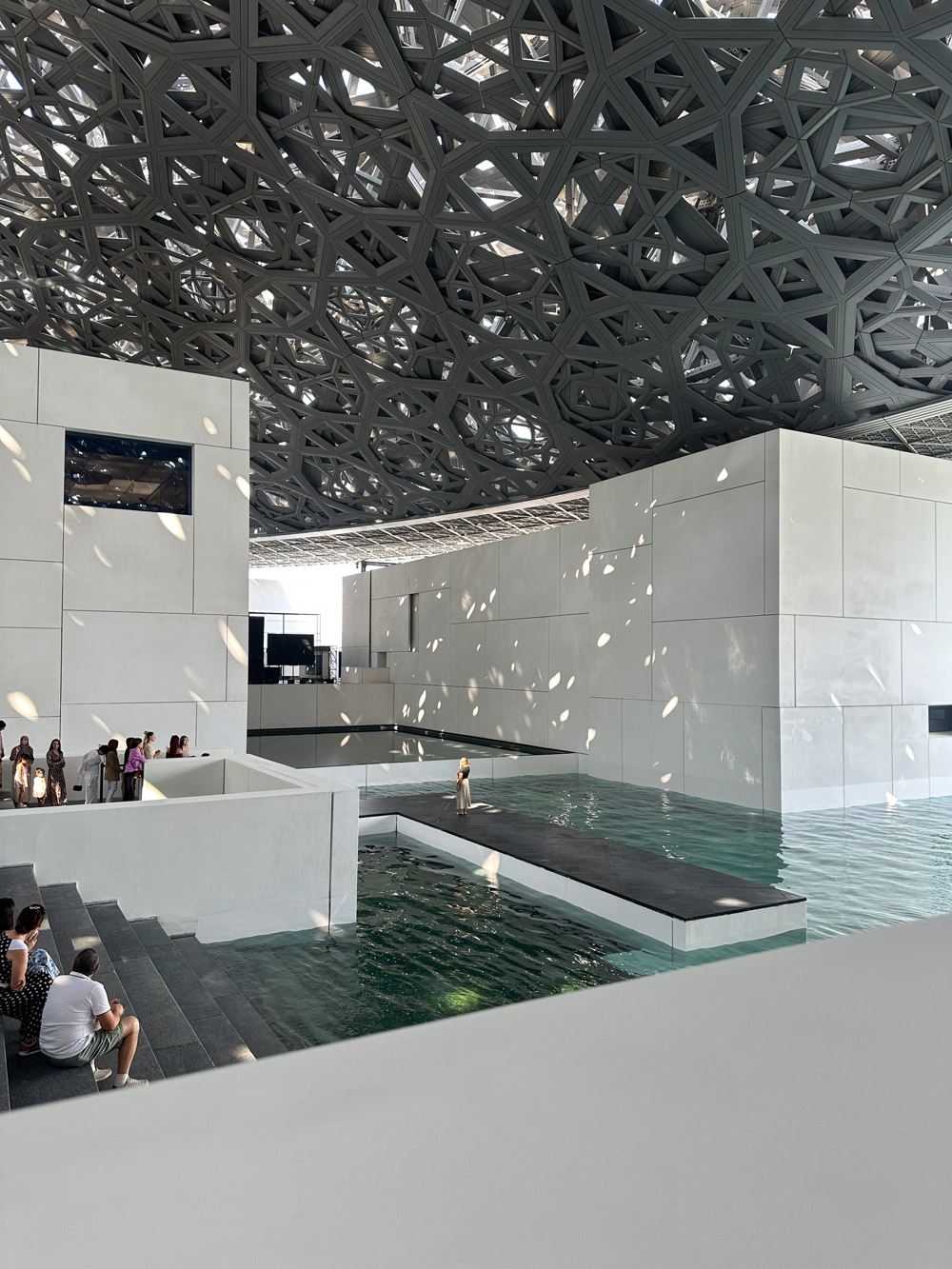
Abu Dhabi’s 421 Arts Campus, quietly inspired by Dubai’s Alserkal Avenue, marks the shift from the improvised to the archived. Framed through three curatorial perspectives, the campus’ 10-year anniversary exhibition engages with time as a central theme. Rays, Ripples, Residue revisits the last decade, when artists occupied apartments, cafés and warehouse spaces to build a scene that was fragile, provisional, but alive. Curated in chapters by Nadine Khalil, Munira Al Sayegh, and Murtaza Vali, each section highlights the perspectives of emerging artists, collectives, and grassroots initiatives with the help of influential cultural institutions which have nurtured their practices. For 10 years, 421 Arts Campus has been dedicated to supporting artists and creative practitioners from the region, and the exhibition leans on the collaborations and co-written practices produced throughout this time.This tension between improvisation and cultural planning unfolds at the scale of the city. At the Louvre Abu Dhabi, the exhibition Mamluks, noted for its narrative scenography, asserts the museum’s role as a territorial anchor. On the horizon, Foster + Partners’ Zayed National Museum rises, while the Natural History Museum presents the Tyrannosaurus rex “Stan”, acquired at Christie’s and already received not as specimen, but as symbol. Downtown, the Cultural Foundation, a restored modernist structure from the 1980s, hosts a significant exhibition dedicated to Emirati artist Mohamed Ahmed Ibrahim, where organic forms and cipher-like motifs converse with the masculine monumentality of the building, suggesting how Emirati modernism is now being read within a formal institutional space.
A space of convergence
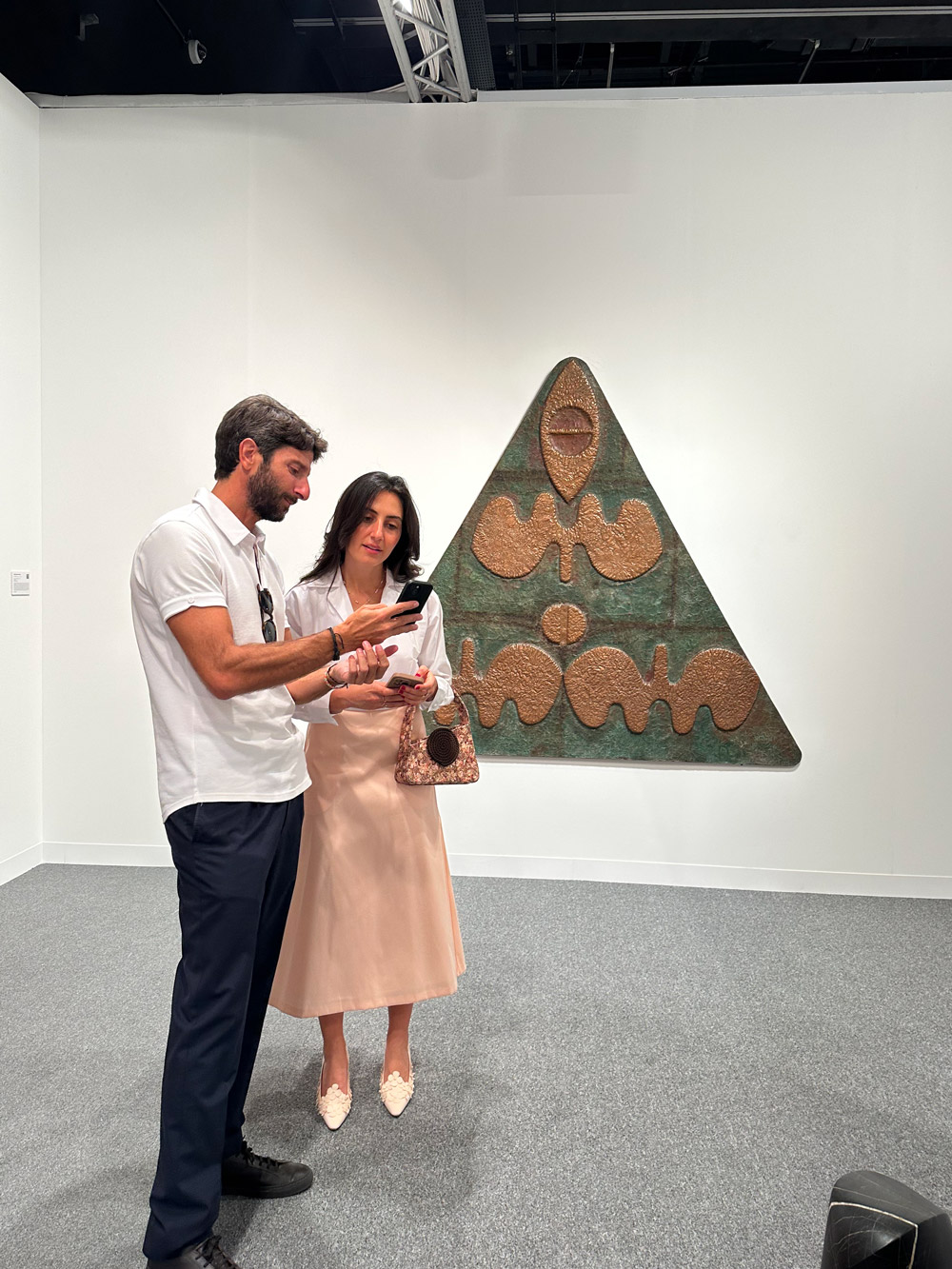
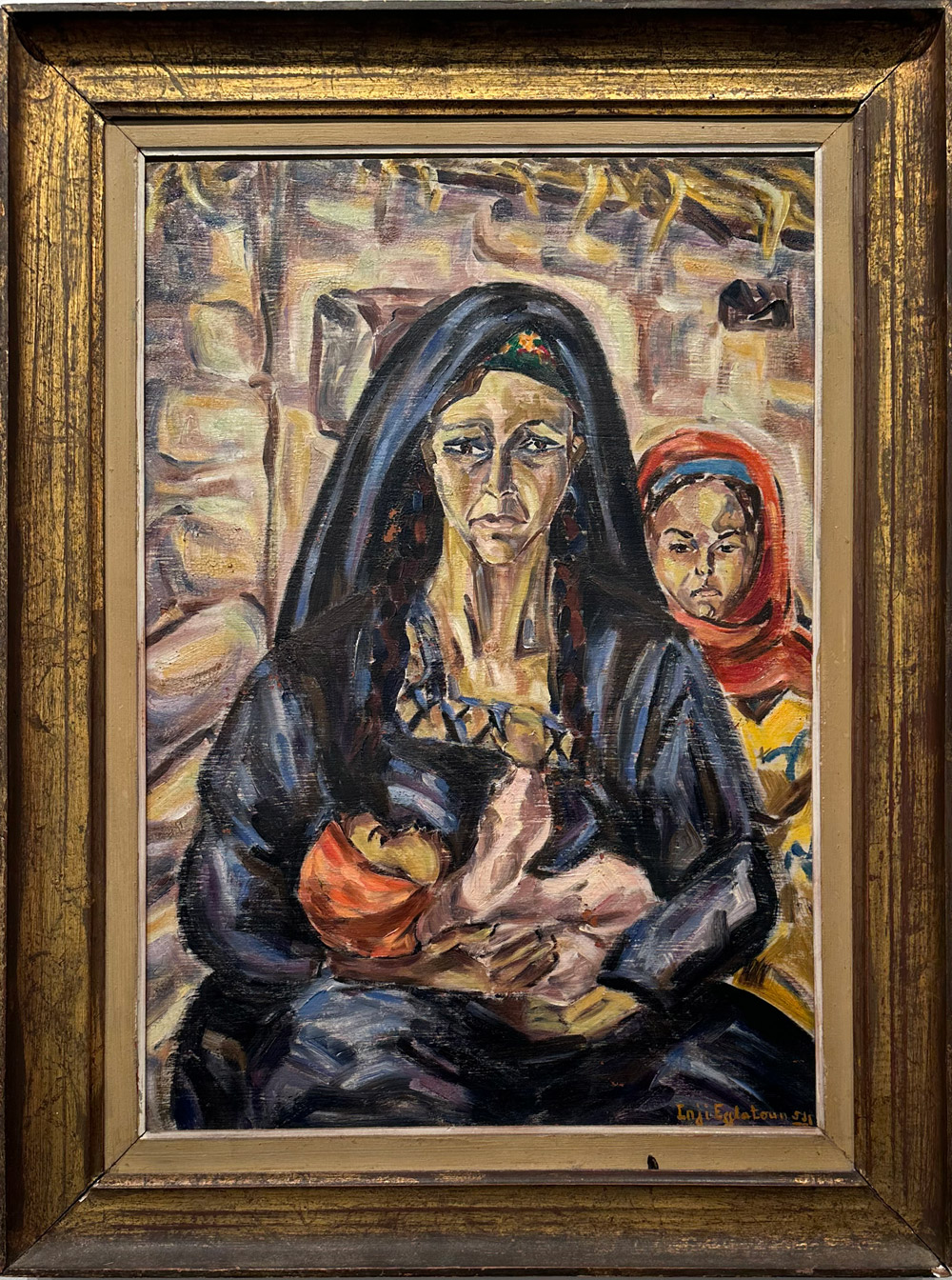
The arrival of Nomad inside Terminal 1 at Zayed International Airport adds another layer to this unfolding narrative. Designed by Paul Andreu in the 1970s, the circular terminal, once a space of waiting, becomes an exhibition instrument. Former departure gates become alcoves, floor mosaics form visual counterpoints, and the iconic green central pillar acts as a spatial spine. Rather than simply hosting a fair, the building is reactivated as a modernist memory site. As Ridha Moumni, Chairman for Middle East and Africa at Christie’s London, noted on site: “I admire the cultural momentum unfolding in Abu Dhabi, the fair, the exhibitions, public art commissions, the museums (including Sheikh Zayed Museum and the upcoming Guggenheim), alongside initiatives like Nomad and the Cultural Foundation. Abu Dhabi’s cultural proposition is now truly unique in the Arab world.”Seen through this lens, Abu Dhabi Art appears less as an autonomous event than as a point of convergence. This edition brought together 140 galleries from 37 countries, with notable expansion from South Korea, Turkey and West Africa. While the spatial layout remains somewhat fragmented, the intention towards a more international vocabulary is clear, without erasing what happens here: the intersection of regional scenes, Arab modernisms, emerging geographies and global players. In the aisles, Sultan Sooud Al Qassemi, founder of the Barjeel Foundation, was seen photographing works by Egyptian modernist Inji Efflatoun and posting them in real time, a gesture that captures something essential about the fair’s role: a place for instant visibility, for the activation of regional archives and for symbolic circulation.
Modernisms in higher resolution
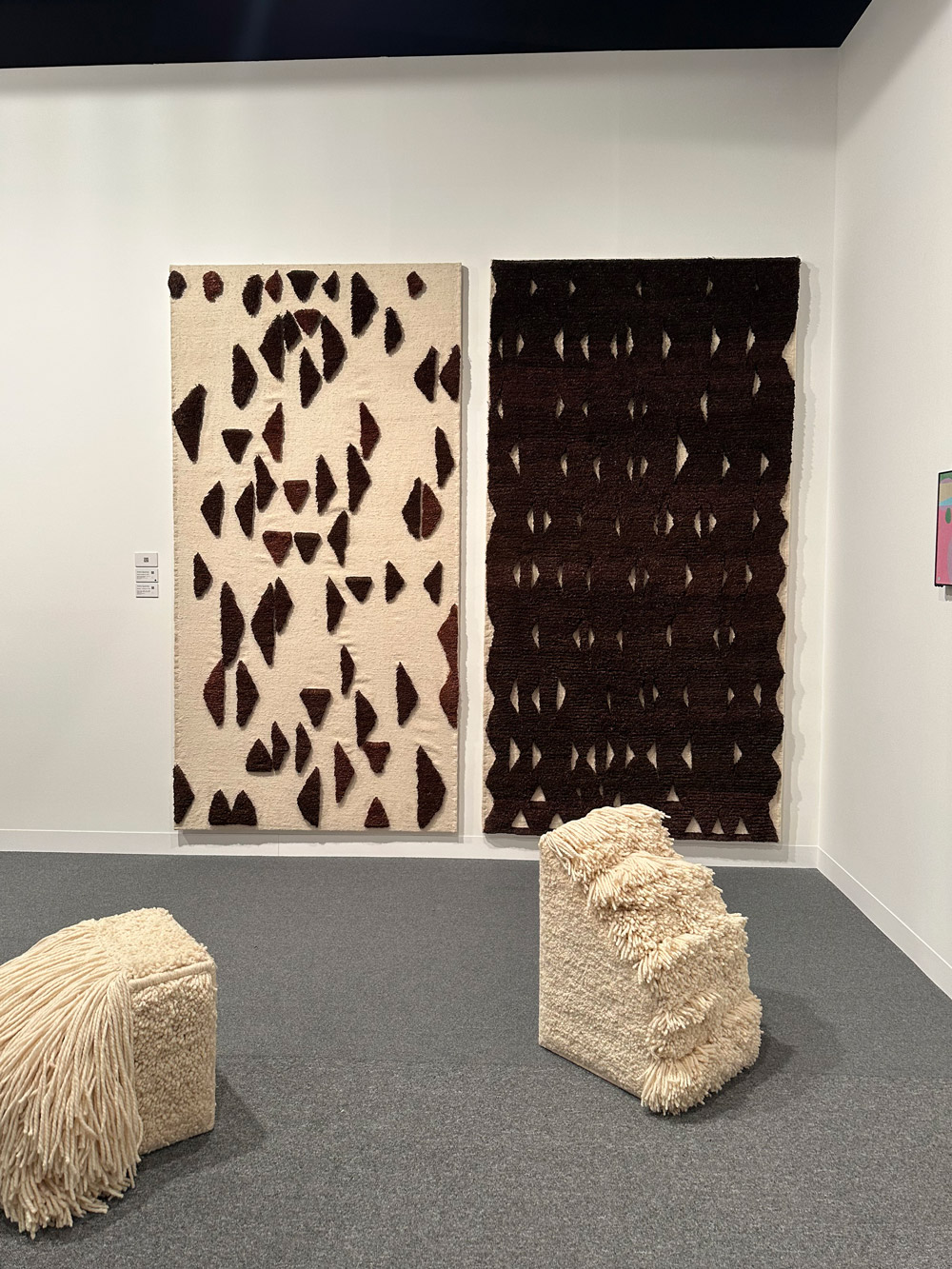
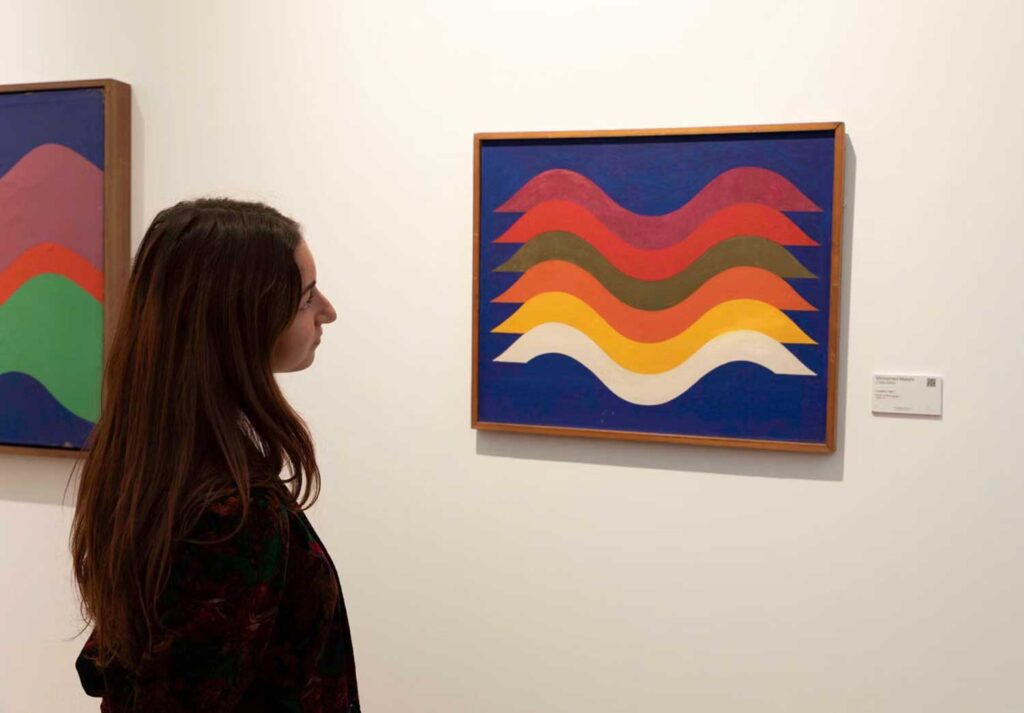
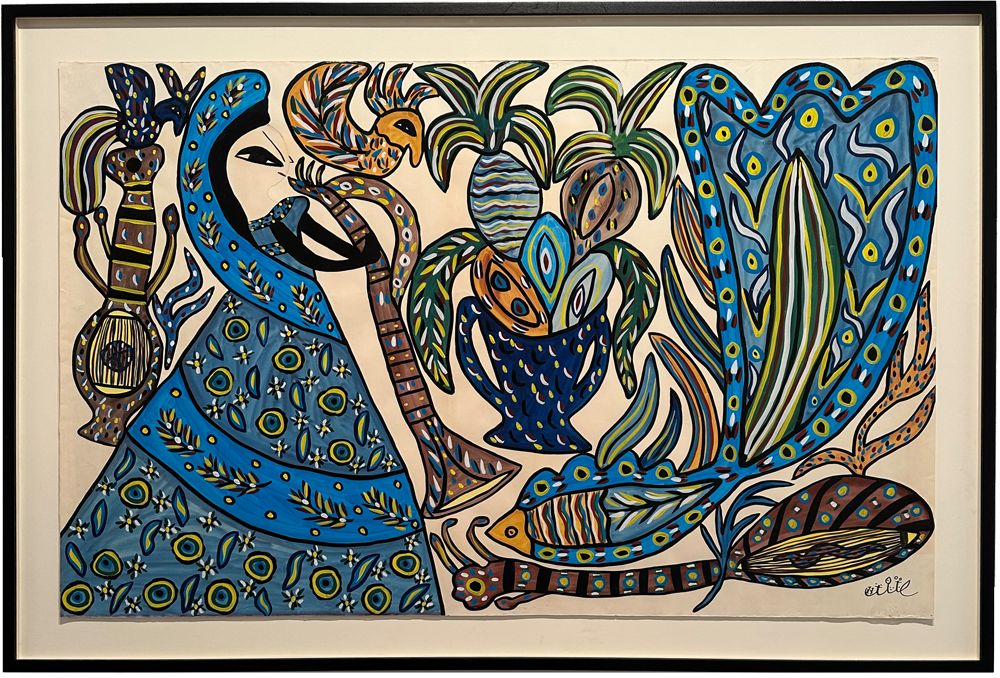
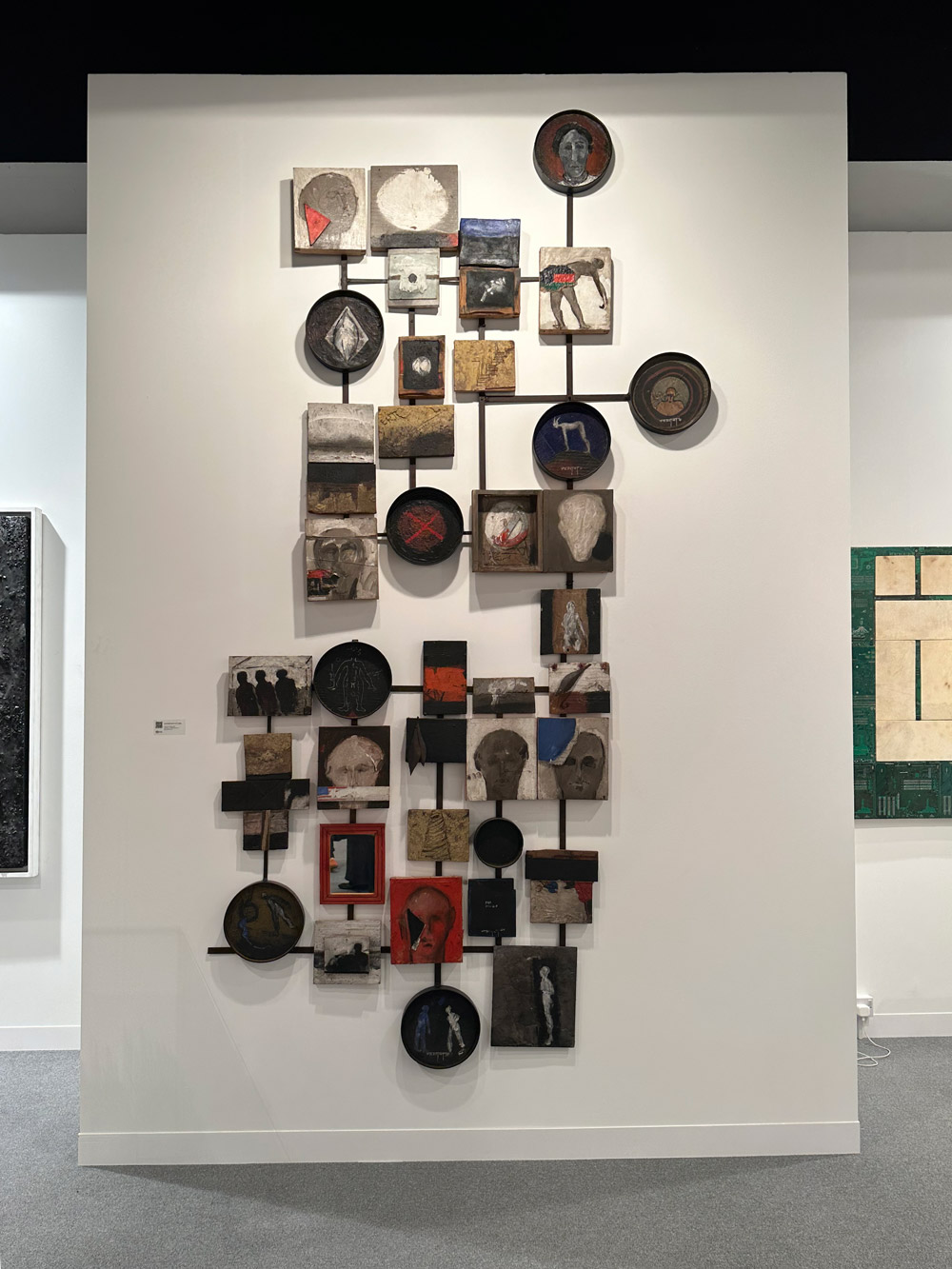
Moumni also sees a shift in how modern Arab artists are being read: “We are clearly seeing increased interest in modern painters, with strong works by Farid Belkahia, Baya, Fatima Hassan or Inji Efflatoun. There is also a growing intent to highlight women artists from the Arab world. Their voices have enriched, in very personal ways, the modern and contemporary art history of the region.” He adds: “Prices have been rising over the past two years, for both modern and contemporary artists, a trend confirmed by auction results.”These trajectories were visible across the Moroccan presentations: Loft Art Gallery (Casablanca and Marrakech) with chromatic variations around a recent Melehi alongside Amina Agueznay, Nassim Azarzar and Khadija El Abyad; CM Gallery (Marrakech) with a pivotal installation by Mohamed Kacimi bridging generations; and Salma Feriani / Le Violon Bleu (Tunis) with a quietly masterful assembly of Belkahia, Baya and Fatima Hassan, not framed as national icons, but interpreted as relational elements.
Major international galleries occupied central positions, Pace, Perrotin, Galleria Continua, Mennour, with recognised names, sometimes expected. Some, however, engaged deeply with the region. The collaboration between Mennour and Athr centred on Saudi artist Mohamed Alfaraj, whom Kamel Mennour described, with characteristic ease, as having first captivated him in AlUla with his poetic reflections on palm trees. Without having seen a single work, the invitation to Paris was already made. The result: a charcoal-on-paper installation, sold out, offering not folklore but a situated reflection on territory, material and memory.
The Frieze perspective
It becomes clearer why the question of Frieze is present in nearly every conversation. Its arrival will bring a more defined structure, broader networks, and a sharpened architectural logic. Yet, as this edition reveals, Abu Dhabi Art has not merely followed market dynamics. It has functioned as a relational field, between institutions, modernist archives, and contemporary production, a place where temporalities do more than coexist. They respond to one another.
Whether that balance will hold remains uncertain. Until now, Abu Dhabi Art has operated as a regional market interface, a culturally anchored platform, a gathering for Arab and African modernisms, and a meeting space for Gulf-based scenes and diasporic networks. The arrival of Frieze promises consolidation, but may also impose hierarchy. For the moment, Abu Dhabi Art remains exactly where it unfolds: in a space of transition.
Meryem Sebti