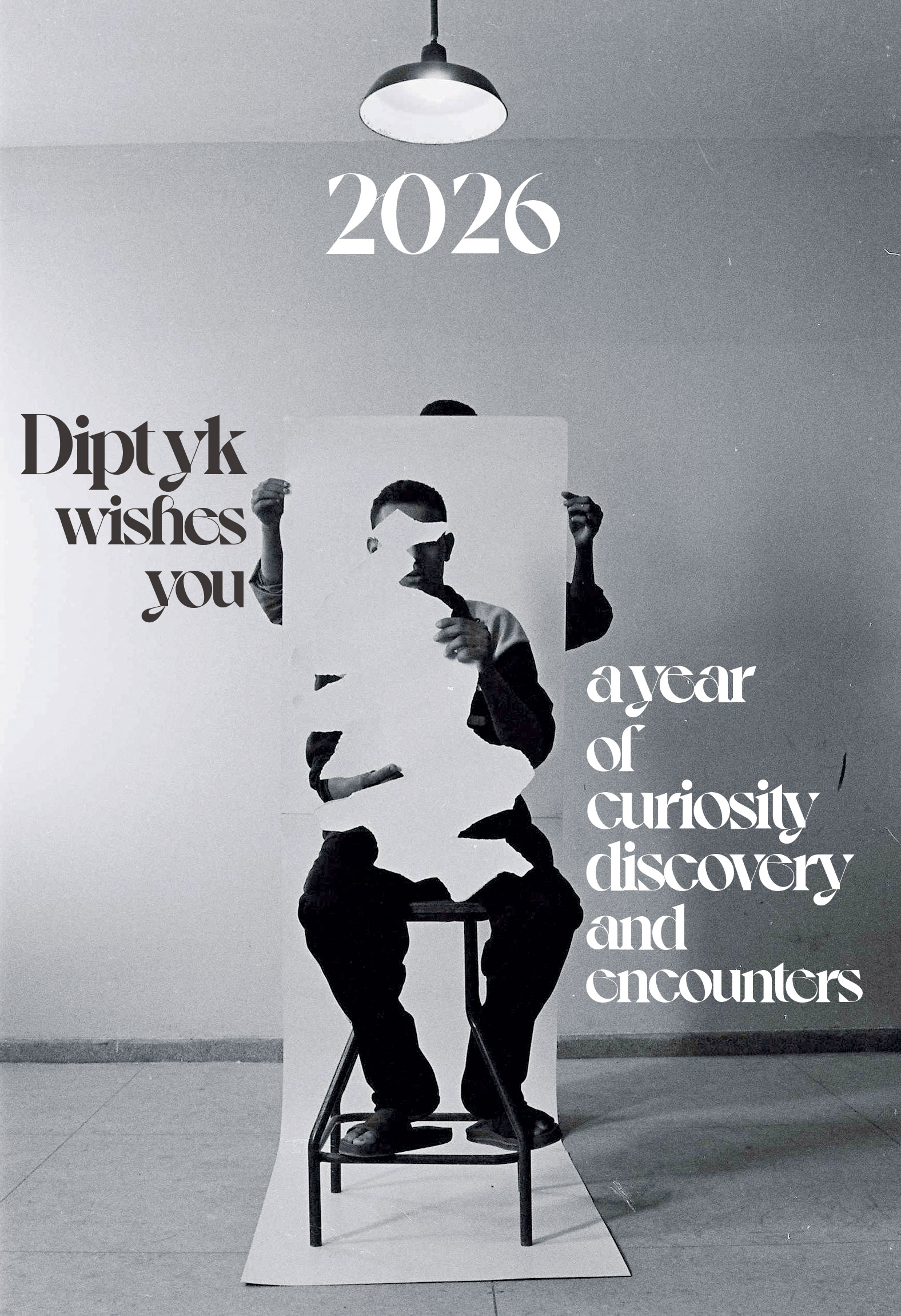
At the dawn of 2026, we would like to thank all those who read Diptyk, who write for it, who support it, and who help circulate it. Our ambition remains unchanged since 2009: to offer tools for understanding an art world that is both compelling and undergoing rapid transformation. We look forward to continuing this work with you in 2026, and to sharing this ongoing passion.
Meryem Sebti
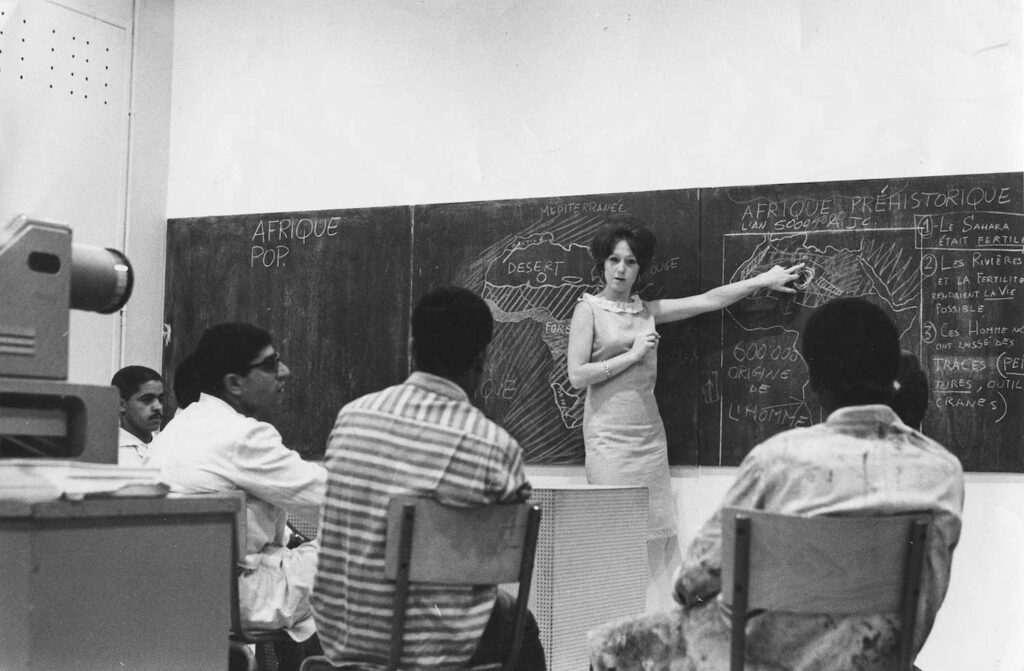
Image : Hicham Benohoud, série La Salle de Classe (1994-2001). © Hicham Benohoud, Courtesy Loft Art Gallery.
2025 aura été une année de déplacements. Déplacements des centres, des récits et des économies culturelles. Déplacements aussi de notre manière de regarder les scènes contemporaines arabes et africaines, non comme des périphéries, mais comme des lieux actifs de fabrication du monde de l’art.
Au fil des quatre numéros parus en 2025, Diptyk a poursuivi un travail engagé depuis sa création : documenter, analyser et mettre en perspective. Au printemps, il a été question de réparation — des héritages, des récits, des regards — en interrogeant la possibilité d’une histoire de l’art véritablement mondiale, débarrassée de ses hiérarchies implicites.
L’été a ouvert un temps plus lent, attentif aux gestes, aux formes de résistance sensibles, à ce besoin de poésie qui traverse les pratiques artistiques dans un monde saturé de crises.
À l’automne, nous avons pris le pouls des scènes émergentes, de leurs écosystèmes fragiles mais inventifs, de la manière dont artistes, collectifs, galeries et institutions composent avec le marché sans s’y dissoudre.
Enfin, l’hiver nous a permis d’affirmer une conviction : le Sud n’est plus un horizon lointain, il est l’un des lieux où s’inventent aujourd’hui de nouvelles modernités, de nouvelles économies de l’art, de nouvelles formes de transmission.En 2025, Diptyk a couvert des territoires multiples. Du Maroc au Nigeria, du Sénégal aux Émirats arabes unis, de l’Europe aux scènes transnationales, nous avons pris le temps de relier les événements aux structures qui les rendent possibles : écoles, ateliers, collections, marchés, politiques culturelles. Nous avons continué à croiser critique d’art, analyse institutionnelle et lecture du marché, convaincus que ces dimensions ne peuvent être pensées séparément.
Ce travail, nous l’avons mené avec une exigence constante.
Diptyk n’est pas un observateur neutre. C’est une revue située, qui assume un point de vue, une rigueur intellectuelle, et une attention particulière aux circulations Sud-Sud, aux héritages modernistes non occidentaux, aux formes contemporaines qui déplacent les canons établis.
Nous ouvrons 2026. Plusieurs lignes de force se dessinent déjà. Nous continuerons à regarder de près les recompositions géopolitiques de l’art, la montée en puissance de nouveaux pôles culturels, les débats autour des restitutions, des modernités plurielles et des économies de production artistique. Nous suivrons de près les grandes plateformes internationales, mais aussi les initiatives locales, légères et parfois fragiles qui inventent d’autres modèles de diffusion et de narration.
Diptyk poursuivra ce travail à travers ses différents formats. Le print, la newsletter, le podcast, le digital ne sont pas des canaux de communication, mais de véritables espaces éditoriaux complémentaires, chacun avec son rythme et ses exigences propres.
À l’aube de 2026, nous tenions à remercier celles et ceux qui lisent Diptyk, qui y écrivent, qui le soutiennent et le font circuler.
Notre ambition reste la même depuis 2009 : proposer des outils de lecture pour un monde de l’art passionnant et en transformation rapide.
Nous vous donnons rendez-vous en 2026, pour continuer ce travail et partager cette passion.
Meryem Sebti