Anne-Claire Legendre, une diplomate arabisante à la tête de l’Institut du monde arabe // Anne-Claire Legendre, an Arabic-speaking diplomat appointed head of the Institut du monde arabe
Actualité
L’Institut du monde arabe a officialisé le 17 février 2026 la nomination d’Anne-Claire Legendre à sa présidence, après la démission de Jack Lang. À 46 ans, elle devient la première femme à diriger l’institution depuis sa création il y a près de quarante ans.
Diplômée de Sciences Po, de la Sorbonne et surtout de l’INALCO où elle étudie l’arabe, Legendre appartient à une génération de diplomates formés directement aux réalités culturelles du Moyen-Orient et de l’Afrique du Nord.
Sa carrière se construit dans cette aire géopolitique : poste à l’ambassade de France au Yémen, négociations sur la Syrie, l’Irak ou la question israélo-palestinienne au Conseil de sécurité de l’ONU, puis conseillère Afrique du Nord-Moyen-Orient auprès de Laurent Fabius.
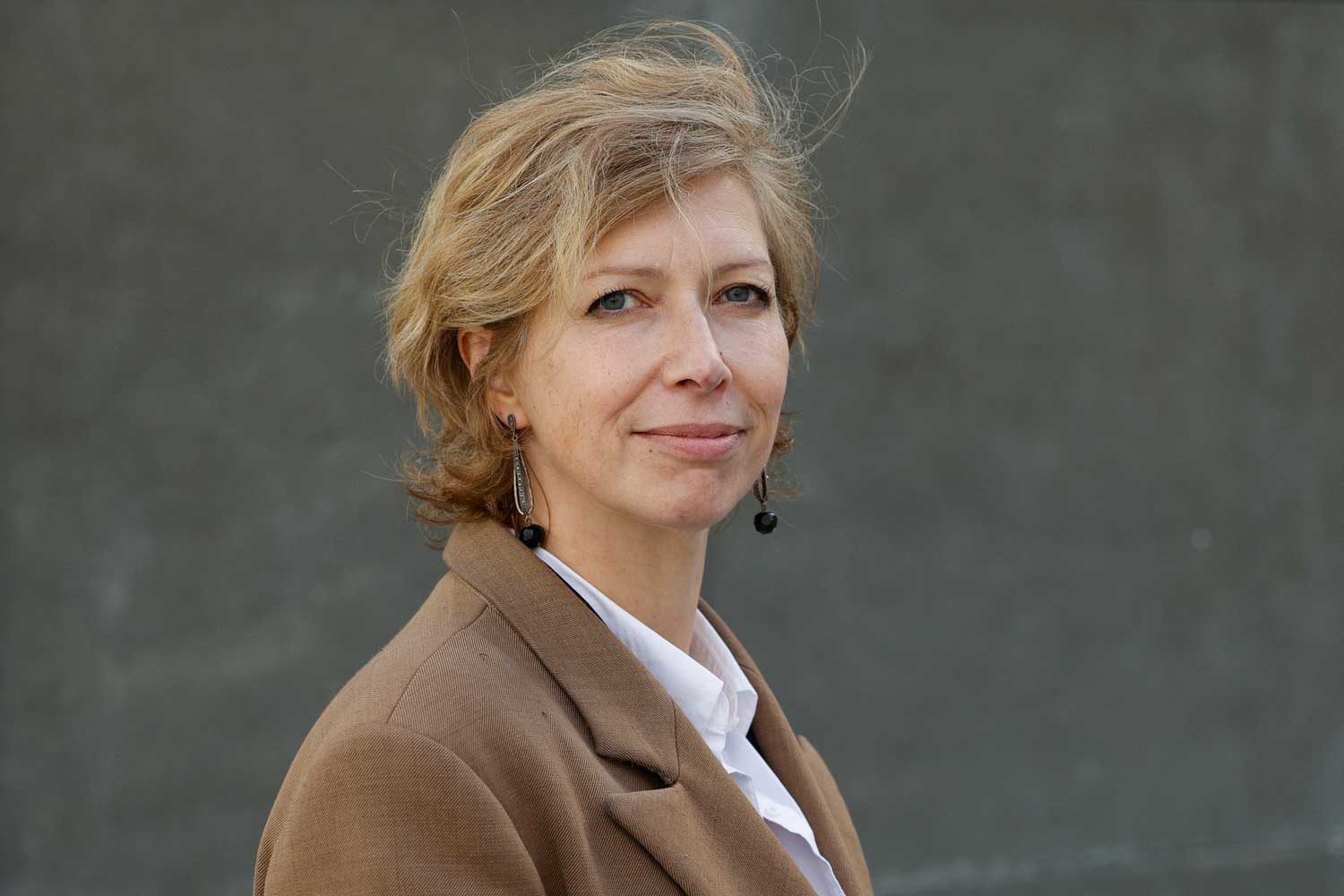
Anne-Claire Legendre. Photo : Geoffroy Van Der Hasselt
Première femme consule générale de France à New York (2016-2020), puis ambassadrice au Koweït puis porte-parole du Quai d’Orsay, elle rejoint en 2023 l’Élysée comme conseillère du président pour la région, participant notamment aux dossiers diplomatiques liés au monde arabe.
Sa nomination intervient à un moment stratégique pour l’IMA, appelé à se réformer et à redéfinir son rôle entre institution culturelle et outil diplomatique. Le choix d’une spécialiste arabisante, issue de la diplomatie plutôt que du monde politique, marque clairement une inflexion : l’institution semble vouloir revenir à sa vocation première, celle d’un espace d’échanges intellectuels et culturels entre l’Europe et les sociétés arabes contemporaines.
On 17 February 2026, the Institut du monde arabe officially announced the appointment of Anne-Claire Legendre as its president following the resignation of Jack Lang. At 46, she becomes the first woman to lead the institution since its creation nearly forty years ago.
A graduate of Sciences Po, the Sorbonne and, notably, INALCO where she studied Arabic, Legendre belongs to a generation of diplomats trained in the cultural realities of the Middle East and North Africa. Her career has been built largely within this geopolitical area: a posting at the French embassy in Yemen, work on Syria, Iraq and the Israeli-Palestinian issue at the UN Security Council, and later adviser for North Africa and the Middle East to Foreign Minister Laurent Fabius.
She went on to become the first female Consul General of France in New York (2016–2020), then Ambassador to Kuwait and spokesperson for the French Foreign Ministry, before joining the Élysée Palace in 2023 as the President’s adviser for the region, working on major diplomatic files concerning the Arab world.
Her appointment comes at a strategic moment for the IMA, which is preparing structural reforms and a redefinition of its role between cultural institution and diplomatic instrument. Choosing an Arabic-speaking specialist from the diplomatic corps rather than the political sphere signals a clear shift: a return to the institution’s original vocation as a space of intellectual and cultural exchange between Europe and contemporary Arab societies.
Treize ans après sa création, la foire 1-54 a-t-elle réussi son pari ? Pensée comme une plateforme de visibilité internationale pour les galeries et artistes...
À Londres, Frieze Masters et 1-54 accordent une place croissante aux modernismes arabes et africains longtemps marginalisés par l’histoire de l’art occidentale. Au-delà de leur...
Dans le Turbine Hall de la Tate Modern, l’artiste libanais Tarek Atoui déploie Hold, une installation sonore immersive dont notre auteure Vamika Sinha livre une...
L’historienne et critique d’art Toni Maraini, qui enseigna aux Beaux-Arts de Casablanca de 1964 à 1972, est à l’honneur de la 47e édition du Moussem...