Inaugurée en septembre et désormais close, la première Biennale de Boukhara s’impose comme un tournant décisif dans l’écosystème international des biennales. En valorisant les gestes artisanaux, les architectures anciennes et les circulations transrégionales, elle propose un modèle d’exposition affranchi des récits dominants.
Pour sa première édition, la Biennale de Boukhara a fait parler d’elle bien au-delà des murs d’exposition. Pensée par la commissaire Diana Campbell sur le thème « Recipes for Broken Hearts », cette nouvelle venue dans le paysage international des biennales rompt avec les modèles établis en suivant une méthodologie centrée sur la relation entre œuvres d’art, artisanat local et patrimoine architectural. Ce faisant, elle réactive la position historique de l’Asie centrale en tant que médiatrice entre des géographies culturelles multiples : le monde islamique, les anciens réseaux d’échanges qui reliaient l’Orient et l’Occident via la Route de la Soie, mais aussi les constellations dynamiques de scènes artistiques du Sud global qui, ces dernières années, ont renouvelé de façon percutante les pratiques contemporaines.
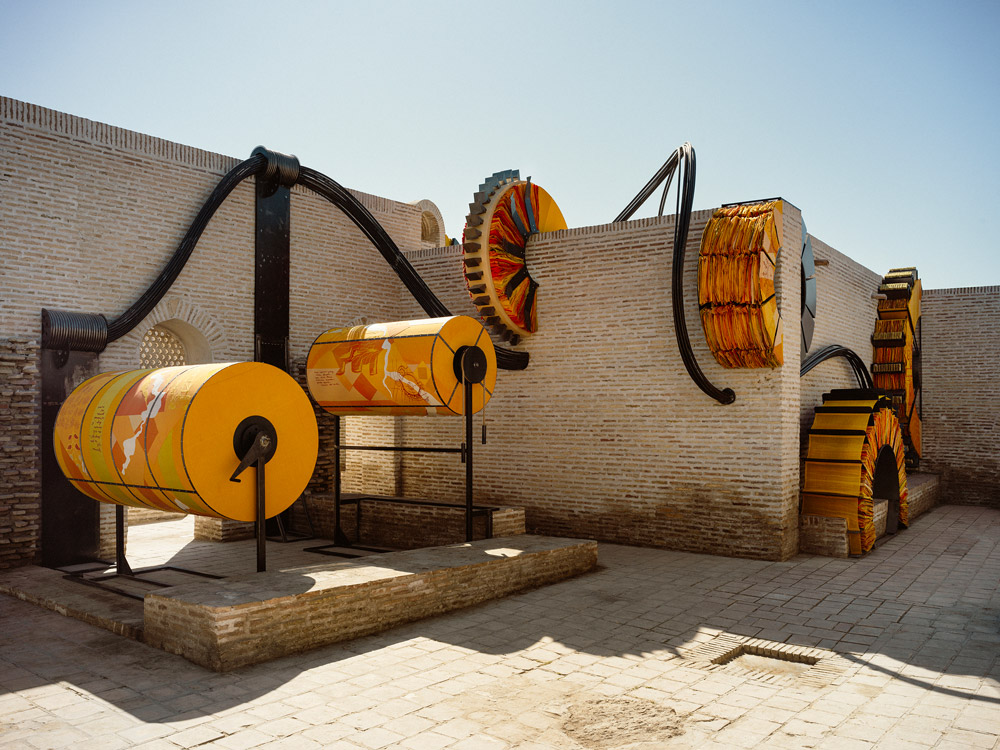
en collaboration avec Yulduz Mukhiddinova (Ouzbékistan)
Photo © Felix Odell
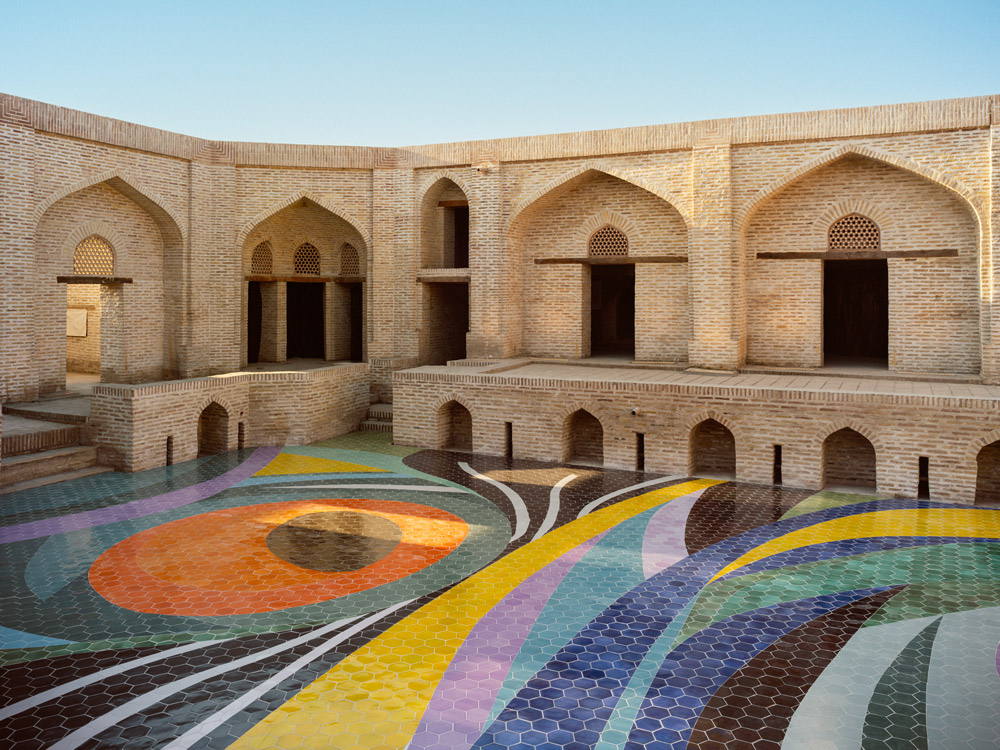
L’un des gestes les plus marquants de la biennale réside dans sa façon d’occuper l’espace. L’art contemporain s’insère dans les caravansérails, médersas, maisons à cour et ateliers restaurés de Boukhara. Loin d’être un simple décor, ces lieux sont envisagés comme des milieux de production de savoir, façonnés par des strates d’histoire architecturale dans une ville qui fut, pendant des siècles, un centre de commerce, de science et de culture. La biennale fait ainsi de Boukhara – 260 000 habitants aujourd’hui – un acteur à part entière, affirmant une approche curatoriale processuelle, attentive aux mémoires.
Cette vision – renforcée par l’intervention du directeur artistique chargé de l’architecture, Wael Al Awar – inscrit la ville dans les discussions actuelles sur des formes d’exposition où le contexte n’est pas un accessoire, mais un élément structurant. Dans cette perspective, l’équipe curatoriale voit la biennale comme un effort continu pour réintégrer des sites historiques dans la vie urbaine, en réactivant leur rôle culturel et social. Entendre les habitants, dans les rues longeant les installations, évoquer spontanément la biennale et la façon dont elle les amène à regarder leur ville autrement reste d’ailleurs l’un des moments les plus marquants de cette première édition.
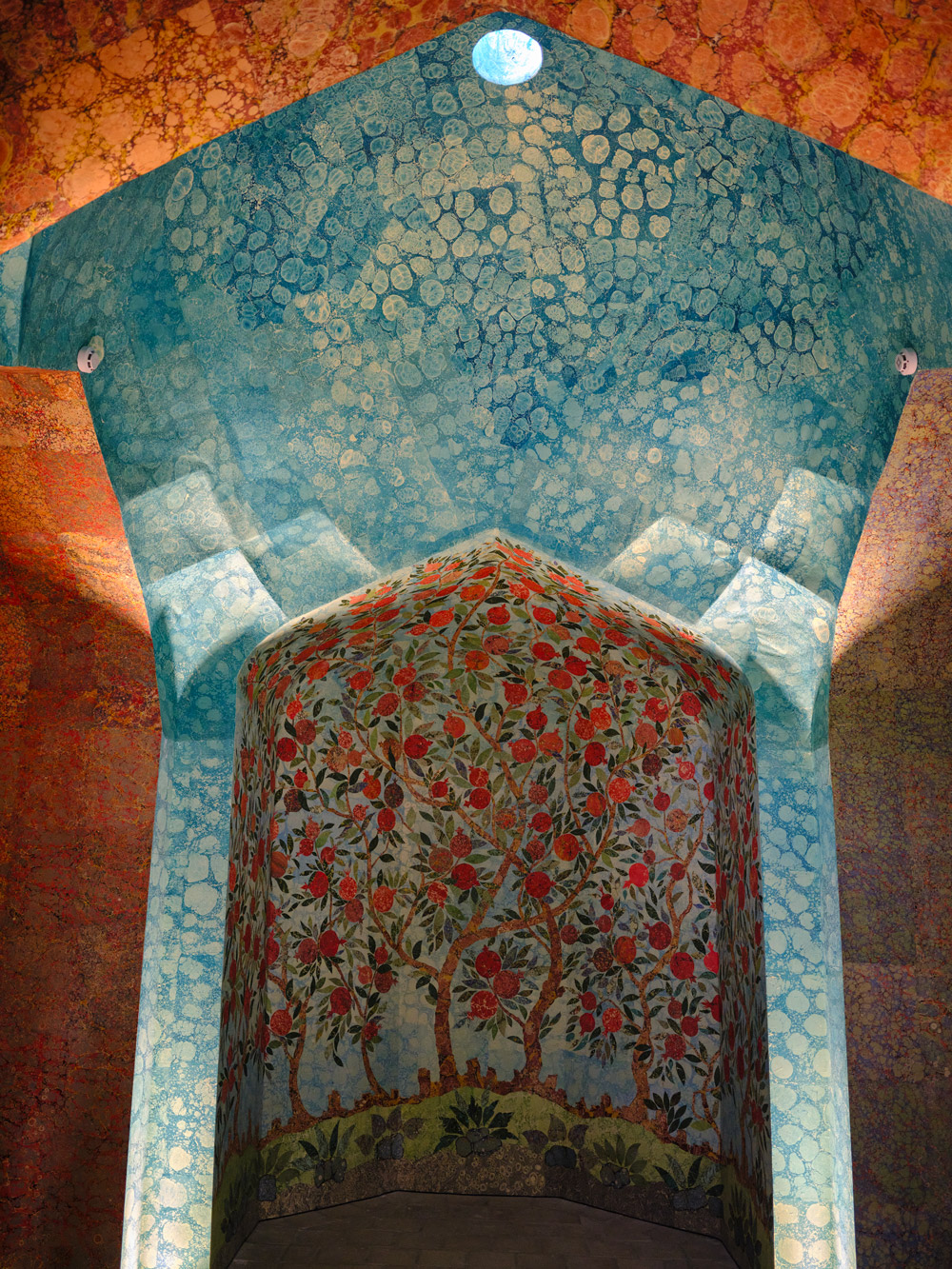
Plus qu’un décor
Tout aussi significative est l’intervention de la Biennale dans une dichotomie ancienne : celle qui sépare l’artiste de l’artisan. En posant le principe de cosignature et en élevant l’artisanat à une force intellectuelle et esthétique, Boukhara interroge la tradition occidentale de l’auteur singulier qui continue de structurer une large part du système artistique global. Ici, le geste artisanal n’est pas secondaire mais cocréateur, enraciné dans des chaînes collectives de transmission des savoirs. Cette question est cruciale dans de nombreuses régions du Sud global, où le statut d’auteur ou la reconnaissance économique des artisans sont au centre du débat. Plus largement, le positionnement de Boukhara résonne avec les efforts actuels visant à redéfinir la production culturelle dans une perspective Sud–Sud.
Cette dimension est renforcée par la distance que la biennale maintient vis-à-vis des structures de marché qui régissent souvent les événements artistiques d’envergure. L’absence de circuits commerciaux spéculatifs permet d’expérimenter des formes de production artistique affranchies des contraintes économiques. Dans ce contexte, l’art devient un vecteur de recentrage local : il permet à Boukhara d’élaborer un vocabulaire propre, ancré dans son histoire de carrefour où la circulation, l’échange et l’hospitalité ont précédé les dispositifs institutionnels actuels.
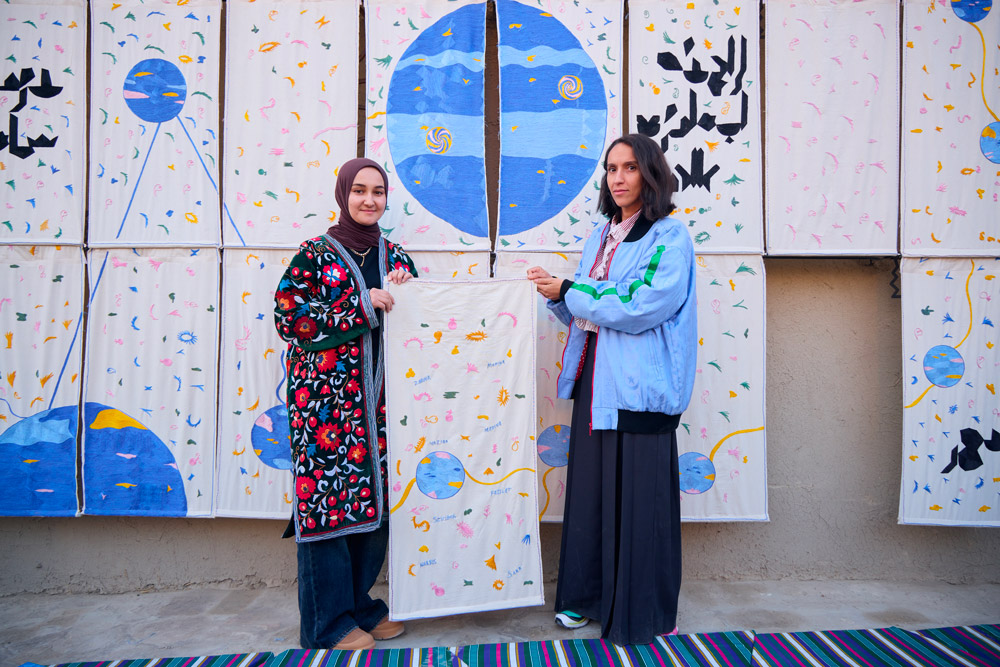
Photo © Felix Odell
L’accent mis sur les circulations et les interconnexions se lit aussi dans la présence d’artistes dont les trajectoires relient l’Asie centrale au Caucase, à l’Asie occidentale, à l’Europe de l’Est, mais aussi à l’Afrique, à l’Asie du Sud, voire à l’Amérique latine. Les œuvres d’Erika Verzutti (Brésil), Delcy Morelos (Colombie), Elena Reygadas (Mexique), Wael Shawky (Égypte) ou Igshaan Adams (Afrique du Sud), entre autres, inscrivent Boukhara dans un réseau qui dépasse largement les frontières régionales. Le projet de l’artiste franco-marocaine Sara Ouhaddou en offre un exemple remarquable : élaborée avec la Hunarmand Artisan Association d’Ouzbékistan et activée par une performance avec des chœurs de l’Orchestre philharmonique de Boukhara, son installation To the Guardians (2025) envisage l’artisanat comme une pratique vivante, libérée du poids de la notion figée d’authenticité et ouverte aux réinterprétations. Tissage, céramique, broderie ou vitrail sont abordés non pas comme des formes statiques, mais des réservoirs de savoir en constante évolution.
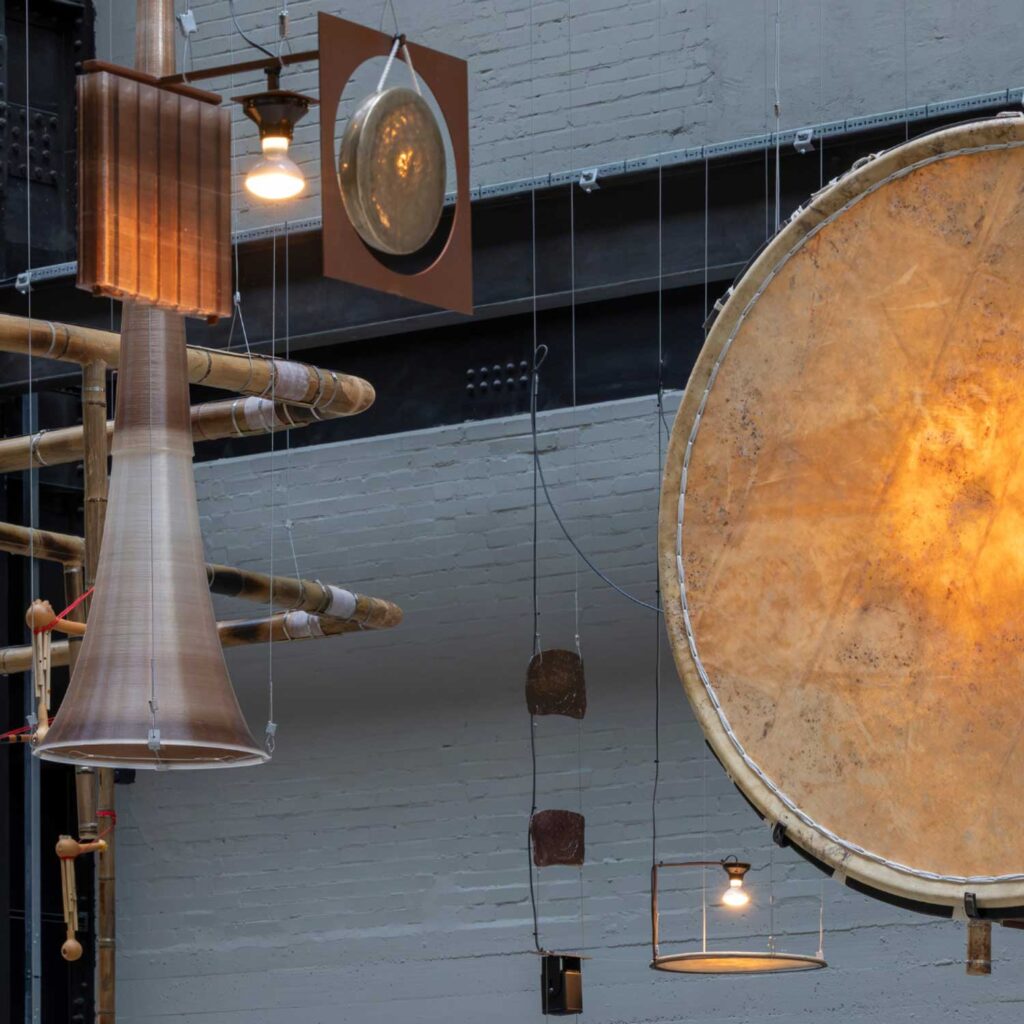
Des préoccupations voisines traversent la nouvelle itération du projet At-Tariq de Tarek Atoui, présenté à Cordoue en 2022 puis au Museo Nacional Thyssen-Bornemisza de Madrid en 2025. Pour la biennale, l’artiste revisite cette exploration sonore à partir des traditions musicales amazighes de l’Atlas marocain, en collaboration avec le musicien ouzbek Sharif Ostanov. Présentée comme une performance électronique solo, cette version insiste sur un patrimoine envisagé comme répertoire circulant plutôt qu’une référence figée.
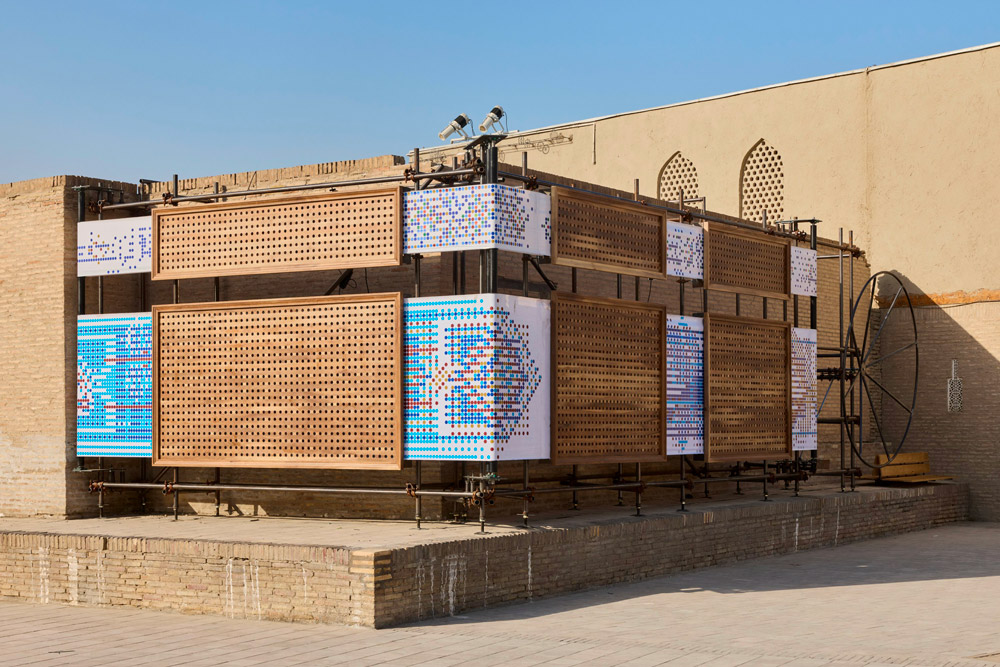
De telles dynamiques s’inscrivent dans un paysage institutionnel en profonde recomposition. Commanditée par l’Art and Culture Development Foundation de la République d’Ouzbékistan, la biennale s’intègre dans une stratégie plus large visant à réinvestir les infrastructures culturelles, à travers la restauration des sites patrimoniaux et le développement de la création contemporaine et des programmes muséaux. L’action de la Fondation – mécénat, programmation artistique, rénovation des infrastructures culturelles, partenariats internationaux – façonne le déploiement de la biennale, tout en inscrivant Boukhara au cœur des discussions actuelles sur la politique culturelle et le rôle de l’art dans l’exercice d’un soft power assumé. Ce faisant, la biennale renforce non seulement le positionnement de l’Ouzbékistan, mais contribue aussi aux dialogues du Sud global autour de modèles d’exposition fondés sur les savoirs locaux. Et prouve qu’une biennale peut fonctionner en tant que dispositif ancré, processuel et ouvert à de nouvelles géographies de l’échange.
Par Sabrina Moura
Opened in September, the inaugural edition of the Bukhara Biennial, Recipes for Broken Hearts, comes to a close, leaving echoes that extend far beyond the exhibition itself. Rather than replicating established biennial models, the show—directed by Diana Campbell—articulated a methodology grounded in the relationship between artworks, local craftsmanship, and the city’s architectural heritage. Its emergence adds a new presence to the global landscape of biennials while reactivating Central Asia’s historical position as a mediator across diverse cultural geographies. These geographies encompass the Islamic world, the long-standing networks of exchange that linked East and West for centuries through what is known as the Silk Roads, and the dynamic constellations of Global South art scenes that, in recent years, have brought some of the most poignant perspectives to contemporary practices.
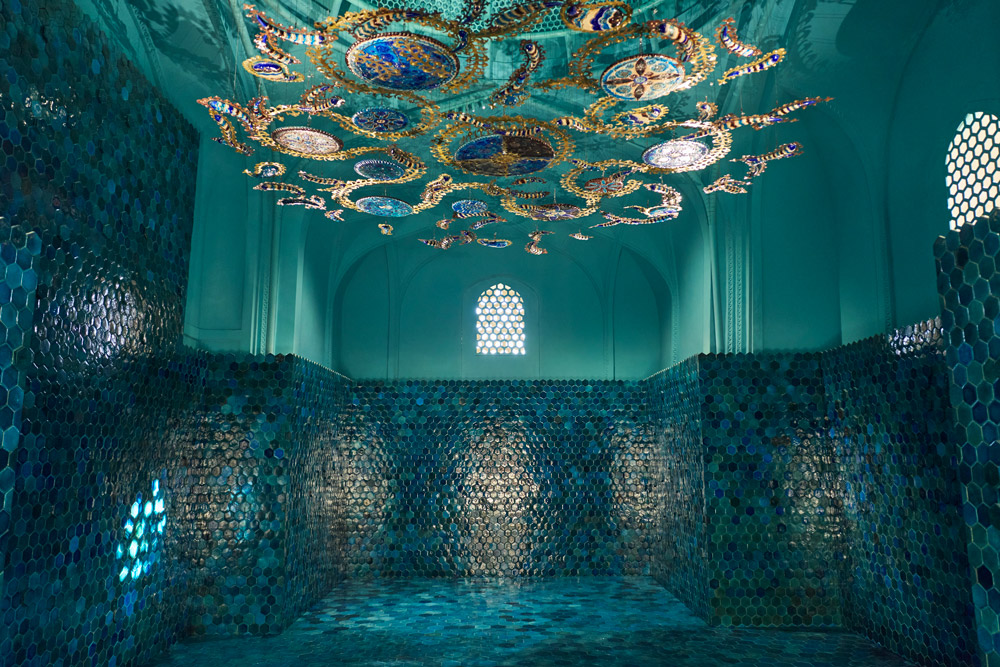
Jurabek Siddikov (Ouzbékistan). Photo © Felix Odell
One of the defining aspects of the Biennial is its mode of spatial occupation, inserting contemporary art into the fabric of Bukhara’s caravanserais, madrasas, courtyard houses, and restored workshops. These sites are not treated as decorative backdrops for curatorial ideas but as knowledge-making environments shaped by layers of architectural history in a city that has, for centuries, served as a center of commerce, science, and culture. The Biennial thus positions Bukhara itself as an active agent, foregrounding a curatorship that is processual and attentive to memory. This approach—further reinforced by the Biennial’s artistic director for architecture, Wael Al Awar—situates the city within emerging discussions on grounded exhibition-making, where context is not an accessory but a central element. Within this framework, the curatorial team positions the Biennial as part of a sustained effort to reintegrate historically significant sites into the city’s life, reactivating their role within its ongoing cultural and social pulse. Indeed, one of the most striking moments of my visit was stumbling upon regular streets that bordered installations and hearing Bukhara’s inhabitants talk about the Biennial and how it made them see their city differently.
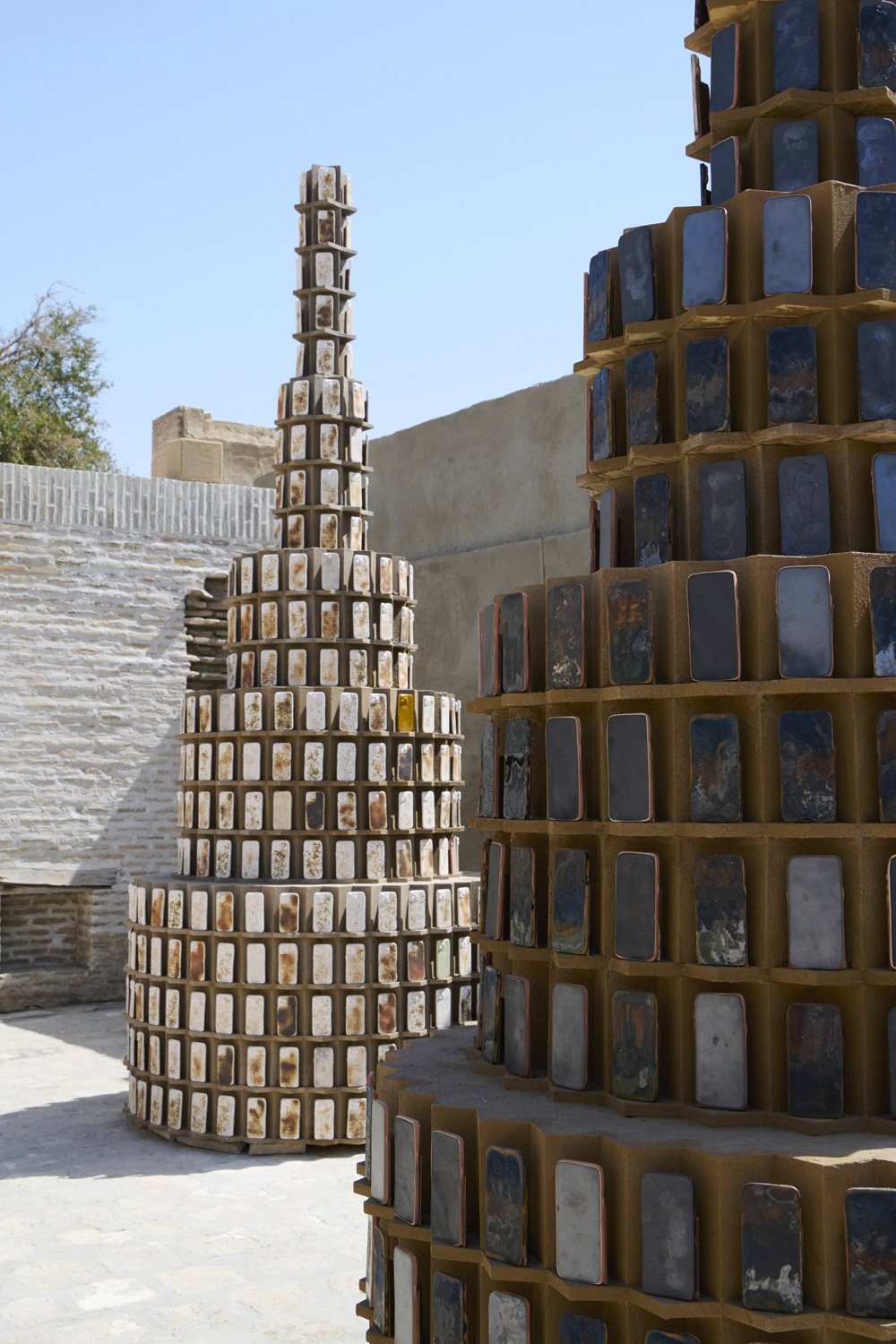
Equally significant is the Biennial’s intervention in the long-standing dichotomy between the artist and the artisan. Through co-signature practices and the elevation of craft as an intellectual and aesthetic force, Bukhara challenges the Western genealogy of singular authorship that continues to frame much of the global art system. Here, craftsmanship is not ancillary but co-productive, rooted within collective lineages of knowledge transmission. This question is crucial for many regions of the Global South, where debates on the status, authorship, and economic visibility of artisans remain central. It is also important to note that the repositioning enacted in Bukhara resonates more broadly with ongoing efforts to redefine cultural labor within a South–South framework.
Such a dimension is further enhanced by Biennial’s distance from the market-centred infrastructures that often govern large-scale art events. The absence of speculative commercial circuits allows the exhibition to experiment with forms of artistic production that need not respond to a transactional economy. In this context, art functions as a vehicle for local forms of care, enabling Bukhara to develop its own vocabulary anchored in the city’s history as a hub where circulation, exchange, and hospitality long preceded contemporary institutional frameworks.
The Biennial’s emphasis on circulation and interconnectedness is reinforced by the presence of artists whose trajectories connect Central Asia with neighbouring regions such as the Caucasus, West Asia, and Eastern Europe, but also with Africa, South Asia, and even distant Latin America. Works by Erika Verzutti, Delcy Morelos, Elena Reygadas, Wael Shawky, Igshaan Adams, among many others, embed Bukhara within a network that transcends regional boundaries. One compelling example is the contribution of French-Moroccan artist Sara Ouhaddou, developed in collaboration with the Hunarmand Artisan Association of Uzbekistan and activated through a performance with singers from the Bukhara Philharmonic Orchestra. Her installation To the Guardians (2025) approaches craft as a living practice, freed from the burden of fixed notions of authenticity and open to processes of reinterpretation. Techniques such as weaving, ceramics, embroidery, and stained glass are treated not as static forms but as evolving repositories of knowledge.