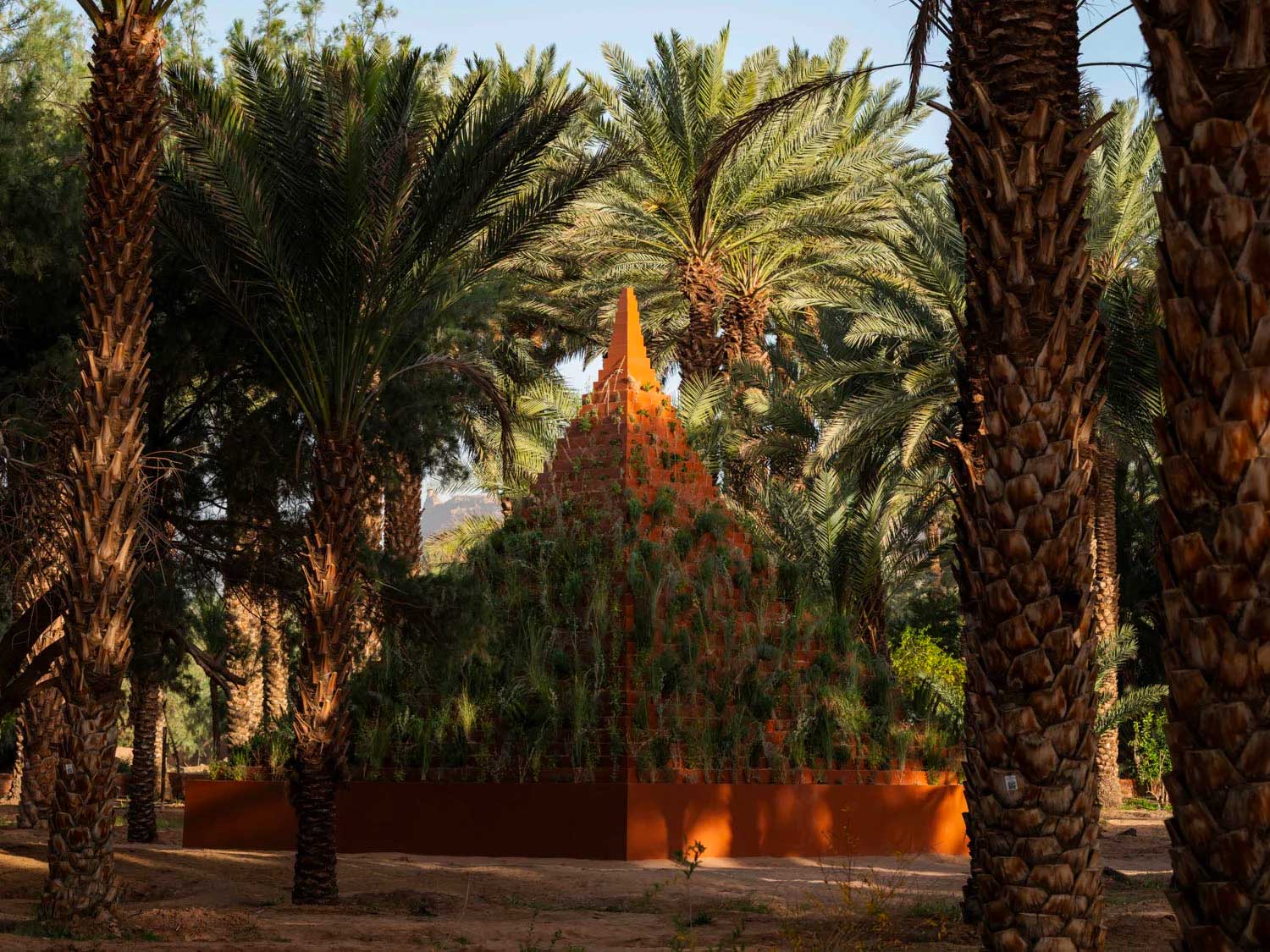
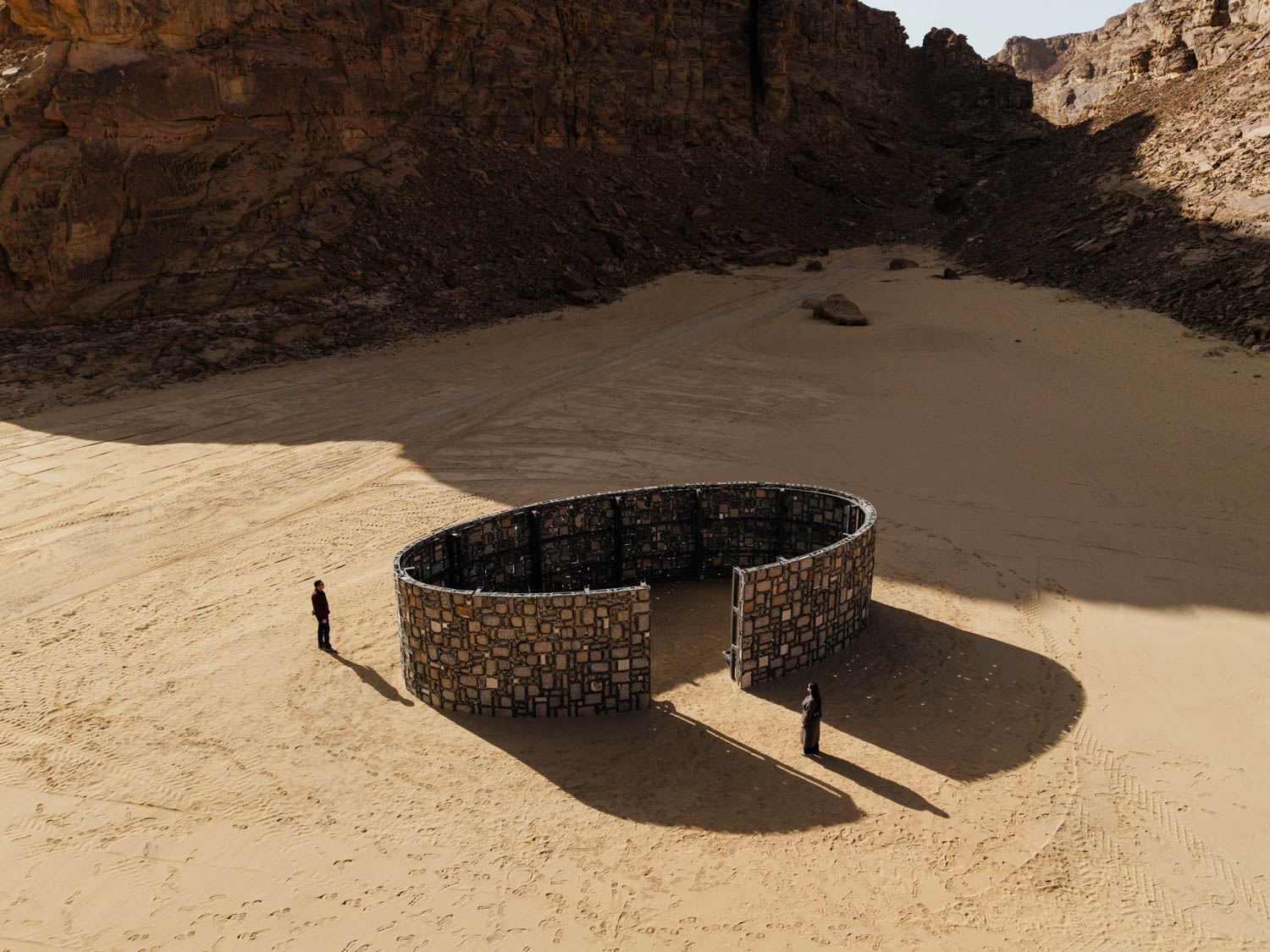
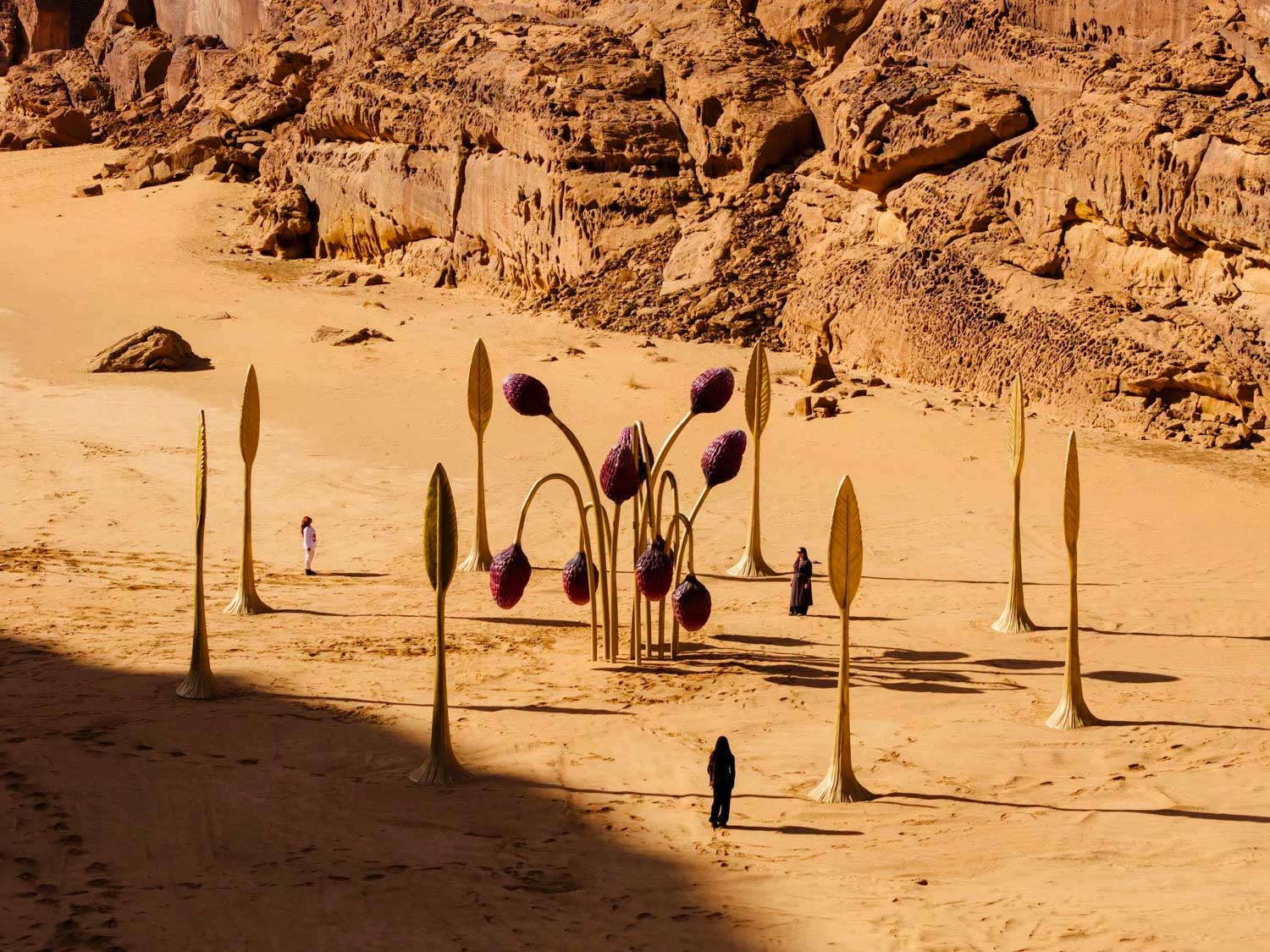
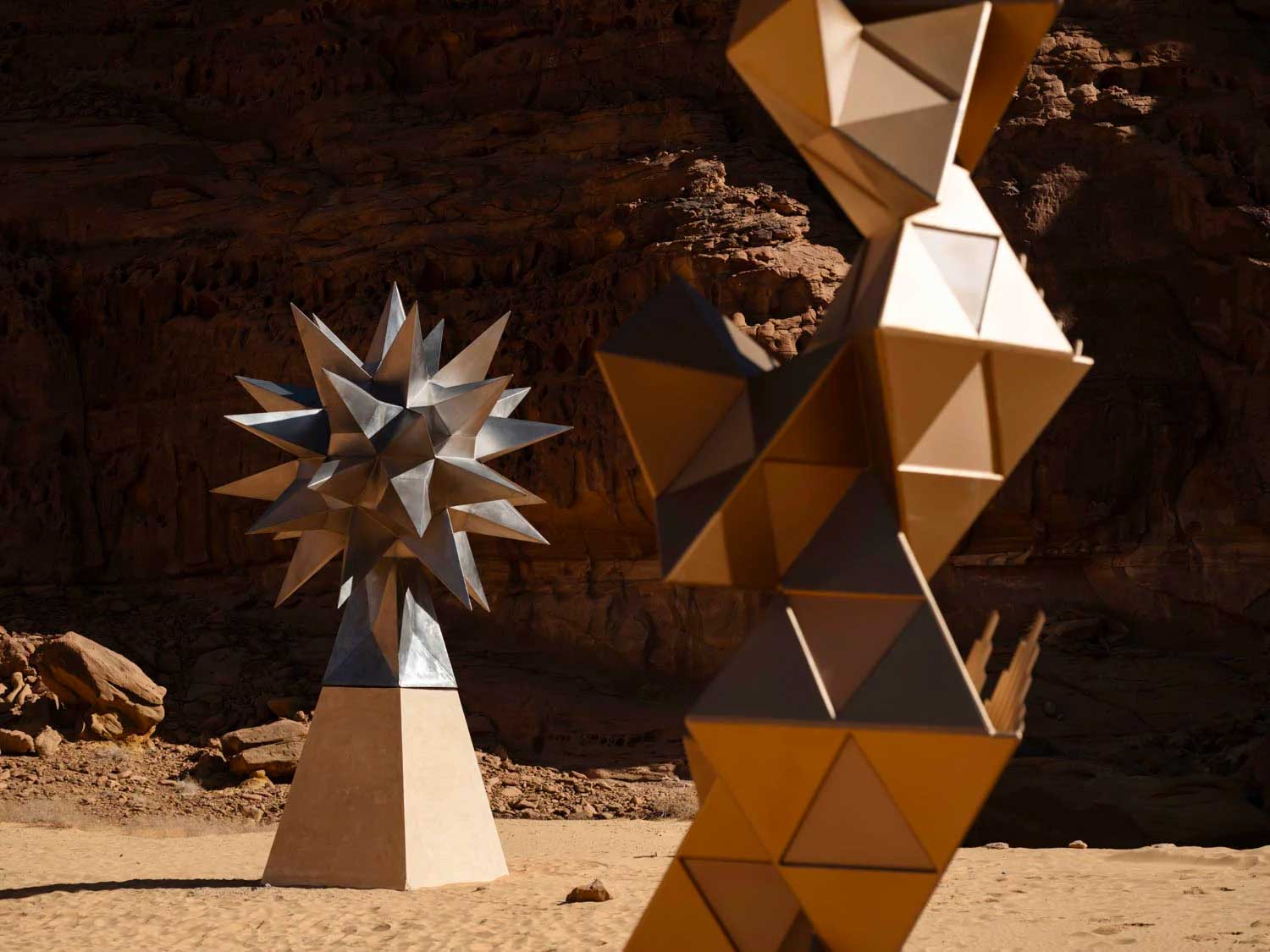
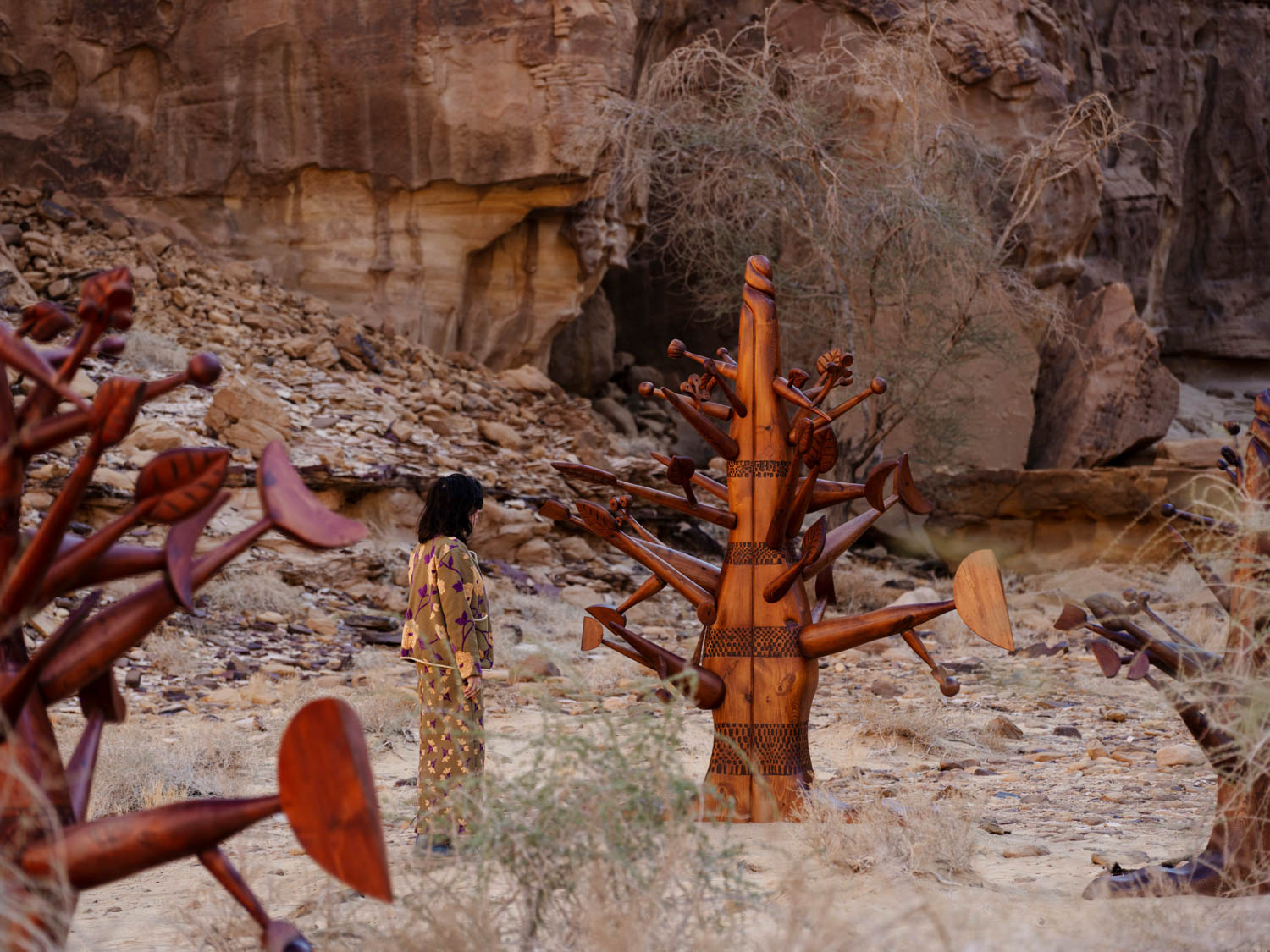
1. Agnes Denes, The Living Pyramid, Desert X AlUla 2026. Photography courtesy of Lance Gerber.
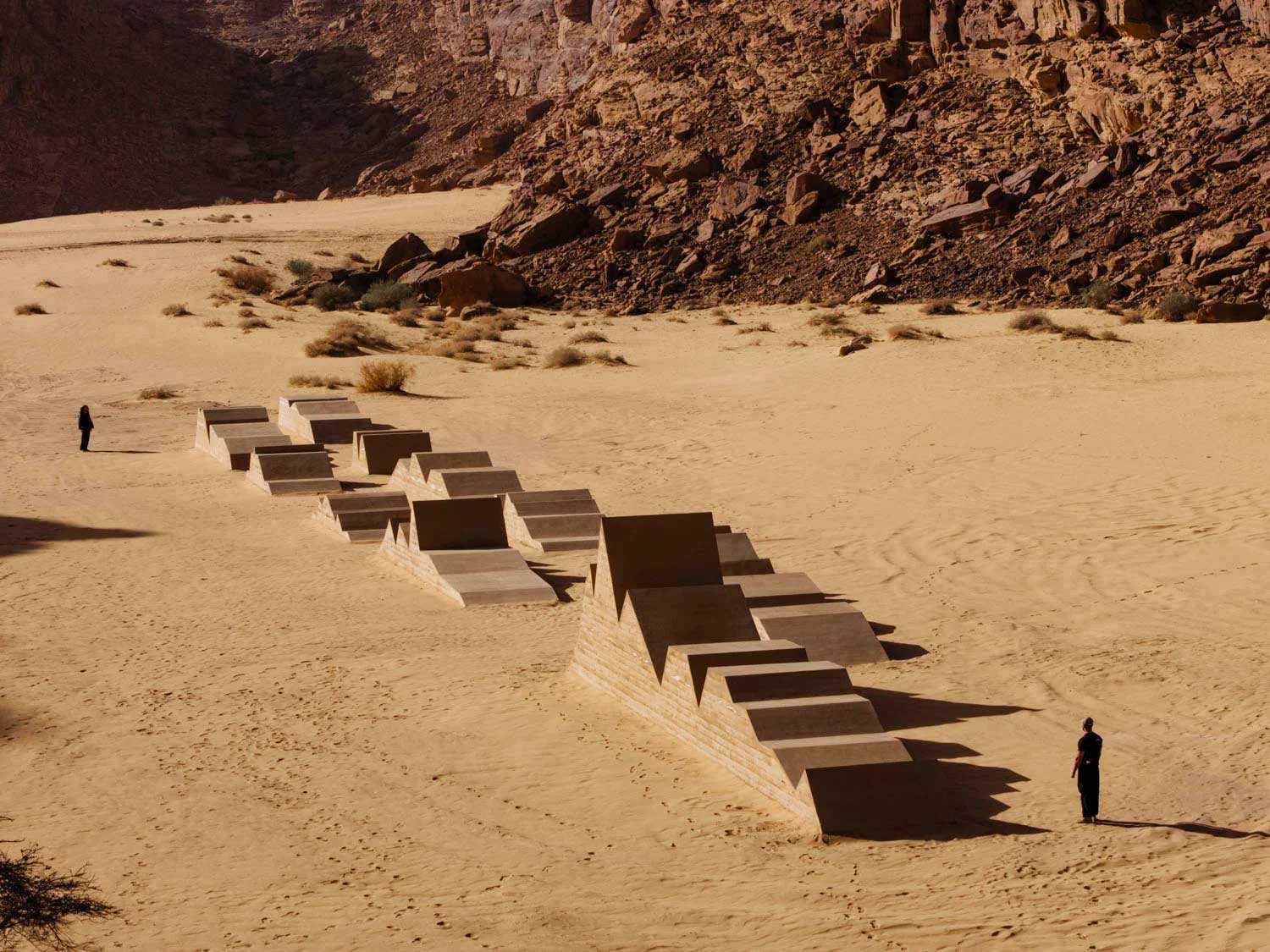
2. Sara Abdu, Desert X AlUla 2026. Photography courtesy of Lance Gerber.
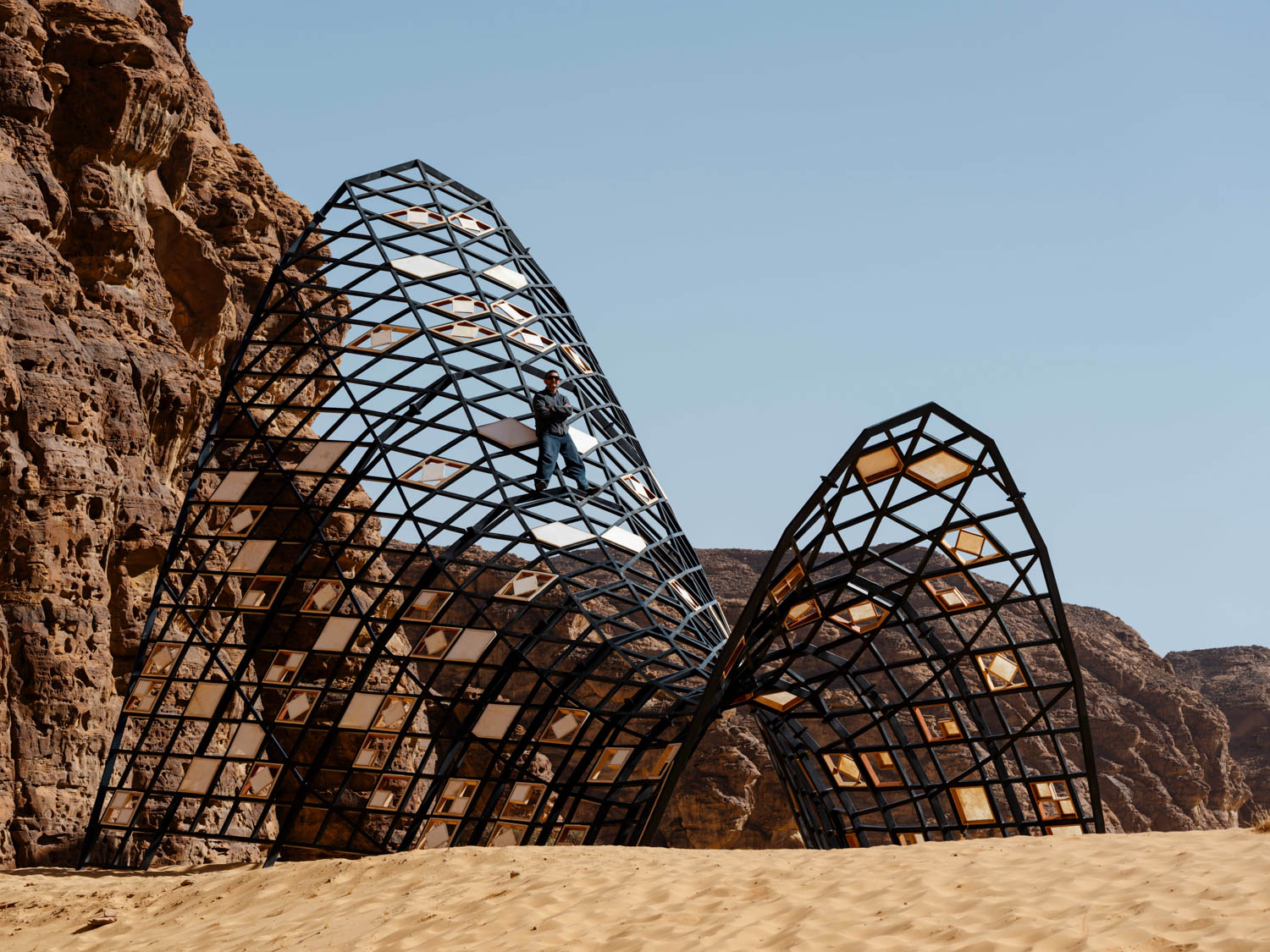
3. Héctor Zamora, Tar HyPar, Desert X AlUla 2026. Photography courtesy of Lance Gerber.
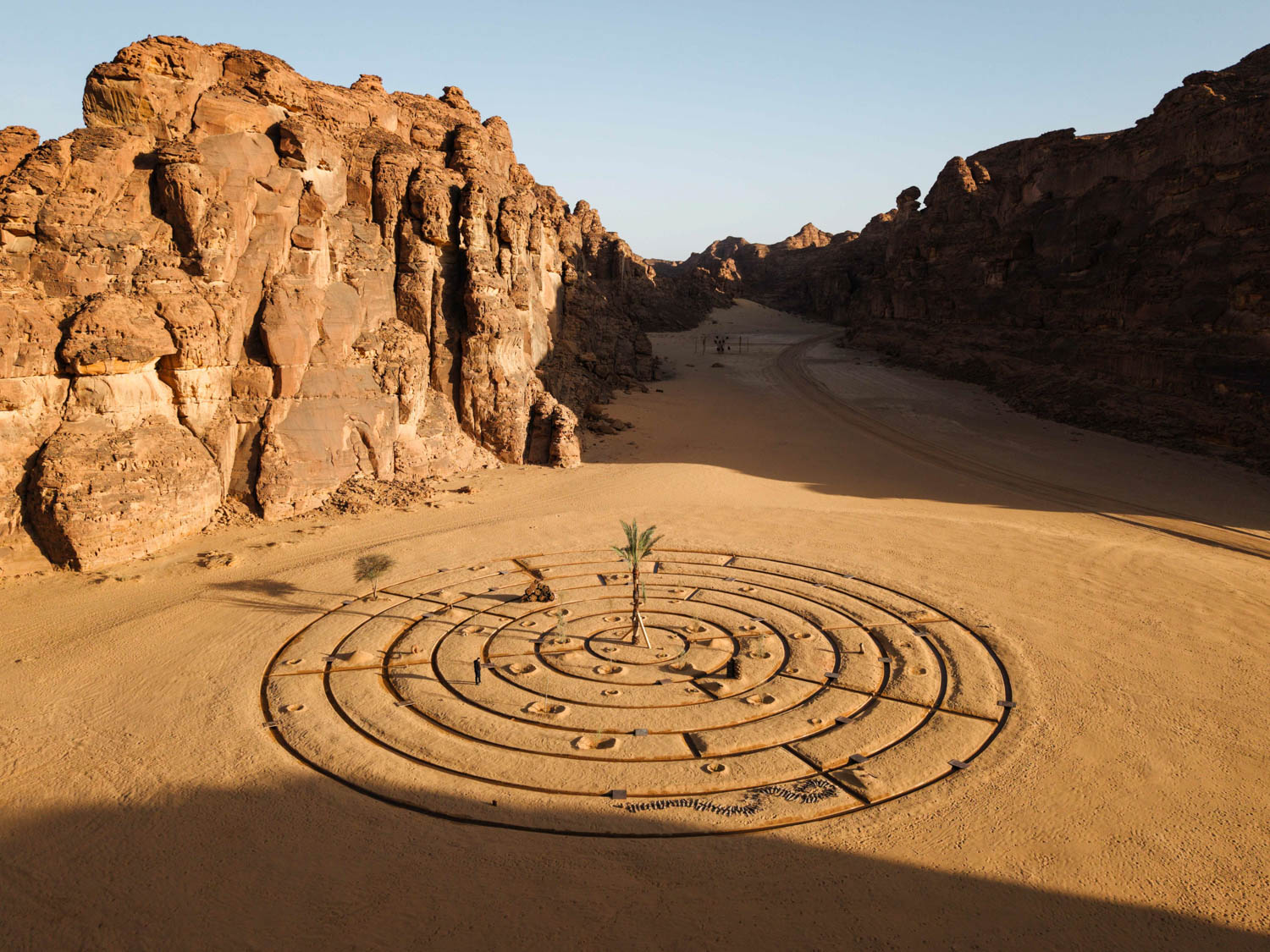
4. Mohammad AlFaraj, Desert X AlUla 2026. Photography courtesy of Lance Gerber.
5. Vibha Galhotra, Desert X AlUla 2026. Photography courtesy of Lance Gerber.
6. Maria Magdalena Campos-Pons, Desert X AlUla 2026. Photography courtesy of Lance Gerber.
7. Works by Mohammed Al Saleem throughout the exhibition are on loan courtesy of Riyadh Art collection, The Royal Commission for Riyadh City.
8. Maria Magdalena Campos-Pons, Desert X AlUla 2026. Photography courtesy of Lance Gerber.
Ouverte de janvier à fin février 2026, la nouvelle édition de Desert X AlUla confirmait le glissement du projet, d’une biennale de sculptures monumentales vers une véritable plateforme de récit. Intitulée In the Presence of Absence, l’édition 2026 réunissait des artistes internationaux et saoudiens autour d’une lecture du désert comme espace mental, spirituel et historique plutôt que simple décor spectaculaire.
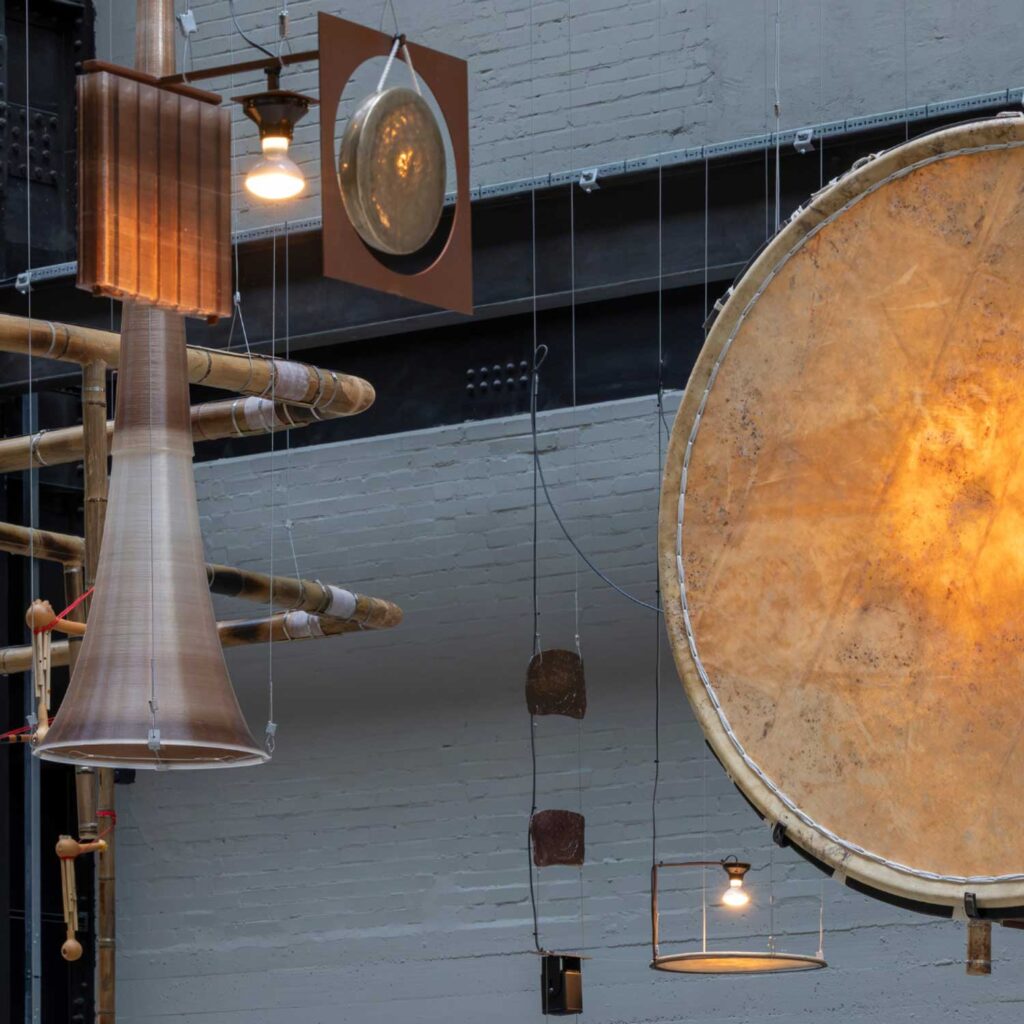
Trois présences donnaient la mesure du déplacement. Ibrahim El-Salahi installait dans la vallée un motif végétal inspiré du haraza soudanais, figure récurrente de son œuvre, qui faisait du paysage d’AlUla un prolongement de sa cosmologie personnelle. Le Saoudien Mohammad Alfaraj travaillait à partir d’archives locales et de narration orale, réinscrivant le site dans une mémoire vécue, domestique, à rebours de l’image de désert vierge. Tarek Atoui abordait l’oasis par l’écoute, ses dispositifs sonores captant les flux d’eau et transformant le lieu en instrument, révélant une géographie invisible.
L’ensemble confirme une évolution déjà perceptible, Desert X dépasse le principe d’une insrtallation dans le désert, pour produire les éléments d’une histoire de l’art située, appelée à nourrir les futures institutions du territoire.
La rédaction