Holiday Powers : « Le modernisme est lié aux luttes de la décolonisation » // “Modernism is inextricably linked to the struggles of decolonization”
Interview, Livres
Spécialiste de l’art moderne et contemporain du monde arabe, Holiday Powers propose une lecture novatrice du modernisme marocain. Loin de le cantonner à une stricte lecture nationale, elle le situe dans une dimension cosmopolite qui constitue le cœur même du mouvement.
Propos recueillis par Olivier Rachet
Holiday Powers est professeure assistante en art moderne et contemporain global à la Virginia Commonwealth University, au Qatar. Spécialiste des scènes artistiques du monde arabe, ses recherches portent sur les articulations entre discours locaux et transnationaux dans l’art moderne et contemporain, à la lumière des théories postcoloniales et féministes. Dans Moroccan Modernism (Ohio University Press), elle montre comment la pédagogie et les solidarités transnationales de cette génération d’artistes faisaient partie intégrante de leurs projets esthétiques et politiques. Elle propose ainsi une lecture novatrice du modernisme marocain à l’aune du contexte cosmopolite de l’époque, marqué en particulier par les mouvements intellectuels anticoloniaux transnationaux tels que le panafricanisme et le panarabisme.
Vous présentez le mouvement autour de l’École de Casablanca comme « uni par des idées plus que par des formes esthétiques », en précisant qu’il était « lié au débat sur la culture nationale et la postcolonialité ». Pourquoi, selon vous, l’esthétique venait-elle au second plan ?
L’École de Casablanca était à la fois une école, en tant qu’institution d’enseignement, et un groupe de travail artistique. On conçoit souvent cette seconde acception comme celle d’un courant porté par des débats esthétiques communs, définissable par des ressemblances visuelles. Ce qui m’intéressait ici, c’était la force motrice du groupe : selon moi, il s’agissait avant tout d’une revendication politique autour de la culture nationale. On pourrait dire qu’ils ne se définissaient pas par le résultat formel de leurs abstractions, mais par l’élan d’où ces formes émanaient. Cela ne signifie pas que l’esthétique était secondaire dans leurs pratiques individuelles, mais que ce qui les liait en tant que groupe était une conviction commune sur le rôle que l’art pouvait jouer dans la société.
« Pour cette génération d’artistes marocains, le modernisme se situait à l’intersection du local/ national et de l’international », écrivez-vous. En prenant l’exemple de Belkahia ou Melehi, vous montrez qu’ils ont forgé une conscience nationale à l’étranger. N’étaient-ils pas aussi, après Cherkaoui, en quête d’un modernisme singulier, propre au Maroc ou au monde arabe ?
Je ne crois pas qu’il existe un modernisme singulier, propre à un lieu. Au contraire, le modernisme est toujours réticulaire : la circulation transnationale des œuvres, des artistes et des idées en est constitutive, non accessoire. Je m’appuie aussi sur la conception fanonienne de la culture nationale : pour Fanon, la nation est le socle à partir duquel s’ouvre le mouvement vers le monde. Les artistes marocains cherchaient donc bien à inscrire leur modernisme dans un ancrage national, mais toujours en dialogue transnational. Historiquement, la notion d’une culture arabe partagée s’affirme d’ailleurs plus clairement dans les années 1970, au moment où l’École se dissout.
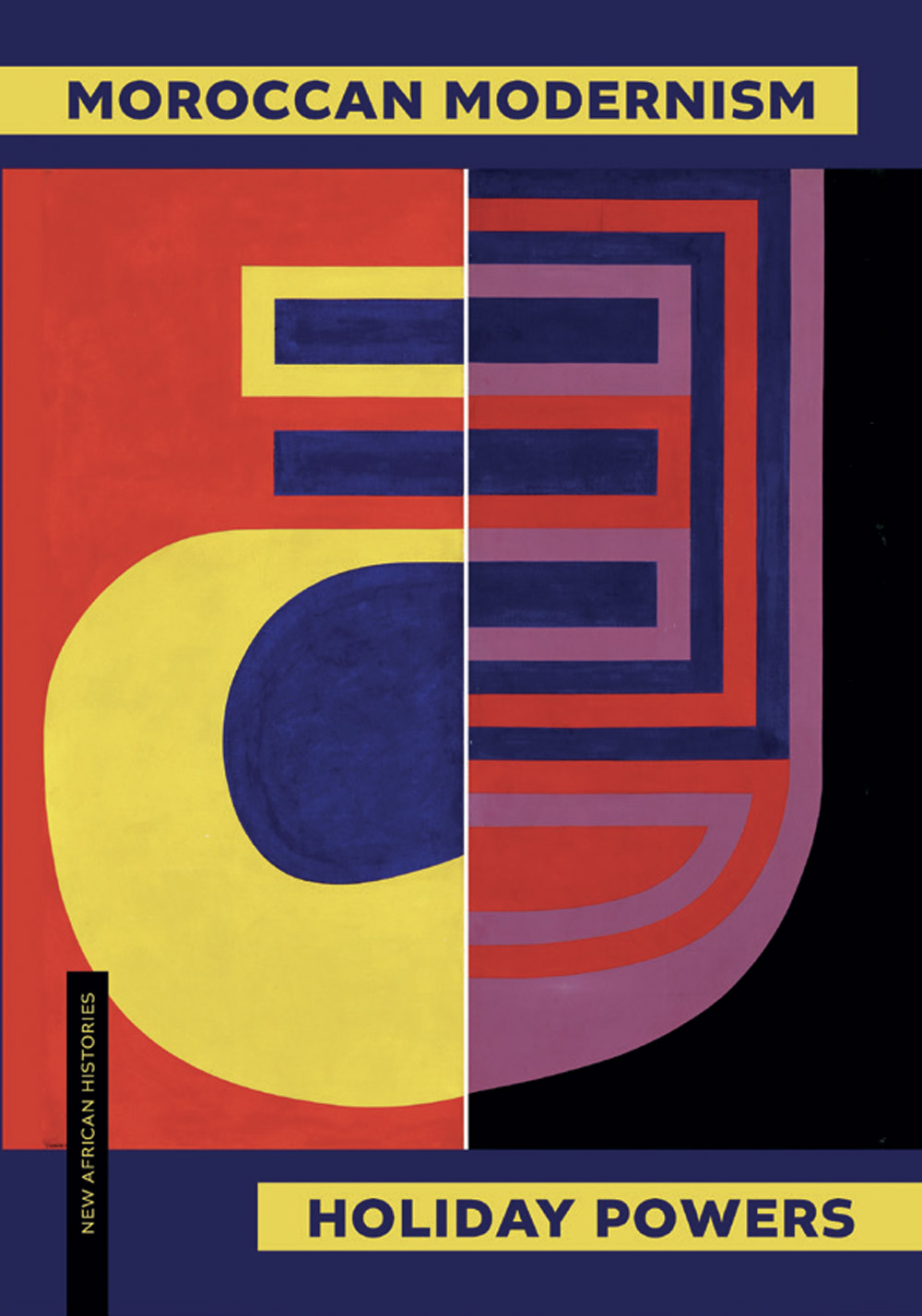
Couverture
Vous développez une réflexion passionnante sur la modernité, souvent perçue en Occident comme rupture ou transformation radicale. Peut-on penser, à l’inverse, la modernité marocaine comme une réappropriation du patrimoine ?
Si l’on considère le modernisme comme une réponse artistique aux structures sociales de la modernité, alors oui, absolument : le modernisme marocain se construit à travers différentes formes de réappropriation du patrimoine. On le voit dans l’usage du cuir chez Belkahia ou dans l’intérêt des artistes pour les formes d’abstraction présentes dans les tapis, les bijoux ou l’architecture. Bien que cela contredise certaines histoires dominantes du modernisme européen, cet intérêt pour le patrimoine national se retrouve dans de nombreux mouvements modernistes à travers le monde : celui du groupe de Bagdad, avec sa notion d’istilham al-turath (s’inspirer de la tradition), mais aussi dans les écoles de Khartoum, de Tunis, de Dakar ou du Bengale. Ces idées de réappropriation circulaient déjà à l’échelle transnationale, avant d’être explorées dans des contextes locaux précis.
En prenant l’exemple de Melehi, vous montrez que son abstraction géométrique s’inscrit aussi dans « l’histoire longue de l’art islamique ». Mais les modernistes marocains n’ont-ils pas aussi été influencés par les artistes orientalistes, qui introduisirent déjà une certaine modernité avec la peinture de chevalet ?
C’est effectivement une manière de raconter cette histoire, et d’autres chercheurs l’ont fait, notamment Nada Shabout dans son ouvrage de référence Modern Arab Art, qui relie la peinture orientaliste à l’émergence de divers modernismes arabes, surtout en Afrique du Nord. Pour ma part, je m’inscris plutôt dans la lignée de chercheurs comme Salah Hassan, Chika Okeke-Agulu ou le commissaire Okwui Enwezor, qui ont montré que le modernisme est fondamentalement lié aux luttes culturelles et politiques de la décolonisation. Dans cette perspective, l’histoire du modernisme ne se résume pas à un changement de technique, comme l’adoption de la peinture de chevalet, mais à une émergence intellectuelle : celle d’artistes revendiquant la puissance et le rôle de la culture nationale pour dépasser les séquelles culturelles du colonialisme.
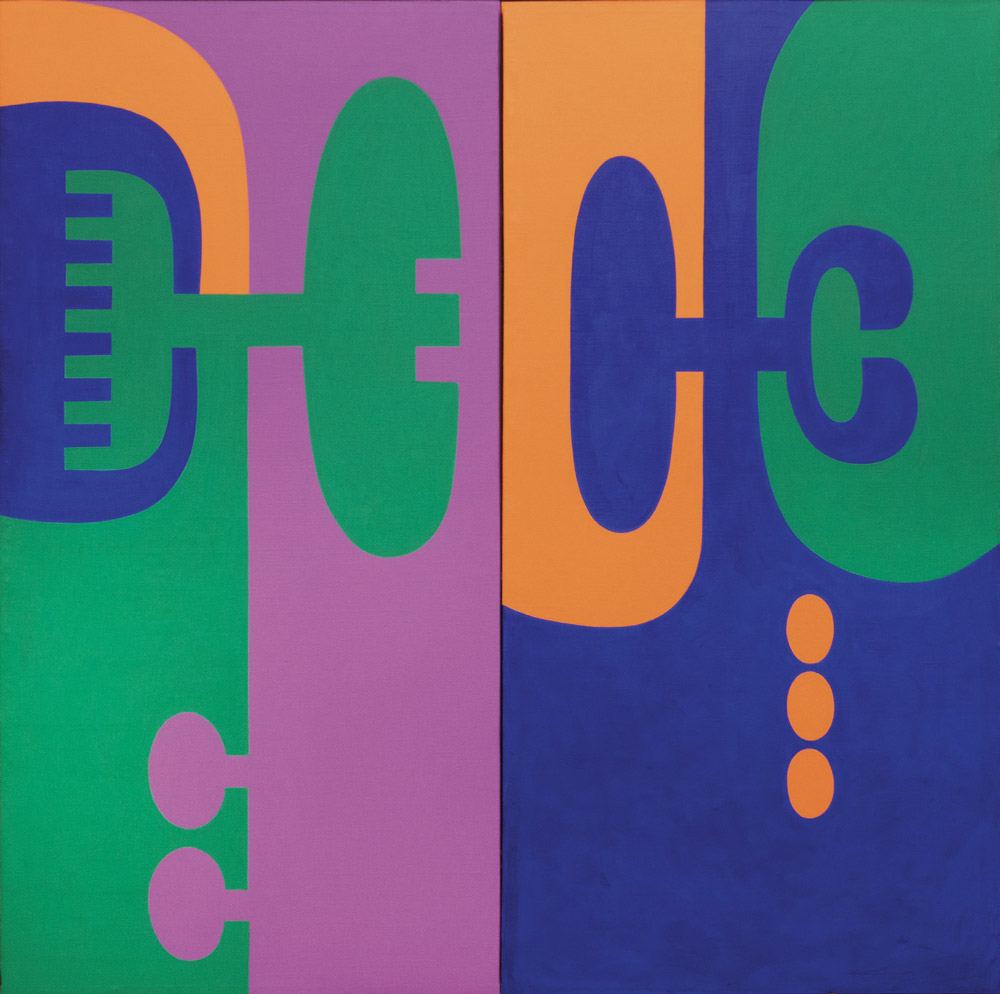
Mohammed Chebâa, Sans titre, 1967. Courtesy Mathaf – Arab Museum of Modern Art, Doha, Qatar / Mohammed Chebâa Estate
Vous soulignez aussi les liens féconds entre l’École de Casablanca et les initiatives panafricaines ou panarabes comme la Biennale de Bagdad, le Festival des arts nègres de Dakar ou le Festival panafricain d’Alger. Peut-on dire que la modernité s’est alors construite hors des centres de pouvoir occidentaux, selon un mode rhizomatique, pour reprendre Deleuze et Guattari ?
Je ne dirais pas que la modernité s’est construite uniquement en dehors des centres européens, car modernité et colonialité sont intimement liées. L’ordre mondial né de ce système a conduit à une mondialisation de l’empire, mais aussi à la formation de nouvelles relations transnationales hors d’Europe – ou entre colonisés au sein même de l’Europe. Avec les indépendances, cette vision du monde a nourri le projet politique transnational du non-alignement. Sans reprendre entièrement Deleuze et Guattari, je trouve l’image du rhizome pertinente pour saisir la manière dont les mouvements modernistes s’entrecroisent : si l’on peut tracer des relations concrètes, les connexions discursives vont bien au-delà. Pour les artistes marocains, la relation aux autres modernismes hors d’Europe est centrale. Mais la question n’est pas tant de savoir où la modernité s’est construite que comment elle a fonctionné comme projet politique, et comment les artistes ont négocié ces concepts transnationaux dans leurs propres contextes.
Selon vous, que retiennent des artistes contemporaines comme Yto Barrada ou Amina Agueznay de l’héritage moderniste de l’École de Casablanca ?
Amina Agueznay hérite sans doute plus directement de l’École de Casablanca, par son travail collaboratif avec des artisans et son goût pour une abstraction issue de l’histoire matérielle du design, tout en étant pleinement ancrée dans le contemporain. Le fait qu’elle représente le Maroc à la Biennale de Venise, dans le premier pavillon national consacré aux arts visuels, est d’ailleurs un signe fort ; non seulement pour elle, mais pour l’importance de cette histoire artistique locale. Bien sûr, le contexte de l’art contemporain diffère profondément de celui de l’époque : les enjeux et les formes d’engagement ont changé. L’École de Casablanca fut révolutionnaire en concevant l’art comme un levier pour inventer une nouvelle manière d’être au monde, accessible à tous. Leur projet n’a jamais été achevé, mais je vois dans les œuvres de nombreux artistes contemporains marocains – Yto Barrada, Bouchra Khalili, Hassan Darsi, Mustapha Akrim, entre autres – la continuité de cet imaginaire et de cet engagement culturel. Même lorsque certains s’en démarquent ou en critiquent les limites, ils héritent d’une conception des potentialités de la culture, qu’ils réinventent pour notre époque.
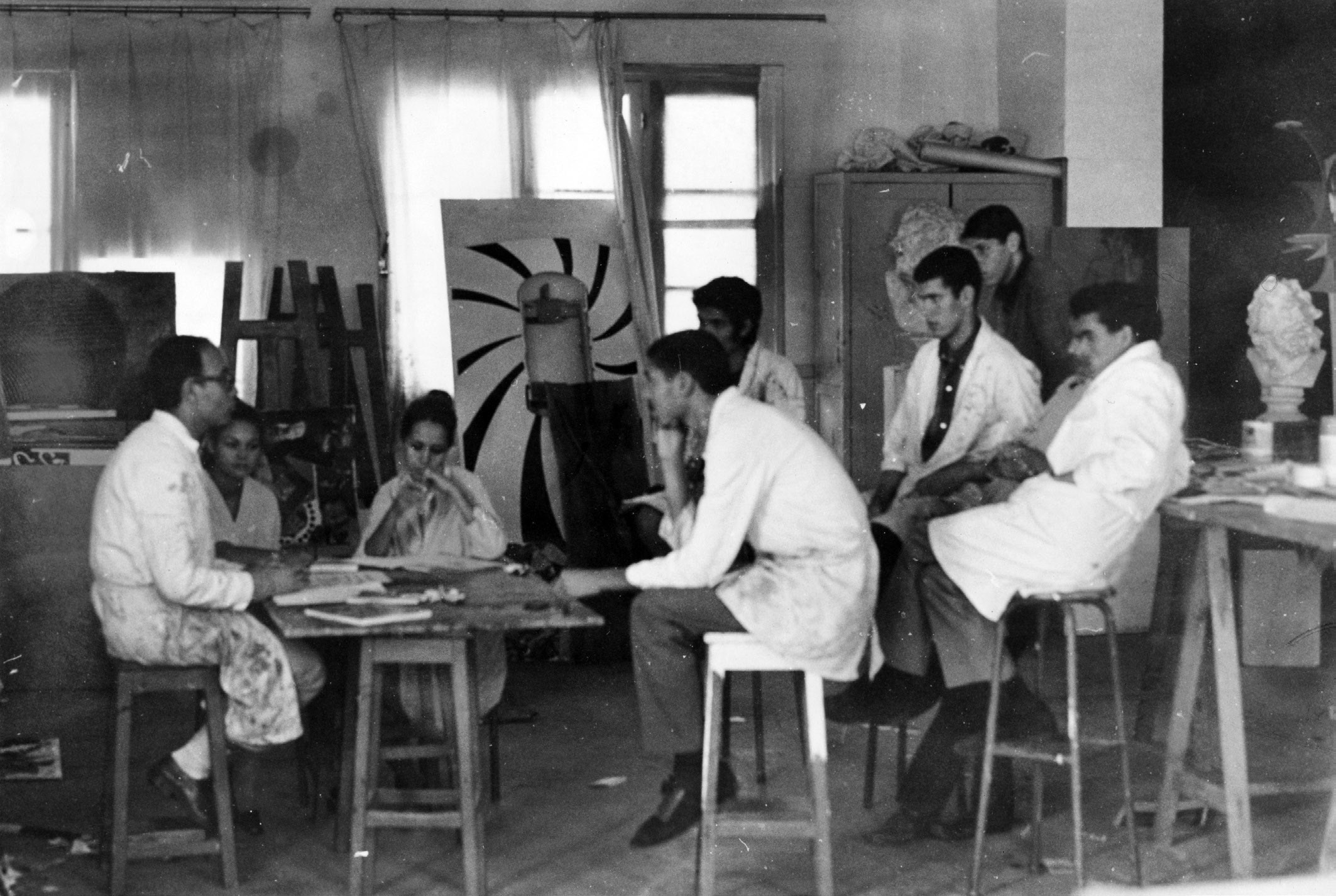
Étudiants de l’École des beaux-arts de Casablanca, dont Malika Agueznay et Mohamed Melehi. Courtesy de Malika Agueznay.
A specialist in modern and contemporary art of the Arab world, Holiday Powers offers a fresh reading of Moroccan modernism. Rather than framing it within a narrowly national narrative, she situates it within the cosmopolitan networks that shaped the movement itself.
Holiday Powers is Assistant Professor of Global Modern and Contemporary Art at Virginia Commonwealth University in Qatar. A specialist in the artistic scenes of the Arab world, her research explores how local and transnational discourses intersect in modern and contemporary art, drawing on postcolonial and feminist theory. In Moroccan Modernism (Ohio University Press), she demonstrates how pedagogy and transnational solidarities formed an integral part of the aesthetic and political ambitions of this generation of artists. She proposes a new reading of Moroccan modernism through the cosmopolitan lens of the period, shaped in particular by transnational anticolonial intellectual movements such as Pan-Africanism and Pan-Arabism.
Diptyk : You present the movement around the School of Casablanca as « held together by ideas more than aesthetics », saying it was « linked to debate on national culture and postcoloniality ». Why do you think aesthetics were secondary ?
Holiday Powers : The Casablanca School was both a school as an educational system and a School as a working group. There is a conception of this second notion of artistic schools that they are driven by shared aesthetic debates, and that they are expected to be defined by their visual similarities. My interest in the Casablanca School was in thinking of their driving force, which I believe to be a political claim about national culture. Another way of thinking about this might be that they were defined not by the outcome of the specific aesthetic forms of their abstractions, but by the impetus from which those aesthetic forms sprang. That’s not to say that aesthetics are secondary to their individual practices, but instead to argue that what held them together as a group was the shared belief about what role art could play.
« For this generation of artists in Morocco, modernism was located at the intersection between local/national and the international ». Taking the example of Belkahia or Melehi, you show that they forged a national consciousness abroad. Were they not seeking also, after Cherkaoui, to imagine a singular modernism, specific to Morocco or to the Arab world ?
H.P : I don’t believe there is a singular modernism specific to one place. To the contrary, I think that modernism is always networked: the transnational movement of art, artists, and ideas is constitutive of modernism, not secondary to it. Simultaneously, I am deeply influenced by Fanon’s conception of national culture, in which the nation served as the foundation from which to extend towards globalism. So I agree that the artists were trying to make a claim about a modernism rooted specifically inside of Morocco, but it was always in transnational dialogue. Historically, though, the conception of a singular shared Arab culture emerged more forcefully in the 1970s, as the School was disbanding.
You have a fascinating reflection on the notion of modernity, which in the West we think in terms of rupture and radical transformation. Can we think, on the contrary, moroccan modernity in terms of the reappropriation of a heritage ?
H.P : Focusing here on modernism as the artistic response to the social structures of modernity more than modernity as such, then yes, absolutely, Moroccan modernism emerges through various forms of reappropriating heritage. We can see this with Belkahia’s use of leather or with the artists’ interest in forms of abstraction found in rugs, jewelry, and architecture. While that is at odds with many hegemonic histories of European modernism, that interest in national heritage is consistent with many global modernist movements. It’s fundamental to the Baghdad Group for Modern Art for instance, with their conception of istilham al-turath, taking inspiration from tradition, for example, but can also be seen in the Khartoum School, the Ecole de Tunis, the School of Dakar, and the Bengal School, among others. These ideas about reappropriating national heritage were circulating transnationally, and were then explored within precise local contexts.
Taking the example of Melehi, you show how his geometric abstraction is also linked « to the longer history of Islamic art ». Don’t you think moroccan modern artists were also influenced by the artists who preceded them such as the Orientalists, as they also brought a kind of modernity with easel painting ?
H.P : I think that is one way of telling this history, and other academics have already done this: Nada Shabout, for example, in her landmark Modern Arab Art connects Orientalist easel painting to the emergence of different Arab modernist movements, especially in North Africa. The way I tell this history, however, is more influenced by scholars such as Salah Hassan, Chika Okeke-Agulu, and the late curator Okwui Enwezor, who have all argued in different contexts that modernism is fundamentally tied to the political and culture struggles of decolonization. In this conception, the history of modernism is not primarily a question of how artists’ techniques changes, such as how they began using the structure of easel painting. Instead, the history of modernism focuses on how artists emerged intellectually in order to make a claim about the power and role of national culture to overcome the ongoing cultural ramifications of colonization.
You also show the fruitful links between the School of Casablanca modernist movement and pan-arab or pan-african initiatives such as Baghdad Biennale, Festival des arts nègres de Dakar or Algier pan-african Festival. Was modernity then constructed outside of western power centers, in a rhizomatically mode, to quote Deleuze and Guattari ?
H.P : Modernity was not only constructed outside of European power centers, because I think that modernity and coloniality are fundamentally linked. The world order that this system created also led to the globalization of empire, with new potential transnational relationships outside of Europe (or between the colonized inside of Europe). With independence, this conception of the world also led to the shared transnational political project of Non-Alignment. Without taking on all of Deleuze and Guattari, I do find the image of the rhizome helpful in capturing how modernist movements were interconnected, because while we can trace individual relationships and moments, the discursive connections also exceed those precise lines. For Moroccan artists, the relationship to other modernist movements outside of Europe is unquestionably centrally important. But I don’t think the question is whether modernity was constructed in or outside of Europe so much as how modernity functioned as a political project, and then how modernist movements negotiated transnational concepts within their own contexts.
According to you, what do contemporary artists such as Yto Barrada or Amina Agueznay inherit from the School of Casablanca’s modernism ?
H.P : Amina Agueznay inherits perhaps more directly from the Casablanca School, given her interest in collaboration with local artisinal practitioners and her emphasis on abstraction that emerges from material histories of design, even as her work is also deeply rooted in the contemporary. She will be representing Morocco in the first official visual arts pavilion in Venice, and that is a strong statement not just about her as an individual artist, but also about the importance of this local art history. The context of contemporary art is not the same as the context of the Casablanca School: the struggles are different, as are the ways of engaging with the surrounding world and its ongoing systems of inequality. The Casablanca School was revolutionary in seeing how art was a platform for a new way of being in the world that could be extended to the larger public. For many reasons, though, their project was never completed. I see a lineage back to this cultural commitment and imagination within the work of many contemporary artists, including Yto Barradda, Bouchra Khalili, Hassan Darsi, Mustapha Akrim, among many others. Yet even when contemporary artists in Morocco reject this history or focus on its failures, they have inherited a conception of the possibilities of culture, which they need to then reimagine for this new context.