La Biennale de Venise 2026 ouvrira en mai prochain. Israël figure parmi les participations nationales annoncées. En raison de travaux de rénovation de son pavillon historique aux Giardini, son pavillon national devrait être déplacé à l’Arsenale. Sur le plan administratif, c’est un ajustement logistique. Sur le plan politique, cette participation intervient dans un climat de contestation croissante de la présence israélienne dans les grandes manifestations culturelles internationales.
Depuis 2024, des collectifs d’artistes et d’acteurs culturels, comme Art Not Genocide Alliance (ANGA), demandent haut et fort l’exclusion d’Israël de la Biennale. Ils annoncent des stratégies de boycott si cette demande n’est pas satisfaite. La direction de la Biennale maintient une position inchangée. Les pavillons nationaux relèvent des États participants. Tout pays reconnu par la République italienne peut demander à participer. L’institution ne se reconnaît pas de droit ou de mandat d’exclure un État pour des motifs politiques.
La Biennale a pourtant déjà fait une entorse à ce principe de neutralité. En 2022, à la suite de l’invasion de l’Ukraine, elle avait suspendu la participation officielle de la Russie. Ce précédent reste à ce jour le seul cas d’exclusion d’un Etat décidé par l’institution de la Biennale. Il sert désormais de référence implicite aux collectifs qui demandent un traitement similaire pour Israël. La Biennale, de son côté, considère le cas russe comme exceptionnel et non transposable mécaniquement.
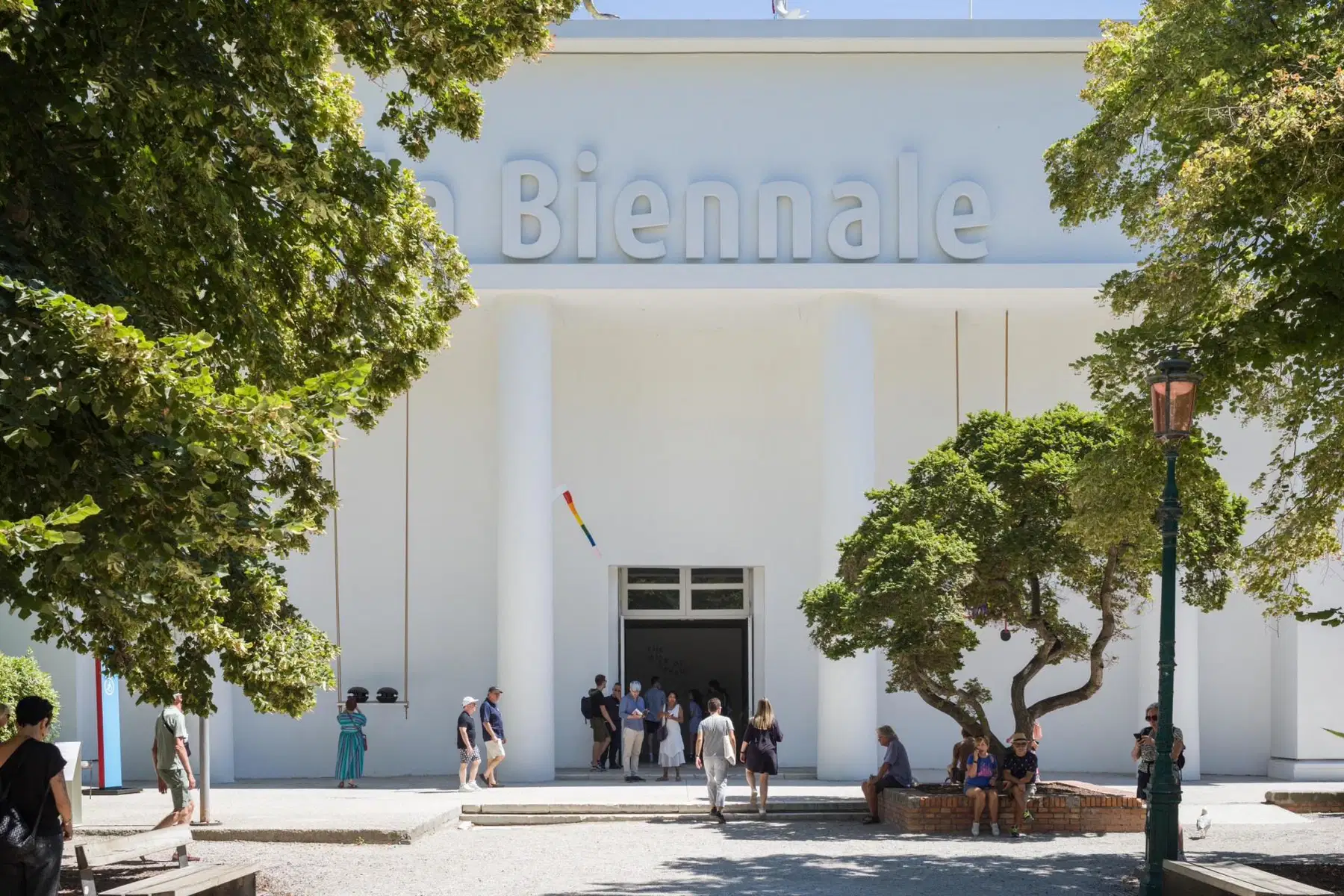
Un rôle politique de la Biennale ?
L’exception russe structure pourtant durablement le débat. La Biennale, et la portée politique qu’on lui prête en tant qu’événement international, avaient déjà été mises sous tension lors de l’édition 2024. Le pavillon israélien avait été installé mais n’avait pas ouvert, ses commissaires conditionnant l’ouverture à un cessez-le-feu. Ce précédent a transformé un pavillon national en dispositif politique autonome, sans intervention directe de la Biennale.
En 2026, la contestation se structure davantage et les appels au boycott se multiplient. Toutefois, à ce stade, aucun État participant n’a officiellement annoncé de retrait en réaction à la participation d’Israël. La mobilisation reste principalement portée par des collectifs et des individus.
À une nuance près : l’Afrique du Sud. Début janvier, le ministère sud-africain des Sports, des Arts et de la Culture revenait sur la nomination de l’artiste Gabrielle Goliath, initialement choisie pour représenter le pays à la Biennale. En cause, une œuvre explicitement liée à Gaza. Depuis, l’artistea annoncé vouloir engager un recours juridique contre ce qu’elle considère comme « un abus de pouvoir exécutif ». Cette polémique montre que certains États ajustent directement leur programmation face aux sensibilités politiques liées au conflit israélo-palestinien. Il ne s’agit pas d’un boycott d’Israël, mais d’un signal de la pression croissante qui s’exerce sur les dispositifs nationaux.
Dans ce contexte, la relocalisation du pavillon israélien à l’Arsenale modifie également les conditions de visibilité et de contestation. L’Arsenale est un espace plus intégré à l’exposition internationale, moins lisible comme enclave diplomatique nationale que les Giardini. Ce déplacement pourrait influencer la forme des mobilisations annoncées.
À quelques mois de l’ouverture, le scénario dominant reste celui d’une participation israélienne maintenue, accompagnée d’une intensification des campagnes de contestation. La Biennale conserve son cadre institutionnel. Les collectifs maintiennent la pression. Les États observent.
La Biennale 2026 s’ouvrira ainsi dans un environnement où la question n’est plus seulement celle des œuvres exposées, mais celle du rôle politique assigné (ou négocié) aux grandes institutions culturelles internationales.
Meryem Sebti