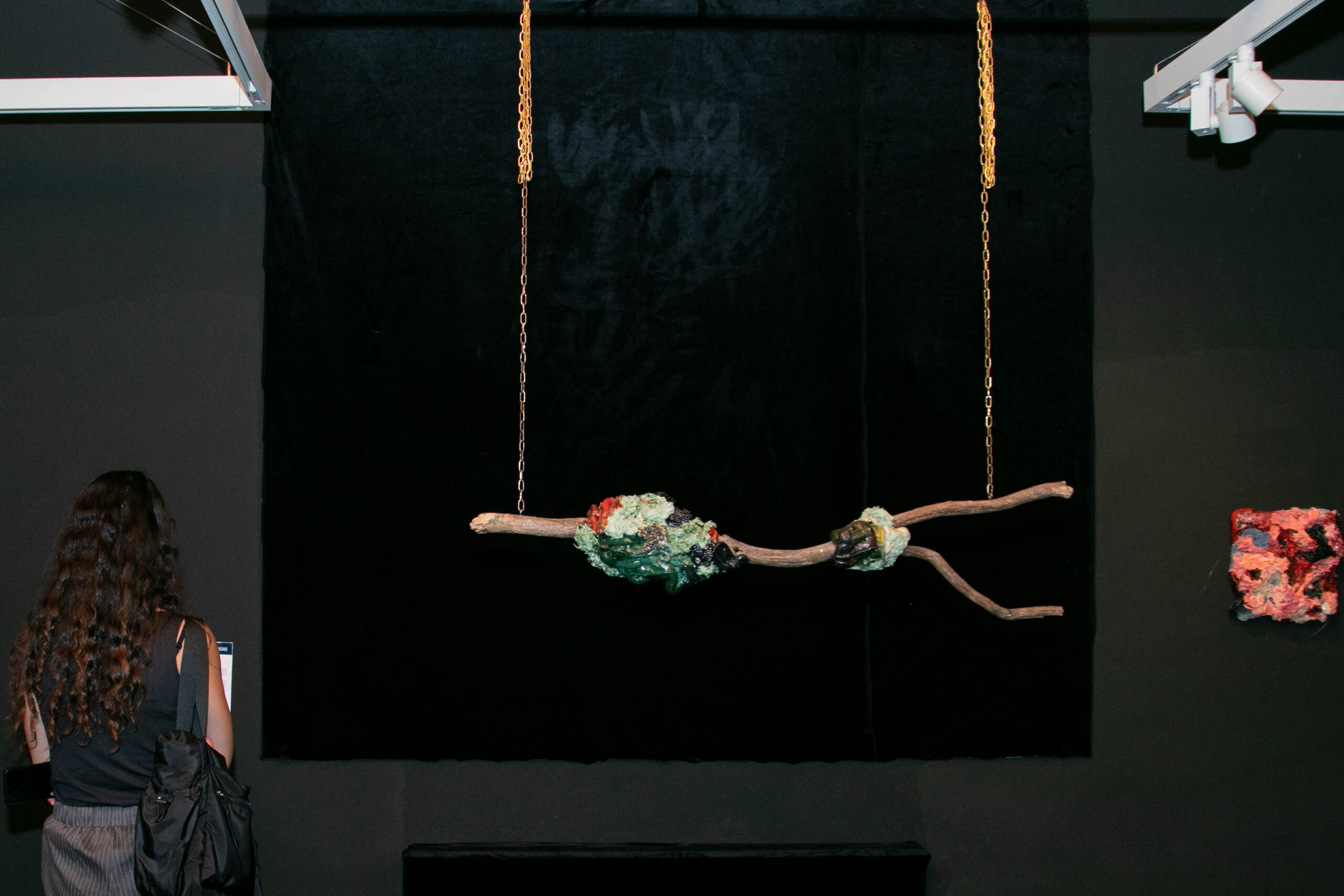

With « État(s) de passage », (“States of Transit”), presented at the Villa des Arts in Rabat, Achraf Remok continues a line of thought he began a few months earlier in Marrakesh as part of an exhibition organized at IZZA during the 1-54 art fair. Here, the project takes on a new scope by bringing together thirteen artists born between 1985 and 2000 to address a question that has become central to contemporary art: how can we conceptualize a generation whose trajectories are shaped by movement, displacement, and multiple affiliations?
By Meryem Sebti
View of the exhibition « État(s) de passage » (“States of Transit”) at the Villa des Arts in Rabat.
Regular contributor to Diptyk, art critic, and independent curator, Remok has for several years been interested in the emergence of new Moroccan artistic practices that defy traditional categories. His exhibition does not aim to define a single generational identity or to establish a new manifesto. Rather, it seeks to explore evolving artistic trajectories, shaped by experiences across multiple cities, languages, and cultural contexts.
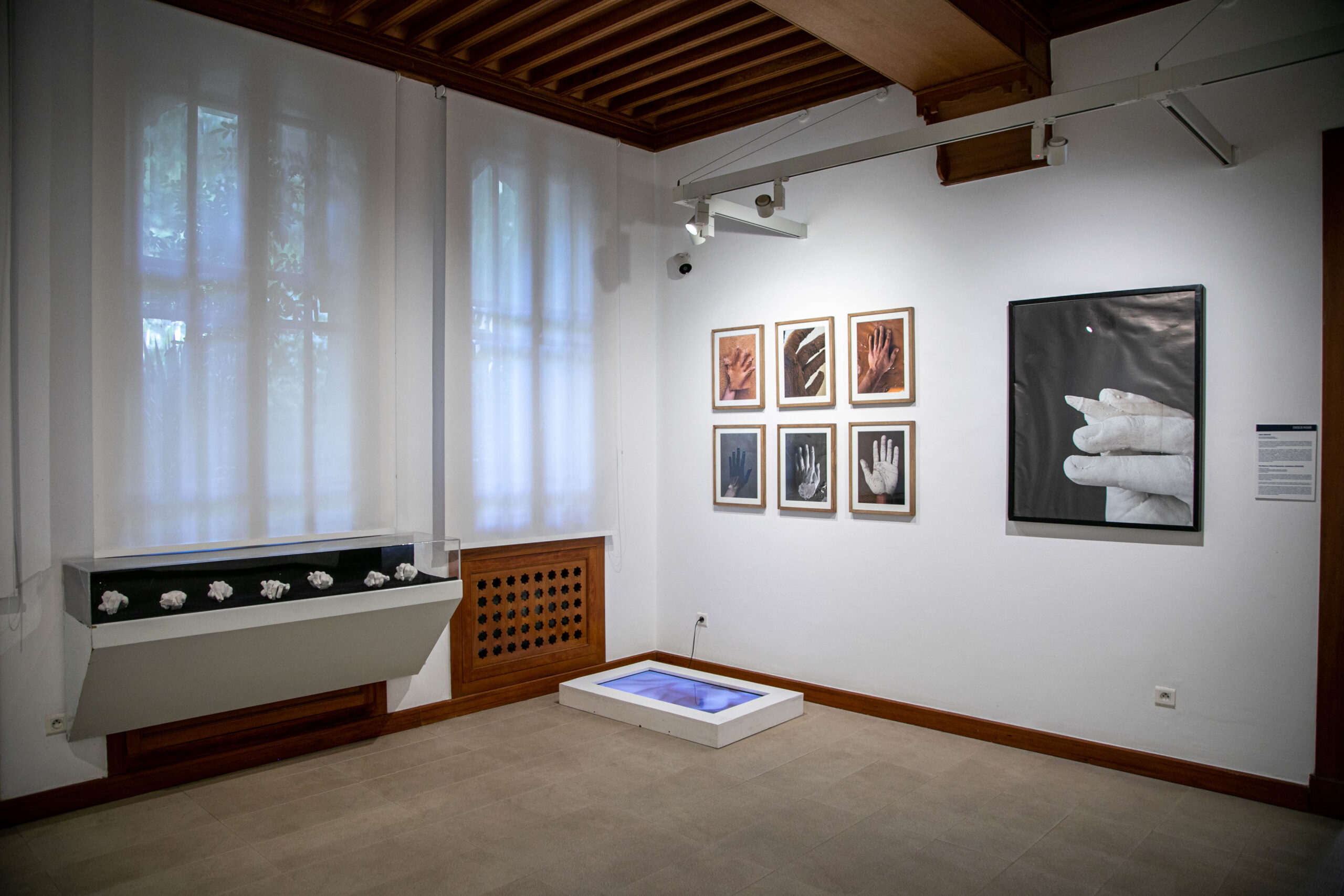
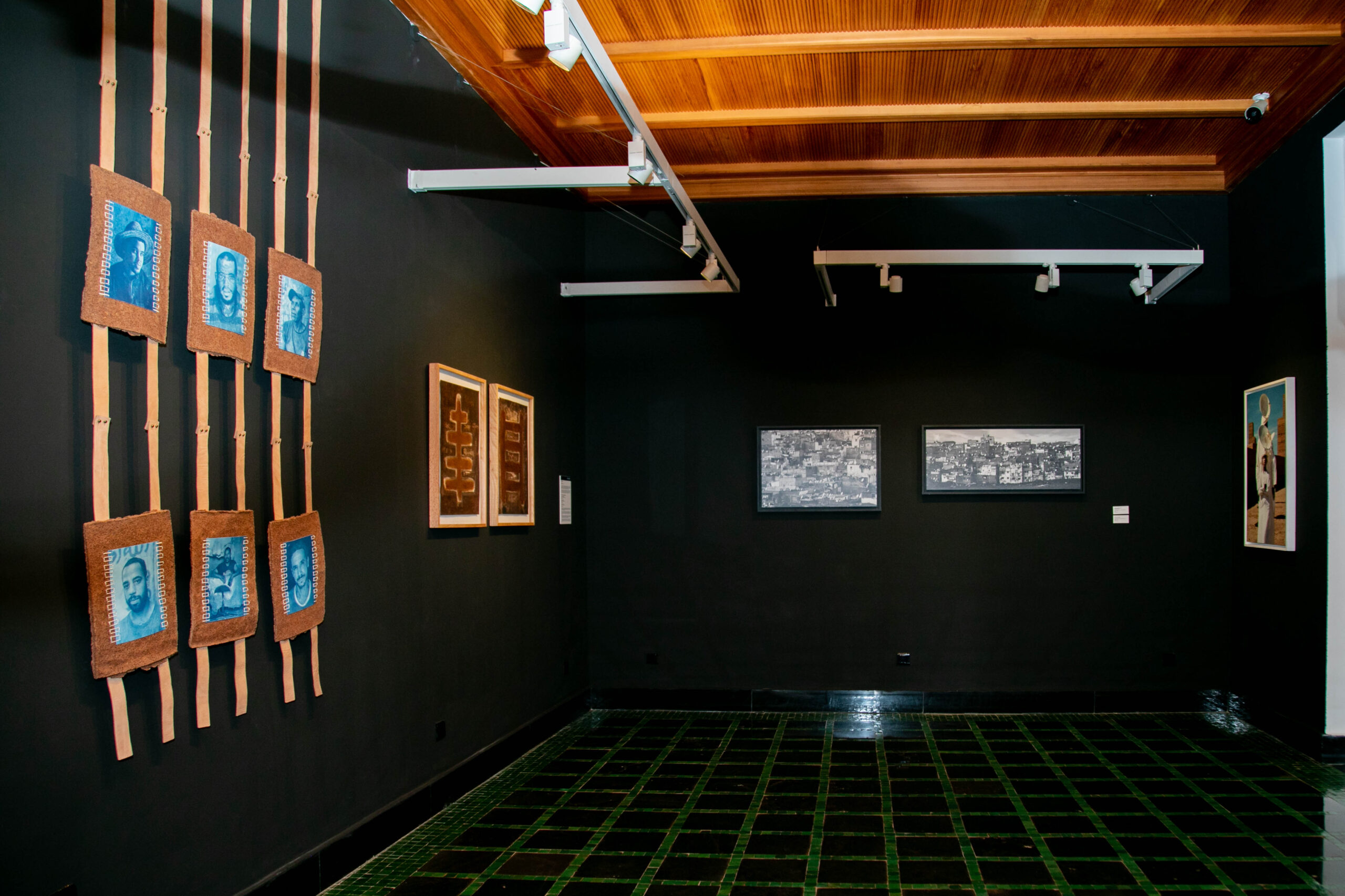
The project brings together artists with a wide range of practices—photography, painting, video, embroidery, installation, and digital art—whose career paths span a diverse geographical landscape encompassing Rabat, Casablanca, Tetouan, Paris, Brussels, Zurich, and Marseille. This diversity is both the exhibition’s strength and its limitation. For while the notion of “transition” allows these practices to be brought together under a single umbrella, it sometimes tends to become a framework broad enough to encompass nearly all forms of contemporary creation.
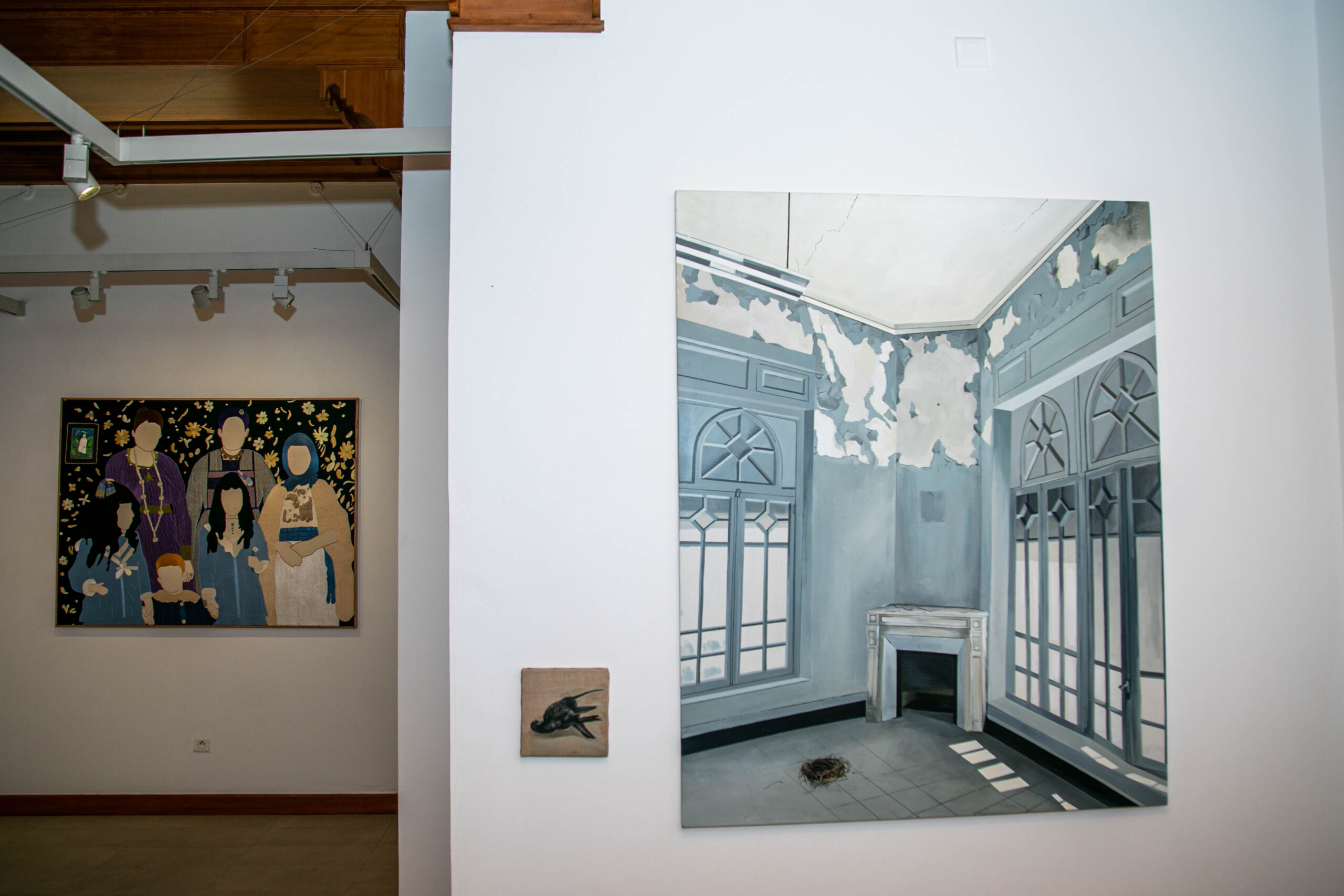
View of the exhibition « État(s) de passage » (“States of Transit”) at the Villa des Arts in Rabat.
The most compelling works are precisely those that defy this generalization. Amina Azreg comes to mind in particular; her work on memory and intimate narratives rooted in Moroccan urban landscapes goes far beyond the mere question of mobility. In Yasmine Hadni’s work, depictions of the family and domestic sphere create a more ambiguous world, permeated by psychological tensions that shift the viewer’s gaze toward territories that are less immediately legible. Hiba Baddou, whose career has notably garnered attention through the Mustaqbal Prize, belongs to a generation that is building its visibility through a network of artist residencies, group exhibitions, and emerging platforms rather than through traditional institutional channels.
Through these artists, a new way of inhabiting the world emerges—one that goes far beyond mere aesthetics. Their affiliations are diverse, sometimes contradictory, and rarely fixed. Artists move about, train elsewhere, return, leave again, or choose to work from peripheral territories that lie outside the usual centers of the art world. “ State(s) of Transit” accurately captures this profound transformation of the Moroccan cultural landscape: the end of an interpretation based on the opposition between “here” and “elsewhere.”
View of the exhibition « État(s) de passage » (“States of Transit”) at the Villa des Arts in Rabat.
This interpretation, in fact, echoes another recent curatorial proposal. At Photo Tanger, the exhibition Exister entre les certitudes du monde (Existing Between the World’s Certainties), conceived by Basma Mansour and centered on Moroccan photographers living across multiple geographies, had already explored this way of inhabiting several cultural spaces simultaneously, without allowing oneself to be confined by notions of origin or return. Within a few weeks of one another, two curators from the same generation thus seem to be drawing a similar conclusion: emerging Moroccan artists are defined less by a stable national identity than by their ability to create from spaces of circulation, friction, and translation. This convergence is undoubtedly no coincidence. It may signal the emergence of a new curatorial perspective on the Moroccan art scene itself.
One question remains, however. Is mobility still a truly critical issue today, or has it now become the norm for much of contemporary artistic creation? If several recent exhibitions converge on this same generational interpretation, it is perhaps precisely because it describes a reality that is now widely shared. By constantly invoking notions of circulation, hybridity, or deterritorialization, however, there is a risk of producing a narrative that has become almost consensual…
Building on a project first outlined in Marrakech before its rollout in Rabat, Achraf Remok continues his careful observation of a generation coming into its own. More than just a snapshot, “État(s) de passage” maps out a provisional landscape of practices still in flux. While the concepts of mobility and multiple affiliations now constitute a widely shared reality, it remains to be seen what truly novel artistic forms this condition will produce. It is undoubtedly here, beyond the generational observation, that the true significance of the exhibition lies.
This translation was generated using AI. For the original text, please see the French version of this article.
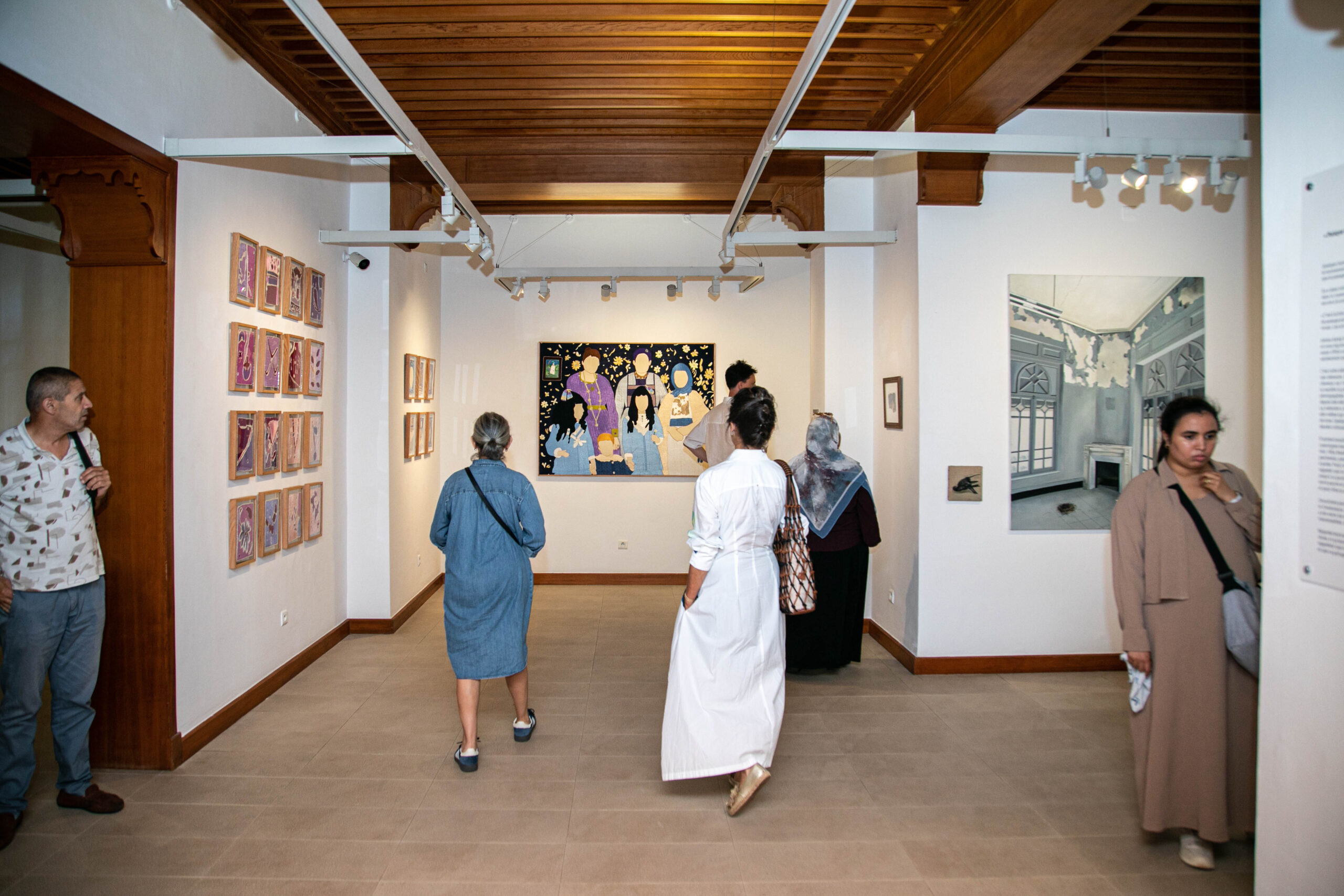
View of the exhibition « État(s) de passage » (“States of Transit”) at the Villa des Arts in Rabat.
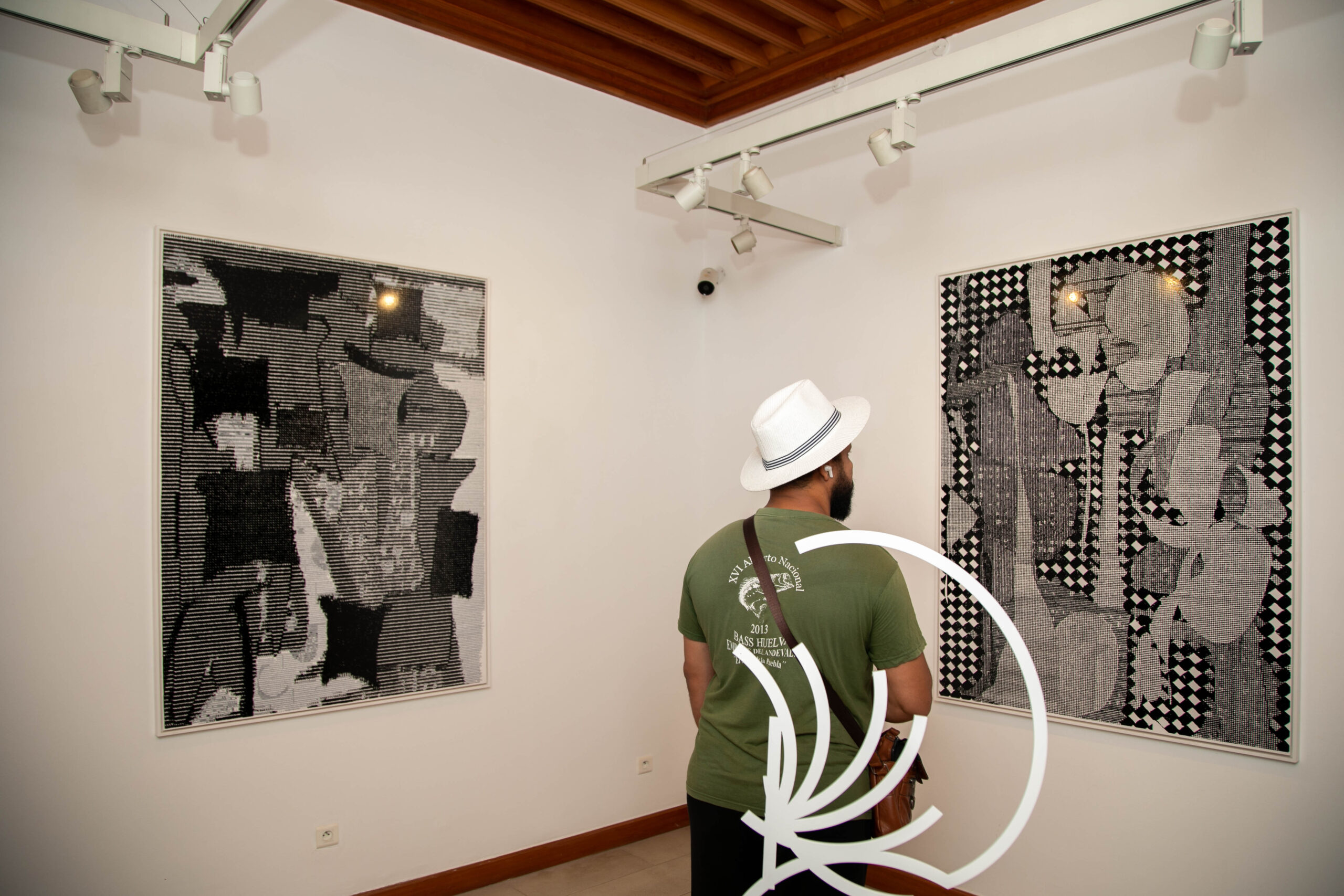
View of the exhibition « État(s) de passage » (“States of Transit”) at the Villa des Arts in Rabat.