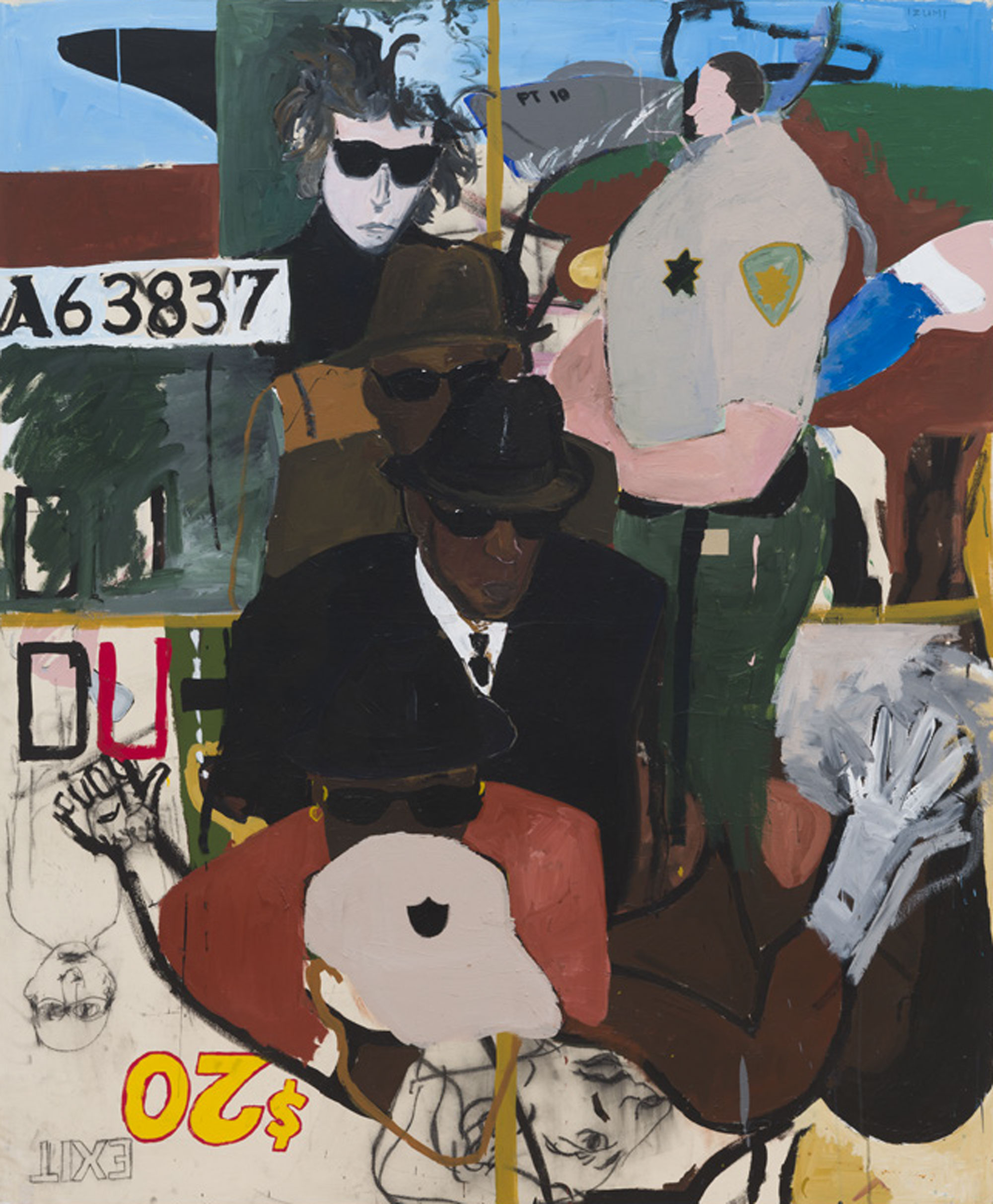

Through the first French retrospective of this American artist, the Picasso Museum does more than simply host a major figure in the contemporary art scene. It examines its own history and, through it, the history of Western modernity. By creating a dialogue between Henry Taylor and Picasso, the institution reverses the perspective: it is no longer just Picasso looking at African art, but an African-American artist who, in turn, reinterprets Picasso’s legacy.
By Najat Saïdi
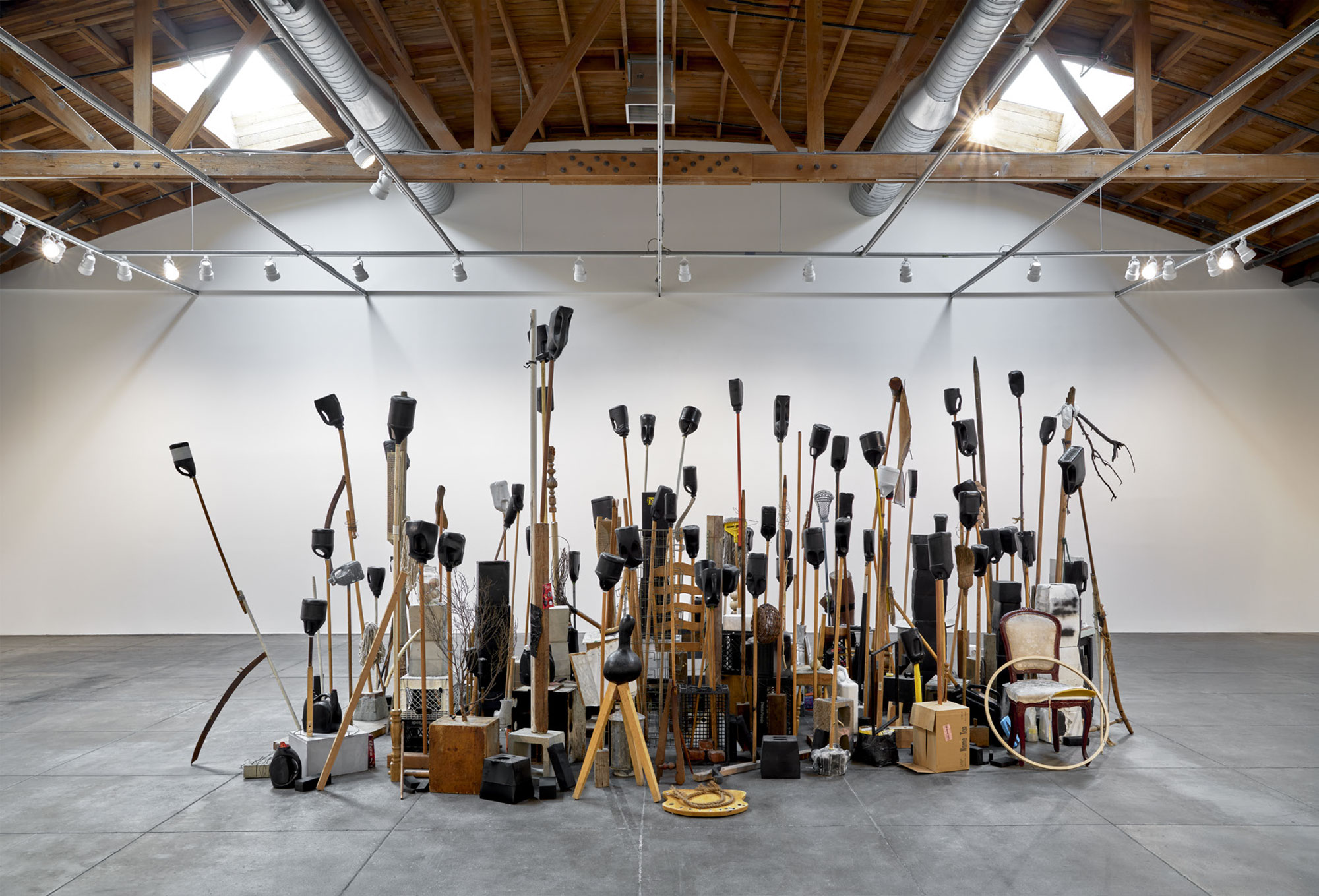
Henry Taylor, It’s like a jungle, 2011. Mixed media. Photo: Keith Lubow.
Spanning two floors, the exhibition brings together about a hundred paintings, sculptures, drawings, and installations. The sheer scale of the exhibition is impressive, but its true appeal lies elsewhere. Very quickly, the visit transcends the typical framework of a retrospective. Through Henry Taylor, it is the narrative of the Picasso Museum itself that seems to shift.
One work immediately provides the key. In *From Congo to the Capital, and Black Again* (2007), the reference to the Les Demoiselles d’Avignon is explicit. But Henry Taylor does not cite Picasso to pay homage to a master: he reverses the perspective. Whereas Picasso found in African sculptures and masks a vocabulary that would revolutionize Western painting, Taylor places Black bodies at the very heart of this history. The painting does not settle scores; it serves as a reminder that European modernity was built on exchanges whose narrative has long been told from a single perspective.
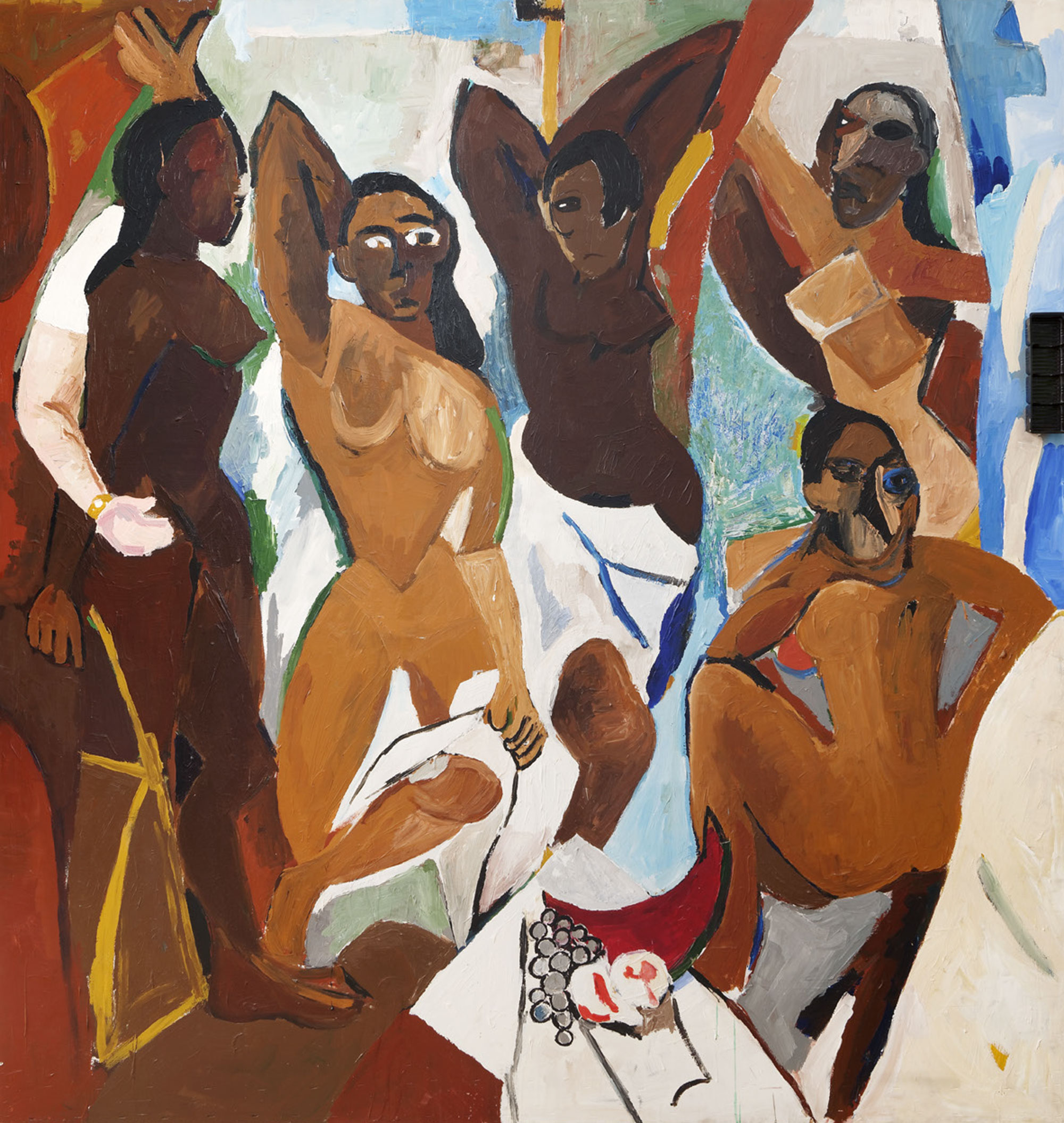
Henry Taylor, From Congo to the Capital, and Black Again, 2007. Acrylic and mixed media on wood. Private collection, Artsy Craft, LLC.
One creates forms; the other brings lives to life
For decades, the Picasso Museum has told the story of an artist capable of transforming painting, sculpture, printmaking, and ceramics. African art is presented there as one of the driving forces behind this formal revolution. Today, this narrative is being reexamined in light of debates on colonial legacies, cultural appropriation, and voices long excluded from the modernist narrative.
Henry Taylor arrives at this very moment. Born in California in 1958, he has spent nearly forty years developing a practice that moves freely between painting, drawing, sculpture, and installation. As with Picasso, the mediums are never strictly separated. But their points of departure differ. Taylor paints his loved ones, neighbors, strangers, and public figures. These individual stories intersect with those of an America marked by racial and social inequalities, police violence, and economic insecurity—without the paintings ever veering into illustration. Each painting first and foremost affirms a presence.
This focus on reality explains why David Hammons, Philip Guston, and Picasso appear less as models than as interlocutors. Taylor borrows, transforms, and reinterprets. He does not align himself with any particular lineage; rather, he rewrites images from the past through his experience of the present.
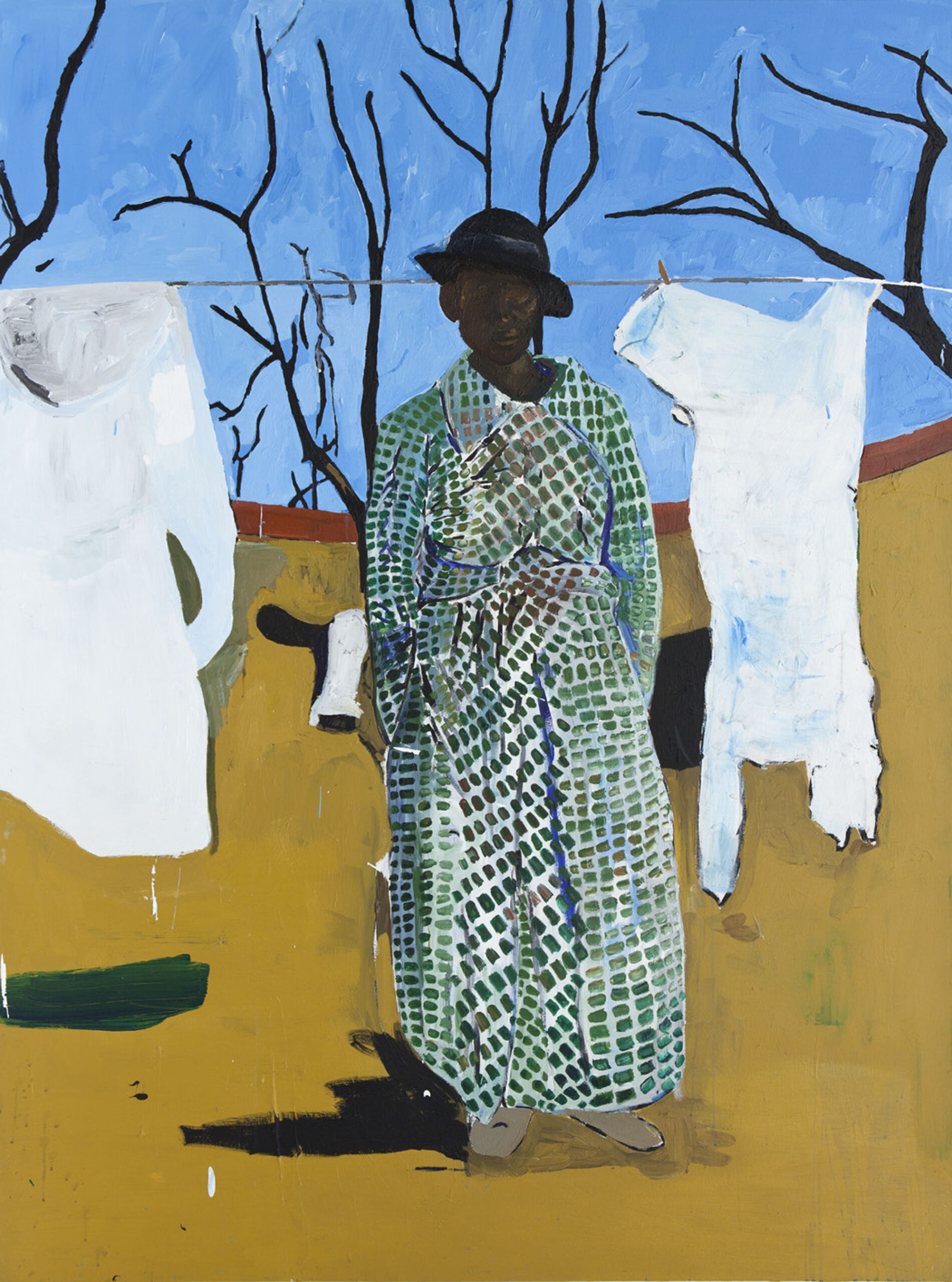
Henry Taylor, Mary Had a Little... (That Ain't No Lamb), 2013. Acrylic on canvas. Private collection, Lonti Ebers, New York. Photo: Sam Kahn.
The exhibition thoughtfully explores this trend. It does not seek to demonstrate an influence but rather juxtaposes two conceptions of the human figure. For Picasso, the body becomes a canvas for artistic experimentation, whereas for Taylor, it remains the setting for a story. One invents forms; the other brings lives to life. Between them, there is neither a lineage nor an opposition, but a dialogue.
In recent years, the Picasso Museum has been expanding this series of dialogues—from Faith Ringgold to Henry Taylor—in the lead-up to an exhibition dedicated to the Harlem Renaissance in 2027. It no longer limits itself to simply preserving a work of art; it examines the narratives it generates and those it has long overlooked.
The success of this exhibition lies precisely in this shift. For a long time, art history focused on how Picasso viewed African art. Today, an African American artist is looking at Picasso. This simple reversal of perspective opens the door to a different history of modernity.
“ Henry Taylor, Where Thoughts Provoke ”, Pablo Picasso Museum, Paris, through September 8, 2026
This translation was generated using AI. For the original text, please see the French version of this article.
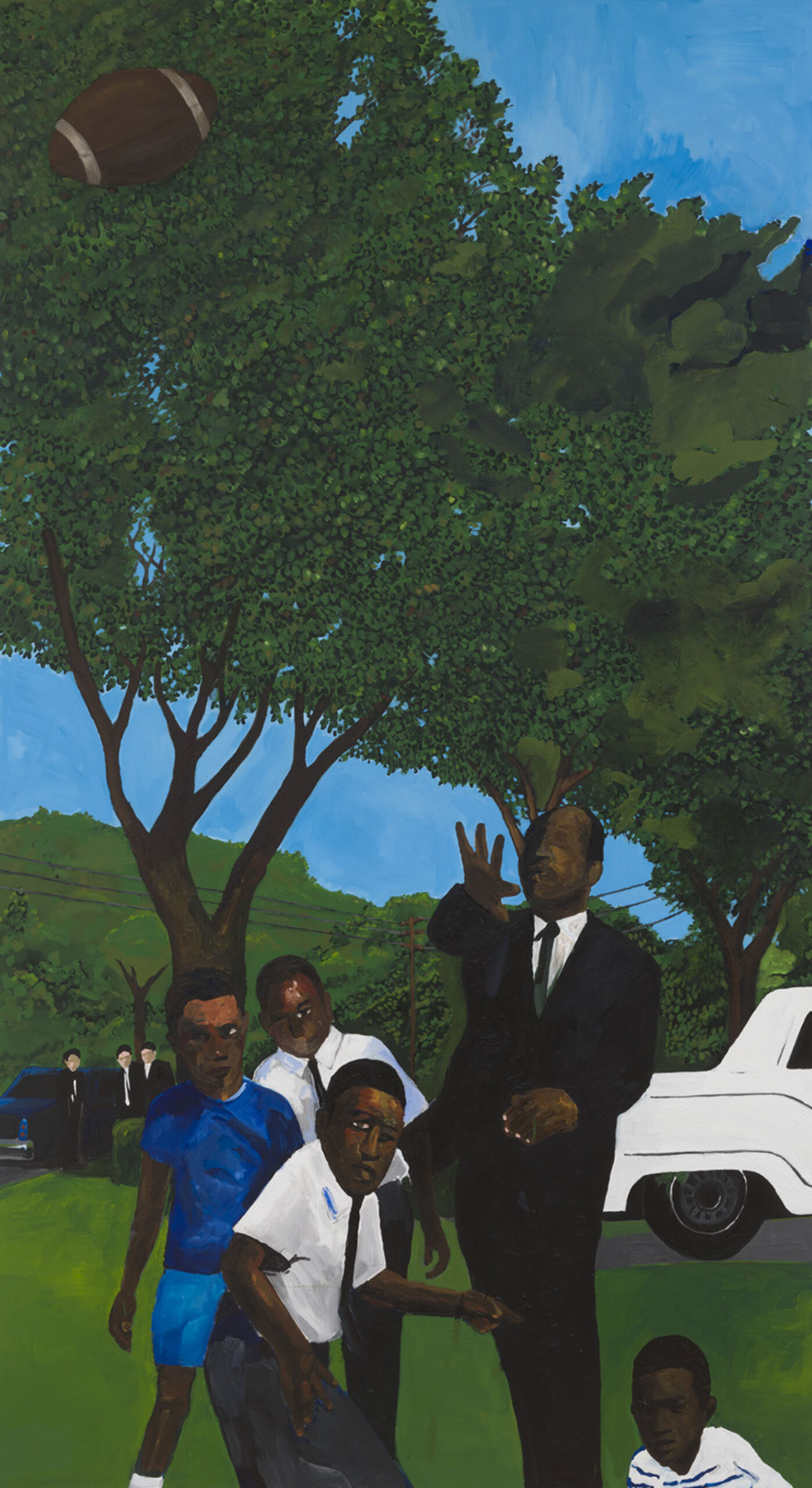
Henry Taylor, Untitled, 2016–2022. Acrylic on canvas. Private collection, Angella and David Nazarian. Photo: Jeff McLane.