Formerly housed in an apartment in downtown Rabat, Kulte has moved into a historic building in Rabat’s old medina. Yasmina Naji’s project goes far beyond the scope of a typical gallery: exhibition spaces, a bookstore and library, the Kulte Éditions office, a café, and workshops make up this art center, designed as a place for passing through, meeting others, and reflection.
By Rym Abouker
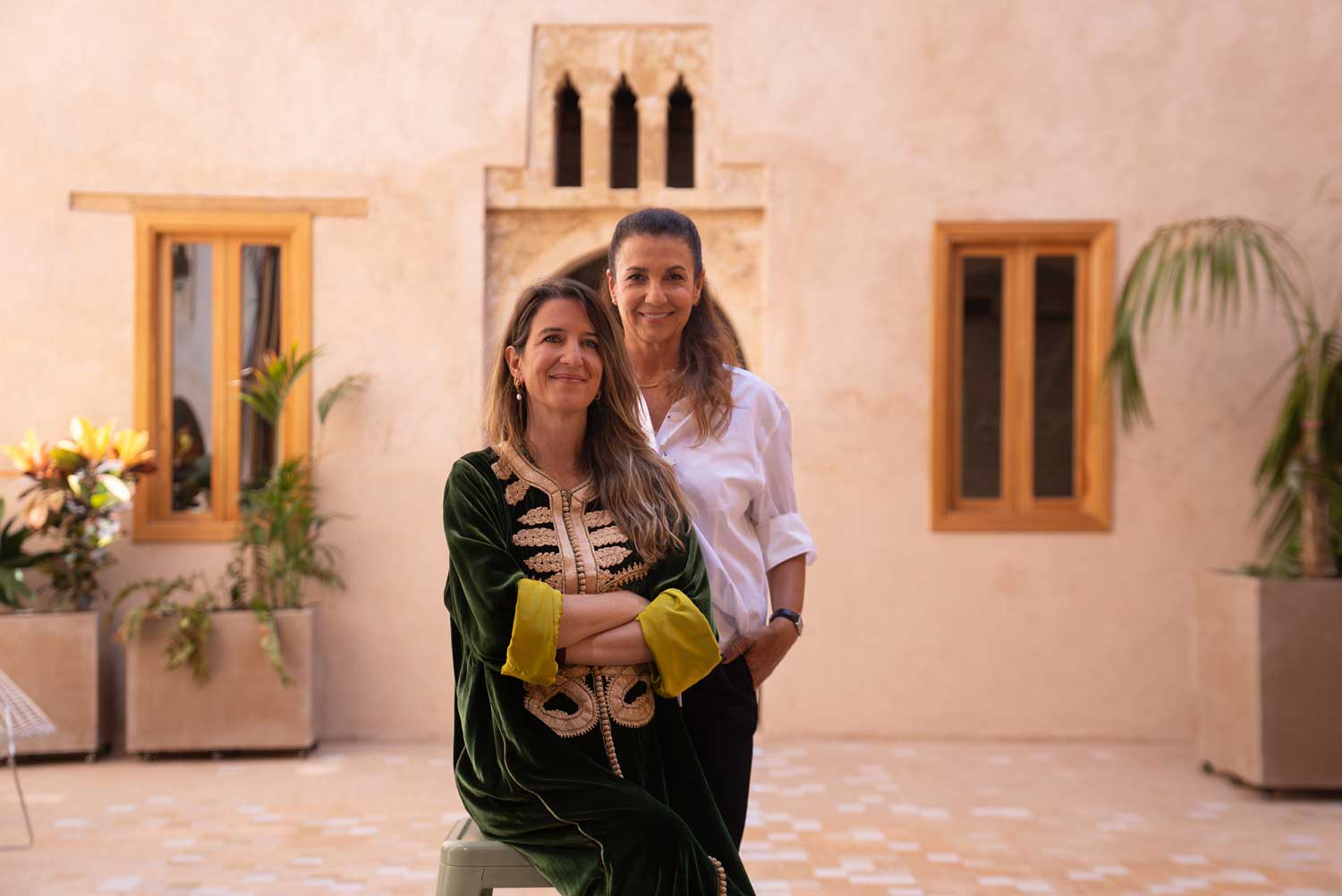
On the legendary Rue des Consuls in Rabat’s medina, a former 18th-century British consulate is about to take on a new life. Freshly renovated, the building will house the Kulte art center starting in October; the center was previously located in an apartment in the Hassan neighborhood. This move is a statement. Kulte is leaving a space where contemporary art could remain physically and socially distant from part of the public. In the medina, proximity becomes a fundamental aspect of the project. “ The idea is to connect with people of all ages and from all social classes, explains Kulte founder Yasmina Naji. Visitors will be able to come in to see an exhibition, but also to have a cup of coffee, read a book, attend a workshop, or simply sit down. “The library, whose collection focuses in particular on social studies, feminism, and ecology, is part of a very specific cultural and ideological project and further advances that mission. The exhibition is no longer the only way to experience the space.”
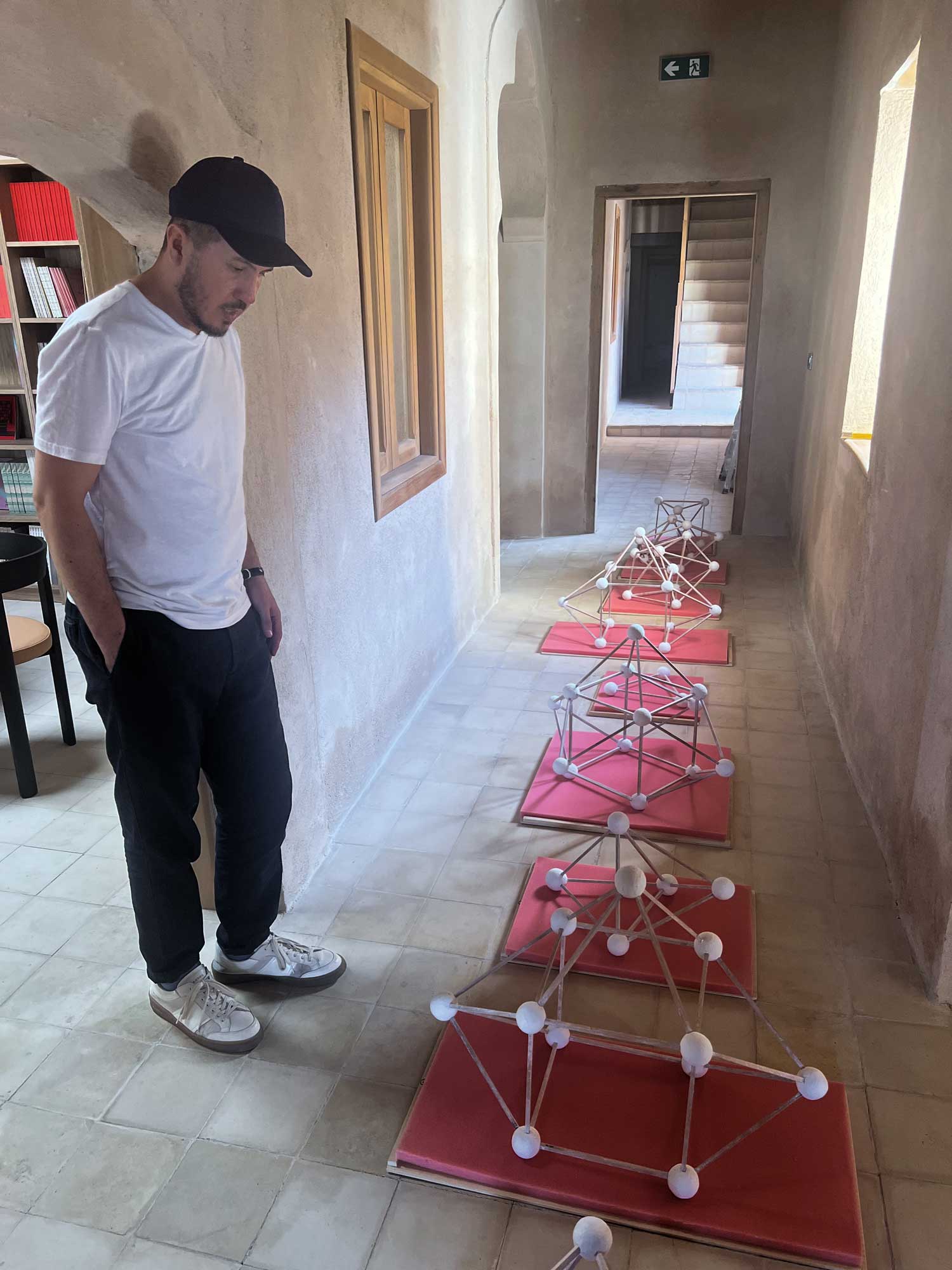
Younès Rahmoun officially opens the facility
This project, however, is fraught with a contradiction that Yasmina Naji does not seek to sidestep: that of gentrification. Establishing a contemporary art center in the medina may contribute to transforming a neighborhood already undergoing change. Familiar with Rue des Consuls and its shops, Yasmina Naji hopes to build a lasting relationship with the neighborhood’s residents, particularly through events designed for them and a café with affordable prices. The goal is to make the space not a cultural enclave, but one that is open to the neighborhood. This ambition will have to be proven through how the space is actually used, and the mechanisms for achieving this will also be one of the venue’s experimental projects.
The program, too, extends beyond the scope of the exhibition. Kulte Édition aims to develop training programs for careers in the book industry—an area that remains largely unstructured in Morocco—while a graphic arts workshop—an extension of the risography printing workshop—led by graphic designer Khawla Mesbahi is set to become a space for creation and knowledge-sharing. Art, publishing, reading, and learning are thus viewed as the various components of a single ecosystem.
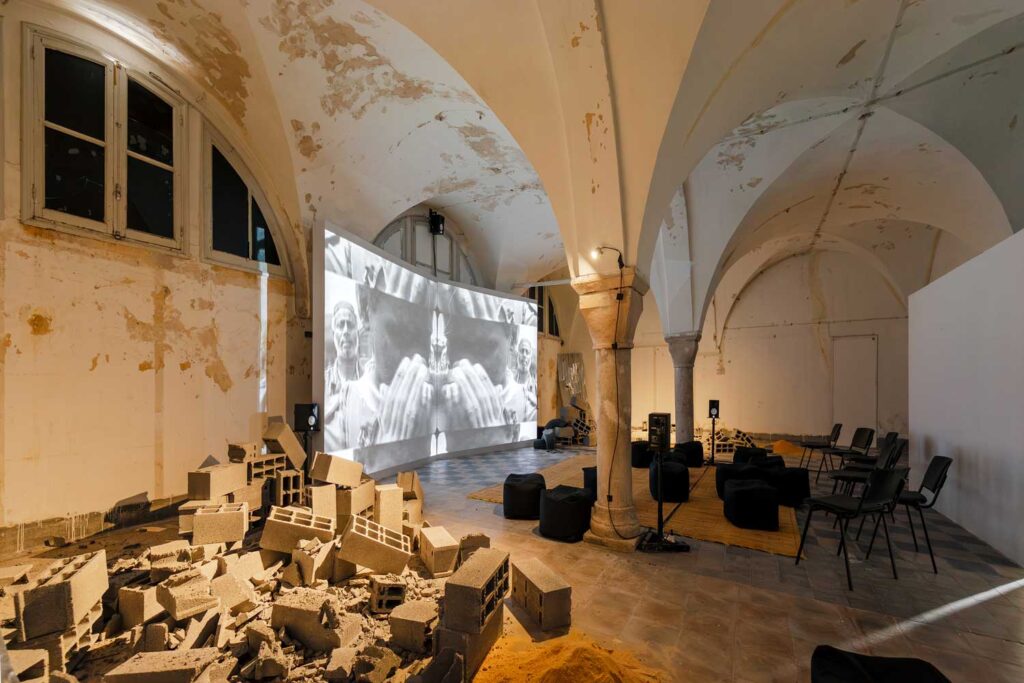
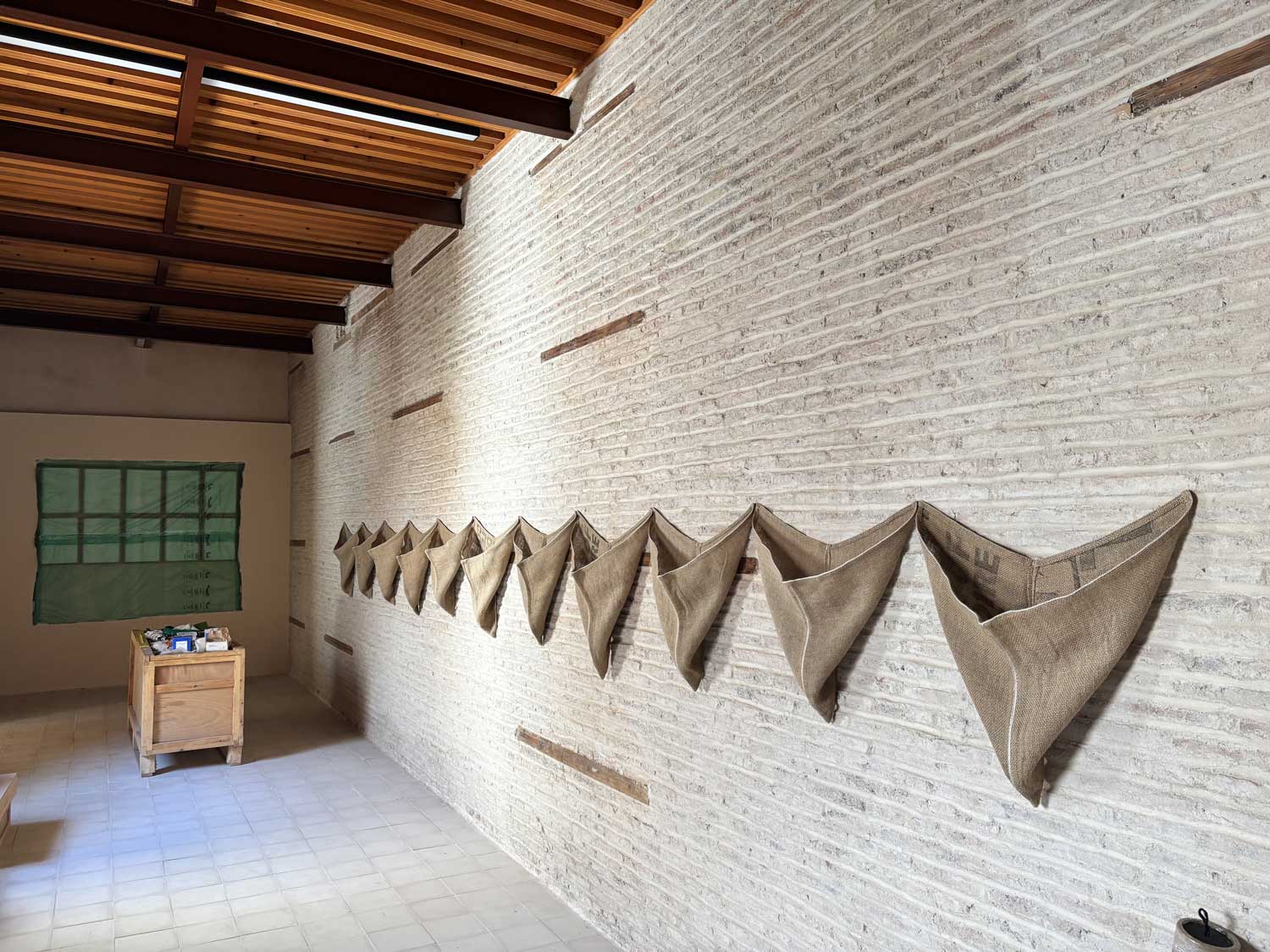
This porosity is particularly evident in Younès Rahmoun’s inaugural exhibition, “Ghorfa – Jabal – Kawn,” conceived in collaboration with Yasmina Naji. As the third and final stage of a retrospective that began at the Smith College Museum of Art with Emma Chubb and continued at the Kunsthalle in Mulhouse with Sandrine Wymann, it brings together several major bodies of work by the artist. The title suggests a movement, from the intimate chamber to the mountain, and then to the universe: from the batîn—the interior and the hidden—to the dhahir, the revealed, before opening up to the collective and the transcendent. Younès Rahmoun presents not only works of art, but also the ramifications of his thought. Installations, preparatory drawings, models, videos, and sound pieces explore the projects in various forms, allowing viewers to follow their development and evolution. “Ghorfa” refers in particular to the small room of his childhood in the Rif, a space reserved for the young men of the family; and then to the room in his childhood home in Tetouan where the child—who would become an artist—would isolate himself to create. A 24-minute film captures this, while Ghorfa Nour reimagines its architecture through a structure made of brass, a material Rahmoun associates with light.
Other works expand on this exploration of the personal and the social. Baydaq-Loqma questions the gendered division between public and private spaces; Manzil Chaffaf Tayf uses houses made of colored acrylic sheets to evoke the social differences embedded in the urban fabric; Jabal-Hajar-Turab, begun in 2010, incorporates stones from the Rif region—particularly from Beni Boufrah—as a connection to the land of his childhood. With Thuraya, 77 interconnected spheres simultaneously evoke the 77 virtues of faith, the infinitely large, and the infinitely small. The exhibition thus becomes less of a chronological journey and more of a mental map.
The artworks were also conceived in harmony with the building. Some punctuate the spaces, blending with their volumes and circulation patterns, making the architecture a partner rather than a mere container. The new Kulte thus seeks to move away from the “white cube” model: here, the artworks coexist with books, daily activities, people, and the traces of the space itself.
Bringing Heritage Together
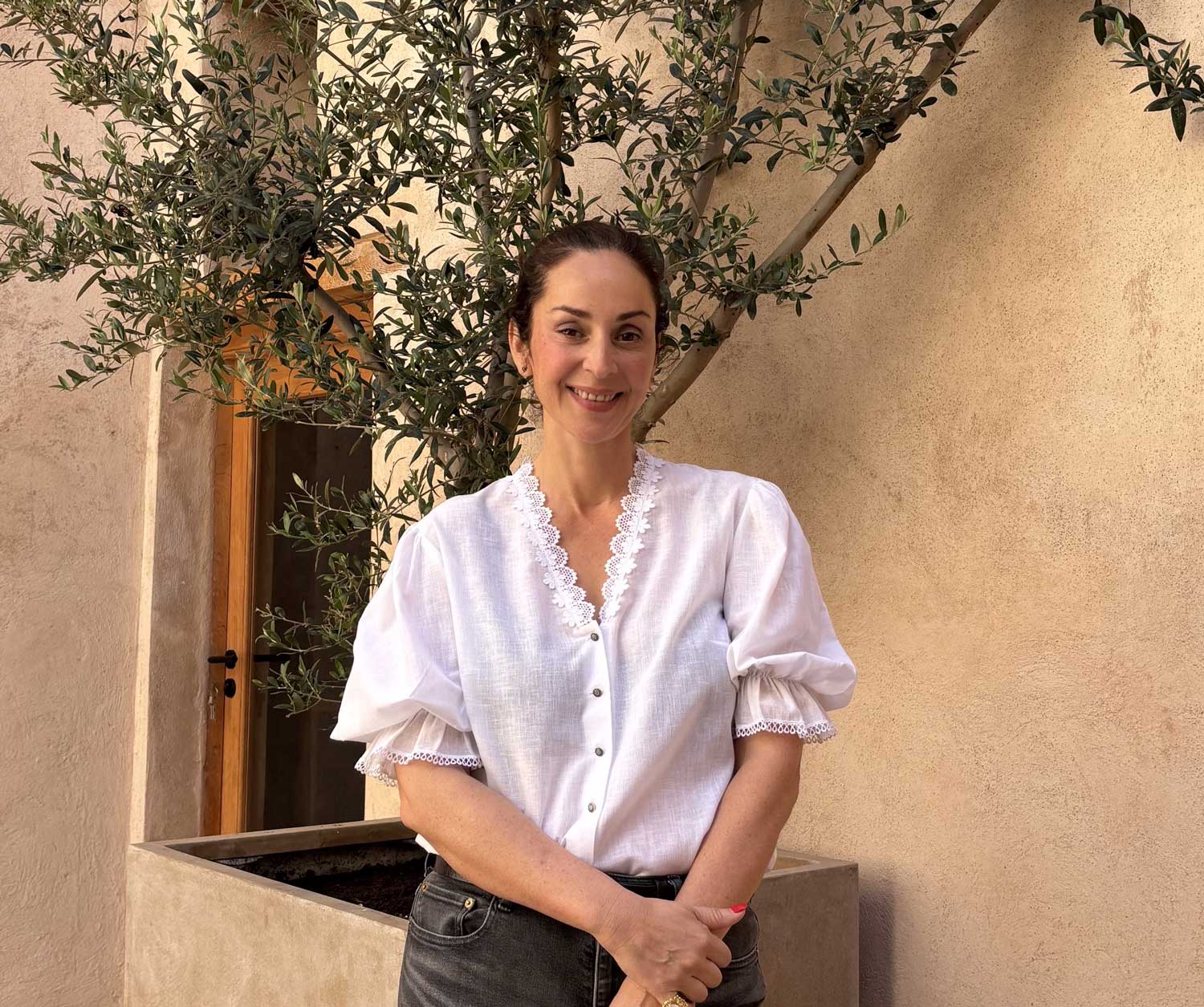
The building’s renovation, designed by Aziza Chaouni, continues this dialogue. “ What we felt was essential to preserve was primarily intangible: the soul of the place ,” explains the architect. She emphasizes the simplicity of the forms, the uncluttered design, and the The contrast between the bustle of Rue des Consuls and the tranquility of the inner courtyard. Among the few original elements discovered were lintels made of Taza stone. Historical plans helped reveal the building’s original layout: successive additions were removed, arcades were cleared, and passageways were reopened. There were also economic and technical constraints. With a limited budget, it was necessary to prioritize the work, reinforce the structure, adapt the floors to support the weight of large crowds, and meet seismic and fire safety requirements. The project was also made possible through sponsorship and donations of materials. “ “A true network of solidarity—and also of sisterhood—has formed around the project ,” insists Yasmina Naji, referring to Aït Manos’s role in restoring the building. For Ghalia Sebti, co-founder of the fashion house, supporting Kulte means supporting two paths that “ hold together the past and what is to come ”: that of Yasmina Naji and that of Aziza Chaouni, who has been committed for years to revitalizing the built heritage.
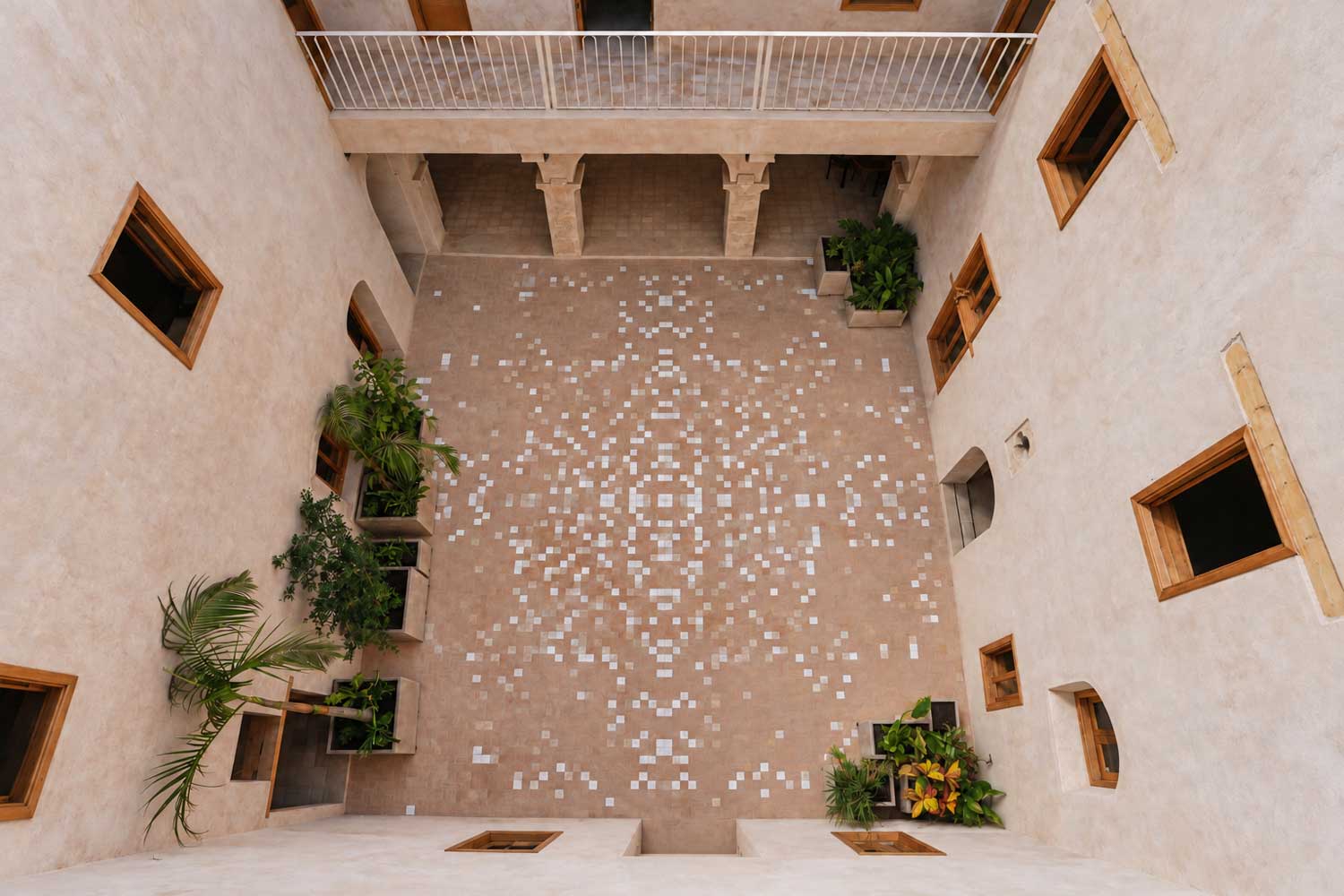
The zellige tiles in the patio and on the library counter were designed based on a rosette discovered in the historic architecture of the consulate. This motif unfolds on a grand scale throughout the patio and is only fully revealed when viewed from the upper floors. Just two sizes and five shades make up a design whose subtlety lies precisely in its restraint. Each tile is hand-cut and hand-glazed using clay from Fez. “ Heritage, as we understand it, is something to be integrated rather than preserved: a living grammar, still open ,” comments Ghalia Sebti. In the new Kulte, zellige is therefore not a heritage-inspired decoration added to contemporary art. It belongs to the spaces where people live and work—underfoot and on the library counter. According to Ghalia Sebti, traditional crafts find “ their rightful place ”: that of a matrix from which contemporary forms can still emerge.
Perhaps this is where the ambition of the new Kulte lies: not so much to add another art venue to the city as to create a space where different ways of producing, viewing, reading, thinking, and generating ideas can come together. In a historic building that has been transformed into an art center, exhibitions, books, the café, crafts, and the sharing of knowledge are no longer peripheral activities. They become different ways of inhabiting the same space.