Without euphoria, but with genuine energy, a selective contemporary art market is taking shape—one that is geographically more diverse and firmly focused on proven values.
By Céline Moine, Artmarket by Artprice.com
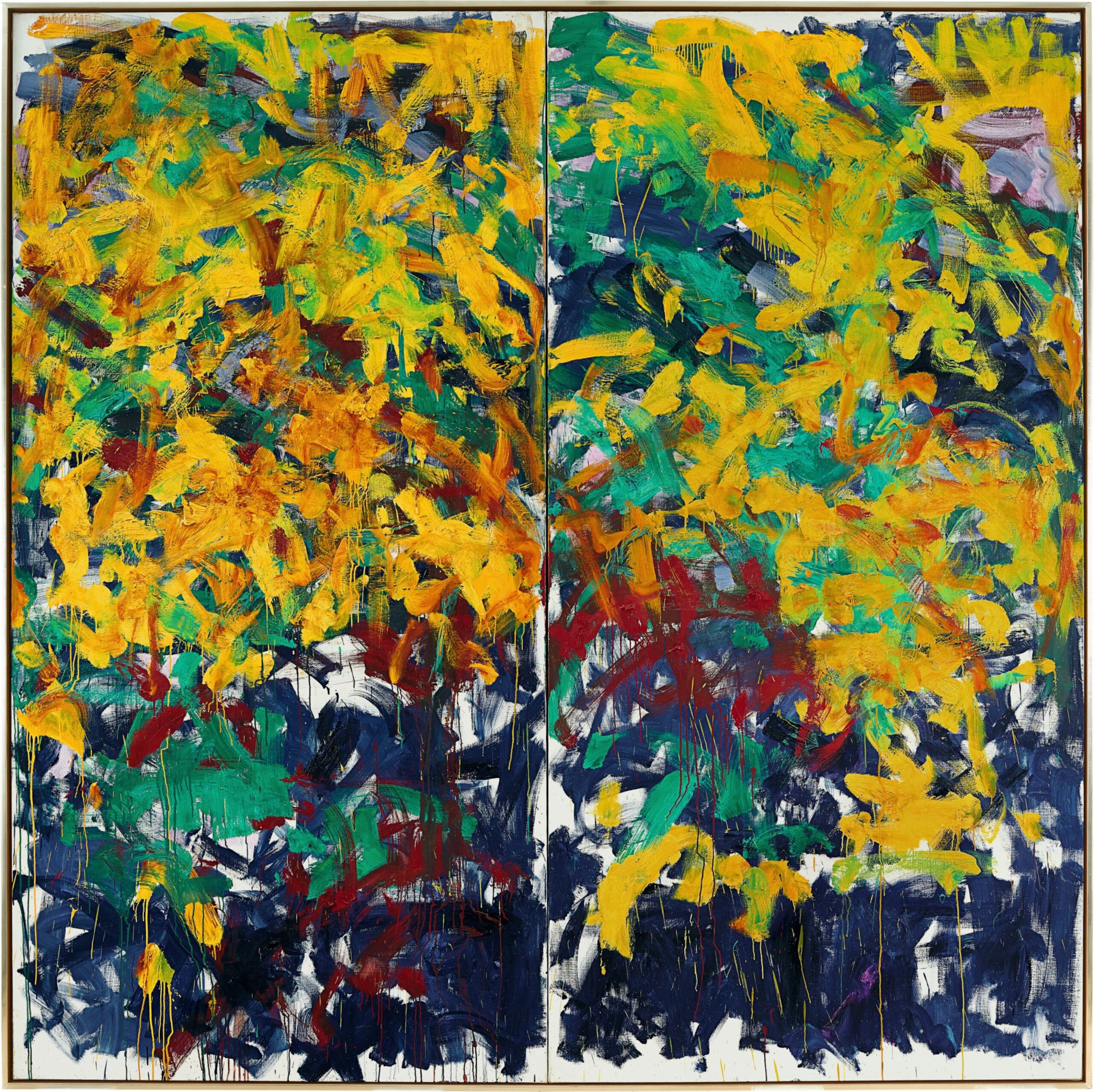
Joan Mitchell, La Grande Vallée VII, 1983, oil on canvas, diptych, 260.3 x 260.7 cm. © Sotheby’s
No cause for triumphalism: the results speak for themselves. The art market is entering a phase of deliberate rebalancing. After the chaotic expansion of the post-pandemic years and the sharp decline in the ultra-contemporary art market—which had fueled the boom of 2019–22 before falling 40% last year— 2026 resembles neither a relapse nor a capitulation. It’s something else entirely: a selective, demanding recovery, where confidence must be earned lot by lot. The proof? The first quarter of 2026 saw no fewer than 6,800 new personal records set at auction. This figure alone shows that the market is not on hold. It is sorting through the options.
In London, the Saleroom as Symbol
There are auctions that go down in history—not because they break all records, but because they encapsulate, in a single evening, the spirit of an entire market. Sotheby’s evening auction in London on March 4 was one such event: 100% of the lots sold, $176 million for 53 lots—the first multi-owner evening sale in London in decades to achieve a white-glove result. Bacon led the way at $21.4 million, Fontana at $13.1 million, and Monet at $10.9 million. Predictable highlights. But the real revelation lay elsewhere. The Children’s Swimming Pool (1969) by Leon Kossoff (1926–2019), estimated at between $800,000 and $1 million, saw bidding rise through ten collectors before finally selling for $6.9 million: a 283% jump from its previous record. This is no surprise—it’s simply how the market works. The upcoming exhibition at Luhring Augustine in New York had laid the groundwork for this revaluation. The market had read the signs and acted accordingly. Kossoff thus joins Auerbach and Bacon in the circle of sure bets in British painting from the second half of the 20th century—bodies of work that economic uncertainty makes even more desirable.
In the days that followed, at Christie’s, the three evening auctions totaled $266.4 million, a 52% increase year-over-year, with other positive results as well. The Surrealist segment, included in the 20th- and 21st-Century Art sale, performed particularly well: every lot found a buyer. Henry Moore, Tanning, and Toyen set new records, while Tracey Emin’s work sold for double her low estimate, buoyed by the “A Second Life” retrospective at the Tate Modern. Similarly, two Richter works were sold for 11.2 and 10.1 million in the immediate wake of the exhibition at the Fondation Louis Vuitton. The pattern is consistent: institutional demand drives market demand.
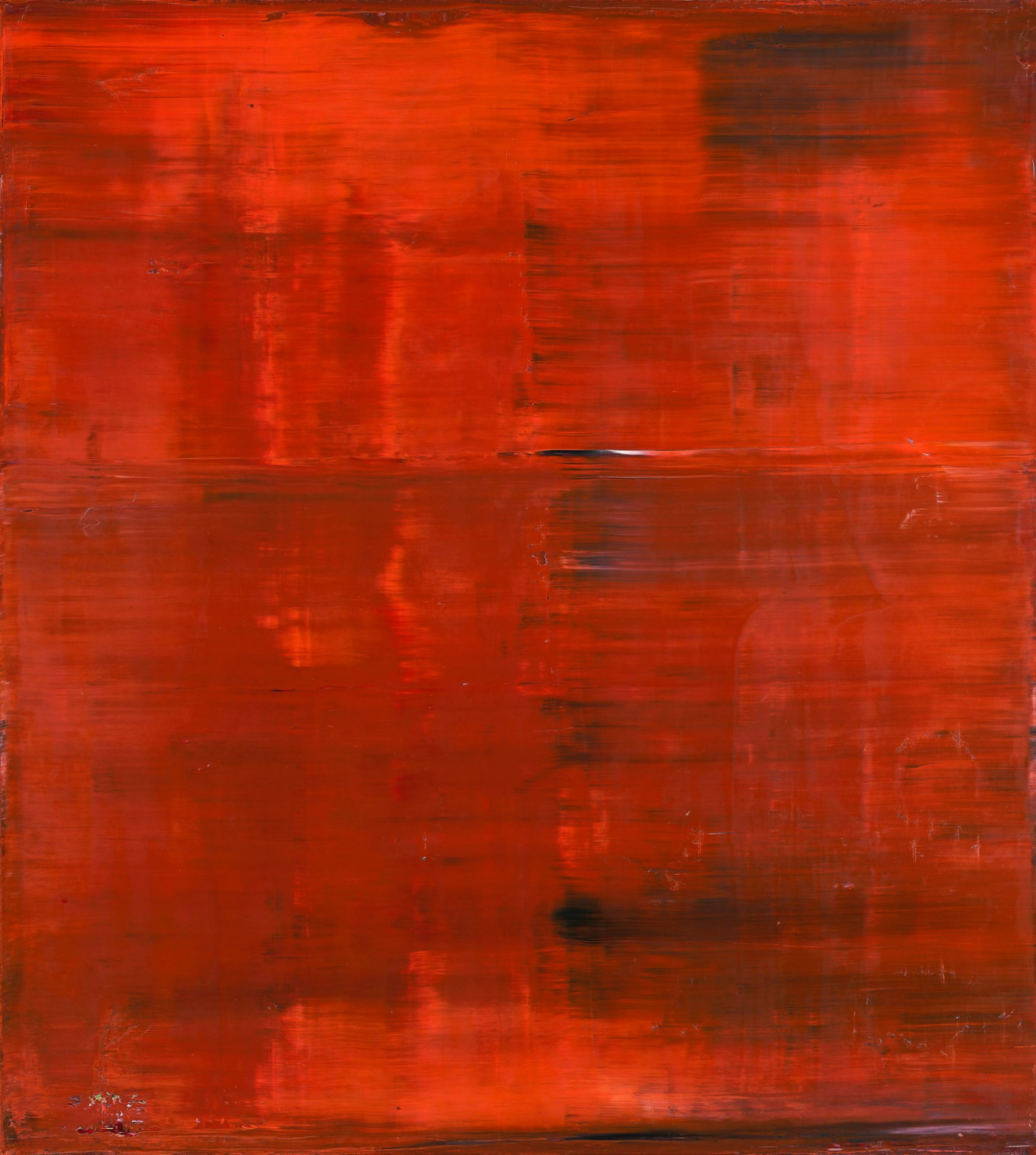
Gerhard Richter, Abstraktes Bild, 1991, oil on canvas, 200 x 180 cm © Christie’s
Hong Kong: A Return, But With a Twist
After an autumn of 2025 that had posted the lowest results in eight years, Hong Kong Art Week in late March came as a real positive surprise for the Asian market. Christie’s and Sotheby’s each achieved 100% sales (all lots sold), an extremely rare occurrence for both auction houses simultaneously. Christie’s is up 17% year-over-year, while Sotheby’s is up more than 50% from the previous season. It’s not the euphoria of the boom years—it’s better than that: it’s solidity. What’s selling in Hong Kong also says something about the evolving tastes there. The star lots were not ultra-contemporary figurative works, as they were during the boom years. They were Gerhard Richter’s Abstraktes Bild for $11.8 million, La Grande Vallée VII by Joan Mitchell for $17.5 million—an all-time record for a female artist sold at auction in the region. Major abstract artists, deeply rooted in the second half of the 20th century. The Asian market, too, is seeking works that have proven their worth over the long term.
But it would be too simplistic to stop there. One of the contemporary artists who drew the most bids during this Hong Kong auction was Lucy Bull, born in 1990. Her painting 22:14 sparked sixteen bids and ultimately sold for $1.55 million—twice its estimate. Abstraction, in all its forms—historical or contemporary—is clearly the winning combination of the moment in Hong Kong. In fact, Sotheby’s recently organized “Beyond the Abstract” there, the largest retrospective of abstract art ever presented in Greater China, as if to deliberately fuel this appetite.
To look beyond the major evening auctions and grasp the true state of the contemporary art market, one must examine the ranking of the top 100 new individual records from the first quarter of 2026. This valuable analysis, compiled by Artprice, covers a much broader spectrum of sales than just the prestigious evening auctions. The first thing that stands out is the geographic balance. The Asia-Pacific region leads with 30 artists, closely followed by the United States with 28. Europe follows with 26 representatives, and the MENA-Africa region accounts for 12 artists: a modest number in terms of volume, but one that carries its own energy.
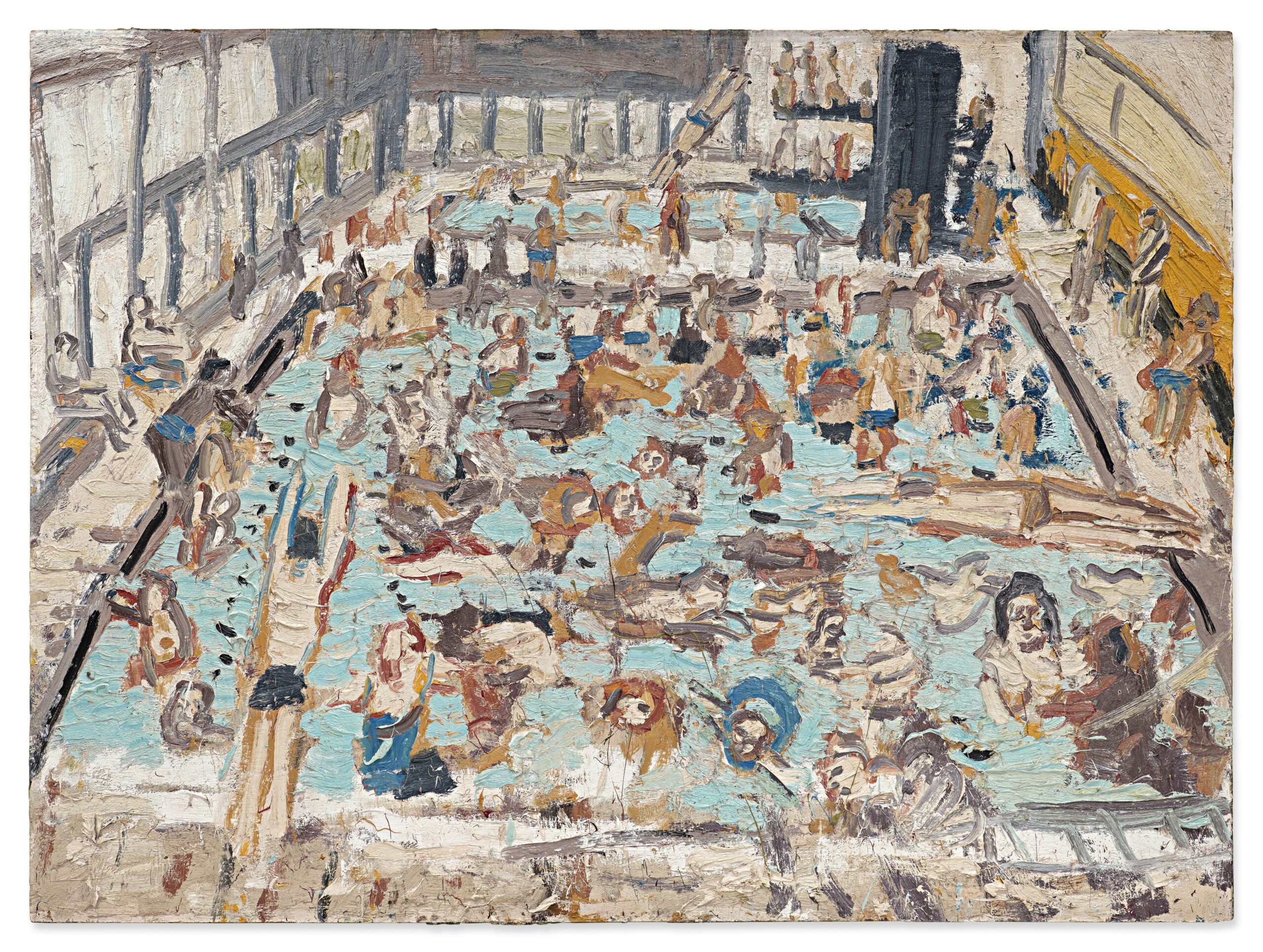
Leon Kossoff, *Children’s Swimming Pool, 11 o’clock Saturday Morning, August, 1969*, oil on panel, 152.4 x 205.7 cm. © Sotheby’s
What Contemporary Records Reveal
What this ranking doesn’t show in raw numbers, it reveals in terms of value: the top spots are unambiguously held by Asian artists. Christine Ay Tjoe (Indonesia) took first place with $2.17 million at Christie’s Hong Kong. Liu Dan (China) came in second with $1.47 million at Phillips. Yi Ming and Atsushi Kaga round out an all-Asian podium. It bears repeating: despite strong sales in London, it was in Asia that the bulk of the momentum behind the first quarter’s contemporary art records took place. Central Europe also made a notable breakthrough, led by the Swiss artist Lenz Geerk, who entered the top 10 for the quarter’s record sales, and the Czech artist Michal Rittstein. Western Europe, meanwhile, remained relatively quiet.
Twelve artists out of 100 for the MENA-Africa bloc—that’s both a small number and telling. The region is making headway in the rankings through cohesive groupings: Ziad Dalloul (Syria) leads the way at $103,750, followed by Iraqi artist Emad Al Taay, whose record was established from scratch (with no recorded sales prior to 2026—and it’s all happening in Doha), and the Tunisian artist Imed Jemaiel, followed by the South Africans Doreen Southwood, Guy Pierre Du Toit, and Berni Searle, driven by bronze sculpture and photography. Of particular note: Sanam Khatibi, born in Iran and a Belgian citizen, appears twice in this ranking, having multiplied her previous record by seven. Her case illustrates a fundamental trend: the MENA diaspora is making its mark on Western and Asian markets, supported by galleries—in this case, Janssen in Brussels and P.P.O.W. in New York —that are building international legitimacy for artists whose reputations were previously confined to a circle of connoisseurs. Safeya Binzagr, a leading figure in Saudi art, had, in fact, kicked off the year in style at the Sotheby’s auction in Diriyah in January, with her painting Coffee Shop on Madina Road increasing its estimate tenfold, one month before the military escalation in the region.
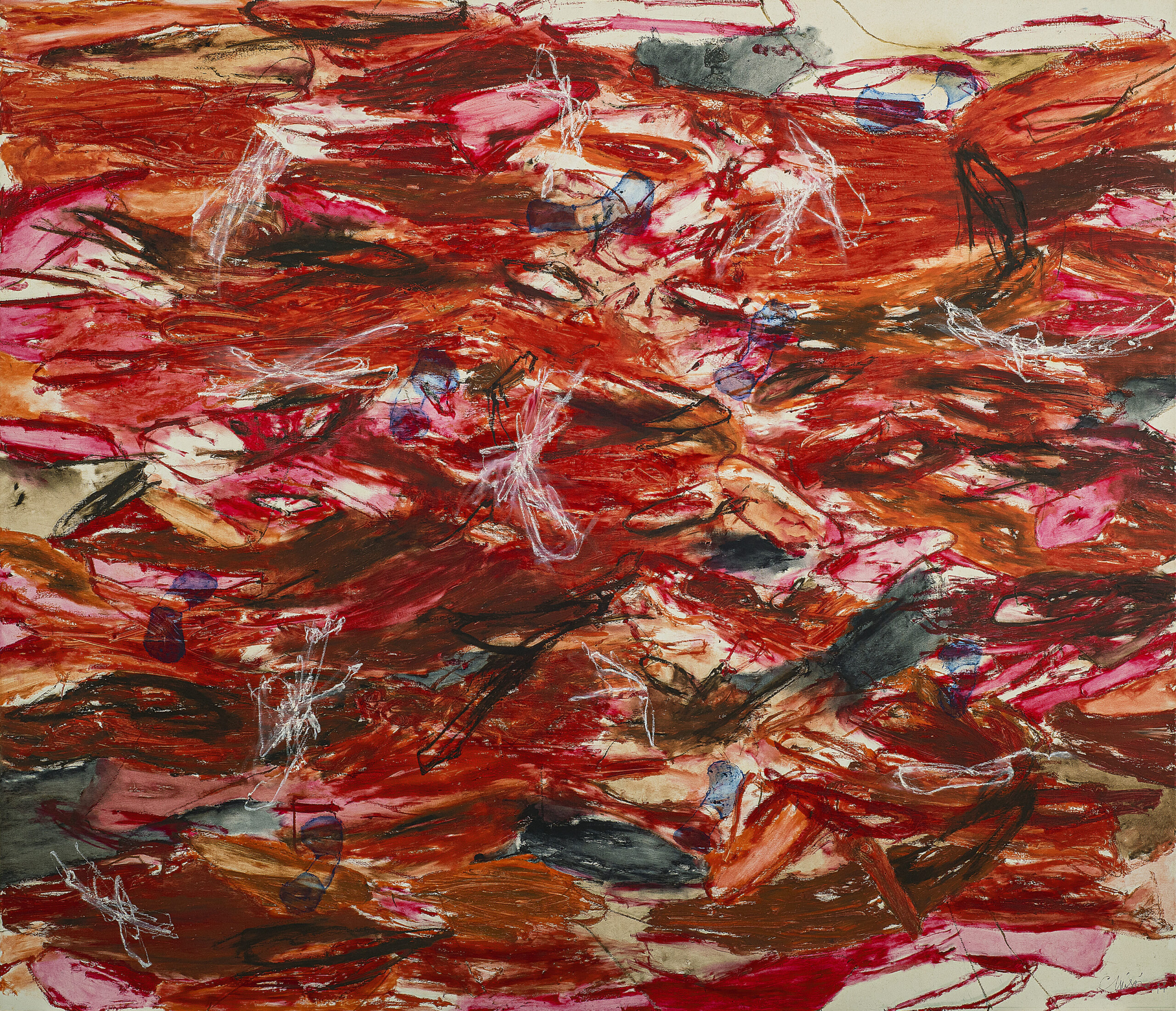
Christine Ay Tjoe, Layers as a Hiding Place #2, 2014, oil on canvas, 200 x 170 cm. © Christie’s
Sixteen Young Artists, Including a 29-Year-Old Dane
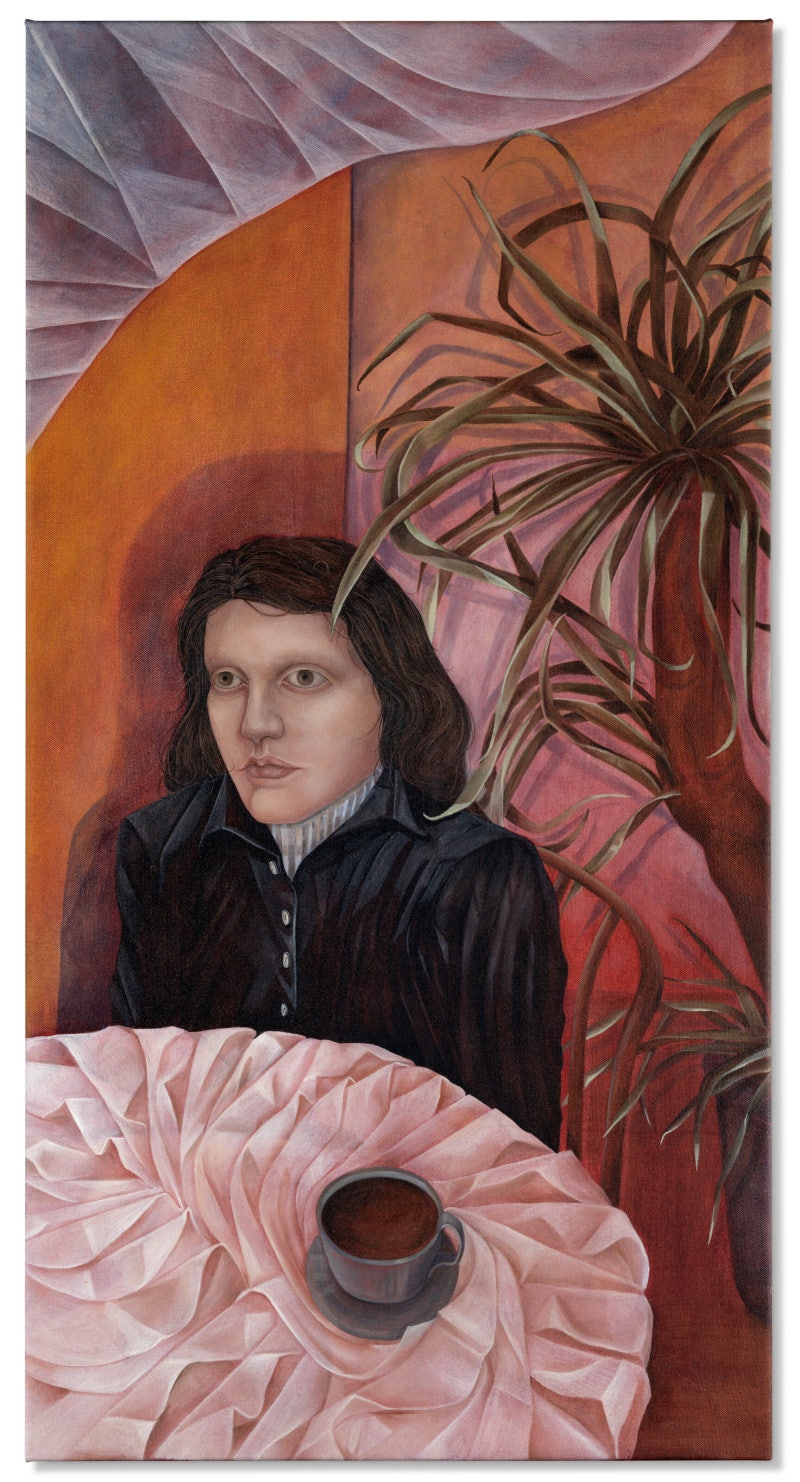
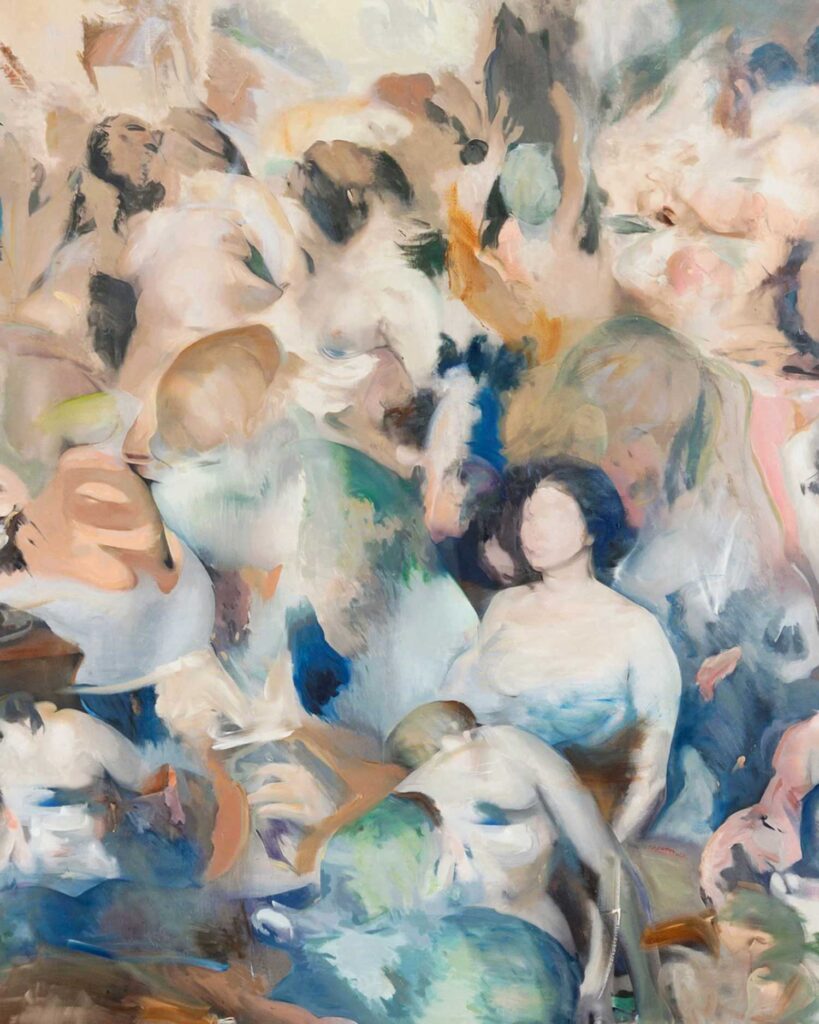
The contemporary art market is, first and foremost, a market of longevity. The median year of birth for artists in the Top 100 is 1964, meaning they will be between 61 and 63 years old in 2026. This is not an anomaly: it is the mechanics of the secondary market, which rewards established bodies of work that have stood the test of time and been validated by institutions. There are sixteen artists born after 1980 in this ranking, with an average price of $87,200 and a median of $51,355. These are modest but healthy levels: they are not subject to rampant speculation. Among them, three names stand out. Lenz Geerk (Switzerland, 1988), ranked 9th at $275,600. Fan Yang-Tsung (Taiwan, 1982), ranked 15th at $196,000. And above all, Eva Helene Pade (Denmark, 1997), who enters the Top 100 at No. 18 with $129,700 for an oil painting sold at Bruun Rasmussen in Copenhagen. Born in 1997, she is, at 29, the youngest artist in the entire ranking, and her emergence at this level is by no means a mere footnote.
Beneath her bruised-toned palette, Pade draws on a logic of dreams and instinct, a style of representation that carries within it the legacy of Lucian Freud and the emotional distortion of Francis Bacon. One senses a dual influence in her work—Surrealism on one hand, the London School on the other—two movements that are precisely dominating the art scene at the start of this year. It is no coincidence that the market is taking notice of her now: she speaks a language that collectors recognize, in a voice they had not yet heard. This may be the most interesting sign this quarter has left us: the market also knows how to identify new trajectories early on, provided they resonate with those that have shaped the history of art. Novelty is reassuring when it has a sense of history.
This translation was generated using AI. For the original text, please see the French version of this article.