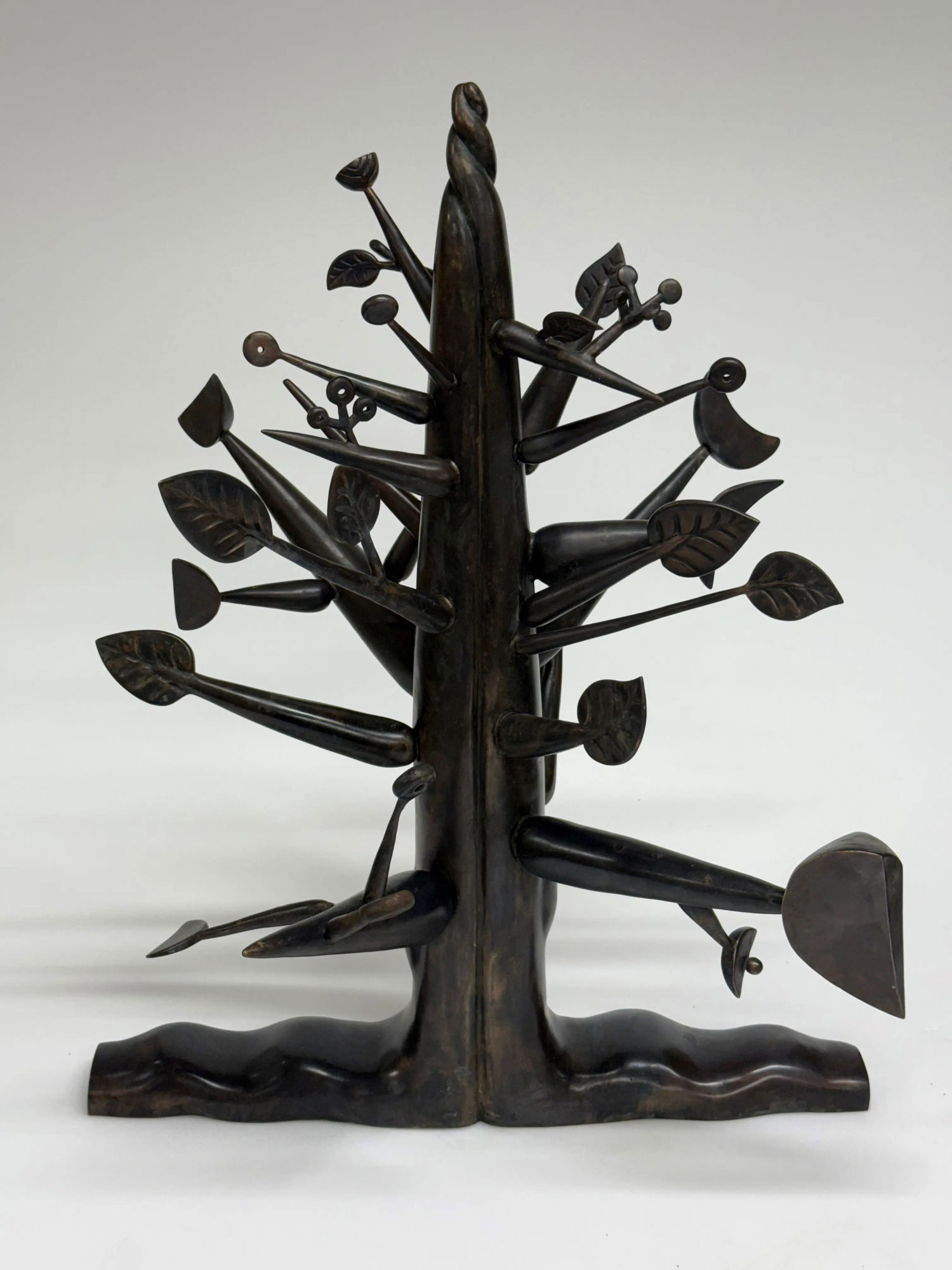
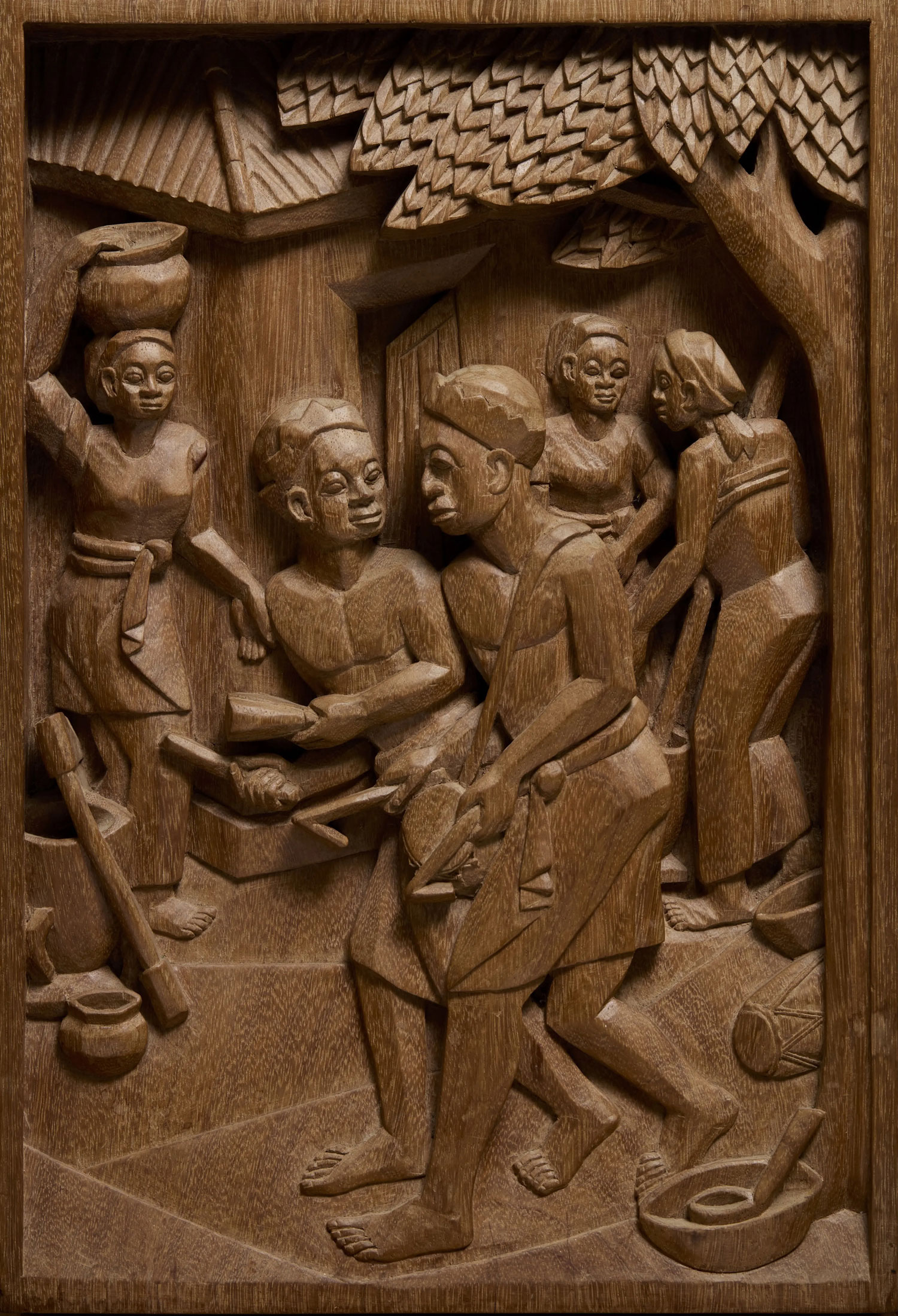
For its 14th edition in London, taking place October 15–18 at Somerset House, 1-54 is introducing, for the first time, a section dedicated to African and diaspora modernisms. In addition to a few booths, this focus is highlighted by “West Wind,” an exhibition curated by art historian Nancy Dantas.
By the editorial staff
1-54 is taking a historical perspective this year. Dedicated since its inception to contemporary art from Africa and its diasporas, the fair is expanding its London edition to include modernist generations through an exhibition and several gallery booths.
Conceived by art historian and researcher Nancy Dantas as part of her curatorial program 1-54 Presents, the “West Wind” exhibition brings together several generations of artists and introduces major historical figures to the fair, such as South African artist Gerard Sekoto, Sudanese artist Ibrahim El-Salahi, Algerian artist Baya, and Senegalese artist Papa Ibra Tall.
By including these artists in its program, 1-54 reaffirms its commitment to integrating African and diaspora modernisms into a narrative that has thus far been largely devoted to contemporary art scenes. It will be interesting to observe this evolution during Frieze Week, when these same modernist movements are also gaining ground at general-interest art fairs (La Loft Art Gallery will present a solo exhibition by Mohamed Melehi at Frieze Masters).
At booths 1–54 at Somerset, Loeve&Co will feature, among others, the modern Haitian artist Roland Dorcély. The Gallery of Everything will dedicate a solo exhibition to the Senegalese sculptor Seyni Awa Camara, who passed away last January and whose work was featured at this year’s Venice Biennale.
Contemporary art remains, of course, at the heart of the fair, with some 30 galleries confirmed and several solo exhibitions. Morocco will be represented notably by Loft Art Gallery, featuring James Mishio and Amina Rezki, while Yacout Hamdouch will be featured at the group booth of the London-based October Gallery. This expansion into modernist movements thus adds historical depth to a fair that has, until now, been primarily focused on contemporary art scenes.