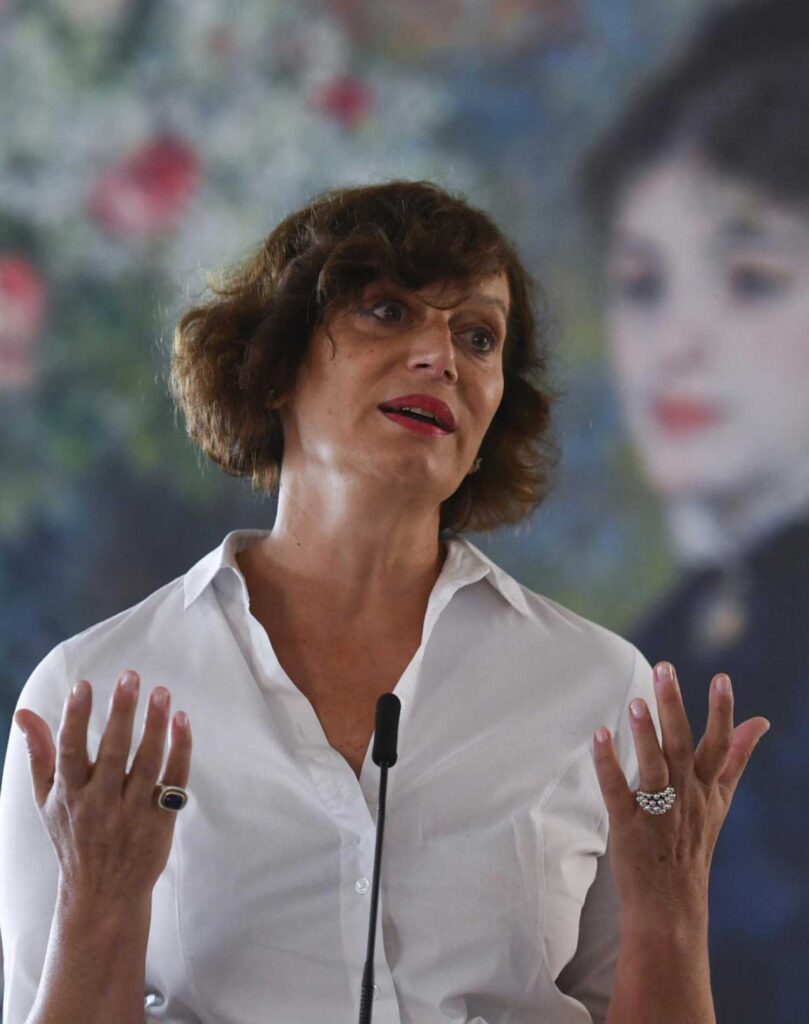
To accompany the publication of the book C.A.S.A. Casablanca Art School Archives, co-edited by Morad Montazami and Madeleine de Colnet, the exhibition “Perspectives on the Casablanca School (1962–1987)” brings together a collection of works—many of which have never been shown before—at the risk of obscuring our understanding of a major movement in Moroccan modern art.
By Olivier Rachet
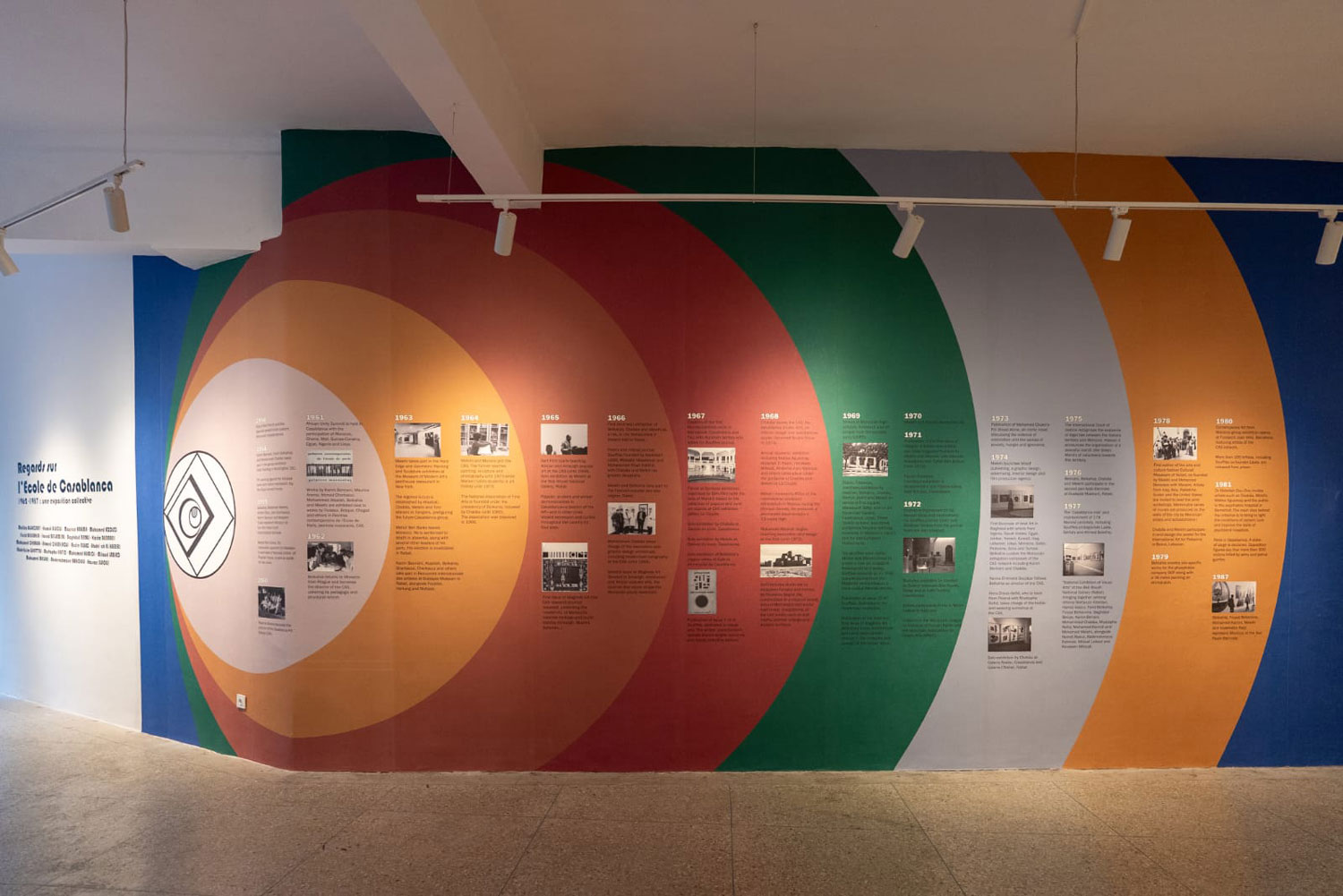
View of the exhibition “Perspectives on the Casablanca School” at the African Arty Gallery in Casablanca.
While it has now become impossible to reduce the École de Casa to the trio consisting of Belkahia, Melehi, and Chabâa—who exhibited in 1966 at the Mohammed V Theater in Rabat—as well as to the twelve years, from 1962 to 1974, during which Belkahia headed the School of Fine Arts, we are justified in asking what this term—which sometimes serves as a talisman—actually signifies today. The group exhibition “Perspectives on the Casablanca School, 1962–1987,” currently on view at the AA Gallery, despite featuring major works often drawn from private collections, does not always help to shed light on the matter.
The key figures in this movement are indeed well represented, though in an almost anecdotal manner, notably through a 1970 cellulose-based painting on panel by Melehi and a striking 1974 work on panel by Chabâa, featuring a victorious fist at its center. The artist had just spent two years in prison, and the spirit of resistance still seemed deeply ingrained in him. The exhibition also focuses on Ahmed Cherkaoui, a pioneer of the Casablanca School and of abstraction in Morocco, featuring four remarkable works by him in ink and mixed media on cardboard.
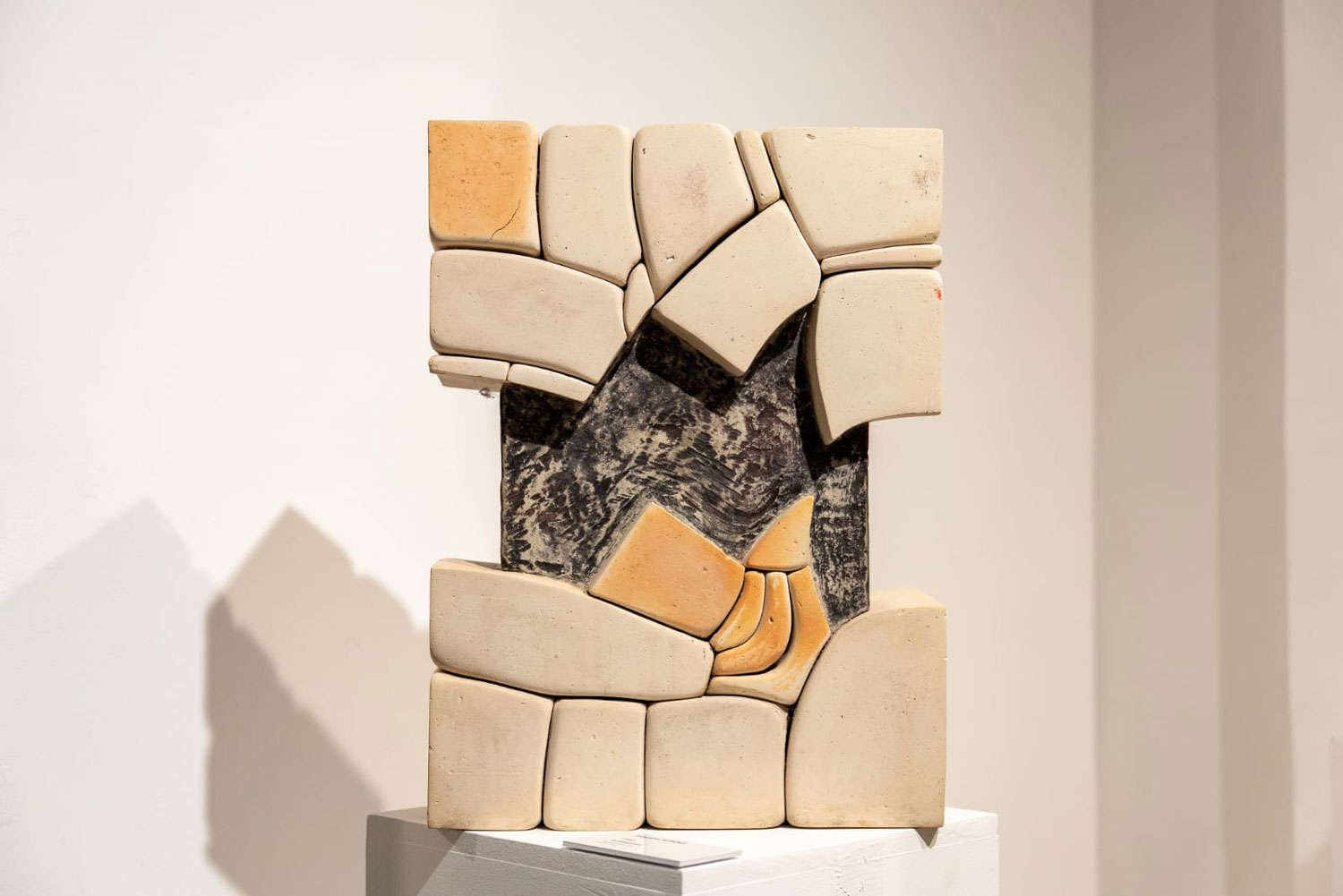
Hassan Slaoui, Parallelepiped, 1980. Terracotta, carved earthenware, 40 × 40 × 15 cm
Rehabilitating Overlooked Artists
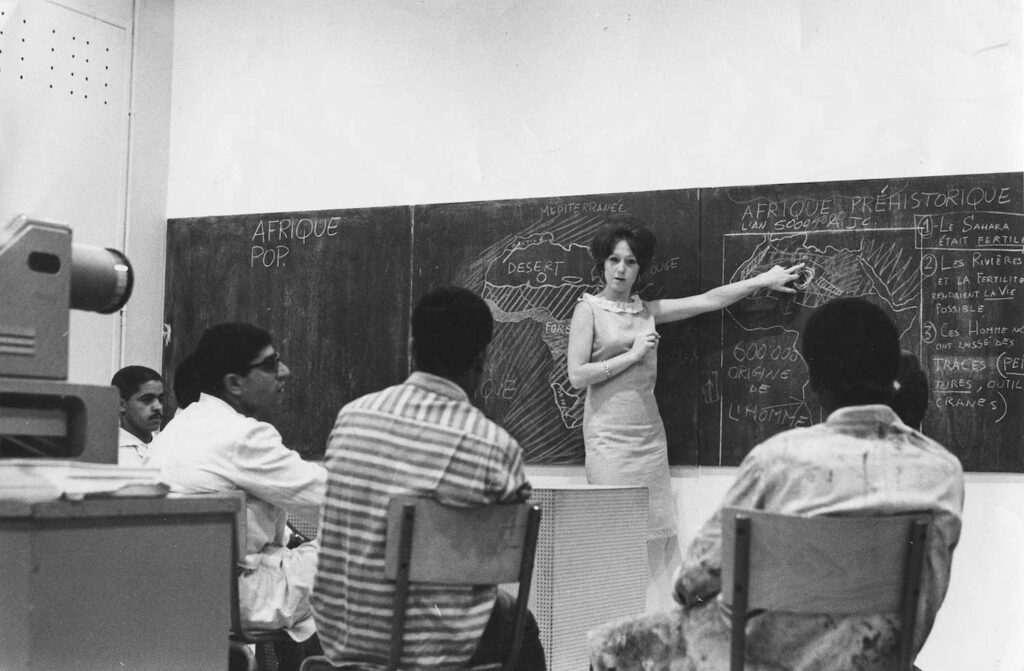
Following a series of recent exhibitions—both institutional and commercial—dedicated to Abdellah El Hariri, Mustapha Hafid, and Mohamed Azouzi, this exhibition has the merit of bringing back into the spotlight key figures who, in one way or another, were part of the vibrant art scene of the post-independence years. Starting with Maurice Arama, director of the School of Fine Arts from 1960 to 1962, who moved the school from the medina to Boulevard Rachidi, where it remains today, as recalled by the monumental chronological frieze with its psychedelic design that opens the exhibition. His painting The Conductor, dated 1965, is—along with The Bullfighter in Love by André Elbaz (1962), one of the curiosities of this exhibition.
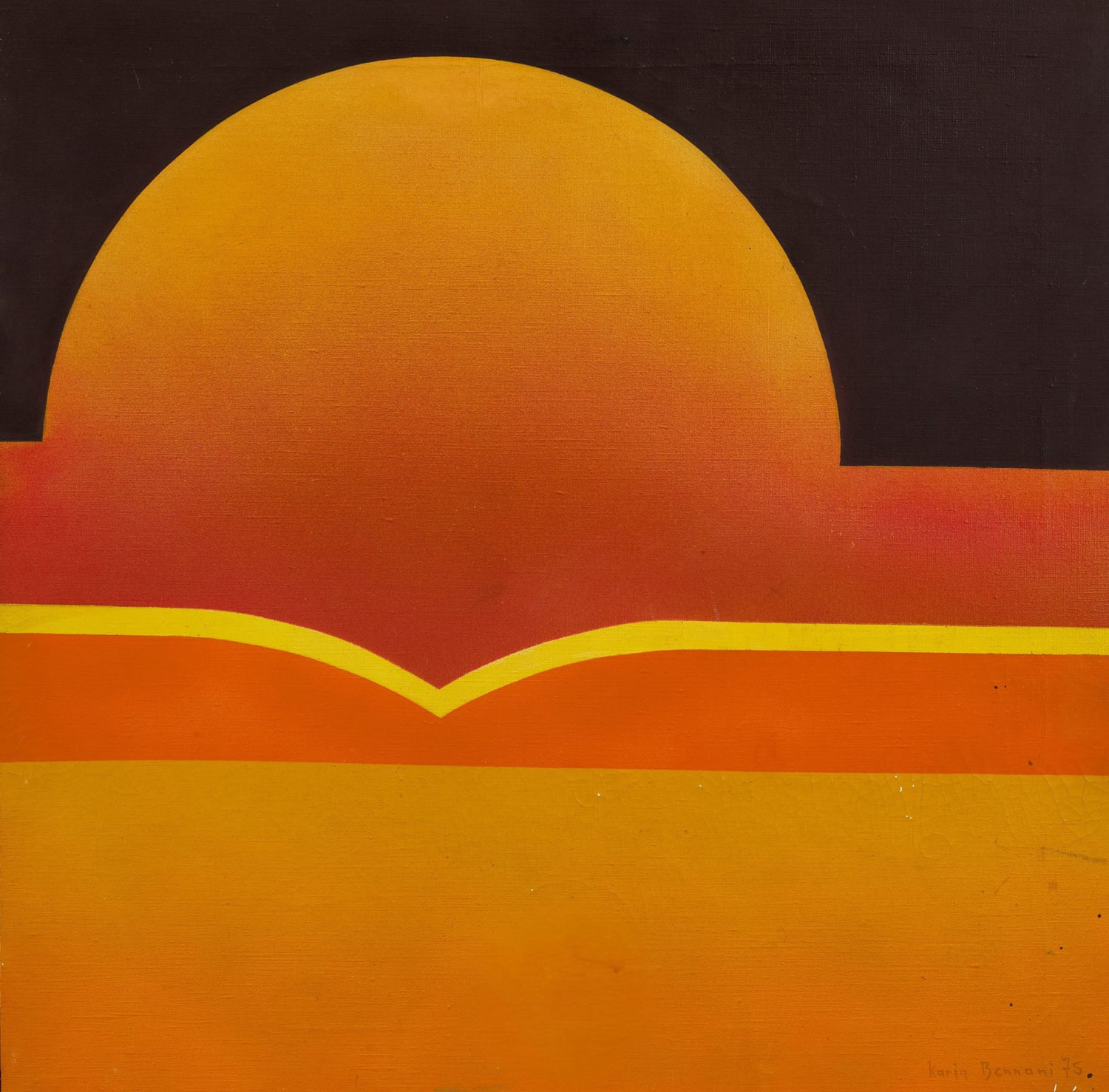
After bringing former students who have become artists—such as Abderrahmane Rahoule and Karim Bennani—back into the spotlight, the gallery directed by Jacques-Antoine Gannat is now turning its attention to artists sometimes overlooked by official histories, such as Hamid Alaoui, who headed the school in 1974. His silkscreen prints are every bit as masterful as the graphic artistry of Melehi or Chabâa. From Baghdad Benas, who studied at the School of Fine Arts in the 1970s, a 1977 ink-on-paper work astonishes with its surrealist inspiration, halfway between the painting imbued with folk legends of Moulay Ahmed Drissi and the magically strange universe of Saladi.
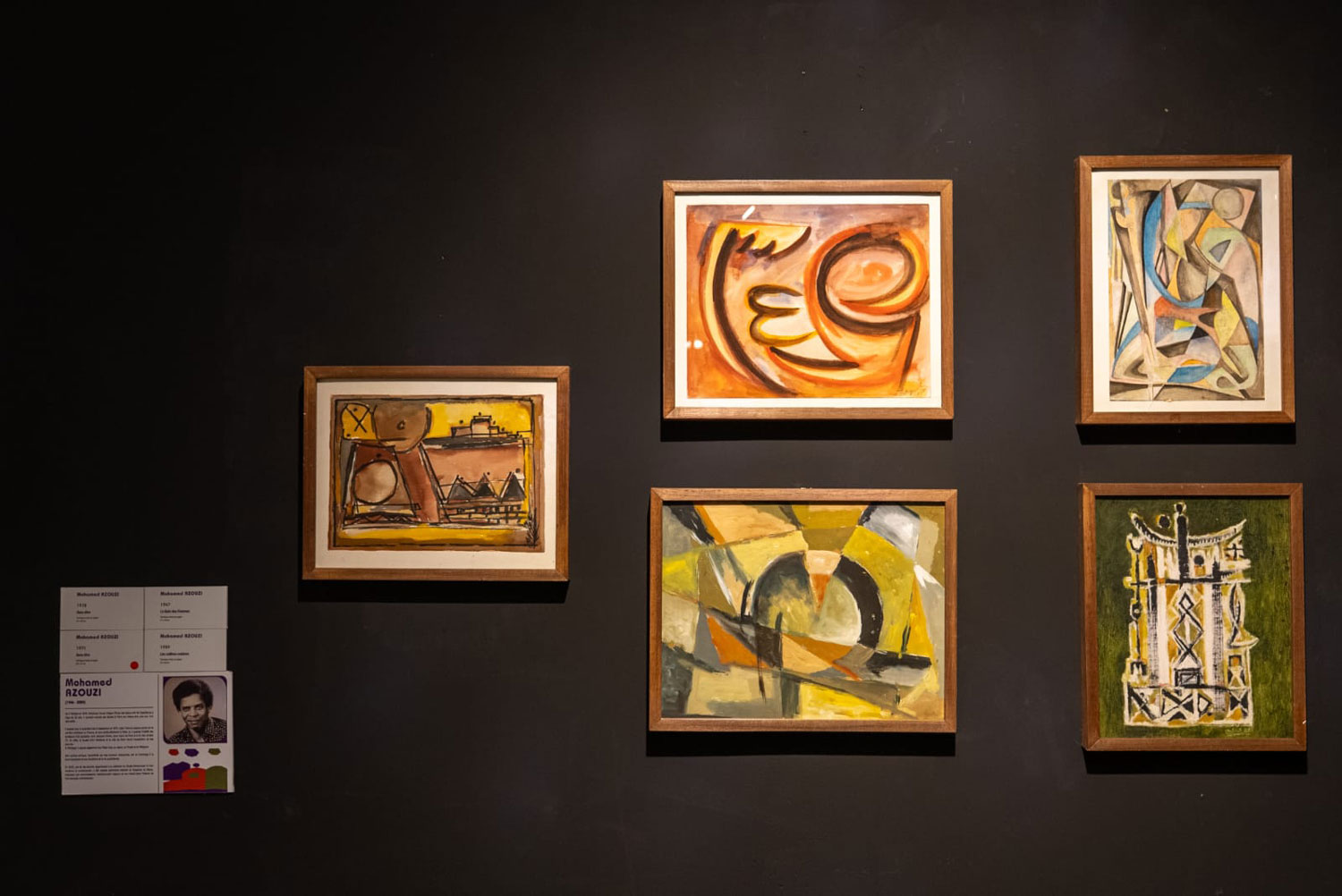
View of the exhibition “Perspectives on the Casablanca School” at the African Arty Gallery.
Nevertheless, despite their visual beauty, the inclusion of works by Miloud Labied, Bellamine, and Hassan Slaoui raises questions about the appropriateness of linking them to a movement with which they may share nothing more than the language of abstraction. Bellamine’s superb panel painting owes far more to the École de Paris and to Nicolas de Staël than to the École de Casa. Hassan Slaoui’s wood sculptures engage in a more fruitful dialogue with artisanal traditions than with the movement’s modernizing imperatives. Such associations, which are undoubtedly not coincidental, could serve to boost these artists’ market value, in accordance with well-established market logic.
Exhibition “Perspectives on the Casablanca School, 1962–1987,” AA Gallery, Casablanca, through September 15, 2026
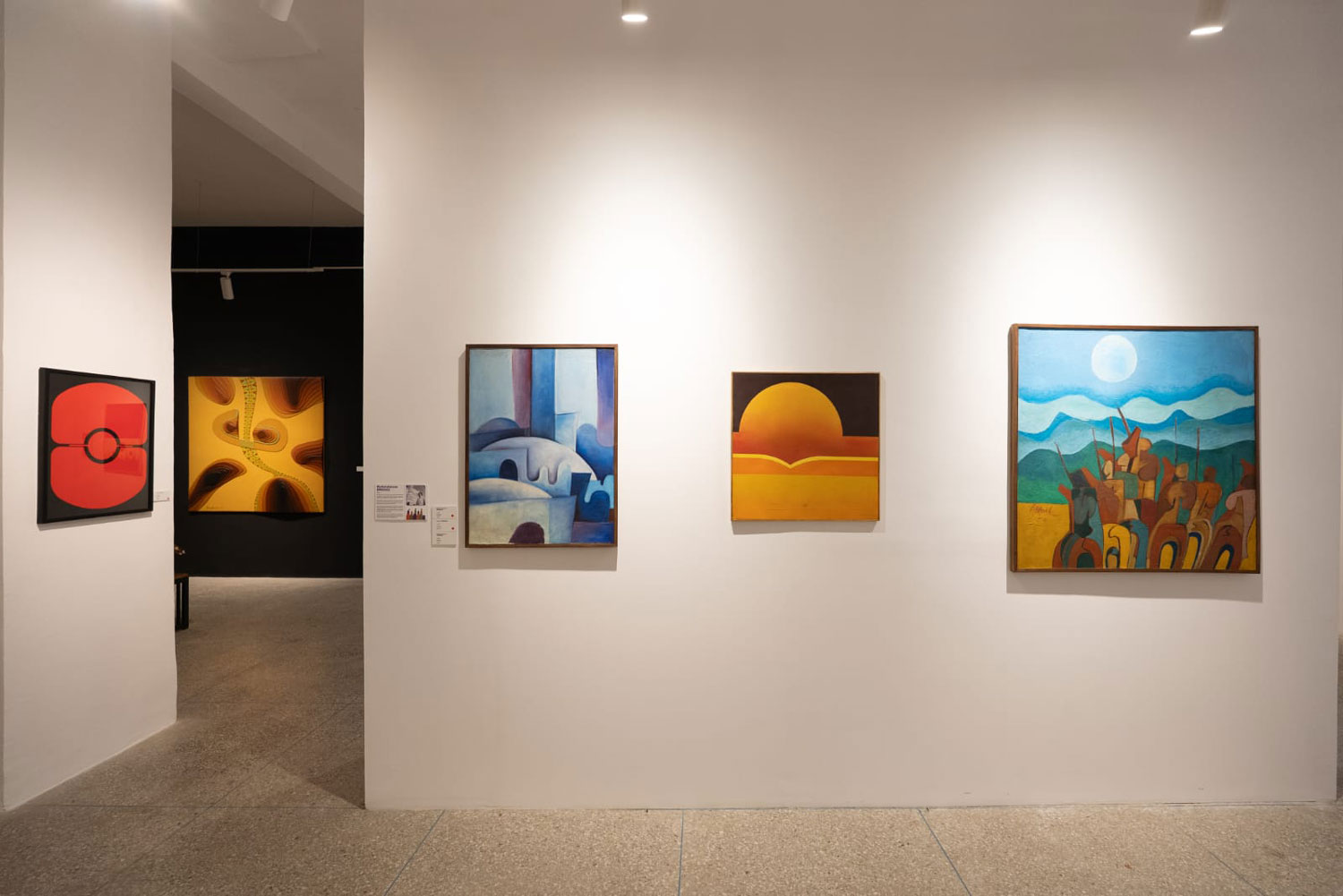
View of the exhibition “Perspectives on the Casablanca School” at the African Arty Gallery.