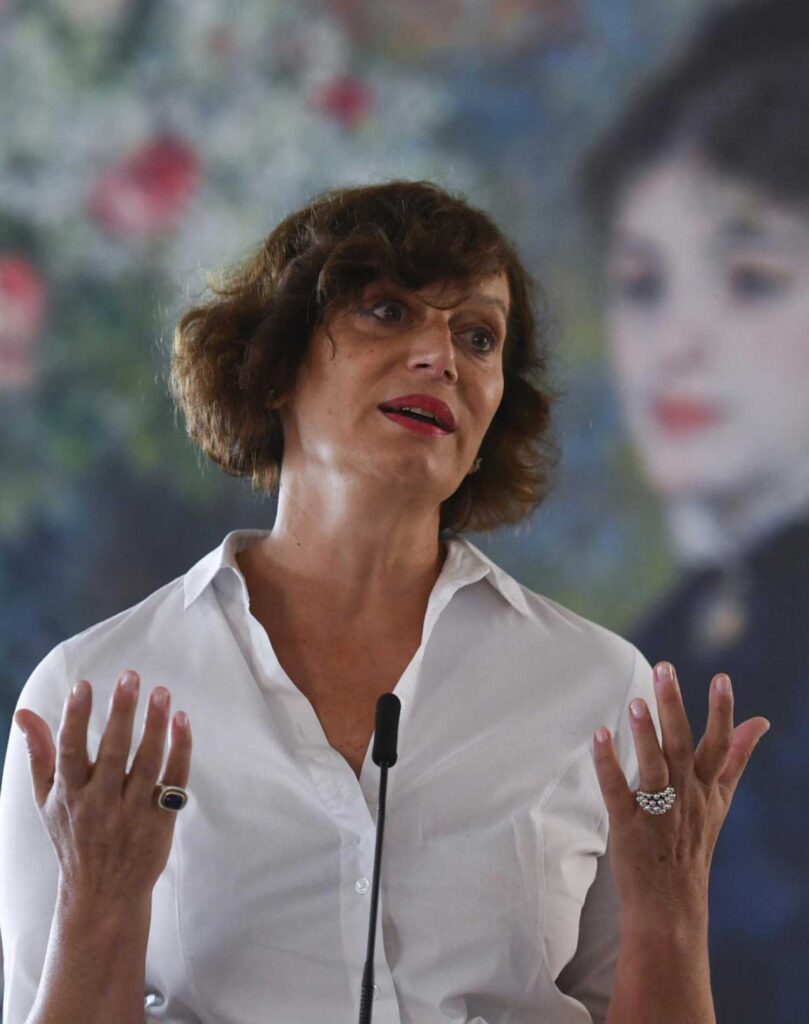
Historian and art critic Toni Maraini, who taught at the Casablanca Art School from 1964 to 1972, is the guest of honor at the 47th edition of the Assilah International Cultural Moussem. Here’s a look back at the career of a major figure who helped shape the history of modern art in Morocco.
By Olivier Rachet
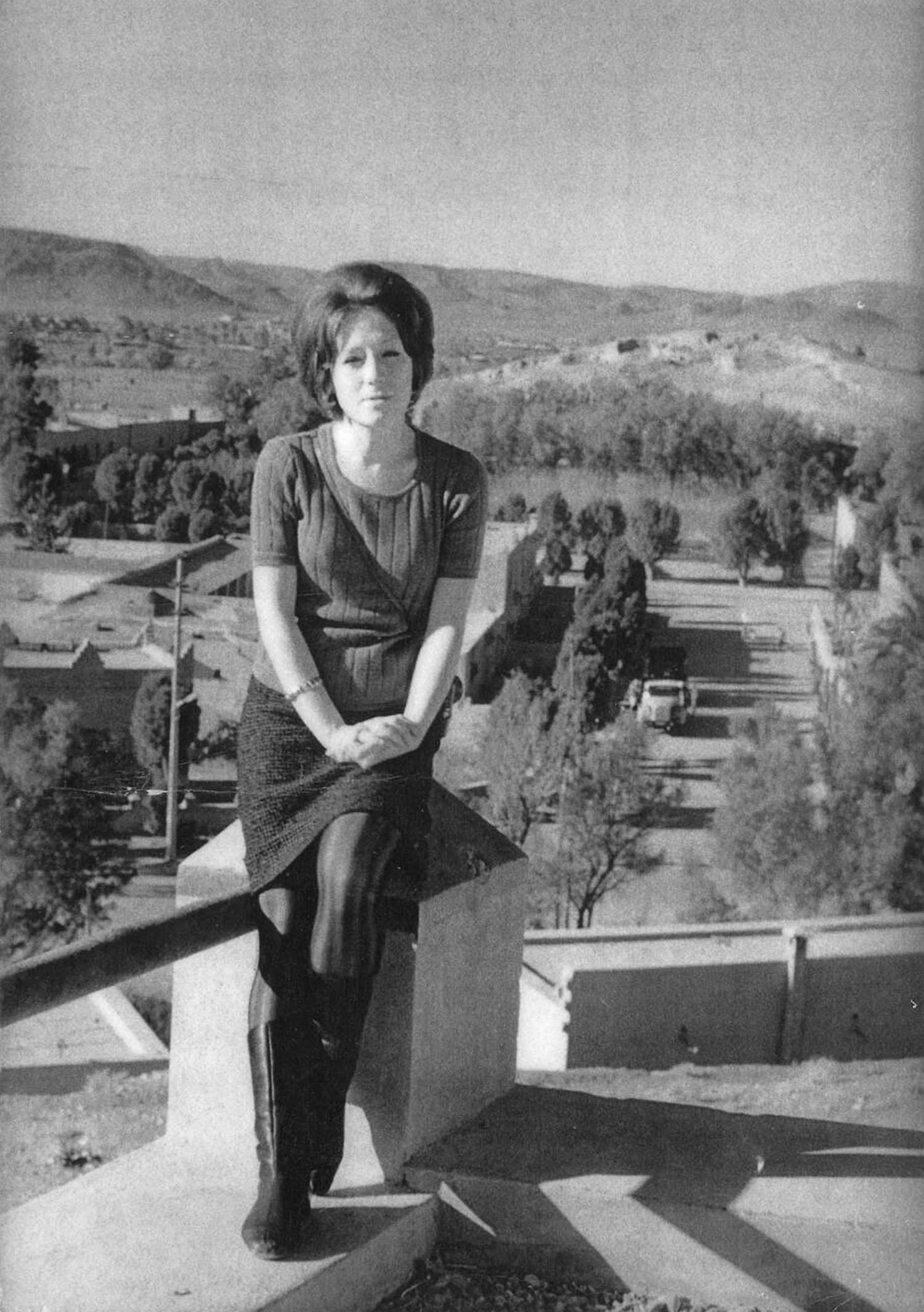
The circumstances of a birth, however random and contingent they may be, may shape one’s character and, without warning, set one’s destiny on a certain course. Toni Maraini was born in Japan in 1941, where her father, Fosco Maraini, had been awarded a research fellowship in anthropology. Accused of failing to pledge allegiance to the Italian fascist regime of the time, the family was interned in a prison camp in Japan from 1943 to 1945. Naturally reserved, Toni Maraini returned to this part of her childhood—always more or less formative—in her 2007 book La lettera da Benares [The Letter from Benares], an imaginary correspondence with her father, who had just died.
After returning to Italy, she continued her studies in England and at Smith College in Northampton in 1958 and 1962, and earned a degree in art history. In 1964, she earned a bachelor’s degree in cultural anthropology, history of the Arab world, and Oriental art, which set the course for a career marked by an openness to non-Western cultures and, more broadly, to others.
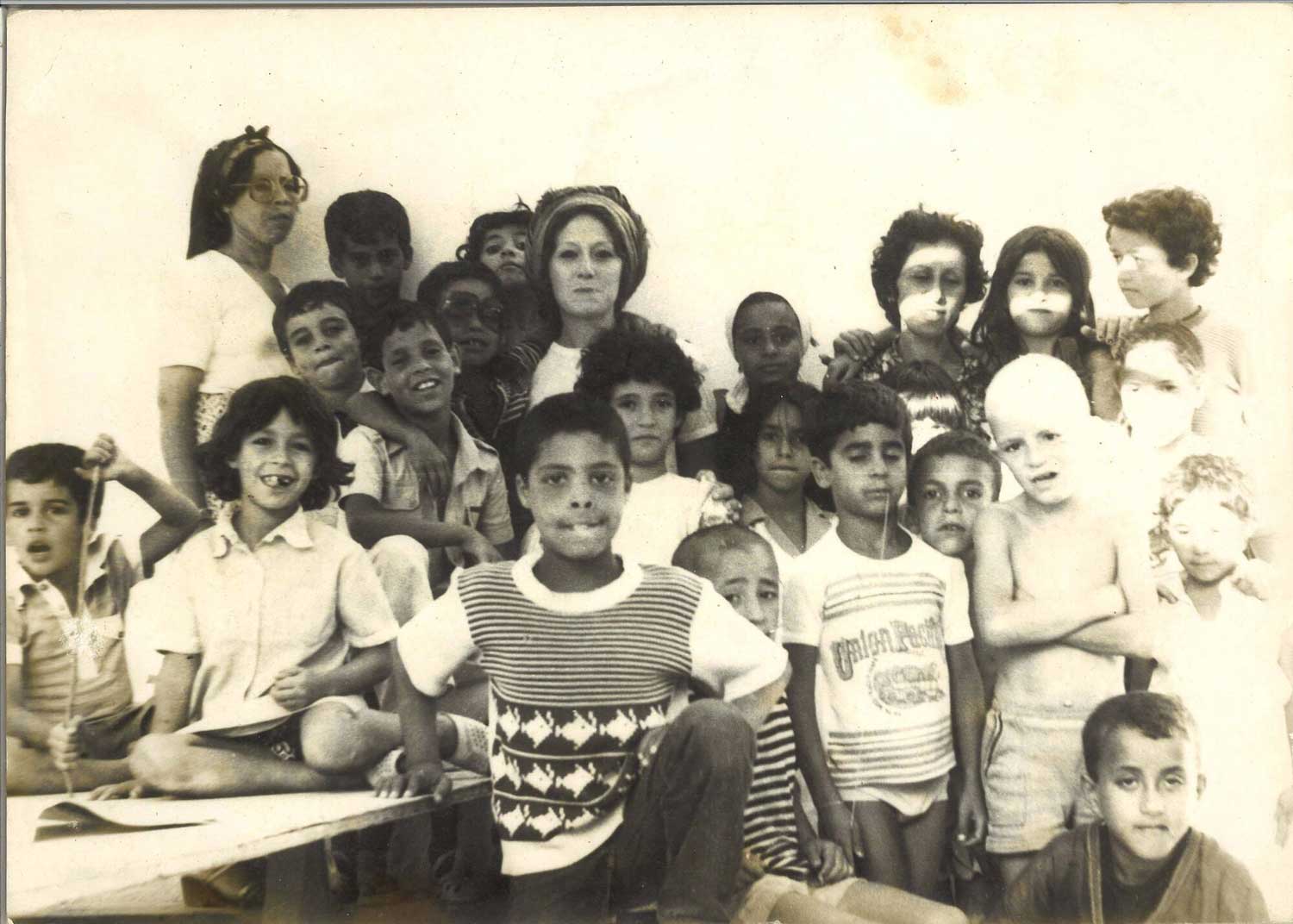
Beyond her now well-documented involvement with the Casablanca Group and the Casablanca Art School, where she taught modern art history from 1964 to 1972, she never ceased to consider every human being in all their vulnerability, taking as much interest in children’s education as in the issue of uprooting. On the occasion of the first Assilah Moussem (1978), she created an open workshop for children and teenagers, which she led until 1985, as well as an art therapy workshop at the Ibn Rochd Hospital in Casablanca, following in the footsteps of the experiments conducted by Dr. Abdellah Ziou Ziou at the Berrechid Psychiatric Hospital. She also published several personal collections, including a book of poems, Message d’une Migration [Message from a Migration] (Éditions Shoof, 1976), whose cover is illustrated by Melehi, whom she met in Italy and with whom she would later become a partner. During his stay in Rome, he exhibited at the Galleria Trastevere, which was then directed by Toni Maraini’s mother, Topazia Alliata. She reflects on the painter’s years in Italy in an article published in 2021.
But it is her Écrits sur l’art (Le Fennec, 1990) and her many contributions to the journals launched in the wake of the Casablanca Group—from Maghreb Art to Souffles and Integral—that establish the fundamental role she played in this Moroccan avant-garde movement in the aftermath of independence. In her contribution to the book C.A.S.A. – Casablanca Art School Archives 1962–1987 (Zamân Books), Salma Lahlou reflects on the innovative nature of her teaching at the time. “Maraini,” she writes, “was thus undoubtedly the first in the entire history of Morocco […] to teach a course in modern art history—and, moreover, from a transhistorical perspective, reaching back to prehistory, and a transcultural one, bringing together African and Mediterranean movements (embodied by the school’s own professors) and European movements, notably the Bauhaus and Paul Klee…”
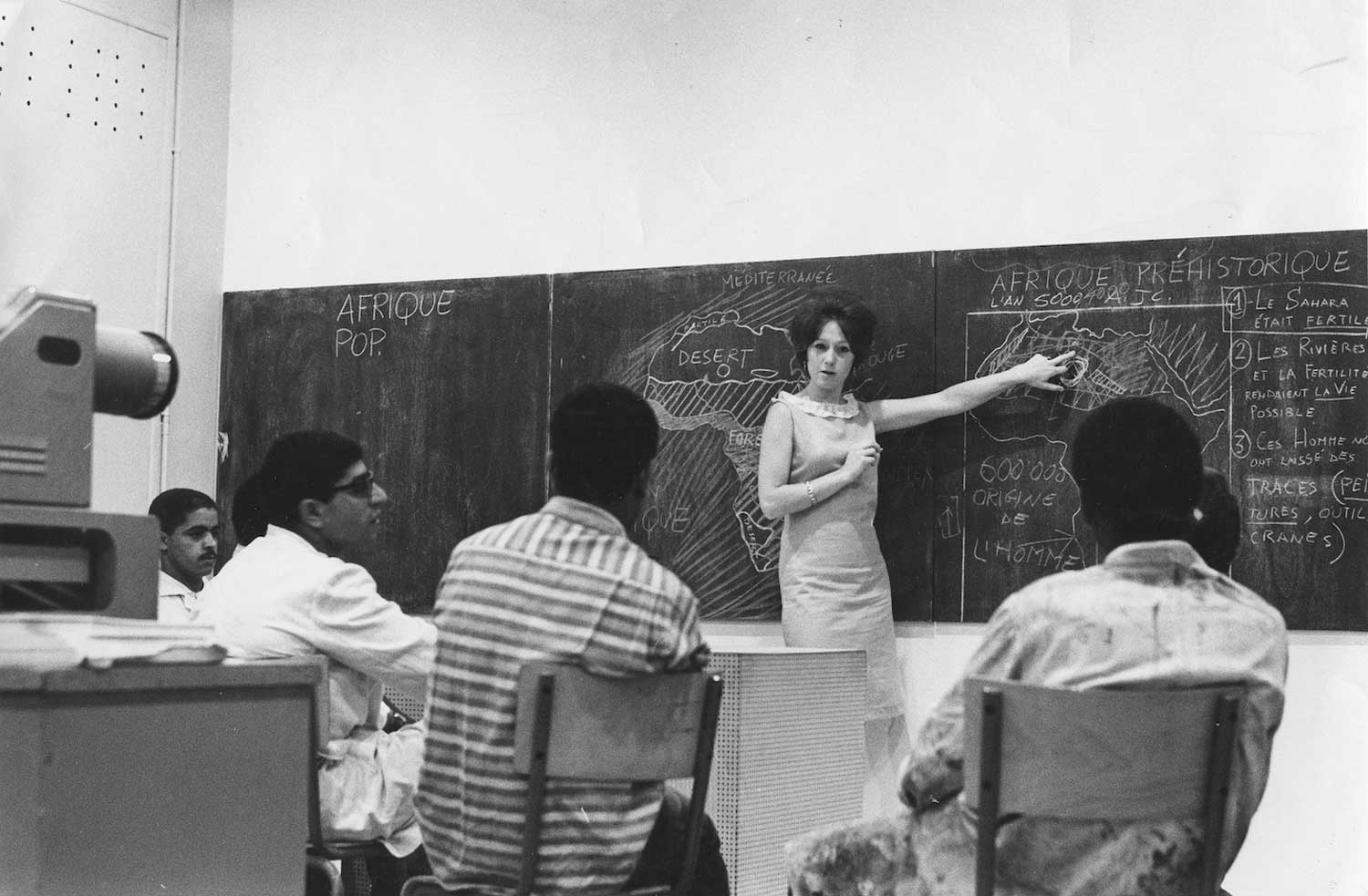
In an interview she granted us during the Fontainebleau Art History Festival—which featured Morocco as its guest of honor last June—Toni Maraini reflected on her pedagogical approach: “My classes began with an overview of Morocco and prehistory, without which it is difficult to understand the significance of the sites and artifacts of Ancient Morocco, its role as a bridge between Africa, the East, and the Mediterranean, as well as the spread of certain forms, materials, and symbols that have since been inscribed, as Khatibi wrote, in a ‘tattooed memory’ […]. I would then trace a journey through the art and history of the various eras and artistic productions that the students—given the education they received under the Protectorate—knew little about, just as they knew little about the main landmarks of Moroccan history.”
Her interest in folk arts, approached from both aesthetic and historical perspectives, and her reflections on the points of convergence between what are conventionally termed the East and the West—in the tradition of art historian Hans Belting’s Florence and Baghdad: Renaissance Art and Arab Science (Harvard University Press), and her consistently critical eye undoubtedly make Toni Maraini an indispensable figure for understanding the challenges of art history in Morocco, a history that continues to be actively written.