The fall issue is always a new beginning. This year, as everything gets underway—major museum exhibitions, biennials, fall auctions, and art fairs scheduled in London, Paris, and then in the Gulf—we’ve been looking back a great deal. As the Arab and African art scenes gain visibility—both at home and in major Western museums and art fairs that celebrate their artists—a need has emerged. We must also examine the history that has shaped them and the foundation upon which they are built.
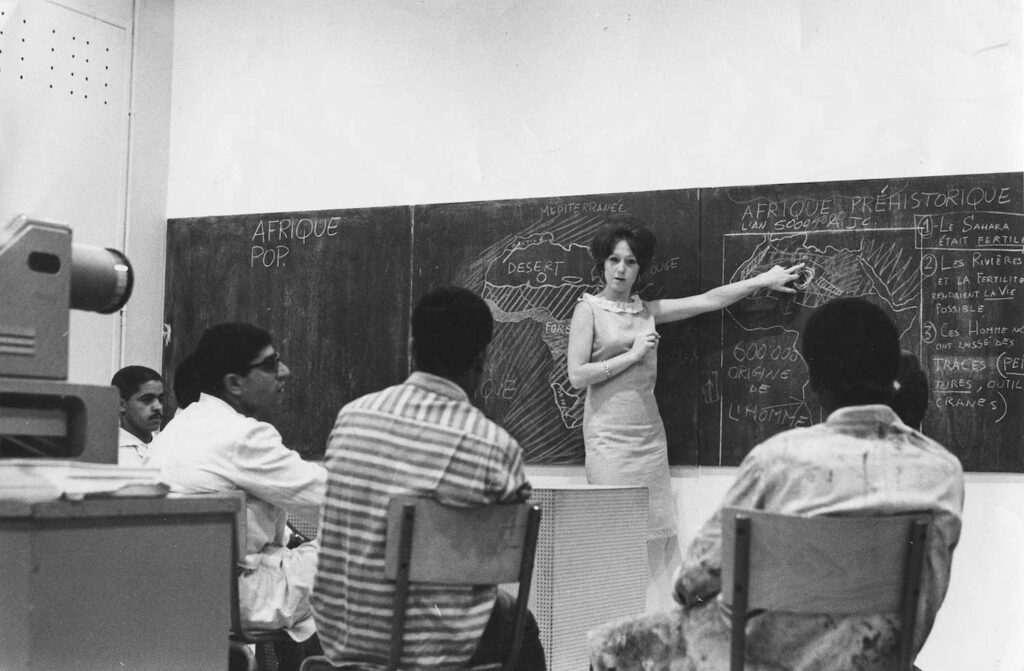
In the last issue, we announced the launch of our critical section. This fall, the accumulation of questions about our foundations led us to create an “Archives” section, which fits naturally into these pages. It is no coincidence that one of its first profiles is that of Mohammad Omar Khalil. At age 90, the Sudanese painter and printmaker has just been honored in New York. But a significant part of his story unfolded in Morocco, in Assilah, where he was invited to participate in the very first festival in 1978 and where he led the printmaking workshop from 1979 to 2018. There, one encounters Robert Blackburn, as well as Malika Agueznay, Farid Belkahia, Saâd Hassani, Abdelkebir Rabi’, and Miloud Labied: an entire chapter of Moroccan art history was forged in that workshop. Forty years later, this history is resurfacing in New York. The exhibition “Asilah Oui: Robert Blackburn in Morocco,” presented at the Blackburn Study Center, now documents Assilah as the creative laboratory it once was, when artists, intellectuals, poets, and musicians from Morocco, Sudan, and the United States gathered there to work together.
As we put this section together, we’ve come to realize that an archive is never a static collection. In another article, three red boxes of negatives forgotten in a closet in Cairo bring to light the Gaza captured by Kegham Djeghalian starting in the 1940s. Weddings, beaches, celebrations, but also refugee camps from the Nakba and the Khan Younès massacre: these images have spanned the decades, and as Gaza was destroyed, their significance has shifted. Gaza “before,” we now write. But before what? Before the occupation? Before the blockade? Before Hamas? Before the bombings? The images are the same. It is the present that ceaselessly alters their meaning.
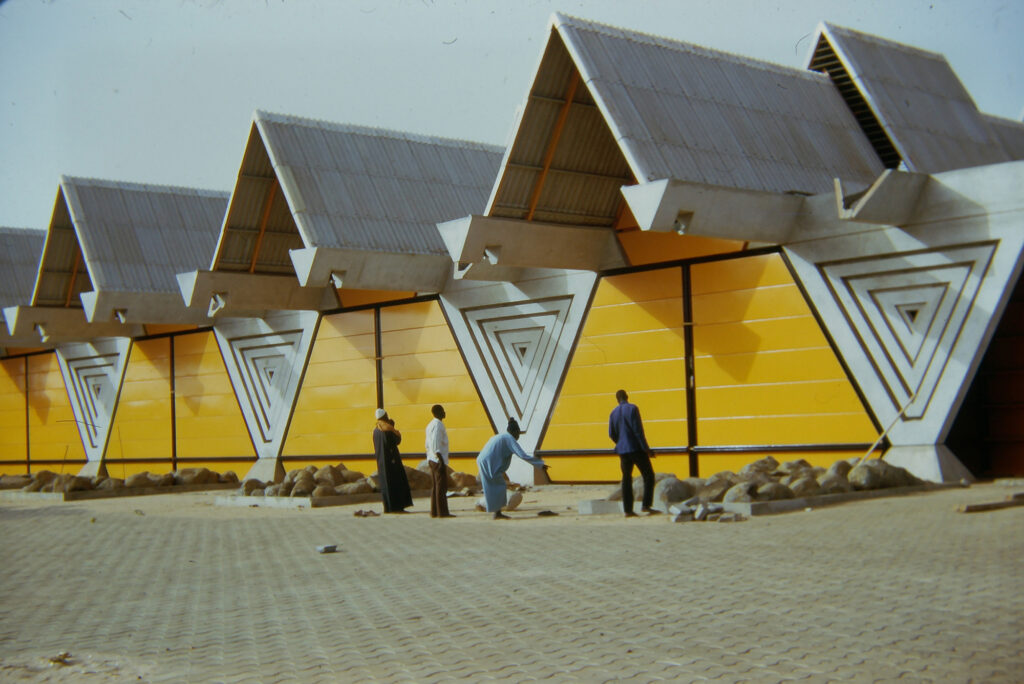
And then there are the institutions. They, too, stand the test of time—they age, endure, disappear, or reinvent themselves. This African fall is particularly telling. Founded in 1994, the Rencontres de Bamako have entered a new phase in their history, now 100% supported by the Malian side, in a country and a diplomatic context that have undergone profound changes. In Lubumbashi, the biennial created around Picha by artists, including Sammy Baloji, nearly didn’t take place due to a lack of funding. Yet it will indeed go ahead. In Dakar, Morad Montazami has made a radical choice: his selection focuses not on emerging scenes, but on the already established practices of mid-career artists, as well as figures he intends to restore to their rightful place in history, such as Faouzi Laatiris, El Hadji Sy, and Ernest Breleur.
We need to pause and reflect on this paradox. For years, we’ve talked about “emerging scenes.” Diptyk has used this term extensively. But it’s time for our scenes in the Global South to move beyond the “emerging” stage. For too long, Africa has been synonymous with youth, discovery, and emergence. As if each generation sprang into being out of nowhere, as if there were no schools, no teachers, no workshops, no institutions, no lineages, no breaks with the past, no archives… A powerful tool for visibility or for In marketing, the concept of “emergence” becomes reductive when it obscures the complexity and depth of the scenes. Bamako is thirty years old. The Assilah printmaking workshop is nearly half a century old. Faouzi Laatiris has trained several generations of artists.
It’s no longer about discovery. Now it’s about knowing.
Meryem Sebti