In Rabat, the third edition of BIDAYA brought together eight recent graduates of the Casablanca Art School for an artist residency followed by an exhibition at Espace Expressions CDG. Spanning installations, photography, digital art, and design, their works reflect a wide range of concerns. But they also raise a crucial question for the Moroccan art scene: how can we support artists as they transition from school to the professional world?
There is a particularly delicate moment in a young artist’s journey: the moment they leave school. The studios, teachers, production resources, and collaborative environment that supported their early explorations disappear, just as they must begin to establish an independent practice, find places to work, and, above all, exhibit their work. In Morocco, where support programs for early-career artists remain relatively few, this transition deserves special attention.
This is precisely where BIDAYA (“beginning”) comes in. For its third edition, the CDG Foundation, in partnership with the Casablanca Art School (ESBAC), invited eight of its recent graduates to take over the Espace Expressions CDG in Rabat. A creative residency, held from July 24 to 30, 2026, preceded the exhibition, offering participants the opportunity to develop their projects in a professional setting and present them to an initial audience.
The format is noteworthy: it’s not simply a matter of hanging graduation projects, but of giving young artists the means to continue their artistic exploration outside of school. A week is quite short for a residency. The goal, therefore, is less about trying to produce fully realized works in just a few days than about establishing a relationship with the artists that has the potential to continue.
From the Rural World to Digital Images
The exhibition brings together approaches that do not necessarily seek to complement one another. In fact, this is one of its defining features: BIDAYA brings together graduates from different fields (art and architecture, graphic and digital design, interior design) rather than a single generation united by a predetermined theme.
Ayman Bouaali’s work takes as its starting point the transformations of rural Morocco, particularly drought and its impact on the landscape. The artist works with humble materials, including dried paper towels and toilet paper, which he colors to create organic surfaces and forms. In Le Puits (2026), a network of roots unfolds across a long vertical strip. The image evokes both the search for water and the fragility of natural balances. The precarious nature of the medium is not incidental: it lends a particular materiality to this reflection on resources and their depletion.
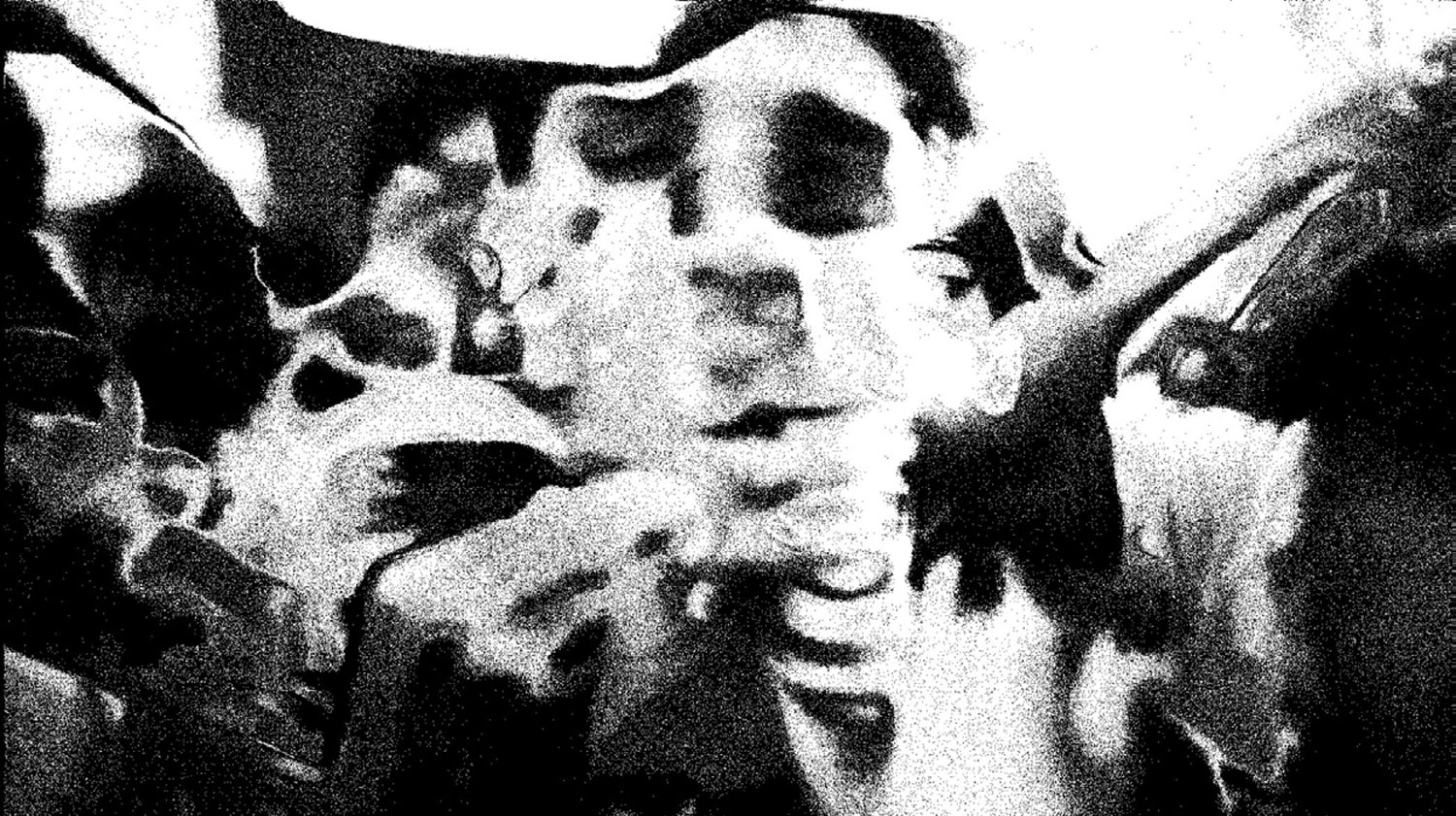
At the other end of the spectrum, Chouaib Attif explores the degradation of the digital image. His three-screen video installation, Residual Signal (2026), stretches an image until it becomes almost unrecognizable. Pixels, chromatic distortions, and gaps between the monitors create a visual space where the image seems to disintegrate. In his photographic series, faces undergo similar processes of fragmentation and erasure. The artist seeks not so much to explore the technical possibilities of digital media as to examine what becomes of the human figure when it is continually converted, compressed, and transformed into data.
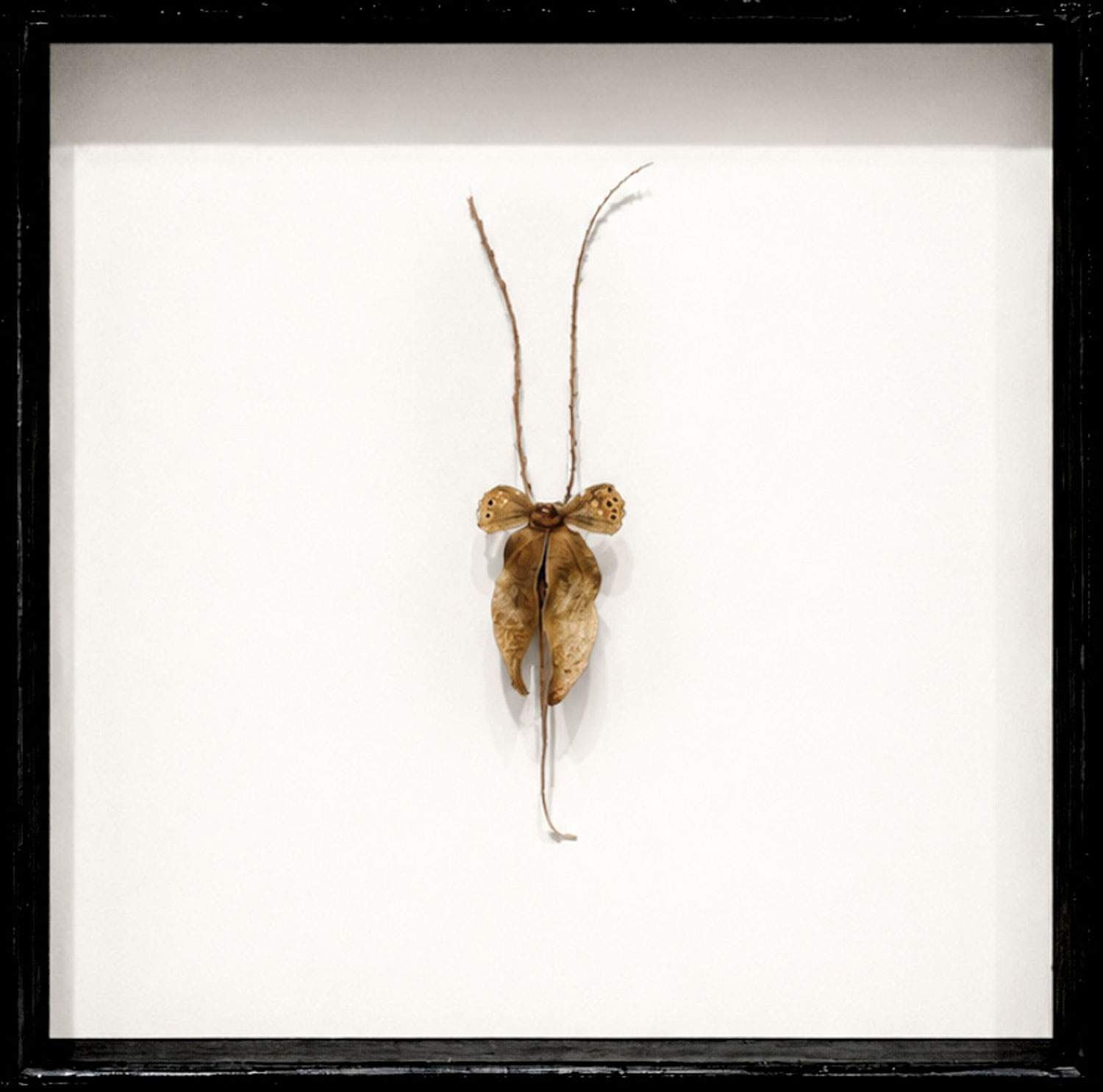
This focus on the unstable forms of living things is also evident, albeit in a different way, in the work of Mohamed Attou. With Specimen A023 (2026), a suspended installation made of plant matter, he imagines an organism that takes its appearance from the world of insects without corresponding to any identifiable species. Other specimens, presented in frames, evoke natural history collections. The installation plays on the ambiguity between scientific discovery and artistic invention. Above all, the use of natural plant materials introduces a temporal dimension: the materials transform, dry out, and decay. The work is not fixed in its initial state.
Memory as Material
Some works draw more directly on Moroccan social and cultural practices, without necessarily resorting to their most conventional forms.
Randa Ghalib focuses on a seemingly mundane object: the business stamp. In The Seal of Trust (2026), she combines kraft paper, paint, printing, and glass to evoke a system of exchange based on one’s word. Her work on merchants’ cards extends this exploration of businesses, documents, and graphic codes that accompany everyday transactions. This focus on ordinary materials offers an interesting way to approach intangible heritage: not as a set of traditions to be celebrated, but through the objects and practices that preserve its traces.
The issue of transmission takes on a different form in the work of Mohamed El Aamery, a native of Aït Baha. With IGHRM (2026), he envisions a strategy game inspired by the layout of villages in the Amazigh highlands. Architecture, agriculture, natural resources, and characters drawn from this cultural world become the components of a playful system. The project is therefore not limited to illustrating a cultural heritage; it seeks to translate certain principles of that heritage into a language accessible to new audiences. It remains to be seen how this game, beyond its graphic qualities, could be developed and tested with its future users.
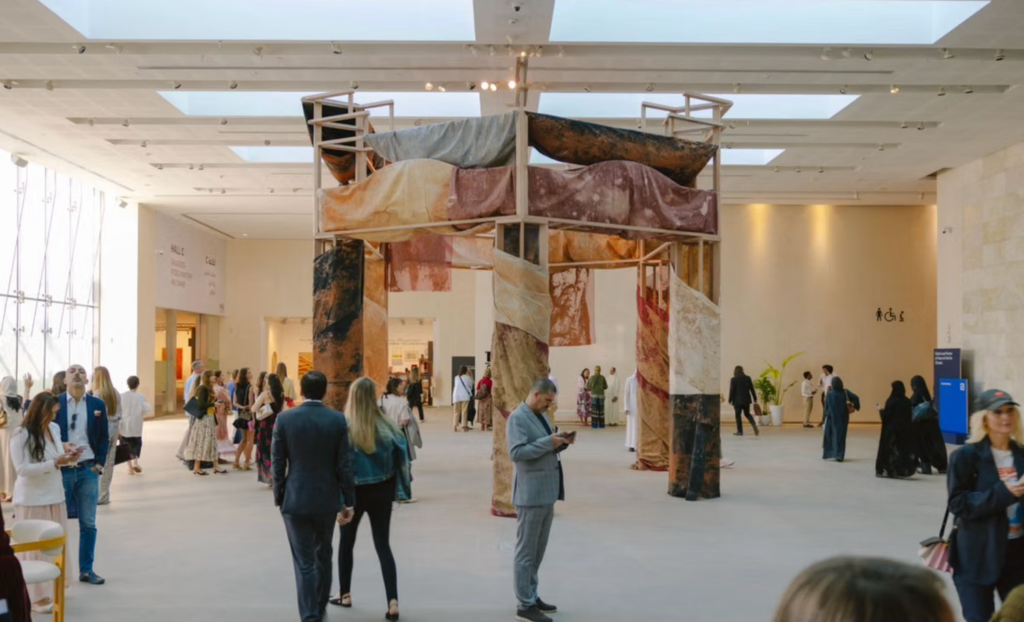
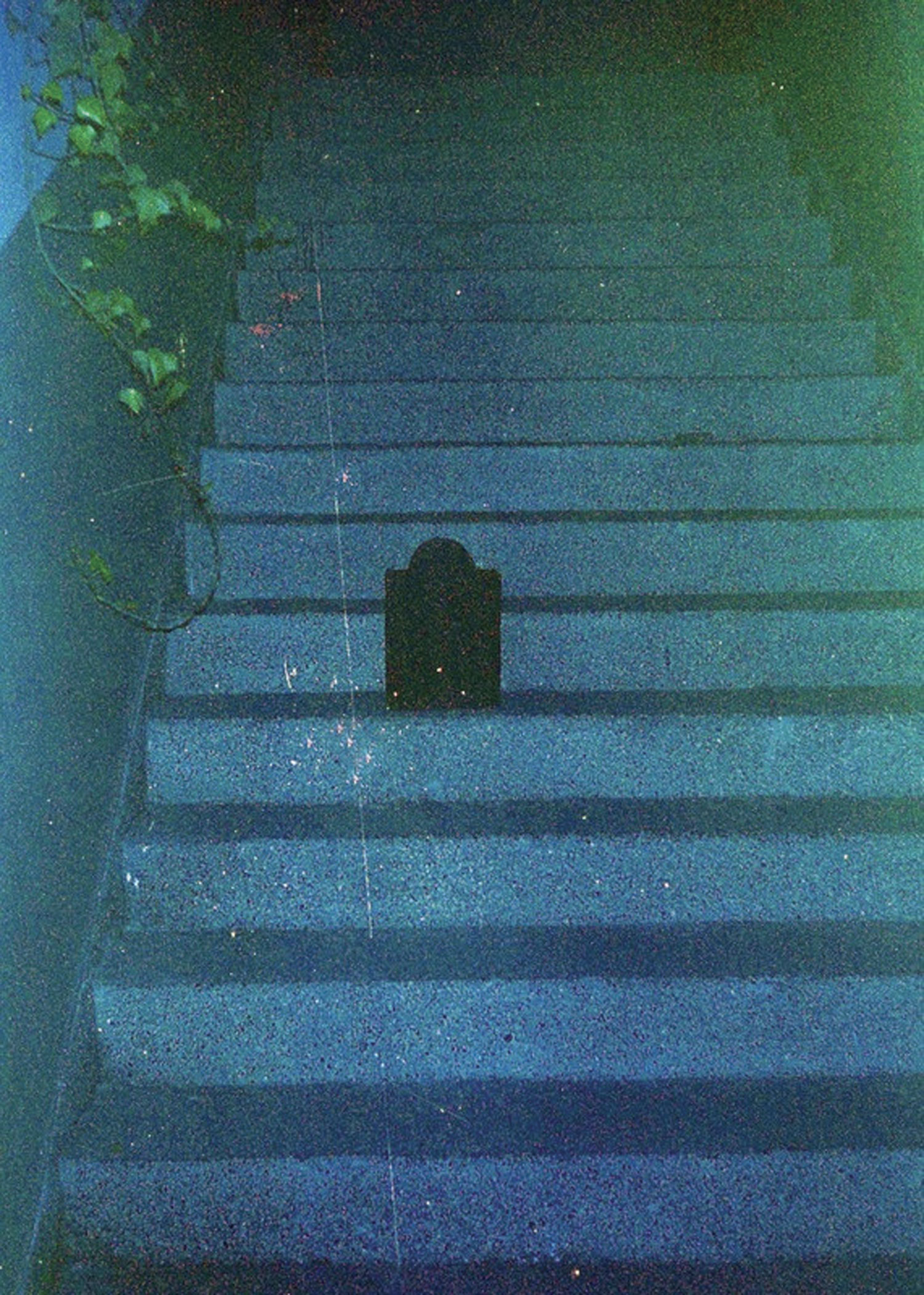
Salaheddine Makoudi’s work, which takes on a darker tone, explores Moroccan funeral rituals. His installation Al Darih (2026) takes the architectural form of a mausoleum, featuring a wooden structure covered in white fabric, video projections, lamentations, and recitations from the Quran. The artist is less interested in the representation of death than in the space left by absence and the collective rituals surrounding mourning. His film photographs, taken with expired film, extend this exploration: the chromatic alterations and imperfections in the images seem to physically capture the passage of time.
Between the Visual Arts and Design
The inclusion of design in BIDAYA broadens the scope of the exhibition while highlighting the differences between practices whose objectives are not always comparable.
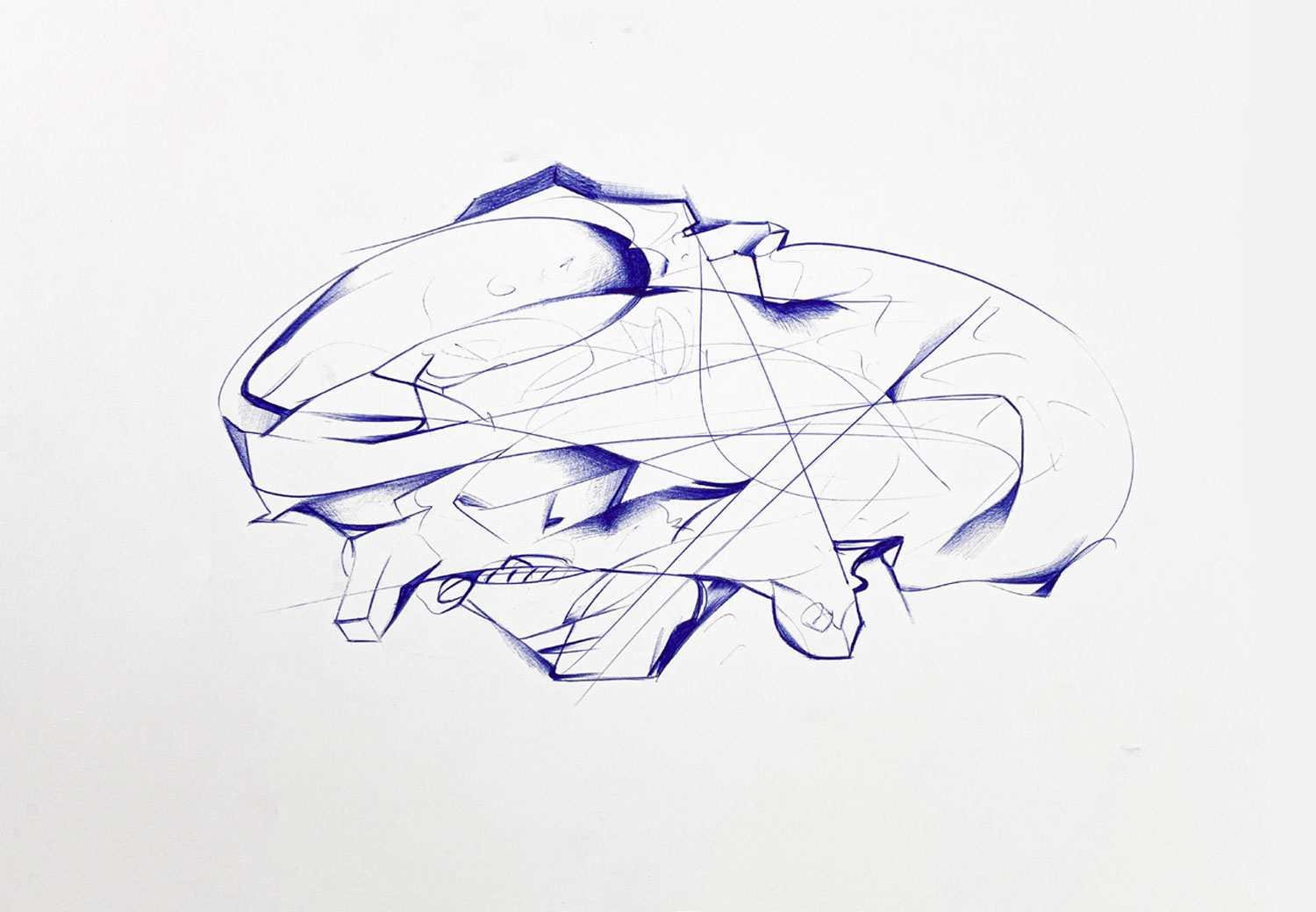
With VANOMA, Walid Oulahyane has designed an electric travel vehicle, intended to accommodate up to four people and meet the economic and practical needs of young travelers. Presented through drawings, technical renderings, and 3D models, the project falls more within the realm of conceptual design than that of a visual art piece. Nevertheless, it demonstrates an ambition for applied design, combining mobility, functionality, and formal exploration.
Badreddine Cherrat, for his part, explores the concepts of identity and transformation. His Passeport du monde (2026), presented as a digital work, envisions a document stripped of its national associations. In Rubik’s Cube: 54 Abstractions, he develops a set of modular compositions that can be rearranged. These two works address, through very different means, the idea of a non-fixed identity. While the blank passport relies on an immediately recognizable symbol, the modular system opens up a more complex visual exploration based on constant reconfiguration.
This diversity is both the appeal and the challenge of an exhibition like BIDAYA. Among immersive installations, photographic explorations, graphic projects, and design prototypes, the levels of completion are inevitably uneven. Some works already demonstrate a relatively well-defined personal style; others remain at the stage of a proposal or an experiment. But this is also the nature of a program dedicated to artists at the beginning of their careers.
What support is available after the exhibition?
Beyond the works on display, BIDAYA raises a broader question that directly concerns the structure of the Moroccan art scene.
An artist’s visibility does not begin with their entry into a commercial gallery or their selection for a major international event. It is built long before that, through production experiences, professional networking, research opportunities, and chances to present their work to audiences outside of school.
By bringing together an art education institution and a foundation with an exhibition space, BIDAYA offers a concrete solution to one of these needs. The program provides recent graduates with their first experience of institutional exhibition, in a context where opportunities for residencies and production remain limited.
One crucial question remains, however: what happens next? An exhibition—even one accompanied by an artist residency—is not enough to establish a sustainable artistic practice. Ongoing support, access to studios, production resources, and professional networks are all necessary steps.
It is perhaps by this measure that we will need to assess, in the coming years, the impact of BIDAYA: not only by the quality of successive exhibitions, but also by what becomes of the artists who have participated in them.
For a beginning only truly takes on meaning through what follows it.
BIDAYA 3 — Residency and Exhibition for Graduates of the Casablanca School of Fine Arts
Espace Expressions CDG, Rabat
Residency from July 24 to 30, 2026
Exhibition through September 14, 2026
Organized by the CDG Foundation in partnership with the Casablanca Art School (ESBAC).