For his first solo exhibition, “Indélébile,” the 2025 winner of the Mustaqbal Prize offers an interactive journey into the world of childhood, exploring the balance between the freedom of play and the relentless process of socialization.
By Olivier Rachet
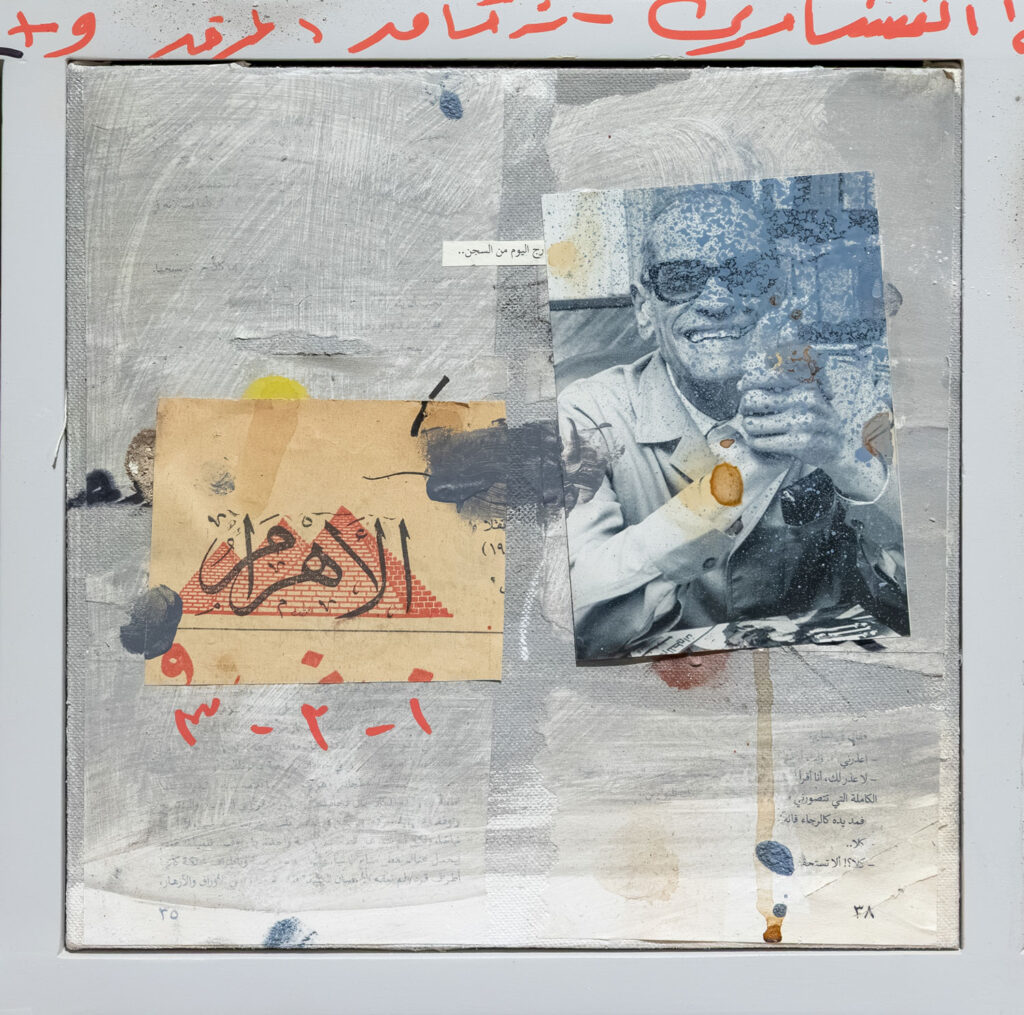
The stakes are always high for the winners of the Mustaqbal Prize for emerging artists: facing their first solo exhibition and taking on the intimidatingly large Artorium space at the TGCC Foundation. One wonders, in fact, whether it might not be wiser to exhibit the three winners together to overcome this challenge? While some previous winners, such as Khadija El Abyad and Kamil Bouzoubaa-Grivel, have at times opted for mediums or materials with which they were not always familiar—such as sculpture or ceramics—all of them have experimented, with varying degrees of success, with the flexible boundaries of installation art.
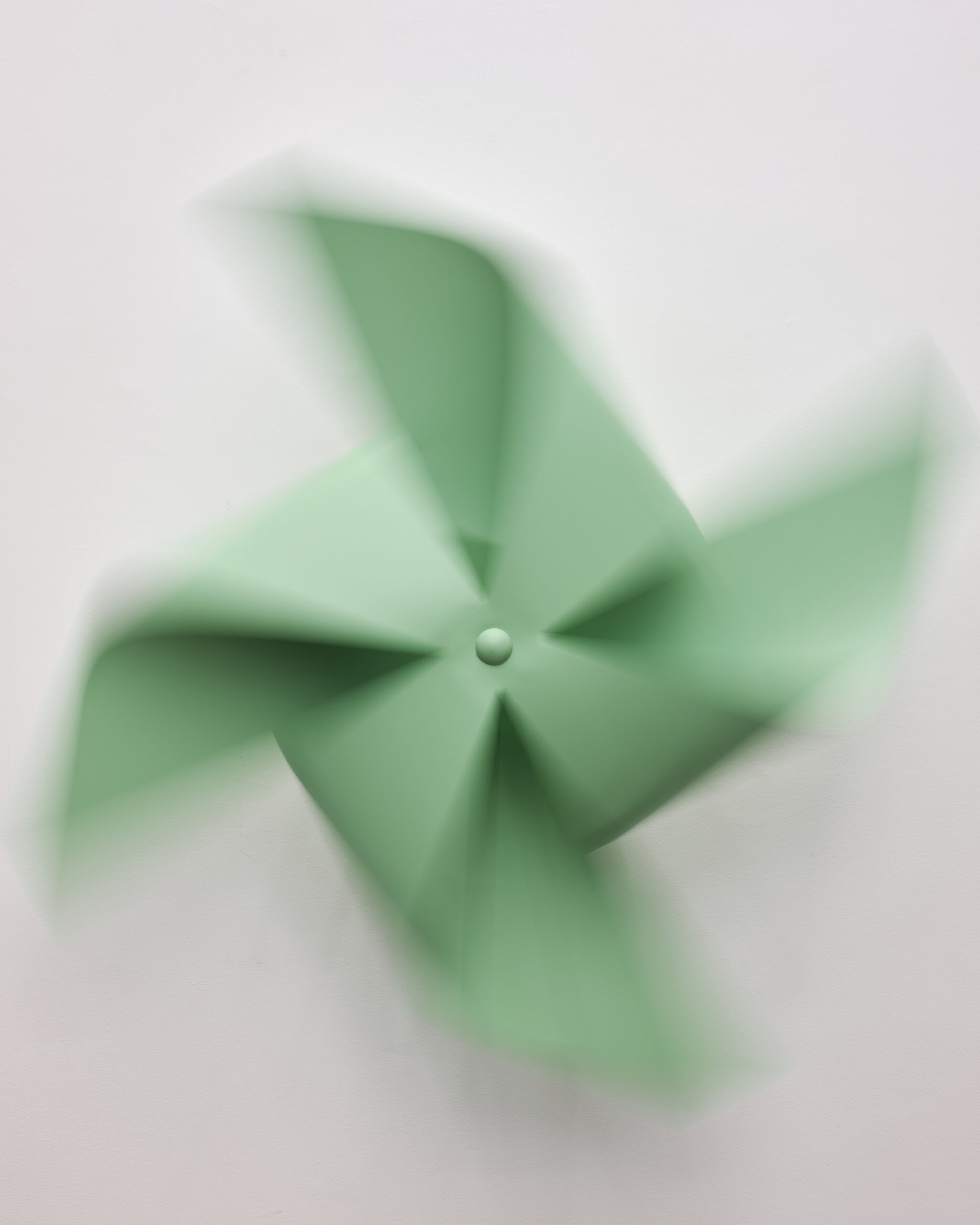
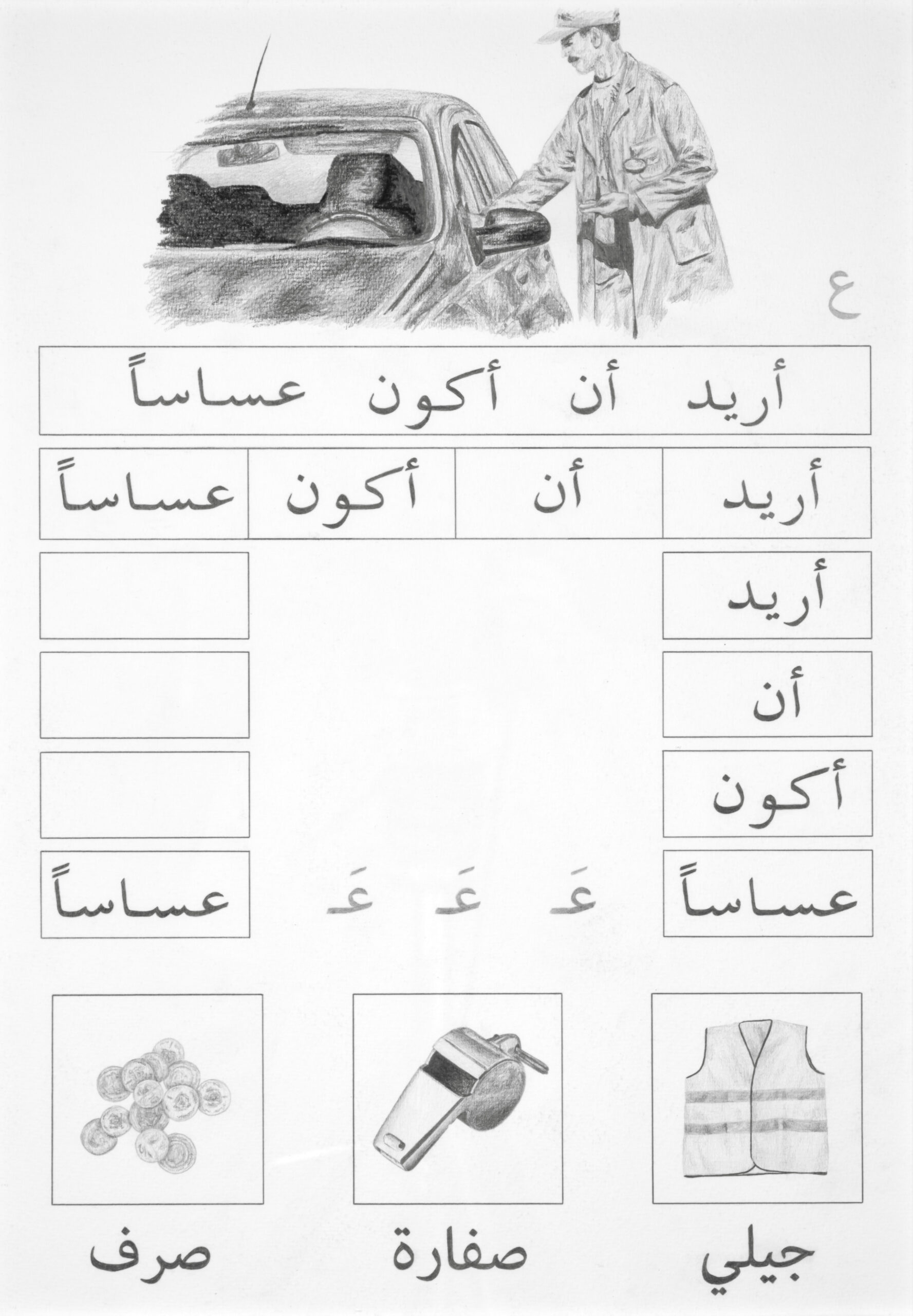
Aymane El Gadi chooses to transform the exhibition space into a classroom and a playground through works that evoke both playgrounds and the processes of socialization. A bench covered in nails and school uniforms in “gendered” colors—reproduced in tricolor catalogs—remind us, not without a touch of naivety, that school is a place of power and control over individuals, just like the military or prison.
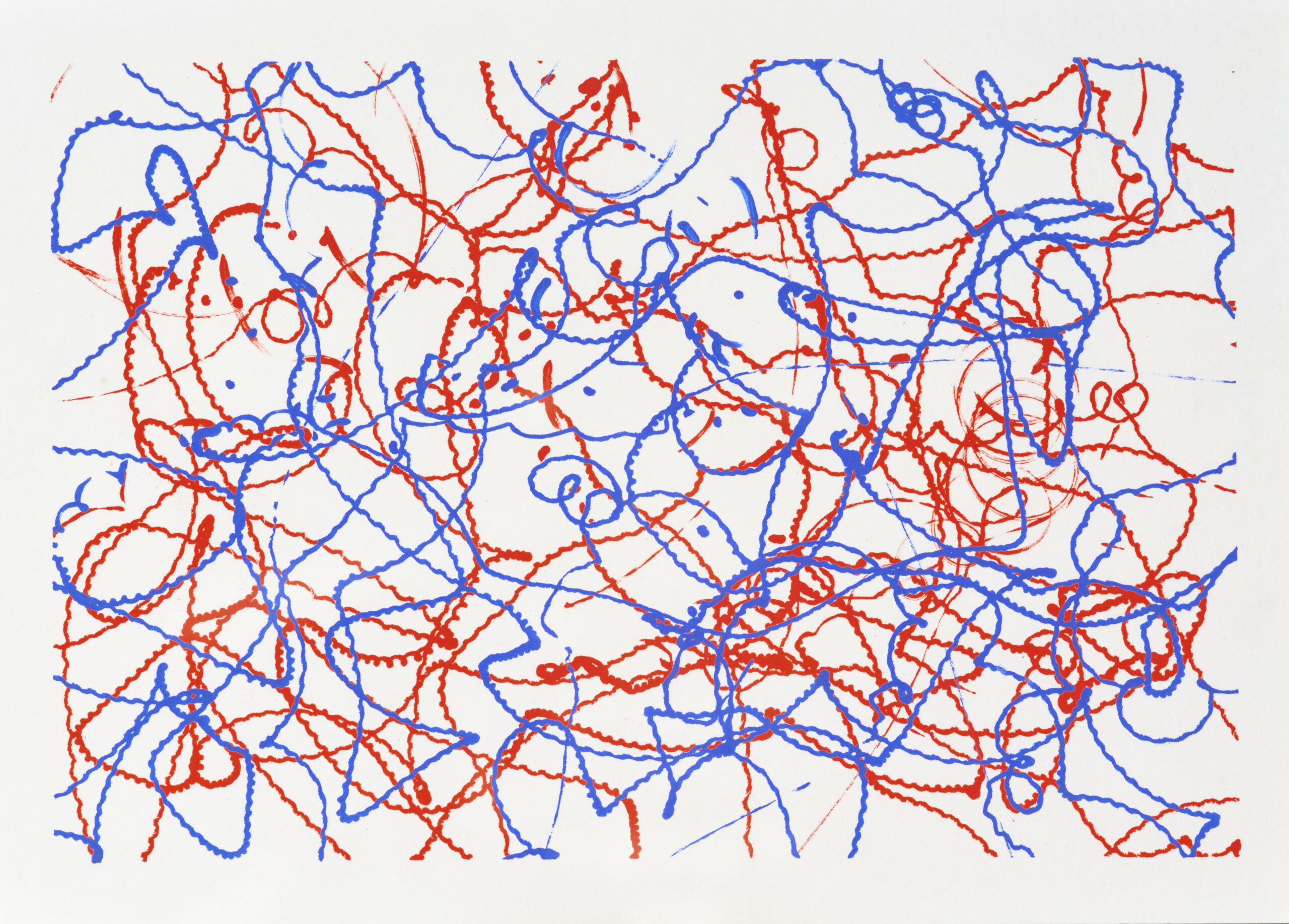
One of the exhibition’s successes is its ability to create a tension between the rigidity of rules and the imagination inherent in children’s games. Twenty-four sheets of paper are hand-gridded, suggesting a punitive principle of repetition whose educational virtues—which sanctify memorization—are here undermined. Alongside them are drawings whose lines were drawn randomly by a simple spinning top—a distant echo of Pollock’s drippings—express the joy of play and the transgression of rules.
We expected Aymane El Gadi to focus on graphite pencil drawings—a medium he has already mastered with virtuosity and which features several standout works in the exhibition. Instead, the artist chose to approach this medium from the perspective of reflexivity, notably by depicting a child in close-up as he contemplates the colors of a set of marbles. Alongside these are pixelated drawings and others that magnify undulating lines, highlighting the importance of perception. Aymane El Gadi does not impose a condescending gaze upon us, but he places at the center of his approach the very question of representation and vision—with a certain humility.
He is only at the start of his career: let’s bet that the game is far from over!
Exhibition “Indélébile” by Aymane El Gadi, curated by Farah Maakel, Espace Artorium, TGCC Foundation, Casablanca, through December 19, 2026