Coming to terms with trauma rather than erasing it—that is the invitation extended by the16th edition of Dak’Art, curated by Morad Montazami under the theme “(Anti-)Fragility: Arts of Repair and Strategies of Recoupment.” Nearly 80 artists explore acts of repair, shared knowledge, and strategies for working around obstacles. However, the scope of this ambition remains dependent on curatorial choices and production resources.
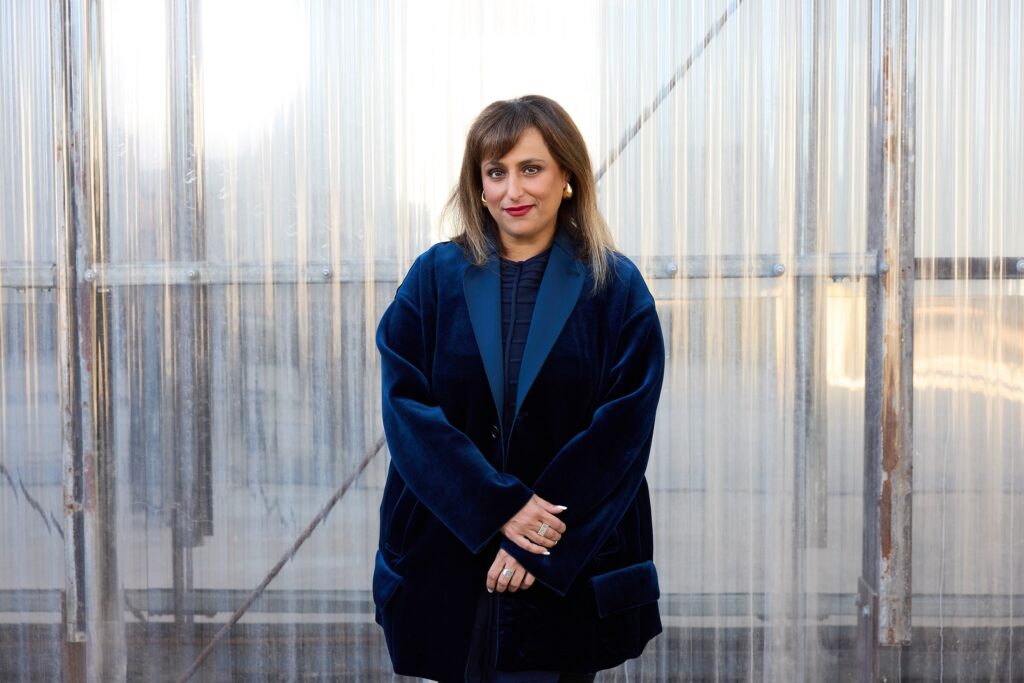
By Farah Makeel
Place16th The Dakar Biennale centered on the theme of “antifragility” would almost run counter to its historical mission: to let Africa tell its own story. Yet emphasizing the fragility and vulnerability of the African scene risks overlooking its strengths. This title, which sparked debate within Dakar’s cultural microcosm, may have been misinterpreted. Dak’art’s artistic director, Morad Montazami, was seeking a term that would capture an era of overlapping ecological, economic, and social crises. Nassim Nicholas Taleb’s concept of “antifragility,” which he draws upon, aims to move beyond a victim mentality by viewing crises as spaces for reappropriation, from which tools for social transformation can emerge: reversing the burden of trauma and shocks to uncover the “benefits of disorder.” Moreover, the strength of the continent is beyond doubt for Modou Dieng, a Senegalese artist exhibiting in “Palimpsest of African Cities” at the Le Manège gallery, who points out during a discussion that it is in the Global South that we find the answers to the ills created by the Global North.
Vanishing Lines
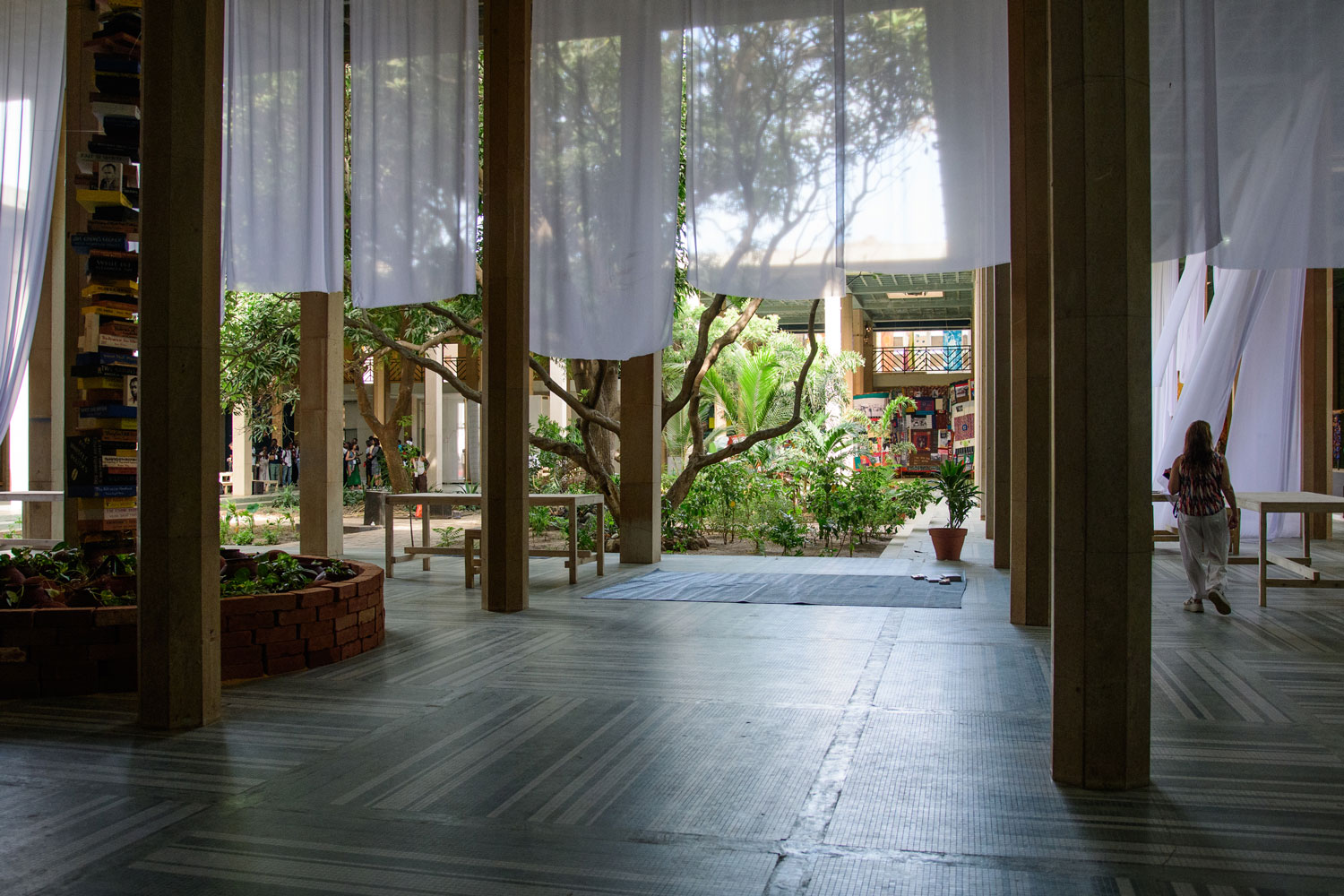
At the former Cape Manuel Courthouse, this Monday, November 23, at 3 p.m., there was no crowd, just a moment of calm and quiet reflection. We stepped out onto the patio, where long white veils fluttered in the breeze. There, Joey Aresoa unfurled Seeds from Beyond (2026), an imaginary herbarium composed of ceramic seeds and accompanied by sound poetry. The main focus of the exhibition design is the reforestation of the palace’s green spaces, in collaboration with the Botany Laboratory of the Cheikh Anta Diop Fundamental Institute of Black Africa. Re-greening the palace is a work of art in itself through its gentle and slow act of restoration. On the upper floors, each room hosts a solo exhibition. Visitors enter an artist’s world rather than a thematic exhibition. The exhibition itinerary, conceived by the curatorial team comprising Madeleine de Colnet, Oulimata Gueye, Delphine Lopez, and Fatima Bintou Rassoul Sy, is structured around five guiding themes—re-greening the palace, arts of marronage, being and creating, sharing knowledge, and connecting the continent. These lines of flight run through the visitor’s journey without, however, dictating the spatial layout.
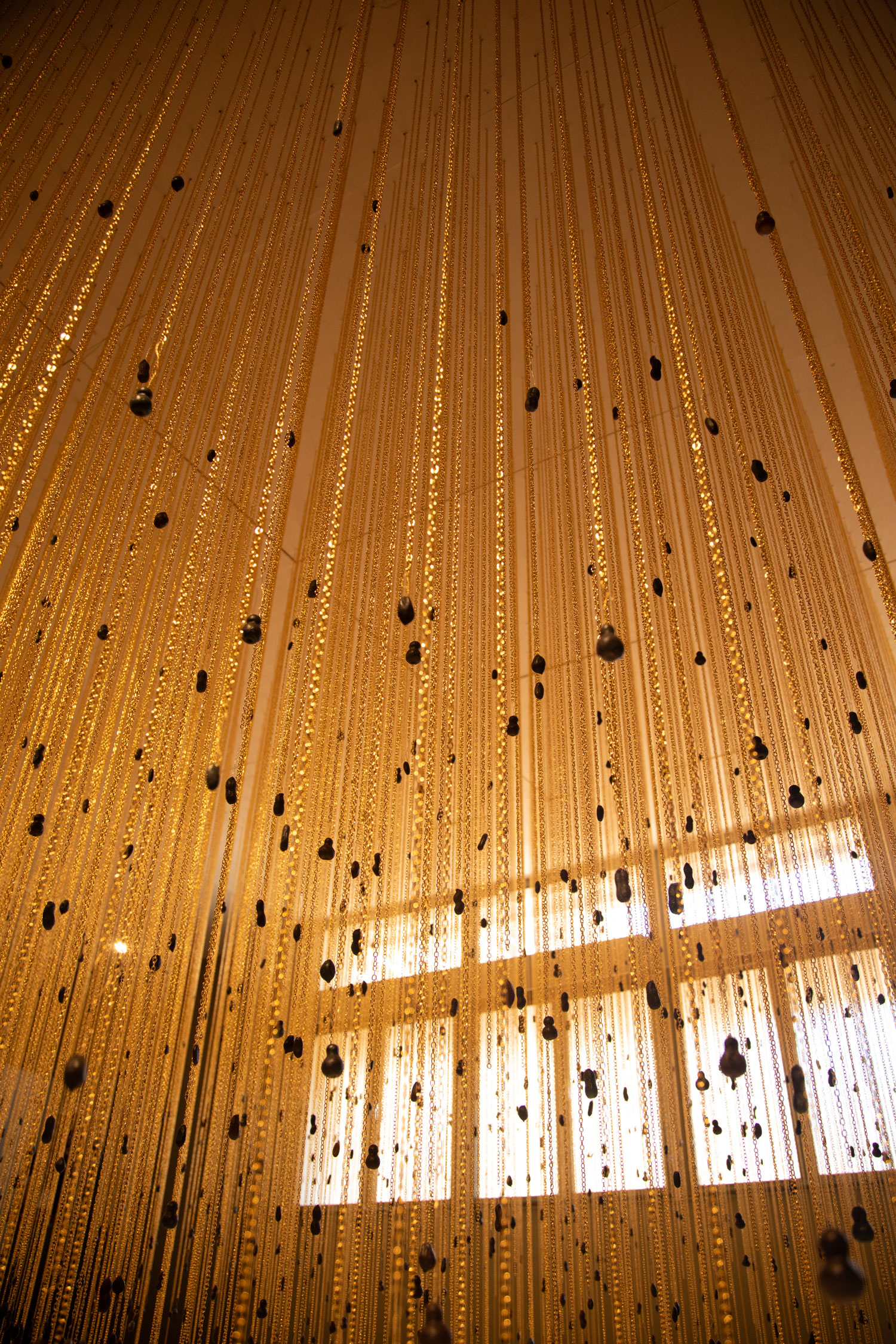
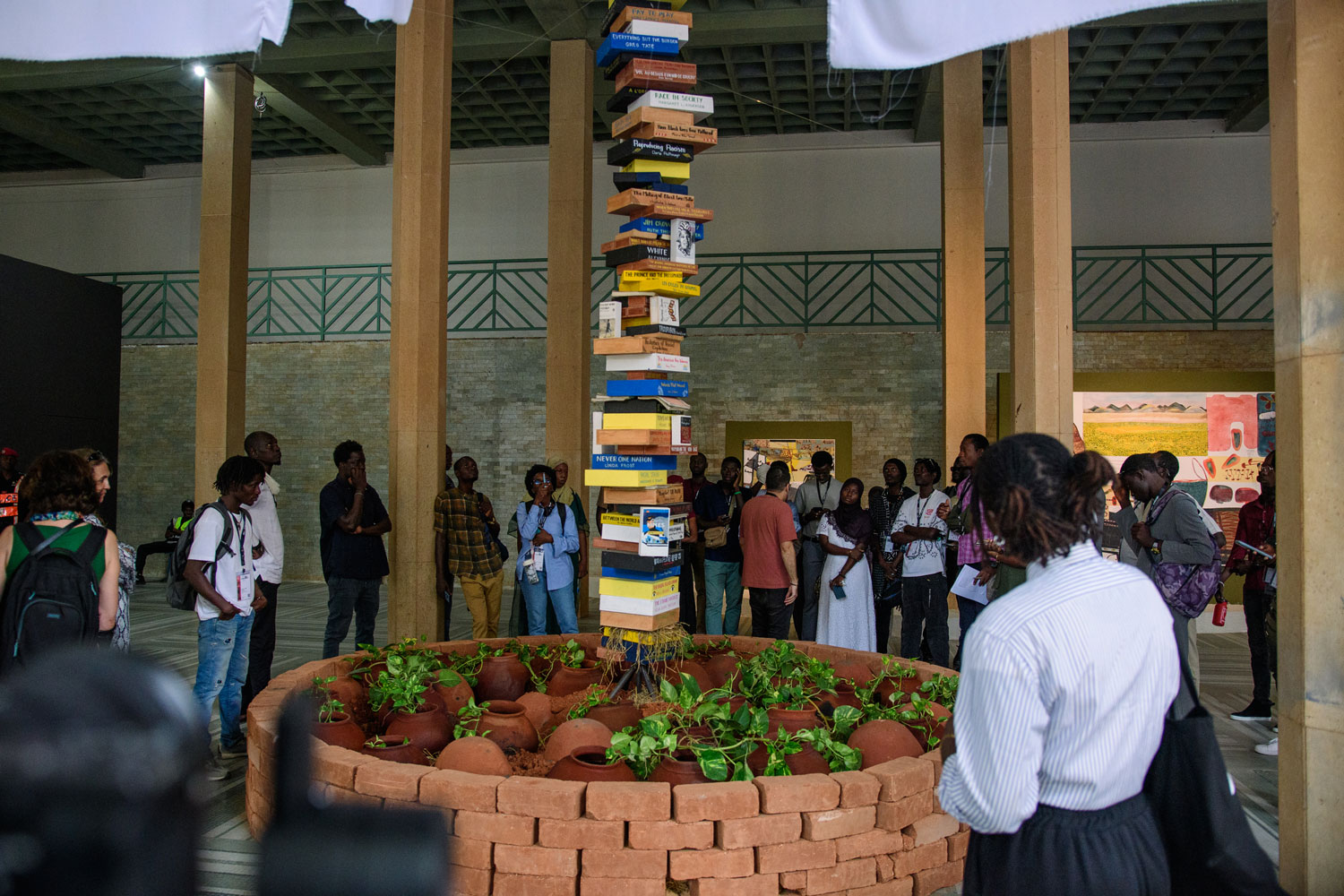
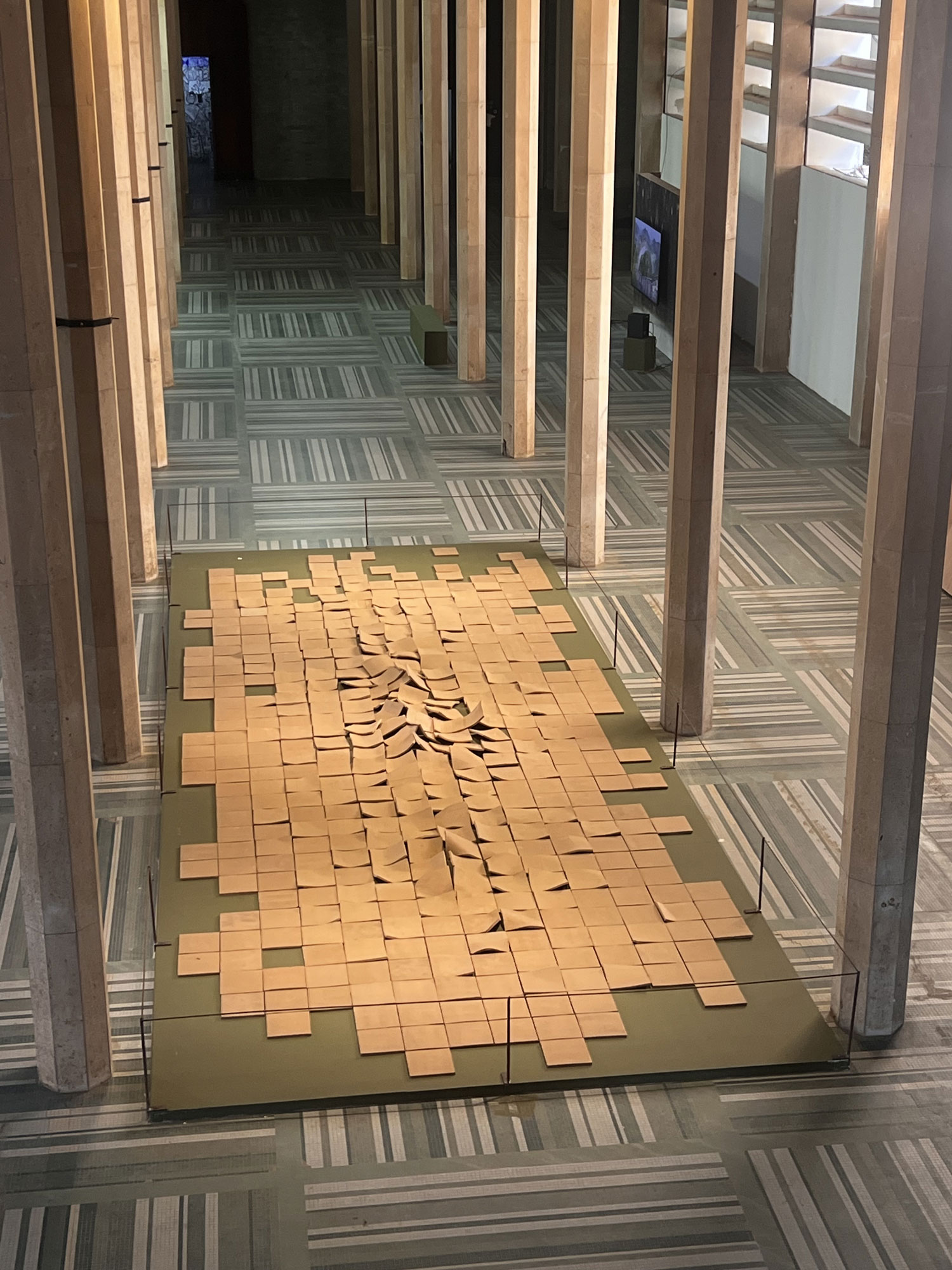
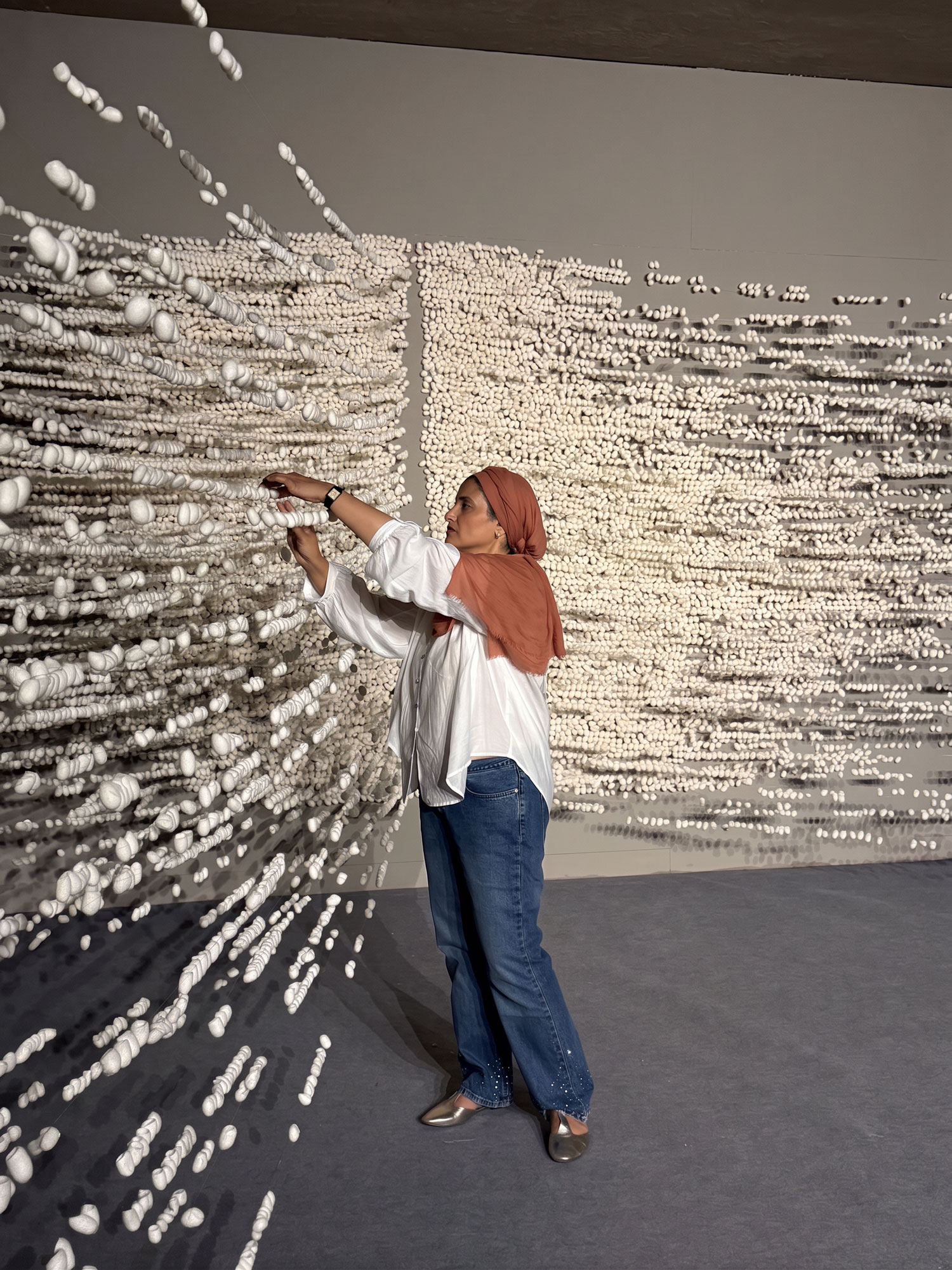
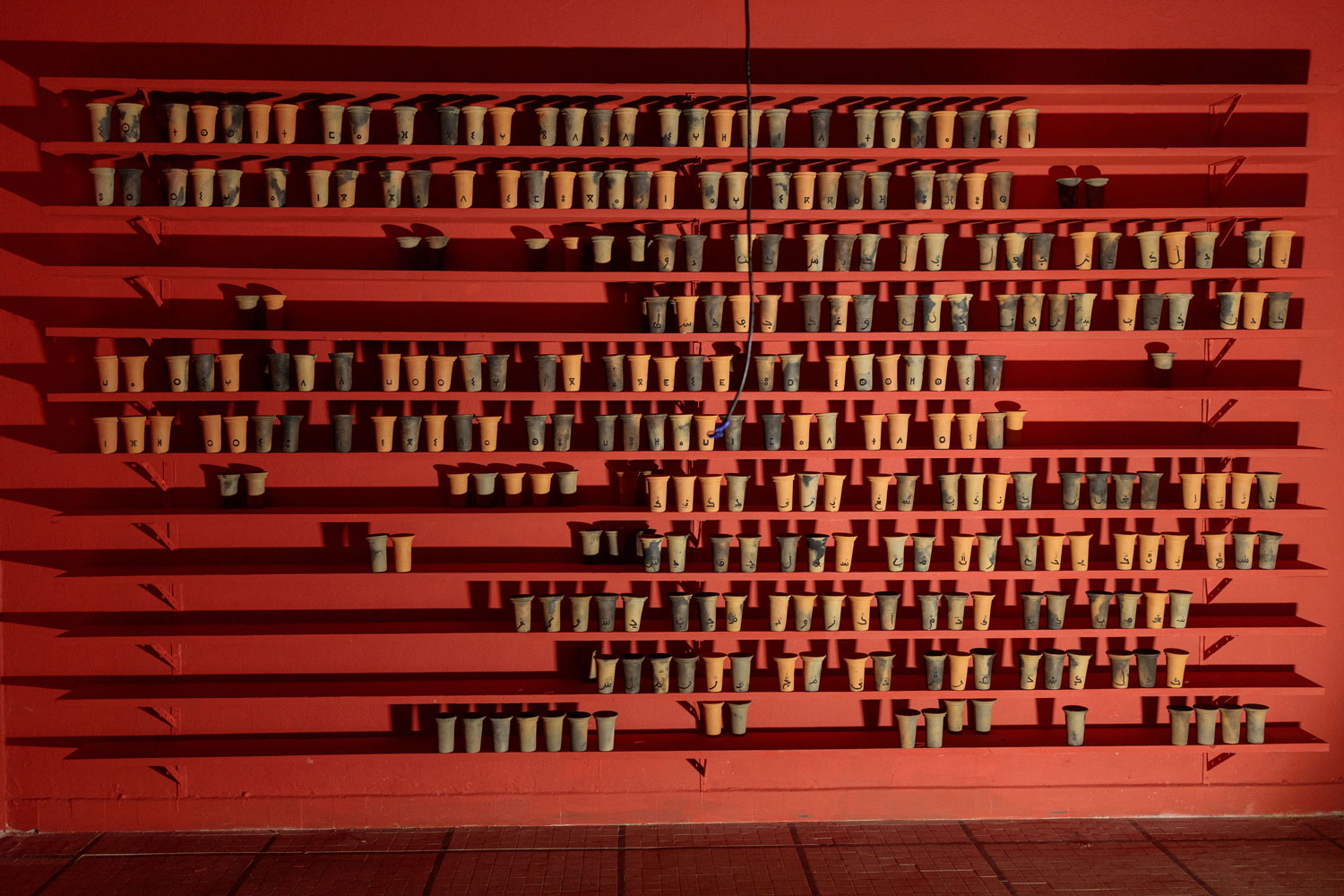
The circulation of knowledge takes shape on the ground floor in a “library without walls,” where seating arranged around the garden invites the sharing of informal, indigenous, oral, women’s, and experimental knowledge. To the right of the entrance, near the exhibition text, Fatiha Zemmouri arranges slabs of raw clay on the floor in a regular grid pattern; they rise, curve, and overlap. The gradual deformation of the material creates a sense of disorder within the structure. In the stairwell, “Being and Creating: Between Care and Repair” unfolds with Expansion (2019–2026), by Safaa Erruas, which connects women’s art and care by suspending thousands of silk cocoons from transparent threads. Starting from a cracked core, the material disperses and reassembles itself into a network. The fragility of each element is offset by the strength of the bonds that unite them. Upstairs, Library #4 (2026) by M’barek Bouhchichi: on red shelves, pottery engraved with verses in Tifinagh and in ajami bring together a Moroccan poet and a Senegalese poet in dialogue. These two literary traditions, long marginalized in official writings, share here the same terracotta: oral knowledge becomes an object, bridging Morocco and Senegal.
Shifting One’s Perspective
Morad Montazami emphasizes that the theme “(Anti)-Fragility” is not a call to strength. Curator Delphine Lopez asserts that the title does not seek to refute the stereotype, but rather to shift the perspective, and the parentheses leave the question open. It remains to be seen whether the works live up to this ambition. Walking through the palace, one notices that few works directly depict war, violence, or conflict. Cléophée Moser, founder of L’Eau Rage in Yoff—a highly politicized space for exchange rooted in the Dakar art scene—regrets in this regard that artist Alioune Badras Samb’s work on wrongful imprisonment is absent from the main exhibition, as his application was not selected by the curators when they reviewed the 600 submissions received. The works presented at the Courthouse further explore the possibilities of transforming materials. In the work of Faouzi Laatiris, designated as the “key witness” of this edition, satellite dishes and food bags are repurposed from their original functions. Here we see a methodology developed within the “Volume and Installation” workshop he founded at the Tétouan School of Fine Arts, extending in his own way the breaking down of barriers between artistic practices initiated by the Casablanca Art School. According to Morad Montazami, this plasticity allows for “ “to slip through the cracks of disasters and traumas.”
In fact, this biennial focuses less on subjects than on methods, tools, and strategies for circumventing constraints. The approach is one of weaving. In a monumental room with red walls, two works engage in a dialogue: Alexandra Karakashian allows used motor oil to seep up through long white canvases (Organs of Breath I, 2025), embedding the violence of extractivism into the very fabric of the work. Cheikh Ndiaye, for his part, reconstructs a tree using wood salvaged in Dakar (Thoughts, 2026). The fragments are held together by plaster casts, leaving the fractures visible. While one piece symbolizes the spread of a catastrophe, the other envisions reconstruction as a process of hybridization. Repair, then, involves coming to terms with the traces of the shock rather than seeking to erase them. “Let’s Absorb the Shock” is, in fact, the title Modou Dieng would have preferred for this edition. The question of production resources remains. While the issue of inequalities between artists on the continent and those in the diaspora keeps coming up in discussions, Morad Montazami attributes the gap more to the financial support a gallery can provide for the production of works (the Sabrina Amrani Gallery for Alexandra Karakashian and OH Gallery for Souad Abdelrasoul).
Share tools
So, what does the Senegalese art scene gain from this biennial? For Modou Dieng, the arrival of an artistic director who approaches concepts from a different perspective—Morad Montazami is Franco-Iranian—immediately prompted artists exhibiting elsewhere in the city to view their work in a new light. The resonance of the curatorial proposal indeed extends beyond the palace walls into the OFF program. In Popenguine, at Malidoma’s studio, the CATPC (Art Circle of Congolese Plantation Workers) also views reforestation as a form of reparations. “Replanting the Forest and Replanting Knowledge,” however, takes on a political and economic dimension here: the revenue generated by the artworks enables workers to buy back their former plantation lands. Complementing the “library without walls” at the Palais de Justice is the exhibition “Cheikh Ngom: Building Modernity,” dedicated to Senegal’s first architect and housed in his former studio. Organized by AKB Héritage, it explores the preservation of Senegal’s post-independence architectural heritage.
Every biennial leaves something behind. What Dak’art 2026 reveals above all—through the works and initiatives that extend beyond its walls—is that artists already possess their own tools for healing and social transformation. The success of this edition lies in bringing these methodologies together. But the approach remains rather mild: one might question the prominence given to artists based in the West and the lack of representation from certain regions. The question of selection criteria remains, especially since works produced within a very tight timeframe—five months between the close of the call for entries and the opening of the biennial—surely influenced the selection. While the selection of a curator with ties to the Global South who is not of African descent has undoubtedly fostered greater openness and international visibility for the African art scene, it nevertheless raises questions about the biennial’s primary responsibility: that of fully representing the continent within the global ecosystem of biennials.
– Dak’art, “(Anti-)Fragility: Arts of Repair and Strategies for Coping,” Palais de Justice, Dakar, through December 19, 2026.