For the first time, Fondation H in Madagascar has invited a curator to design an exhibition drawn from its collection, one of the most accomplished on the continent. Faced with more than a thousand works, Abdellah Karroum offers an interpretation inspired by the tradition of the kabary, the Malagasy art of oratory.
Interview by Emmanuelle Outtier
At what point does a private collection become something other than a personal endeavor?
It all begins with a personal initiative—a desire to live among works of art that inspire ideas and stimulate the imagination. Then, at some point, the desire to share the experience of art and its lessons emerges. It becomes a project. From that point on, it involves more than just an individual perspective. It takes on a collective, social dimension. It becomes part of a commitment. Individual initiatives often lead to large-scale collective projects. It’s worth noting in this context that Madagascar has had a strong presence on the international scene for years—at biennials, for example, in Venice with Joël Andrianomearisoa and in São Paulo with Madame Zo. In Madagascar, as in Morocco or elsewhere where civil society is very active, the question of working together is central. The art world is one such space. There, we step away from daily life without ever completely detaching ourselves from it. We gain some distance while remaining connected to reality. The collector supports artists in their freedom, while fulfilling their civic responsibility to share the works in their entirety.
What makes Fondation H’s collection unique? What are its key themes?
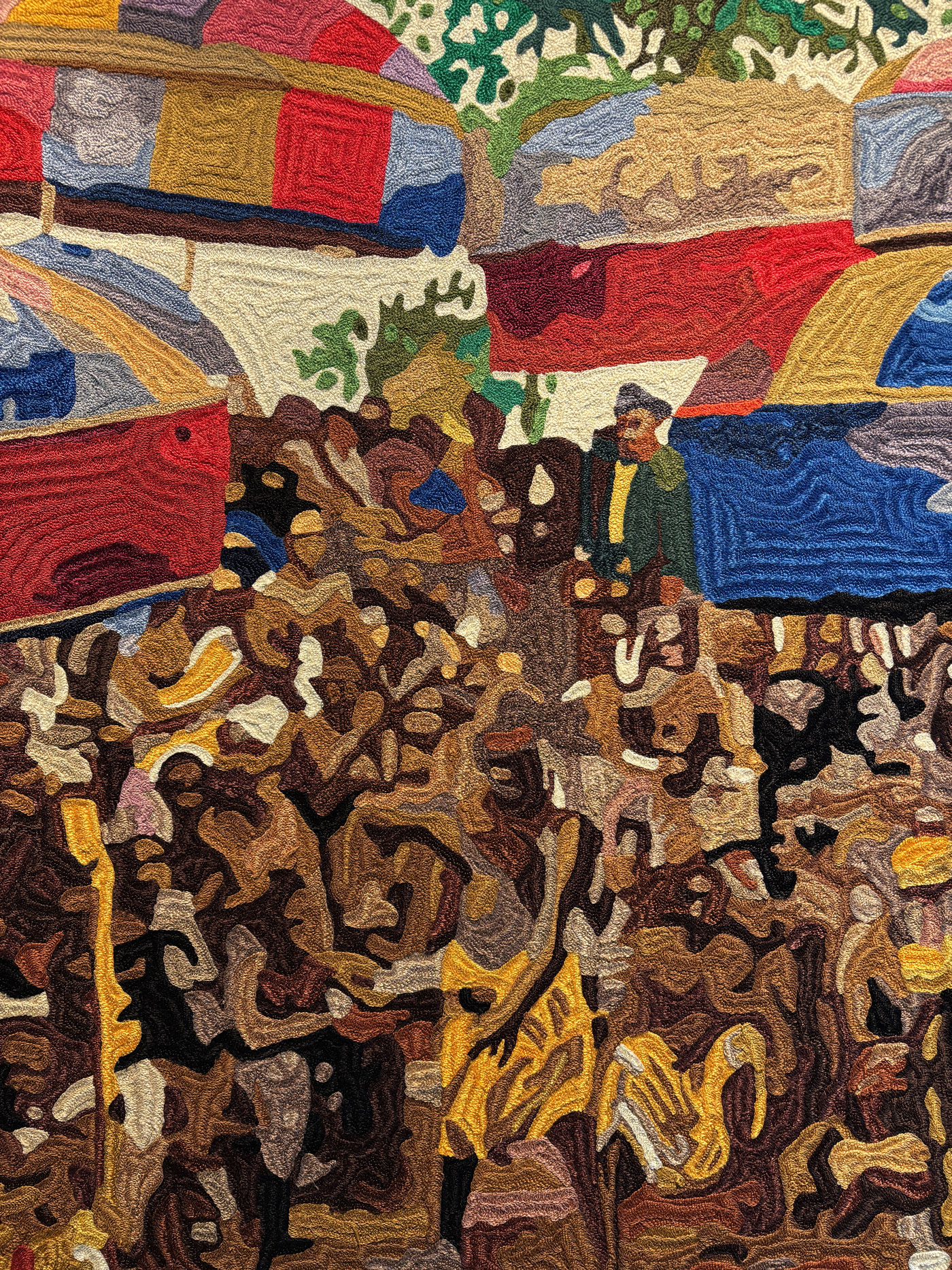
The merit of a collection is measured by its historical coherence and by the resonance its works may have in the current context. What immediately strikes one about this collection of more than a thousand works is both its scope and its potential for interpretation. There are few videos and few photographs. In contrast, there is a strong presence of weaving, ceramics, and installations—practices rooted in craftsmanship and recycling. Many works have a collaborative dimension and remain closely tied to the contexts from which they emerge. There is a thread running through it all—one that is difficult to articulate but very clear. A perceptible, almost intuitive coherence, reflecting the world that the works “speak” of. It is the vision of the collector, Hassanein Hiridjee.
Could we call this a pan-African perspective?
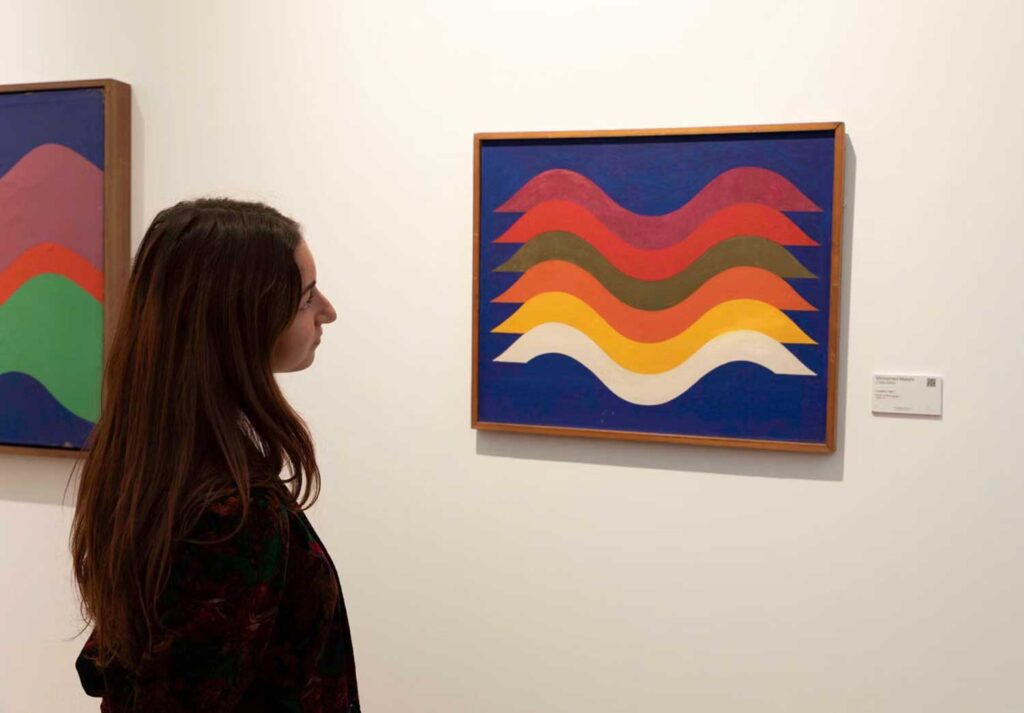
Yes, the African dimension is certainly central to this collection, but it is not the only one. The collection is both African and profoundly international. This tension is fundamental to its structure. An artist like the Italian Alighiero Boetti finds a place here because his work has been presented in non-Western contexts. Conversely, many African artists have worked in Europe or America while remaining rooted in their original contexts. It is these interconnections, these resonances, that interest me. The collection also features Korean artists, such as Lee Bae, and Saudi artists, such as Ahmed Mater and Manal AlDowayan, whose work addresses social issues, particularly ecology, the relationship between ideology and energy, and the role of women. The collection creates a dialogue between major figures, such as Otobong Nkanga and El Anatsui, and more emerging scenes, particularly those from Madagascar. Supporting young artists and bringing their work alongside that of more established artists is, in itself, a way of helping to build a scene. And then there are the scales, ranging from the very intimate to the monumental. The balance within this spectrum is fascinating.
Presenting a collection isn’t just about rearranging works—it’s about crafting a narrative. What was your approach?
I think of an exhibition as a book—something you move through, something you experience, but which also prompts reflection on the world. This dimension of knowledge shapes long-term understanding. When I arrived in Madagascar, I first sought to understand the context. I read, observed, and listened. In particular, I discovered the kabary, a form of oratory deeply rooted in Malagasy culture. It begins with an introduction to a topic, which is then developed; this is followed by a tribute, the presentation of the main content, and a conclusion. I used this structure as my method, and the exhibition’s layout follows a progression similar to that of the kabary—inclusive, respectful, and vibrant.
Is this also a way of asserting one’s position as a curator?
Yes. That amounts to acknowledging that I cannot be exhaustive. An exhibition is made up of choices, affinities, and knowledge. I selected about fifty works out of the thousand in the collection. It is therefore fragmentary, and I accept that. The kabary often begins with an apology. That seemed right to me. It’s a way of reminding us that an ambitious exhibition can also be presented with a certain modesty. And this modesty doesn’t contradict the ambition—it makes it clearer. It’s also the first time the foundation has invited a curator to offer an interpretation of its collection. This echoes the kabary, where a stranger is given the floor to introduce a topic, offering a particular perspective.
Have you tried to create unexpected connections?
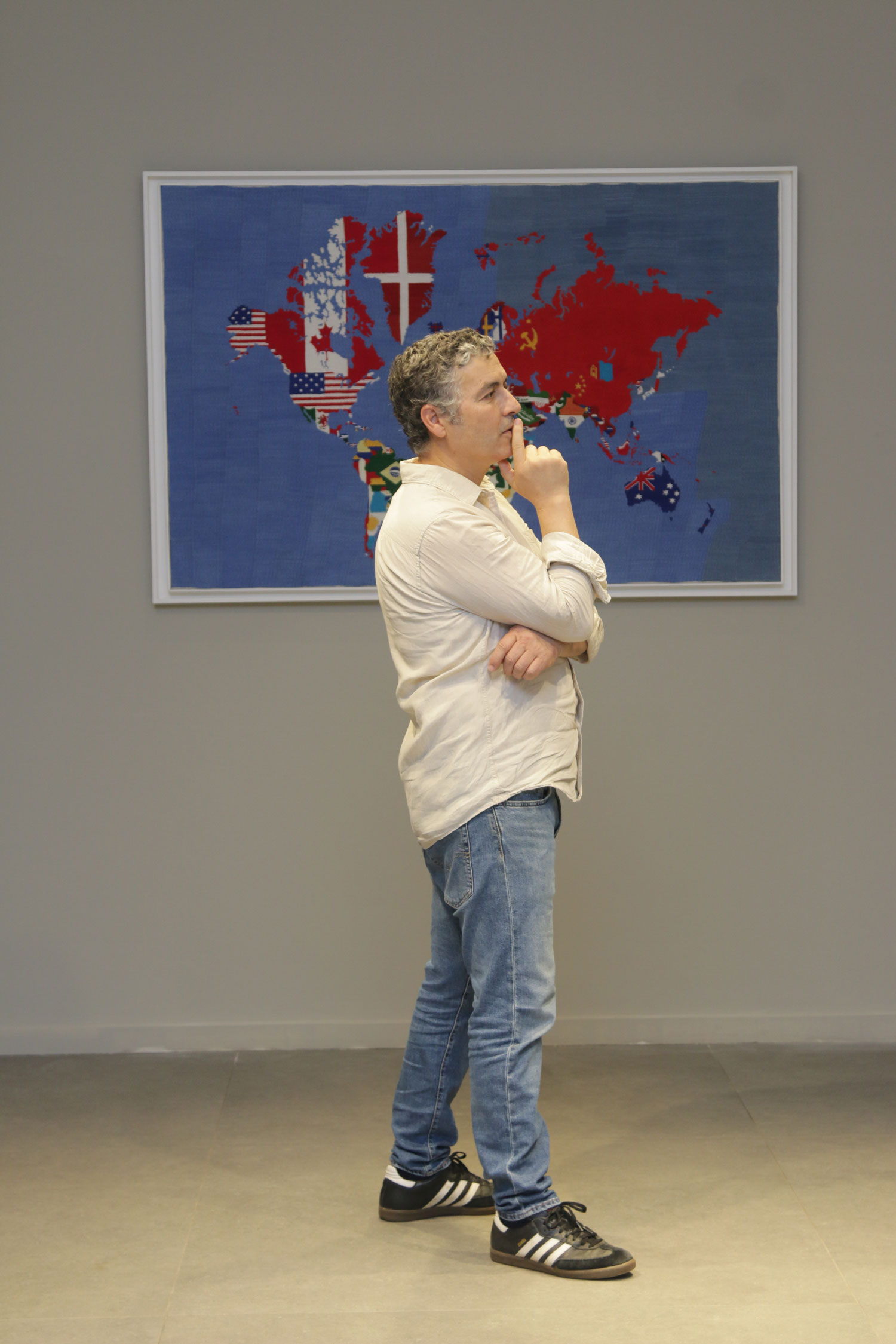
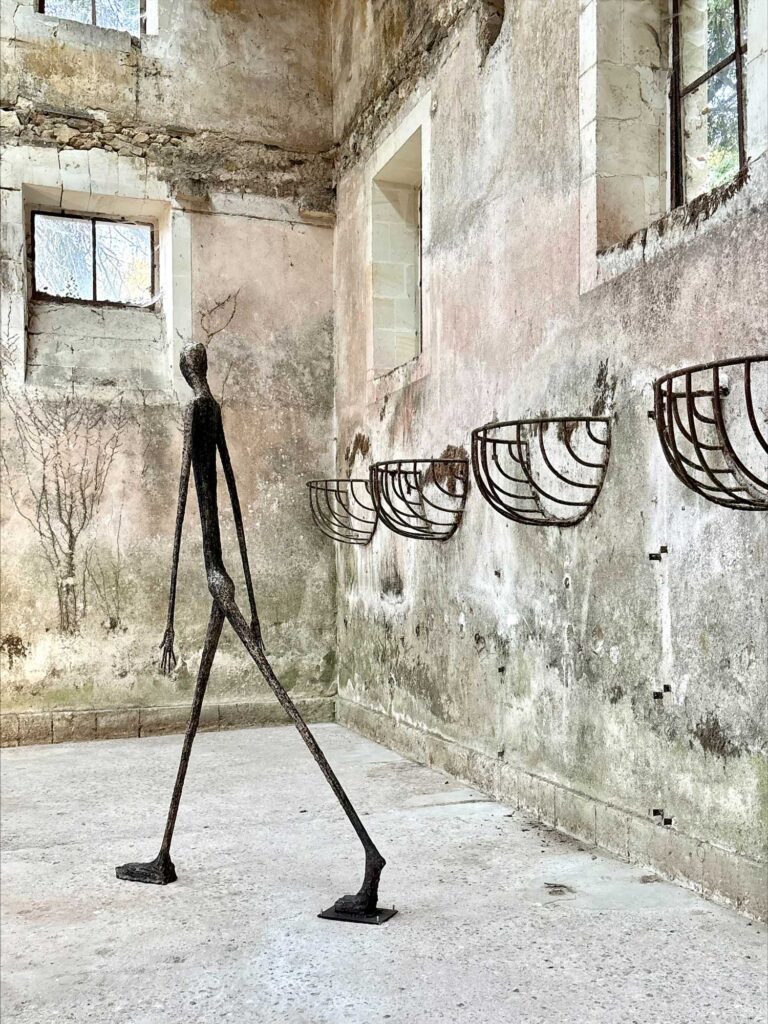
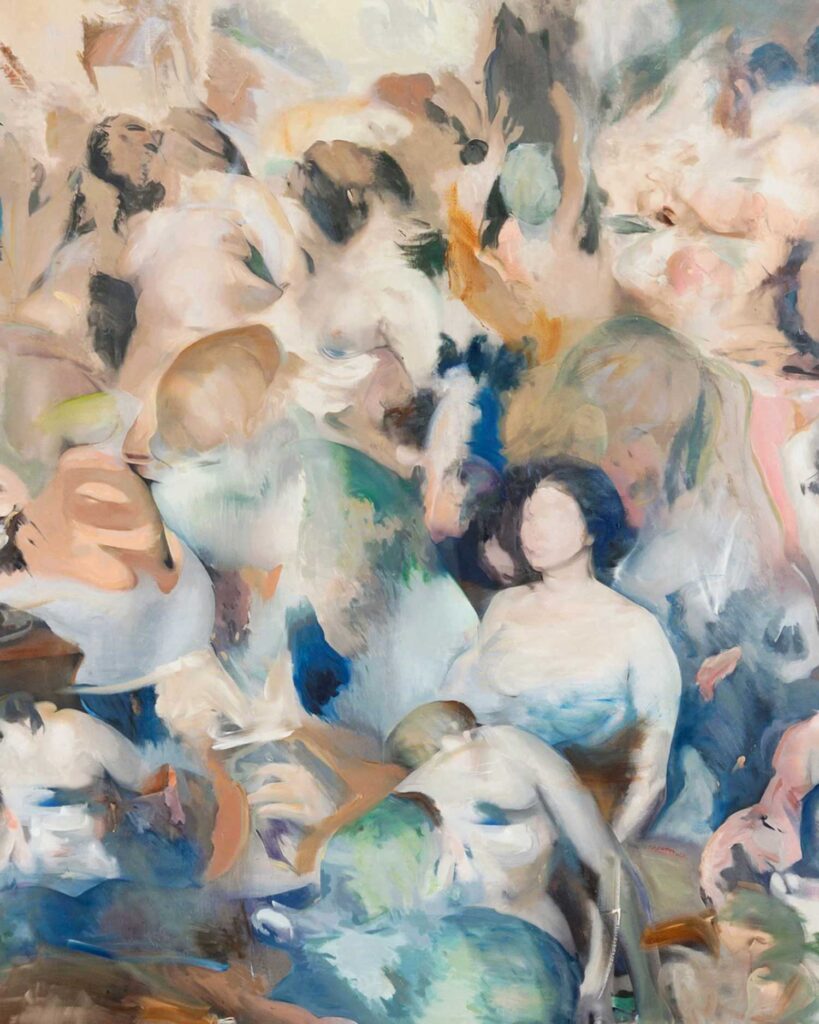
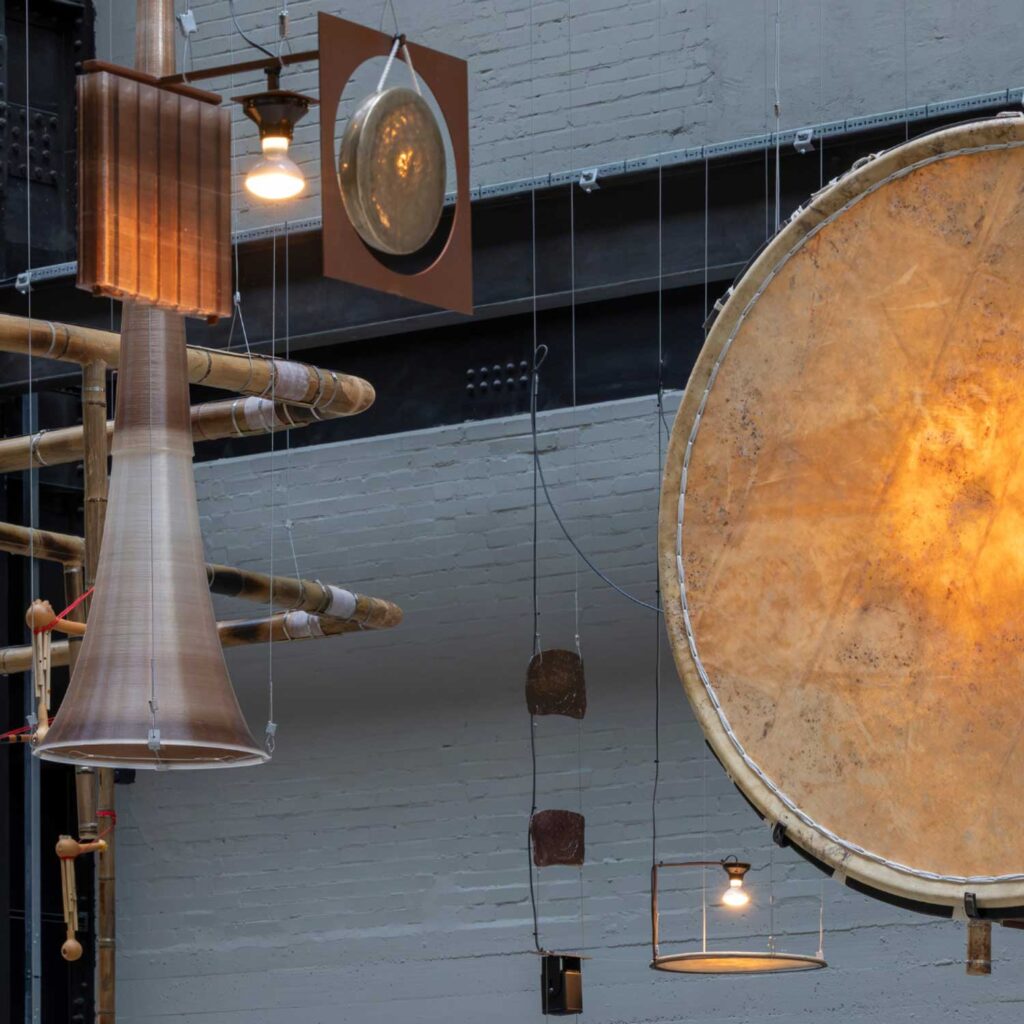
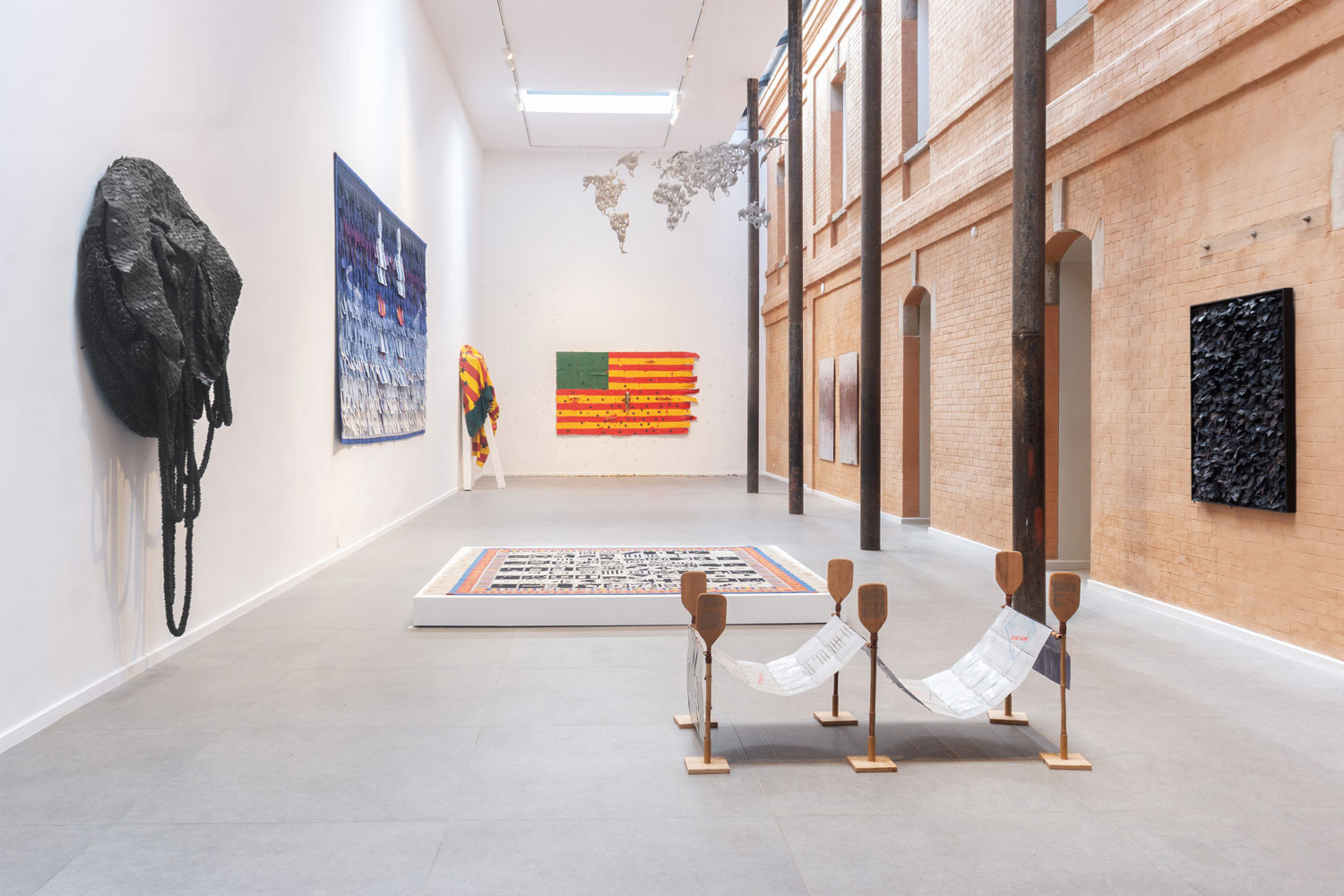
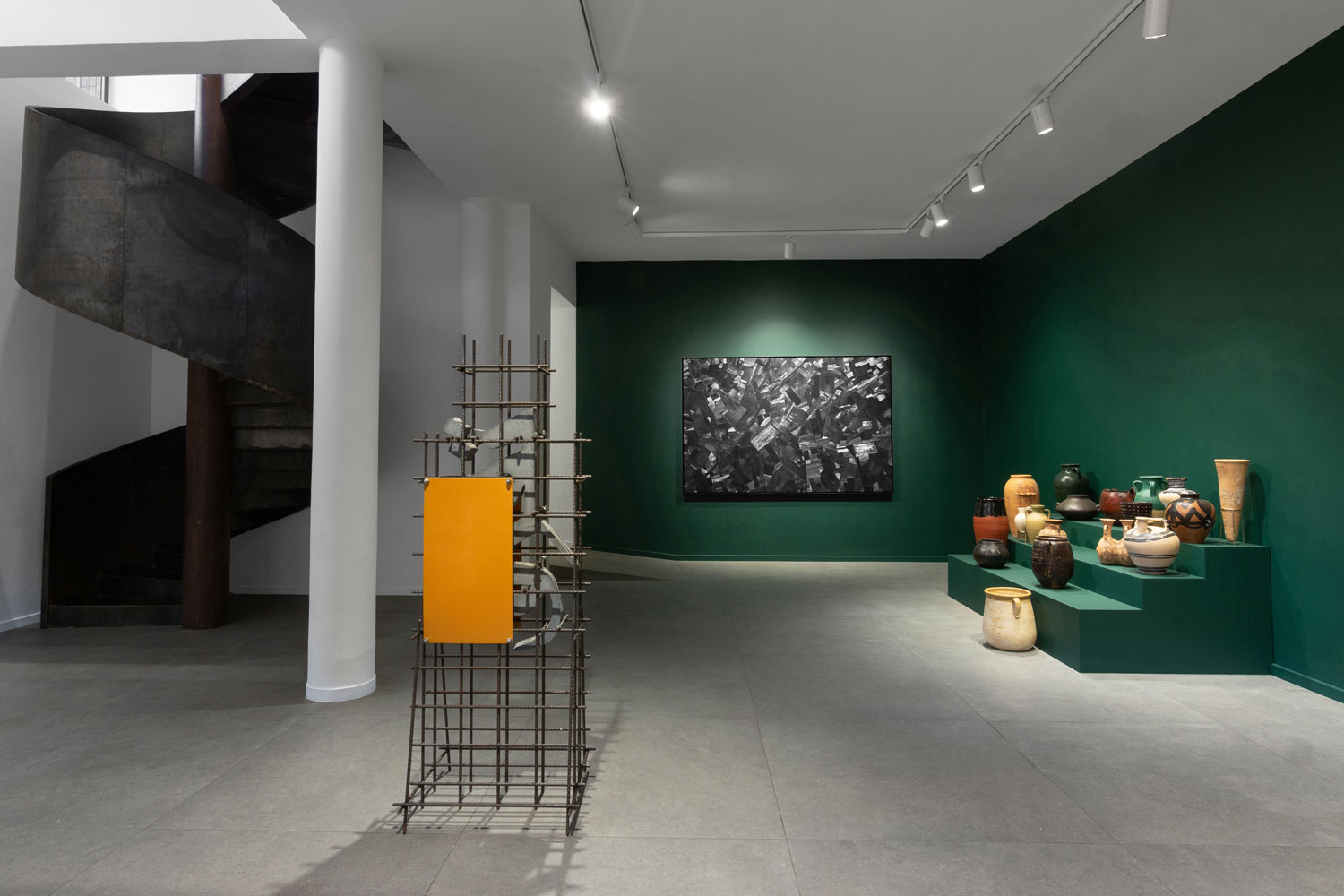
The exhibition is organized into three sections. The first room serves as a highly visual, almost landscape-like introduction. It provides an overview of the exhibition. There, visitors encounter artists from very different backgrounds, such as Otobong Nkanga, with large dyed silk weavings created in collaboration with workshops in Flanders. Nearby, a small embroidered work by Alighiero Boetti, Word of Mouth, echoes the theme of orality, in connection with the kabary. The room also features works by Shahzia Sikander and Lee Bae, as well as architectural elements by Mustapha Akrim. This first room already offers a kind of portrait of the world through the collection. The second room is more densely packed. The works accumulate and overlap, creating an atmosphere reminiscent of a cabinet of curiosities or a collector’s private space. On a single wall, a constellation of works by Maya-Ines Touam, Abdelkader Benchamma, Simphiwe Buthelezi, Beau Disundi Nzazi, and Sara Ouhaddou. I’ve brought Boetti and Melehi, El Anatsui, and the older artists together. Works from the 1960s and 1970s—few in number but essential. I placed them apart, side by side, echoing the kabary, where one addresses the elders with respect, but also because these artists have actively explored forms of collaboration and the reinvention of materials. The third room opens with monumental works, notably a piece by Abdoulaye Konaté, and the large, poetic, and political painting-installations by Nú Barreto, which address contemporary African issues. This final chapter opens up perspectives on development and collective organization. It also features iconic assemblages by Patrick Bongoy and Joël Andrianomearisoa. The exhibition finally extends into the garden with a work by Finoana Ratovo Andriantseheno—a metal structure that visitors can walk through as an “invitation to time.” It is a way of accompanying the visitor to the exit and extending the experience.
What do you take away from this experience?
Exploring Fondation H’s collection has allowed me to deepen my research and forge new connections with artists from the Indian Ocean region. I’m very eager to invite Malagasy artists to Morocco and share this experience with the public there.
— “Kabarin-javakanto: A Reading from the Fondation H Collection,” Antananarivo, through October 17, 2026.
This translation was generated using AI. For the original text, please see the French version of this article.