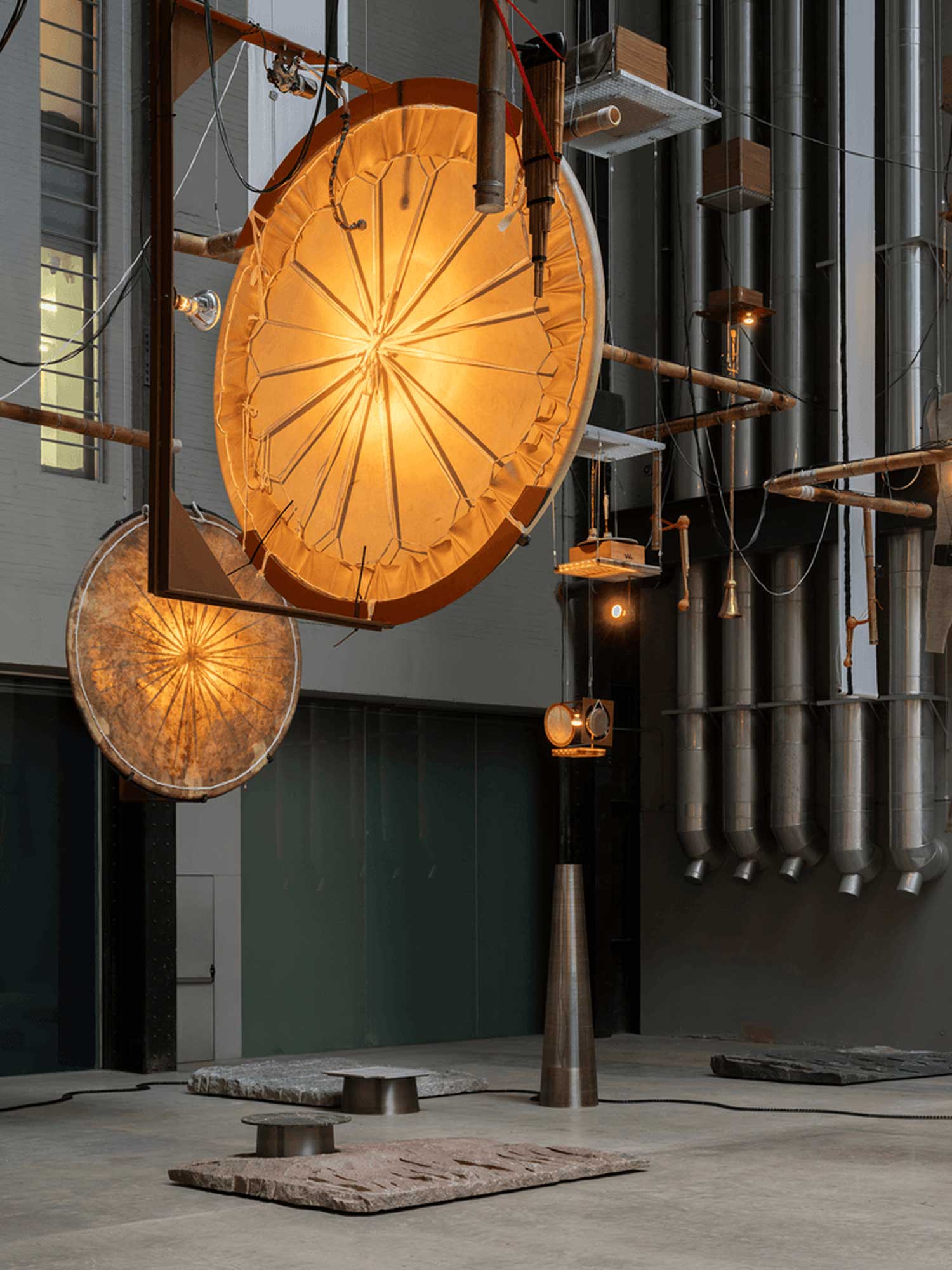
At Tate Modern’s Turbine Hall, Lebanese artist Tarek Atoui presents Hold, an immersive sound installation. Our author Vamika Sinha offers a deeply personal and sensory reading of the work, where sound takes over from images.
By Vamika Sinha
Entering Tarek Atoui’s Hold feels like walking out an airport’s doors into a city. Sound vibrates through my soles, running like charged rivulets through my limbs. An anxious bass note rings and recurs. I am reminded of the 2023 Holocaust film The Zone of Interest, Johnnie Burn and Tarn Willers’ soundscape pulsing through the cinema, designed to keep you perpetually unsettled, haunted. This past year, friends have described to me the fear and confusion of sudden alarms on their phones or the chattering of their floors like teeth, as missiles have careened across their cities. On my phone screen, I have watched image after image, sight after sight of carnage, explosion, destruction and disintegration in Palestine, Lebanon, Iran and Sudan. It has hardened my gaze. Visions have not been able to move us meaningfully.
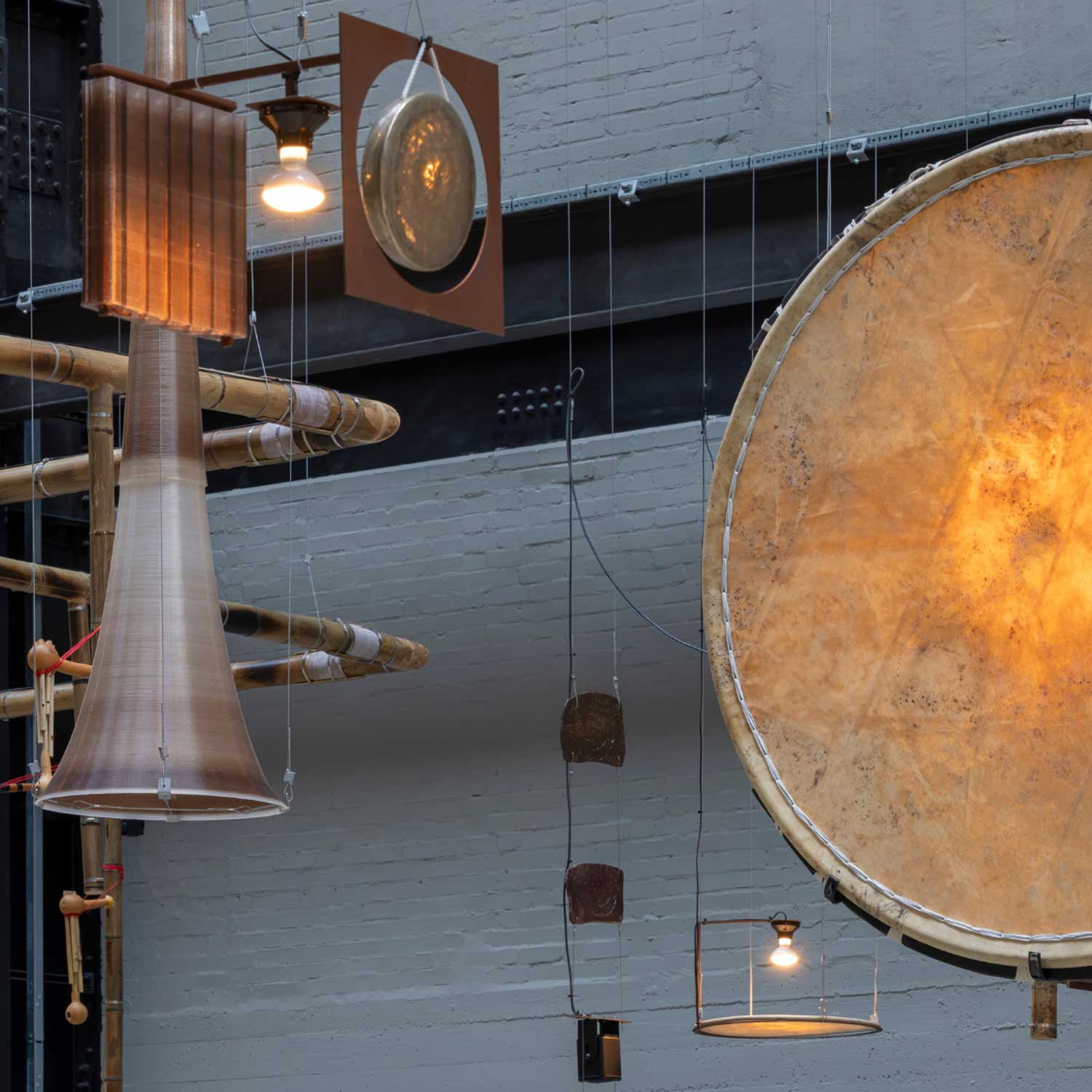
In the Turbine Hall, the Lebanese artist and composer’s sound installation – one of the most fascinating, complex, and refreshing Tate Hyundai commissions in recent years – activates a different sense. Instantly, my body begins to hold all the jazz-like, mixed-up sounds spreading across the former power station, from instruments, horns, electronics, and contraptions made with materials and techniques from around the world. Sound is agile and elastic; it travels and slips across borders; it also stirs and homes within our bodies.
Hold samples and repurposes audio recordings from the hall itself too, so no moment is ever the same. There is bamboo, stone, ceramic, leather, and sugar resin on the ground and suspended from the ‘sky’. Together, they are hard-edged, curving, mismatched, harmonious, dissonant, experimental, at different heights and frequencies. In essence, they are like the people and structures that form the stunning yet monstrous urban city.