

In response to the stories of violence that run through American history, Arthur Jafa and Richard Prince are using the reappropriation of images as a strategy of resistance at the Prada Foundation.
By Olivier Rachet
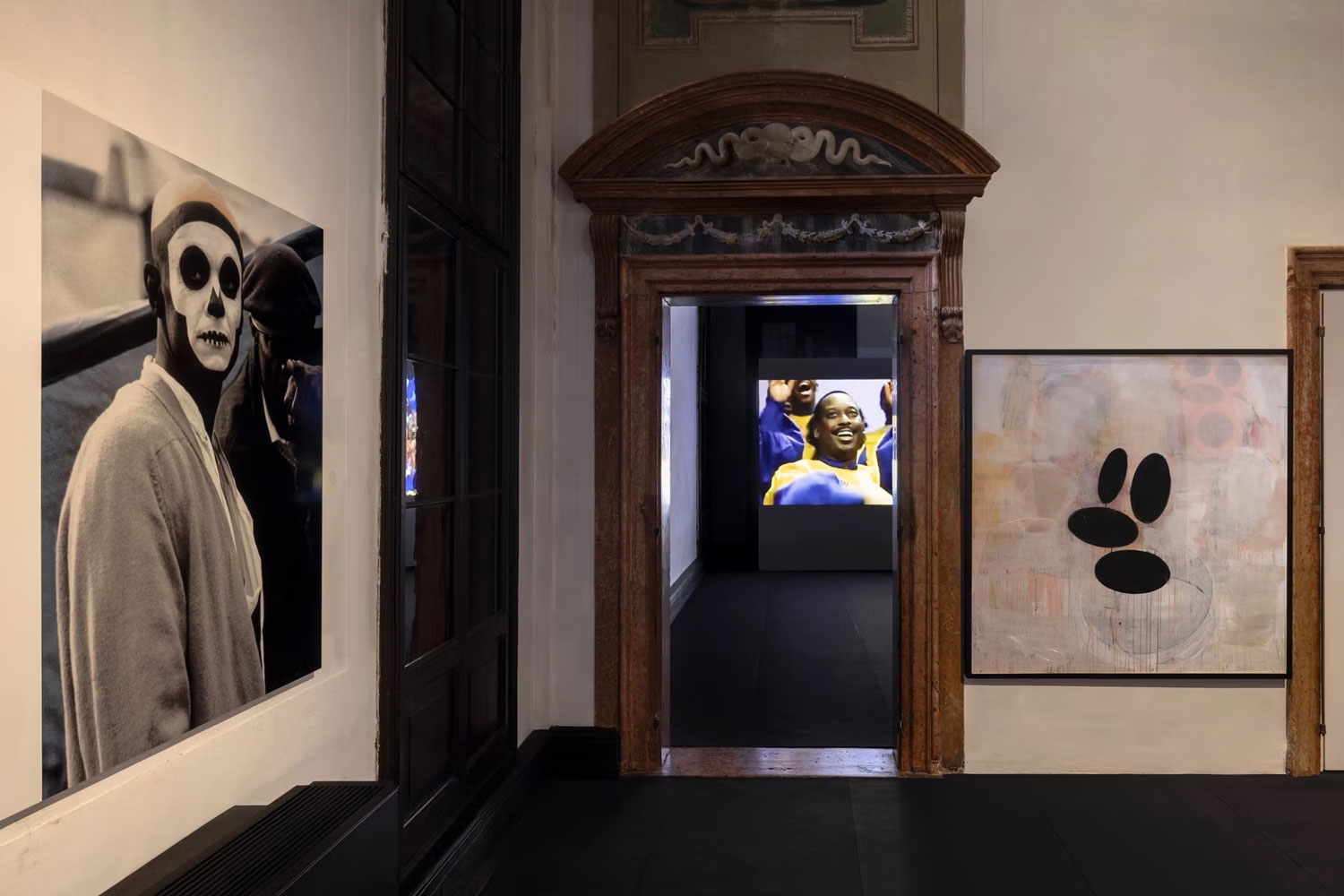
It is no small paradox of our time to see private institutions such as the Prada Foundation or the Pinault Foundation in Venice showcasing today’s most rebellious artists. With “Helter Skelter”—a title that refers to a famous Beatles song composed by McCartney, but above all to an apocalyptic prediction made in 1968 by Charles Manson, who called for a final bloodbath between whites and blacks— the Prada Foundation establishes a dialogue between two contemporary American artists, Arthur Jafa and Richard Prince, who have For one, denouncing white supremacy; for the other, celebrating African American counterculture—each a central tenet of their respective beliefs. Jafa’s well-known video montages, which repurpose archival footage (“found footage”)—such as “akingdoncomethas,” which draws on sermons from Black American churches—continue to impress with their dynamic editing. But above all, the exhibition highlights the art of reappropriation shared by two figures who draw inspiration from Duchamp’s “ready-made” , having understood—much like Prince, who dared to subvert the “Women” series by the abstract expressionist painter de Kooning—that chaos can only be resisted by mistreating it.
“Helter Skelter” by Arthur Jafa and Richard Prince, Fondazione Prada, Venice, through November 23, 2026.
This translation was generated using AI. For the original text, please see the French version of this article.
