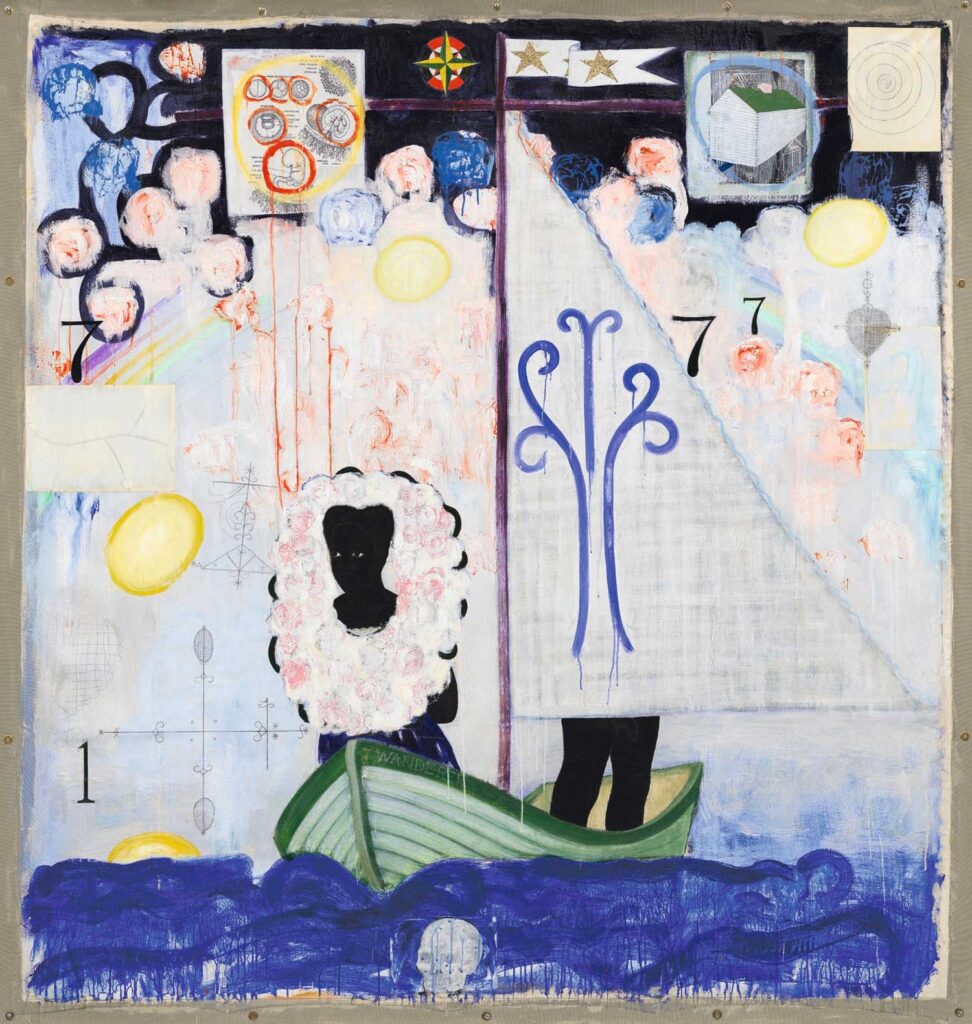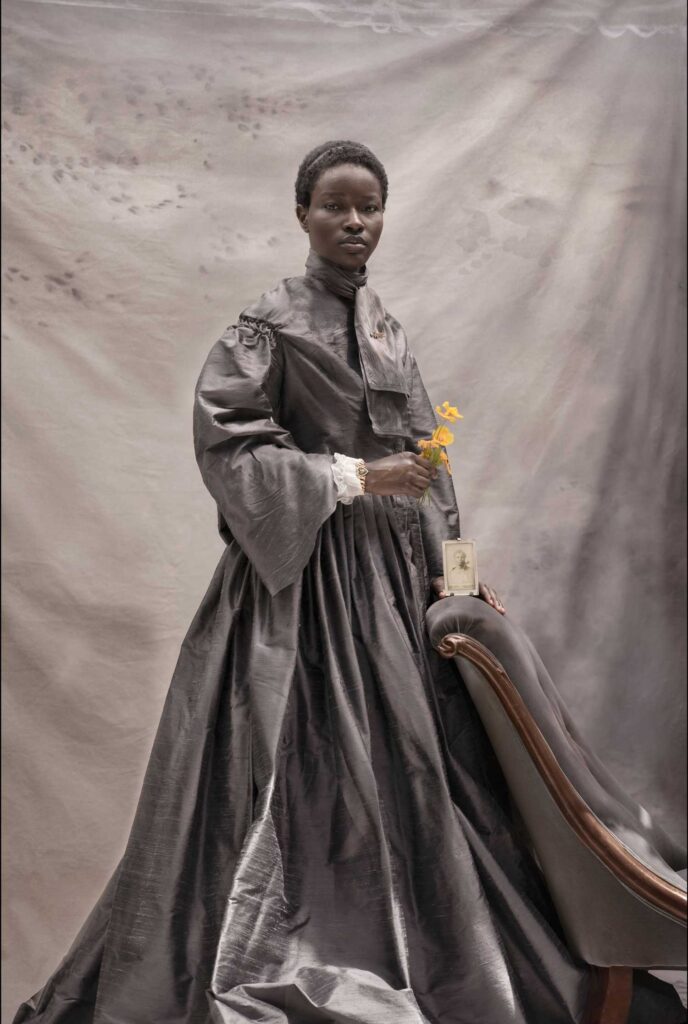
Whether in the form of an arabesque or a bouquet, carved in stone or embedded in the pictorial space, the plant motif is a timeless classic in art history. Contemporary art is part of this tradition. Except that it radically reimagines the use of this motif, transforming it into a powerful tool for reflection in an era of virtual realities, rampant urbanization, and major ecological challenges. Here’s a brief (and by no means exhaustive) stroll through these contemporary practices that (re)invoke the plant motif to better question our relationship with the world. What if “the little flower,” reputedly harmless, were more subversive than we think?
By Emmanuelle Outtier
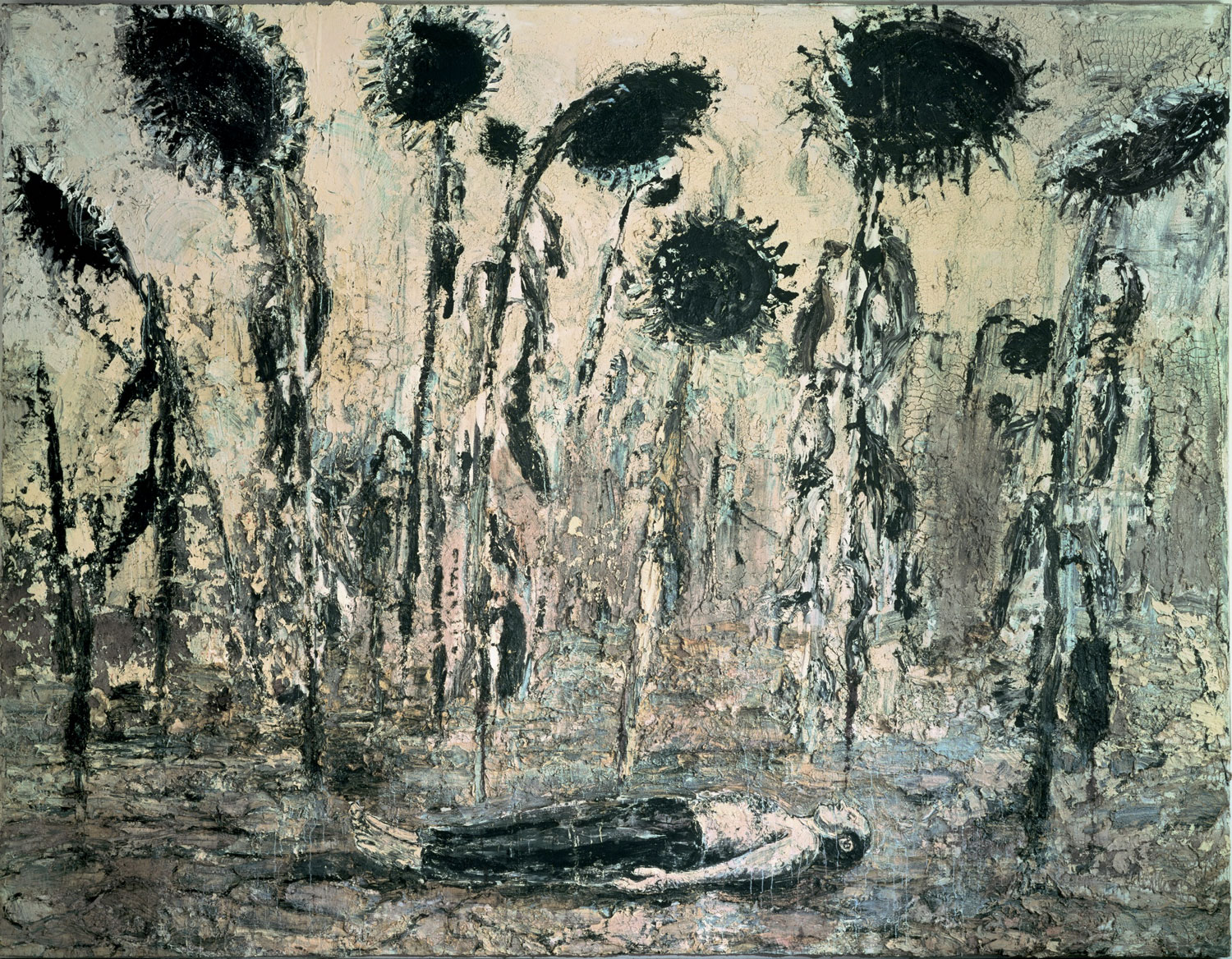
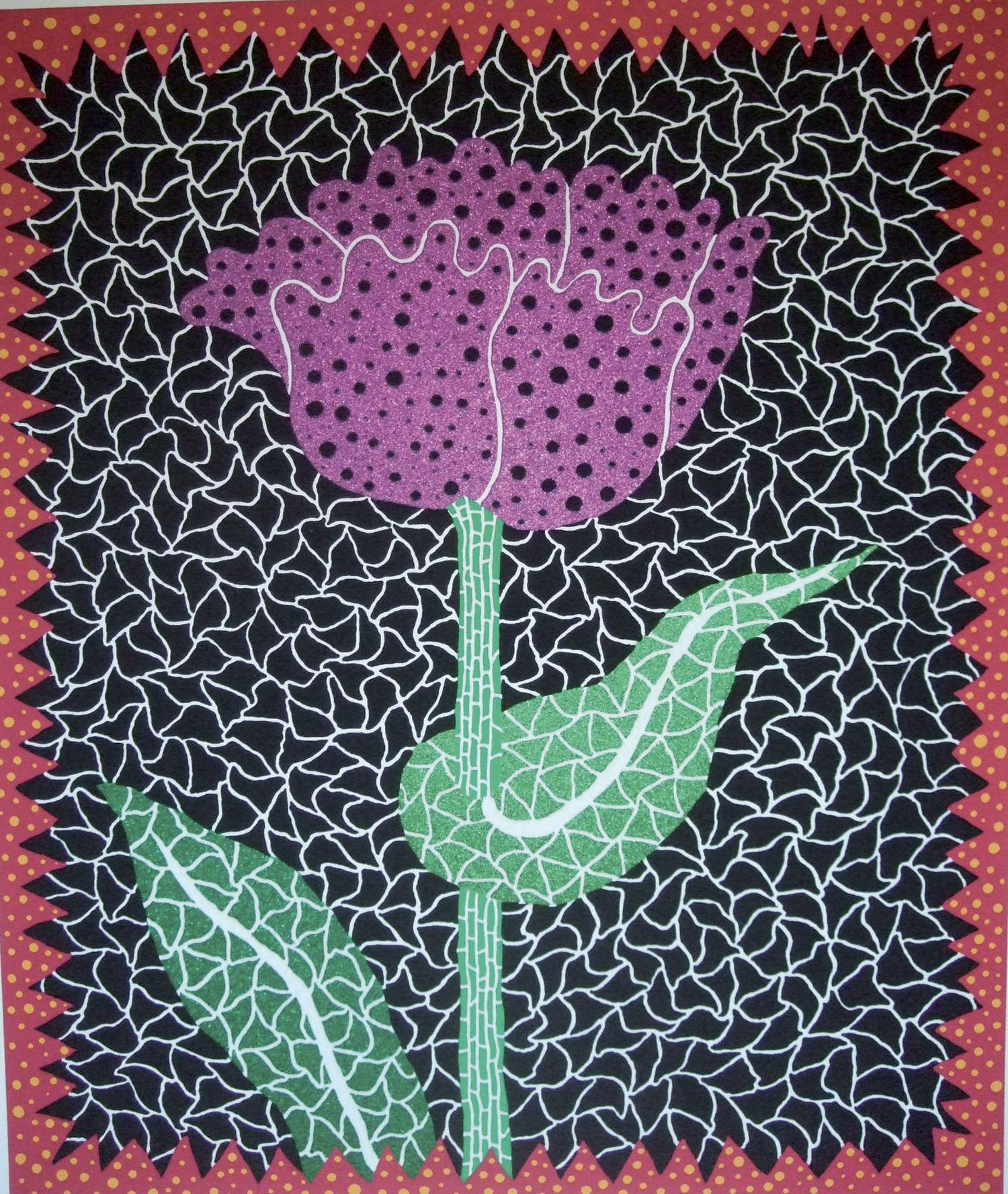
From ancient acanthus leaves to Claude Monet’s water lilies, and from the plant-inspired scrollwork of Islamic art to the turbulent landscapes of the 19th-century German Romantics, the plant world proves to be an inexhaustible source of inspiration. This is because the plant world is not “used only because it is there,” noted anthropologist Claude Lévi-Strauss, but because it “offers humans a way of thinking.” Through the diversity of its forms and colors, and through the sacred or profane symbolism with which it has been imbued, the plant exerts a power of attraction on contemporary artists, who appropriate its codes and reinterpret them according to their diverse—and sometimes conflicting—artistic and intellectual concerns. The brightly colored flowers, screen-printed time and again by Andy Warhol, the pop icon of a triumphant industrial society (Flowers, 1964), thus became a mass-produced decorative motif, whereas, a few years later, the Italian artist Giuseppe Penone—associated with Arte Povera—would seek, in reaction to that same consumer society, the poetry inherent in the plant world through life-size wooden or bronze tree sculptures. In fact, visual representations of flora prove to be highly diverse, whether in Yayoi Kusama’s polka-dot flowers, Cy Twombly’s roses in the process of liquefaction, or even “Puppy”, the gigantic floral dog that Jeff Koons exhibits at the entrance to the Guggenheim Museum in Bilbao—not to mention the convulsive treatment offered by Anselm Kiefer (Die Orden der Nacht, 1996). Behind these various artistic approaches, the issue is far from being merely ornamental.
A Whiff of Scandal
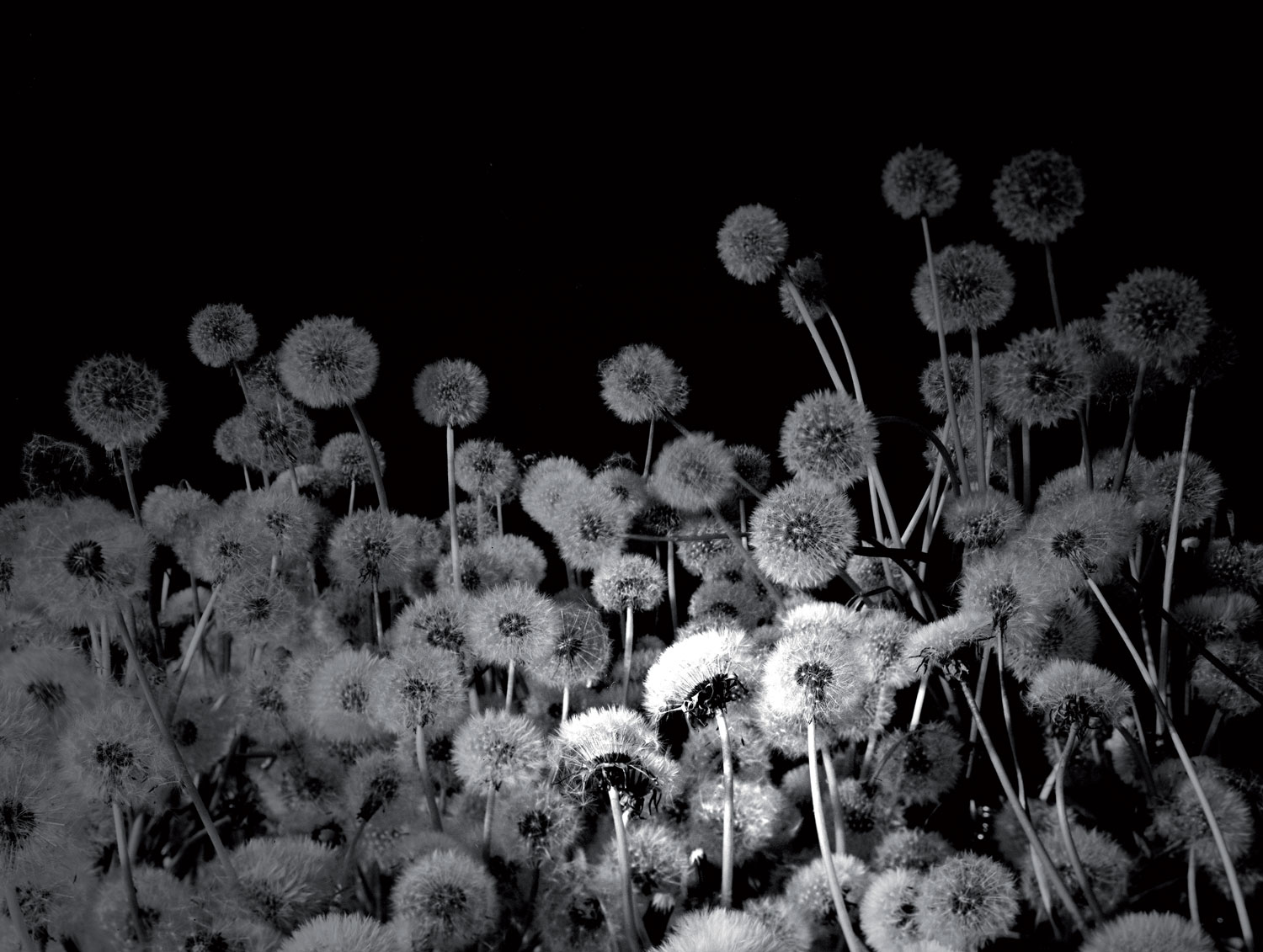
While the floral motif transcends artistic movements, it does so not in the name of innocence or purity—qualities with which it is often associated. Quite the contrary. Through the lens of American photographer Robert Mapplethorpe, known for his provocative nudes and portraits of New York’s underground scene in the 1970s and 1980s, the flower takes on a scandalous quality. In meticulously crafted compositions—with their interplay of light and shadow and precise framing—that hark back to the great classical tradition, Mapplethorpe’s flowers are both glorified and shown for what they are: the plant’s sexual organ. “When I exhibited my photographs, I tried to juxtapose a flower, then a photo of genitals, then a portrait, so that viewers could see that they are all the same thing.” Their curves, veins, and twists interact with other images—those of eroticized bodies, an obsessive motif that permeates Mapplethorpe’s entire body of work. We find this same fascination with the erotic power of flowers in the work of the Japanese photographer Nobuyoshi Araki, who uses tight framing to capture the most intimate details of their colorful folds—a barely veiled analogy to the female genitalia.
When photography isn’t revealing the hidden meaning of things, it can become a deception. An artist like Joan Fontcuberta plays on the visual beauty of plants to challenge our perceptions of the plant world. In the series Herbarium (1984), the plants he photographs with almost documentary precision turn out, upon closer inspection, to be veritable chimeras. Who would imagine that a species with the scholarly name Lavandula angustifolia (the scientific name for lavender) is actually made up of organic scraps, including a chicken head? By adopting the conventions of botanical taxonomy—identical framing, classification, and scientific names—the Spanish artist questions, not without irony, our credulity regarding the truth of images and scientific discourse.
Flowers of Resistance…
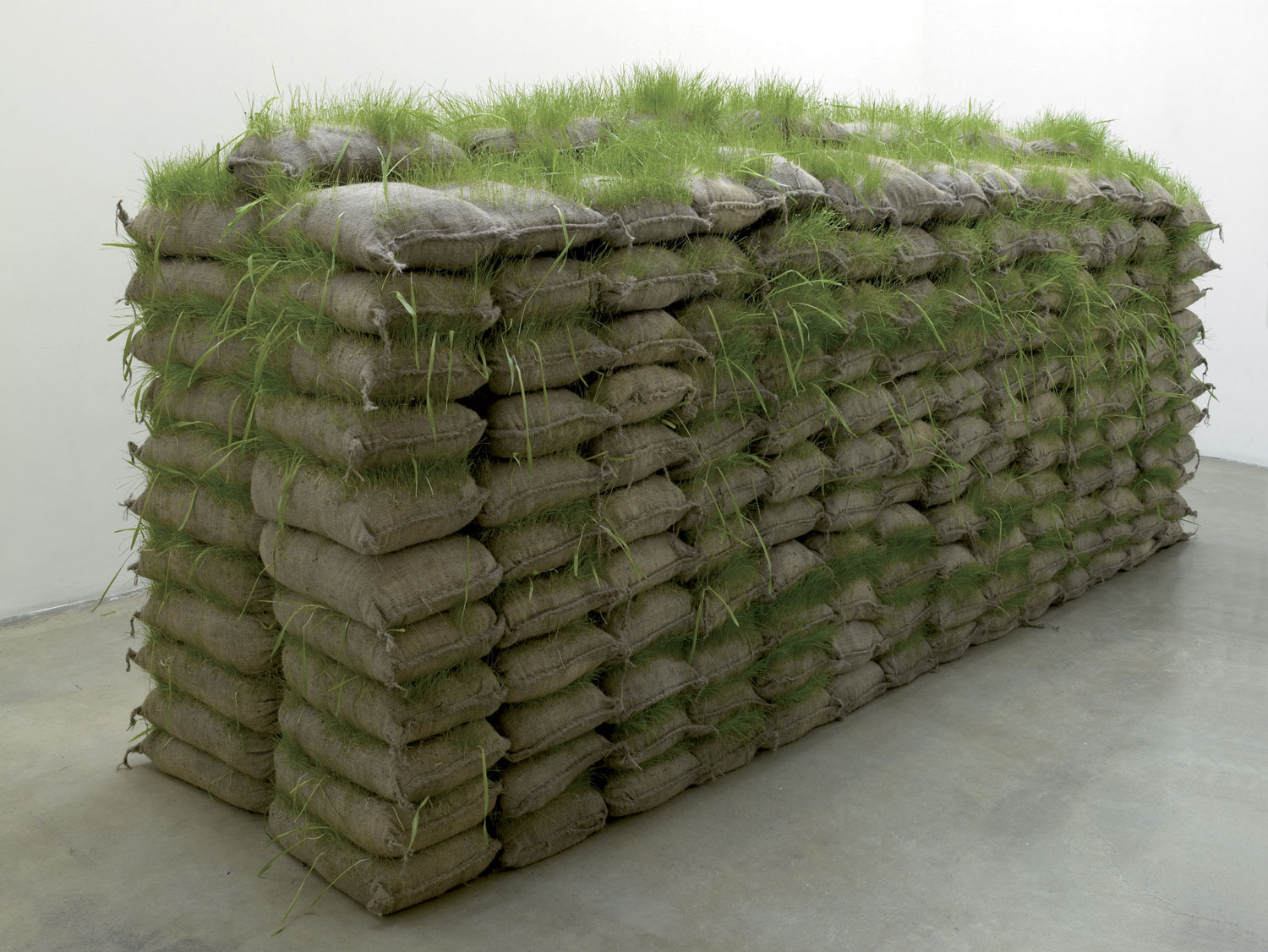
Far from these games with representation, conceptual artists such as Mona Hatoum and Ninar Esber appropriate the plant world to turn it into a critical tool for addressing the tensions that run through contemporary societies. With Jardin Suspendu (Hanging Garden) (2008), Mona Hatoum ironically references the famous Babylonian wonder to evoke the geopolitical conflicts in the Middle East. Her garden consists of a wall of sandbags—a bulletproof barrier commonly found in war zones—which the Palestinian-born artist has filled with seeds that sprout and pierce through the fabric of the walls. It symbolizes how nature always eventually reclaims its rightful place. In contrast, in the work of Lebanese artist Ninar Esber, germination does not occur. The seeds at the heart of her performance The Good Seed (2012), which she mechanically sorts by shape and color, become a symbol of the rejection of otherness in our contemporary societies (see “Botanics Under Influence,” on the following pages).
…and Guerrilla Gardening
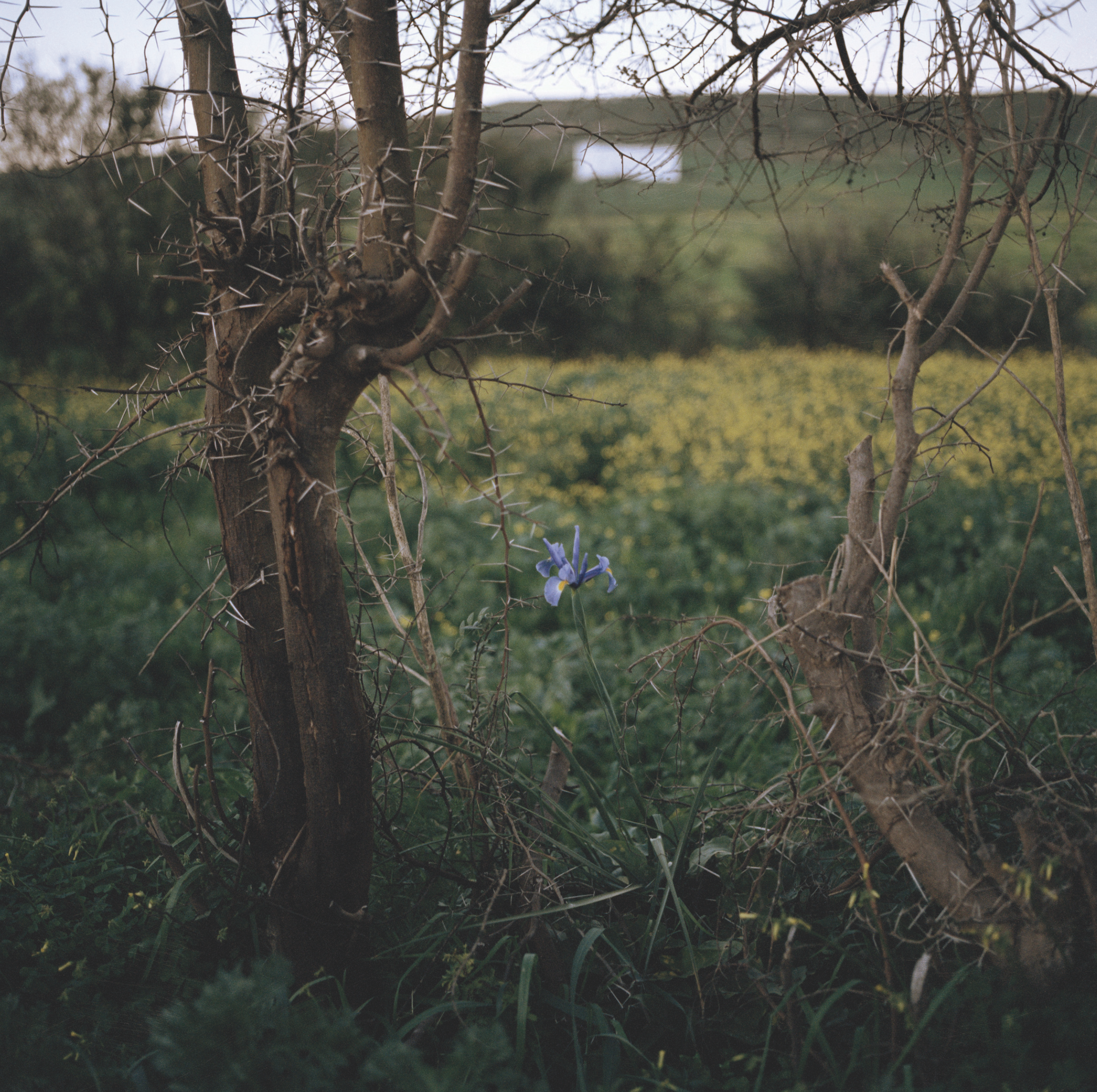
In this era of urbanization, other artists are turning to plant motifs to denounce the destruction of natural heritage. In Morocco, Yto Barrada transforms plants into a tool for reclaiming public space. Her field of action? Tangier, a city in transition, whose landscape is changing as a result of massive investments. While palm trees imported from southern Morocco are planted along the waterfront, the native species—this “invisible heritage”—are disappearing. With her photography project Iris tingitana (the Tangier iris) from 2007, Yto Barrada set out to track down the pockets where this native flower springs up in a final burst of resistance. At the same time, the artist roams the city’s streets and brings the urban fabric to life with “seed bombs,” in the spirit of the “guerrilla gardening” movement led by libertarian activists in the 1970s. Yto Barrada continued this approach in 2011 with the publication of A Guide to Trees for Governors and Gardeners, in which she critiques this “botany of power” that shapes the face of now-globalized cities and, with biting humor, dispenses advice on creating a folklorized decorum during official diplomatic visits. A sense of humor that is also evident in Mohamed Fariji’s work. In May 2015, in the Arab League Park in Casablanca, Mohamed Fariji and the Atelier de l’Observatoire installed their Serre (Greenhouse), an ephemeral and metaphorical space that invites artists to bring their most personal projects to life in the heart of the city. At the same time, Fariji roamed the White City with his small greenhouse full of plastic flowers. The strangeness of the installation sparked curiosity and debate in public spaces. The mobile greenhouse also makes it possible, as the visual artist notes, “to symbolically connect the city center to its working-class outskirts.” To integrate them into a shared space reclaimed by artists and citizens? The project by the Serre is set to continue: it will take place on the sidelines of the Marrakech Biennale from February 24 to 29, before moving to the Hay Mohammadi neighborhood (Casablanca) in May. Using plants as a tool for reflection and change is not a new trend in Morocco. In 2002, Hassan Darsi and the Source du Lion studio took an interest in Hermitage Park (Casablanca), which was threatened with closure. Together, they created Le Projet de la maquette, a miniature garden of the site that ultimately led to its restoration.
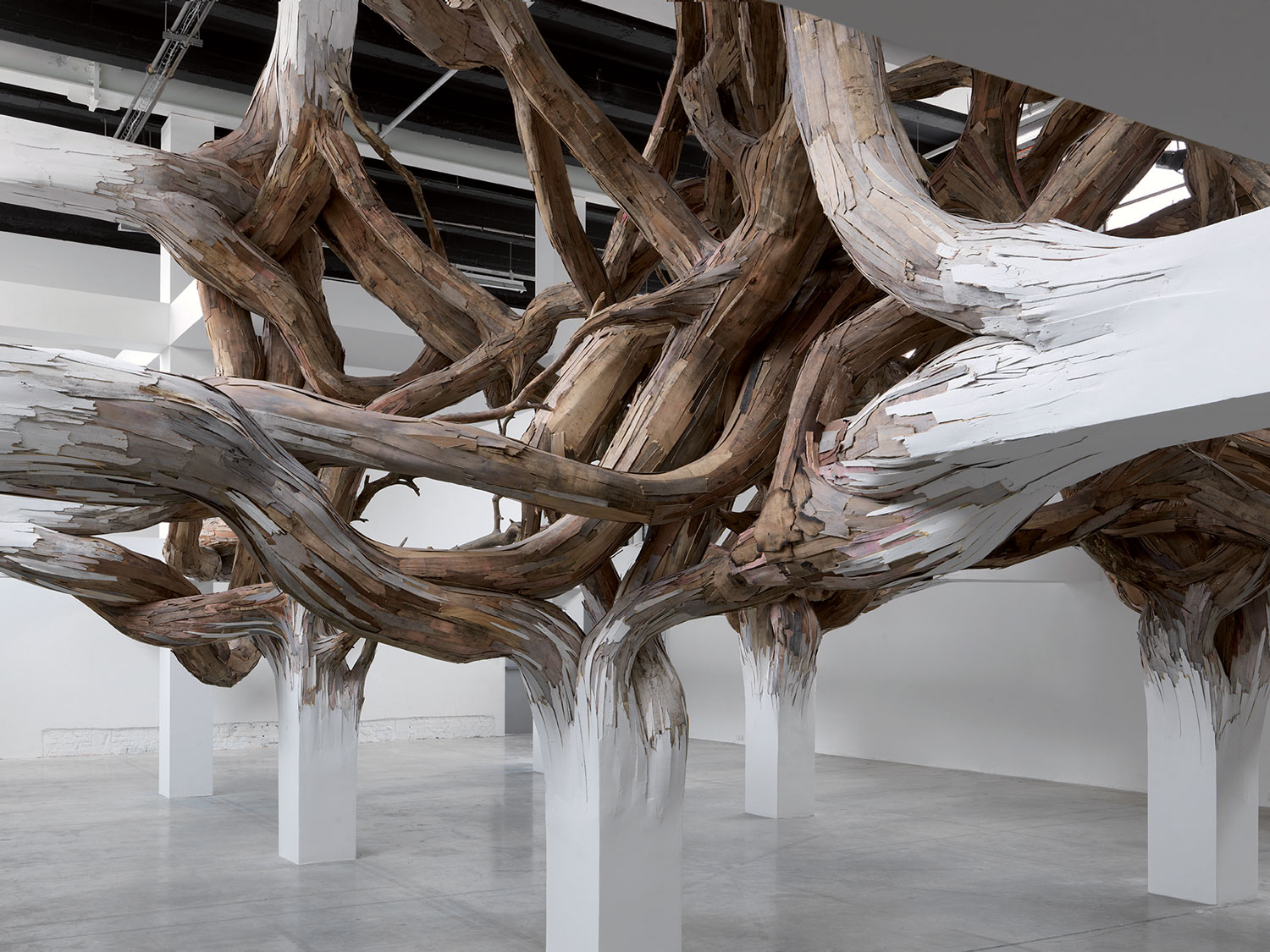
While Yto Barrada, Mohamed Fariji, and Hassan Darsi use plants as a tool of resistance, Henrique Oliveira envisions a nature that would take its own revenge on the urban environment. With his installation Baitogogo, presented at the Palais de Tokyo in 2013, the Brazilian artist created a monumental sculpture that integrates with the museum’s structures to effect a spectacular transformation: the architectural elements are transformed—as if gnawed from within—into enormous, knotty, sprawling volumes of wood. The geometric lines of the building contrast with the tortuous forms of an organic element that seems to want to extend infinitely. This intrusion of nature into the heart of the building subverts the architecture and the rationality that defines it. But Oliveira’s sculpture also offers a commentary on the city, as curator Marc Bembekoff points out, seeing in it “a metaphor for the favelas that grow organically, thereby revealing the dynamic decay of São Paulo’s urban fabric.”
Bringing Wonder Back to the World
What if the turmoil of the world were counterbalanced by the poetry that nature inspires in us? From his long meditation in his “Ghorfa”—the space for contemplation beneath the stairs of his family home—Younès Rahmoun has developed a body of work— Habba (2008), Zahra (2009), Khasla (2009), Jidhr (2008), Chatla (2008) – traces of the poetics of germination, blossoming, and life. The animated film Habba (“seed” in Arabic) is one of his most iconic works. In a series of delicately sketched pencil drawings, Younès Rahmoun’s seed undergoes its life cycle set to the enigmatic and haunting music of Esteban Algora. “Rahmoun’s work,” as we previously wrote in Diptyk, “is a reconciliation of the infinitely small and the infinitely large, of the atom and the cosmos: the entire universe in a seed.” An attempt to touch upon universality and the principle of life that governs the world. By creating plant-like chimeras, artists such as Hicham Berrada, Yamou, Miguel Chevalier, and Céleste Boursier-Mougenot expand the spectrum of the visible and shift our perspective to better spark curiosity and a rediscovery of the mysterious magic of life. Following this logic of revelation, Moroccan artist Hicham Berrada activates unstable molecules in a beaker (Présage, 2007–2013): organic forms emerge and unfurl to create an improbable and poetic flora.
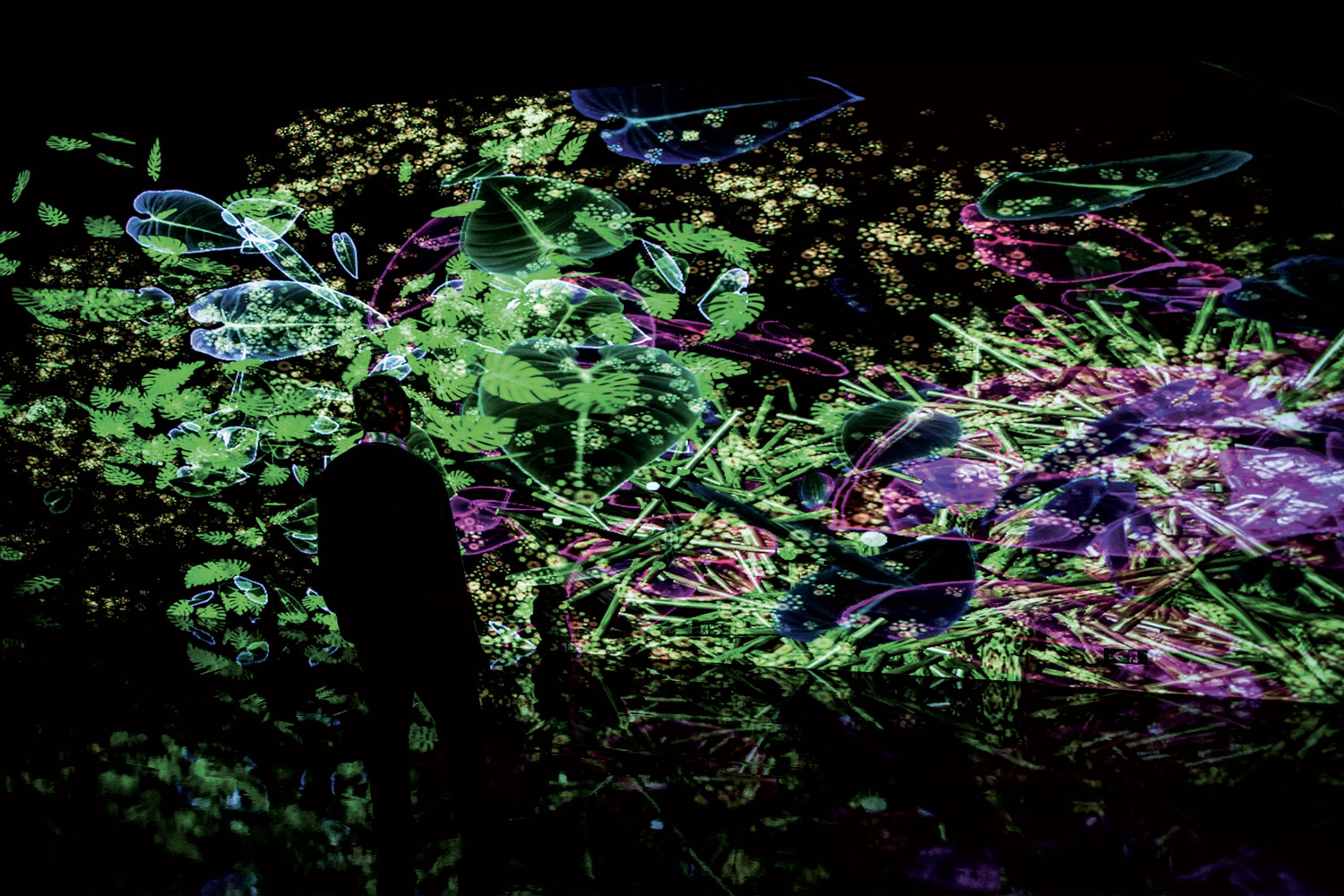
Similarly, Miguel Chevalier—rediscovered in Tetouan during the 2015 Heritage Days—uses digital technology to reconcile what, at first glance, seem to be opposites: nature and technology. In the series Sur-Natures (2004) and Fractal Flowers (2008), and Trans-Natures (2012), immense digital flowers sprout, grow, and die in an algorithmic botanical ballet. Motion sensors trigger interactions: these imaginary plants bow with every movement of the viewer. A sense of disorientation sets in: Miguel Chevalier’s virtual gardens mimic living things to the point of becoming almost tangible, almost real.
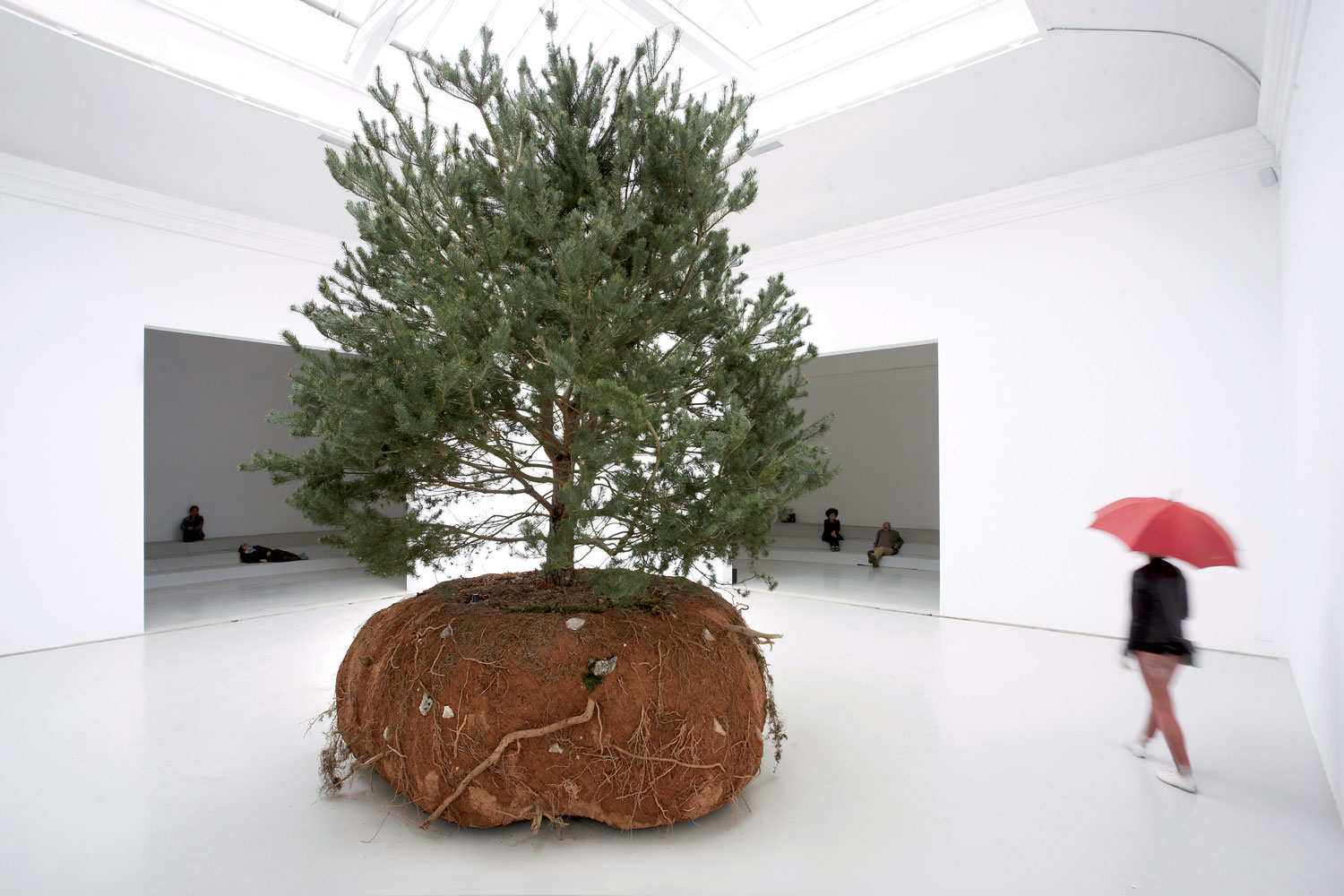
Finally, when Céleste Boursier-Mougenot presented a dreamlike vision of monumental, wandering trees at the 2015 Venice Biennale (project Rêvolutions), the artist revealed the invisible processes at work in nature: the fluctuations of sap within the tree drive a mechanism—developed in collaboration with researchers from the CNRS—that suddenly endows plant matter with motor capabilities. The artist’s hand intervenes in the mechanics of nature, both disrupting and revealing them, to recreate a sense of wonder and remind humanity of its place within the environment. Alternately cherished for its ornamental value, then repurposed, politicized, or turned into a weapon of reappropriation or re-enchantment, it’s a safe bet that the plant world will never cease to inspire artists. And to answer Camille Henrot’s question, “Is it possible to be a revolutionary and love flowers?”: For those who love flowers, nothing is impossible.
Why this title?
«Est-il possible d’être révolutionnaire et d’aimer les fleurs ?» (“Is it possible to be a revolutionary and love flowers?”) is the title of a 2012 exhibition by Camille Henrot that transformed the Kamel Mennour Gallery into a botanical garden. The French artist, who declared, “not liking flowers and their ambivalent status” featured strange compositions inspired by ikebana, the traditional Japanese art of flower arranging. Camille Henrot emphasized that “each of these compositions was created with reference to a book chosen from her library, which she subjects to a sort of transformation into a flower.” By potting Victor Segalen, Édouard Glissant, or Claude Lévi-Strauss, she creates a series of poetic correspondences that remind us that literature, too, is meant to germinate and blossom in the mind. At the same time, she playfully undoes “the mental hierarchy inherent in Western culture, which has always tended to idealize the arts of discourse and undervalue the arts of everyday life, such as floral design.”
This translation was generated using AI. For the original text, please see the French version of this article.