The exhibition “The Mystical Odyssey” presents a previously unseen collection of ink and watercolor drawings by Abbès Saladi, in a bold exhibition design that has divided opinion.
By Olivier Rachet
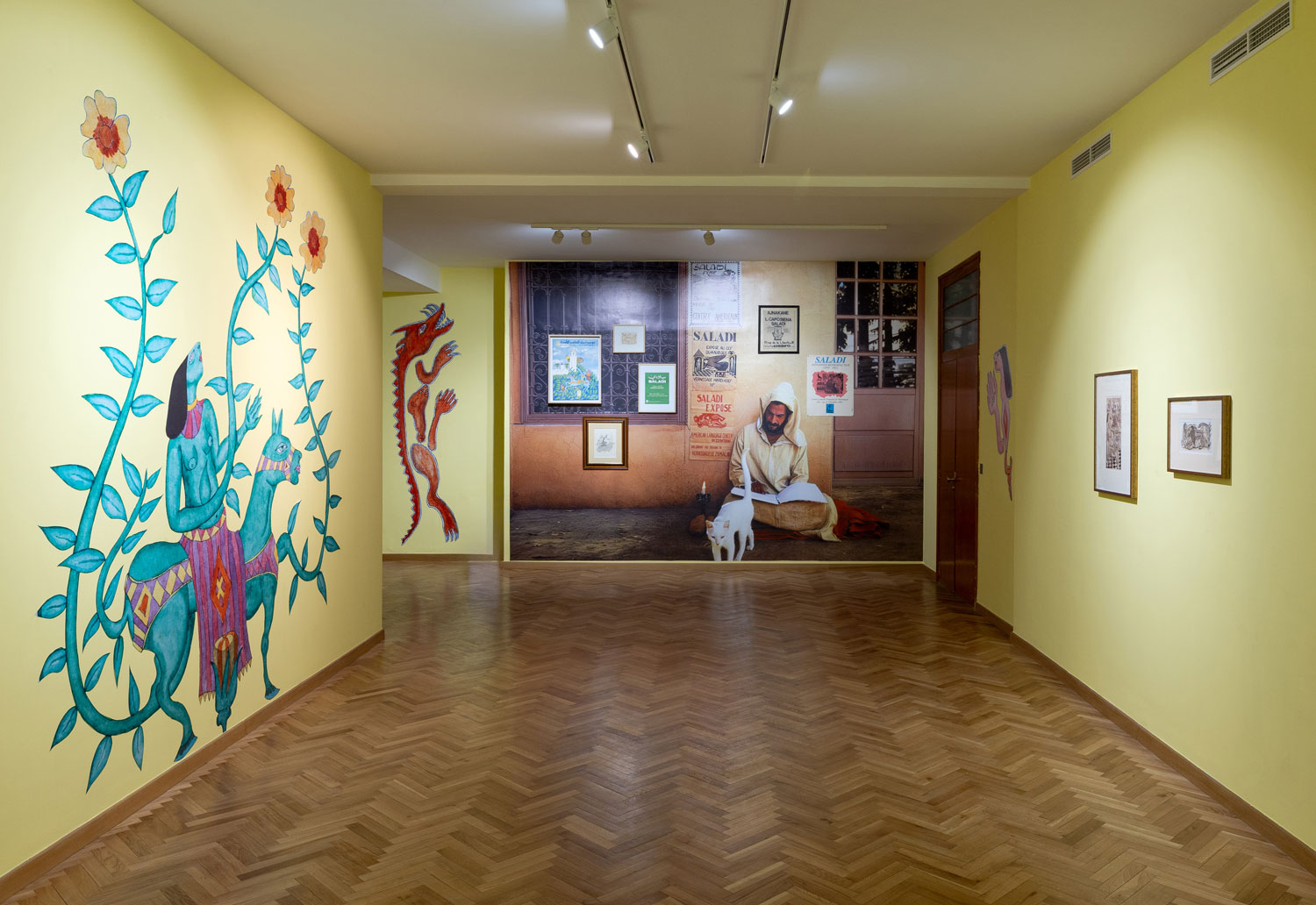
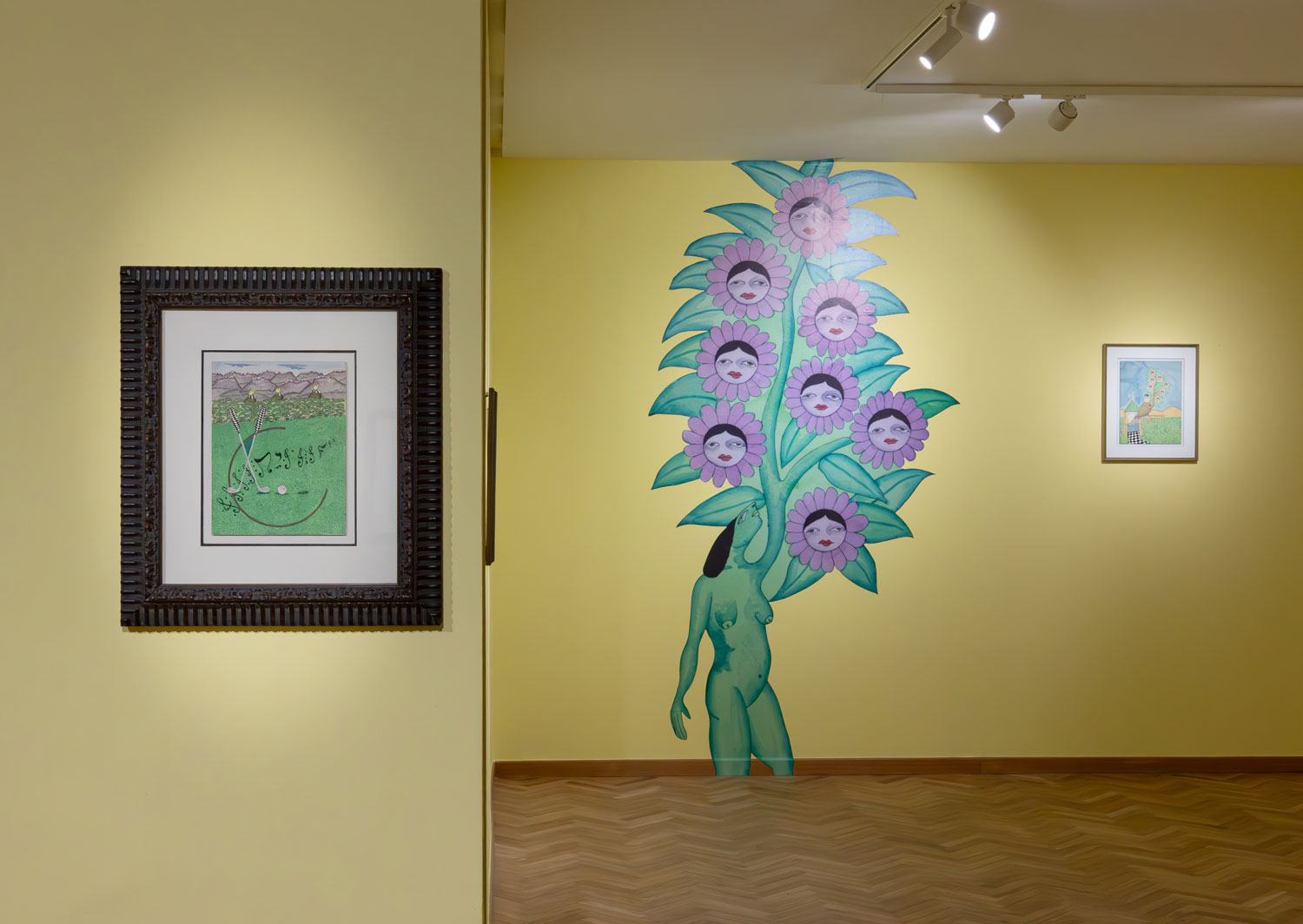
View of the exhibition “The Mystical Odyssey” at the Comptoir des Mines Gallery in Marrakech.
“The Mystical Odyssey,” presented at the Comptoir des Mines in Marrakech, marked a return to his roots for the Marrakech-based artist Saladi (1950–1992). His first exhibition took place in 1978 at the French Cultural Center, just a stone’s throw from the gallery. But this return in no way diminishes the mystery of a body of visual work that fascinates as much through its symbolism as through the principle of metamorphosis—at times bordering on anamorphosis—that animates it.
It is easy to spot—and visitors are quick to do so—the visual cues linking his ink-and-watercolor drawings to the city of Marrakech: mausoleums with green-brick roofs, black-and-white checkered floors, views of the Atlas Mountains, lush gardens featuring ponds alongside which majestic birds are depicted—sometimes evoking the world of Louardiri, who elevated the garden to the status of a distinct pictorial genre. “Marrakech deeply nourishes this imagination,” writes Hicham Daoudi, the gallery’s founder, in the catalog. “A city of saints and invisible passages, it offers Saladi a spiritual geography where the sacred flows through everyday life.”
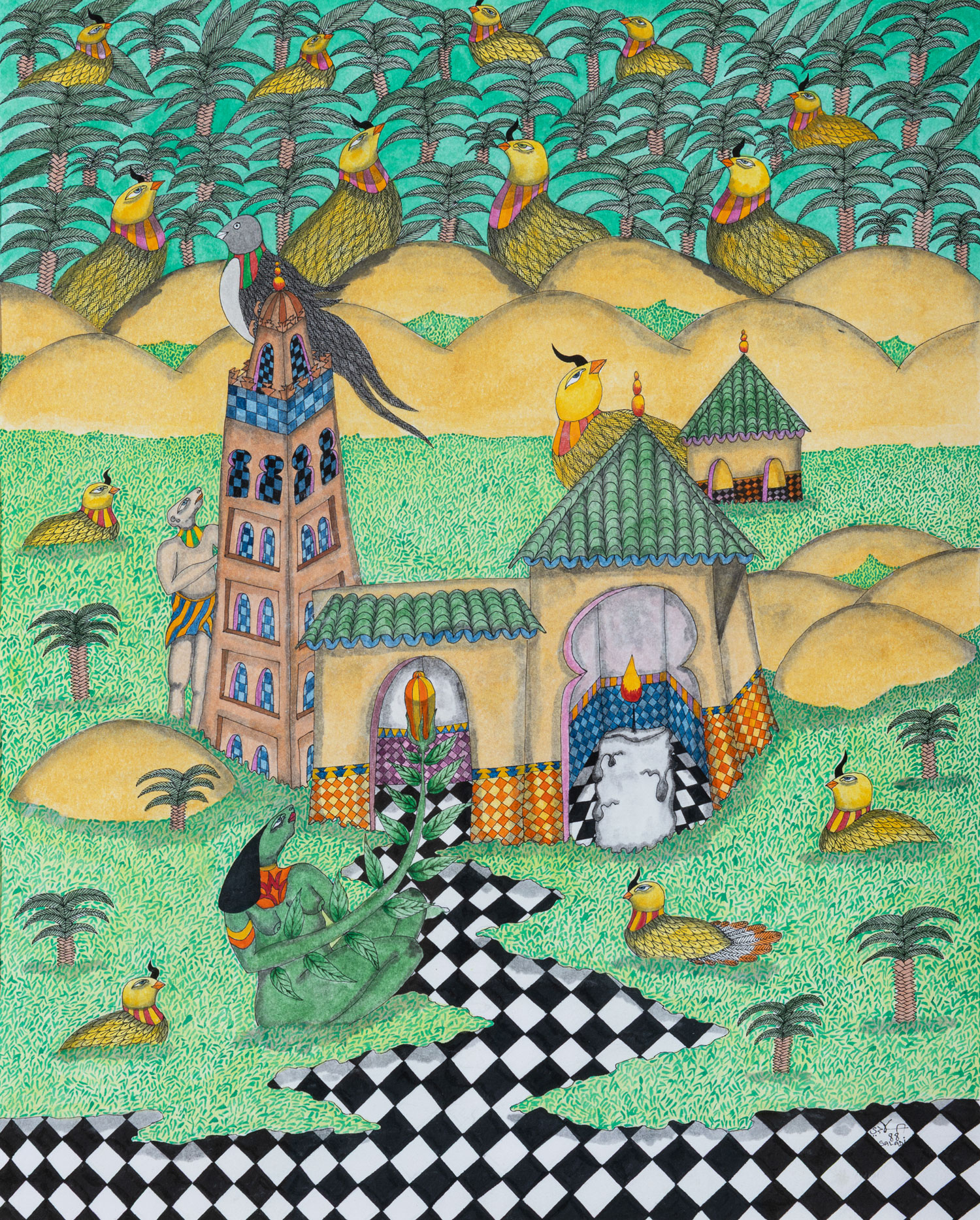
Composition, 1988. Watercolor and ink on paper. Signed and dated lower right, 49.5 x 40 cm.
Arab-Muslim mysticism
It is just as easy to spot the strangely magical transformations that the artist—more of a draftsman than a painter—imposes on scenes whose dreamlike quality may evoke the world of Baya: hybrid creatures, male or female figures with ambiguous nudity depicted in Egyptian-style profile, which may represent the jnouns of folk traditions and oral tales. One wonders, in fact, whether the artist’s studies in philosophy were not an attempt to answer mystical questions.
The fact remains, however, that behind the often allegorical nature of the scenes depicted—in which ambivalent motifs such as the biblical serpent or the “evil eye” appear—the latter, in a 1983 drawing, takes the place of the head of a disturbing group of figures—the key to these works continues to elude us. Undoubtedly, from an operational psychoanalytic perspective, they depict Saladi’s inner demons, but this interpretation is not sufficient.
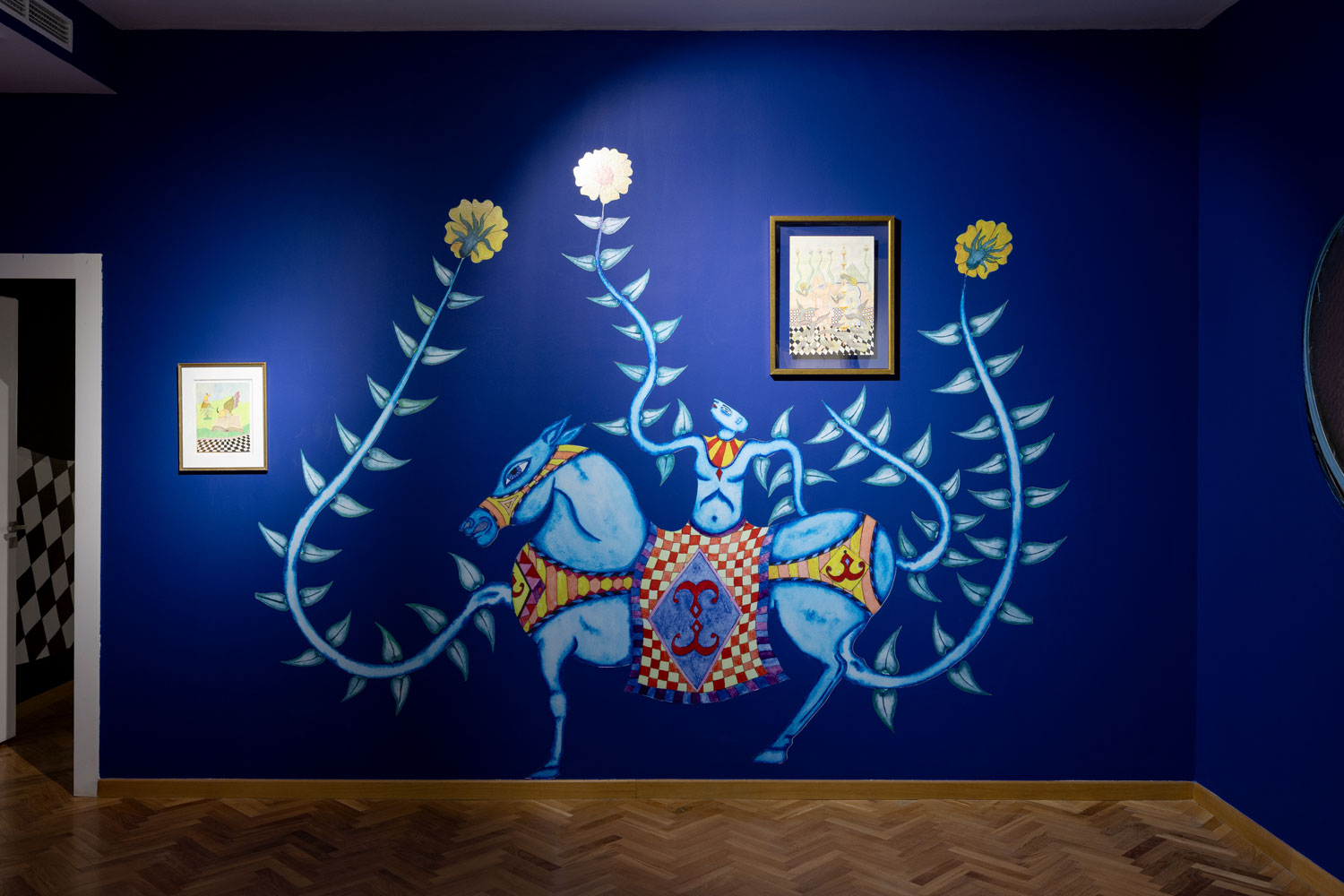
View of the exhibition “The Mystical Odyssey” at the Comptoir des Mines Gallery in Marrakech.
In one of the catalog essays, Yman Erraziki offers an interesting angle for analysis. She links this principle of metamorphosis to Arab-Muslim mysticism, and to Sufism in particular. These almost hallucinatory scenes, in her words, reveal “an imaginal world where man contemplates what he is by becoming what he sees (…) These hybrid bodies that run through his work,” she adds, “thus express the ceaseless metamorphoses of the being engaged in a spiritual experience of transcendence.”
There is one drawback, however. The curatorial decision to reproduce parts of the drawings on a large scale may leave visitors perplexed. It’s understandable that it was difficult to display such small formats in such a spacious venue, but it’s unclear whether the replication of certain images—which, admittedly, are easy to share on social media—might ultimately hinder a direct connection with the artwork.
Exhibition “The Mystical Odyssey” by Abbès Saladi, Comptoir des Mines, Marrakech, through July 15, 2026
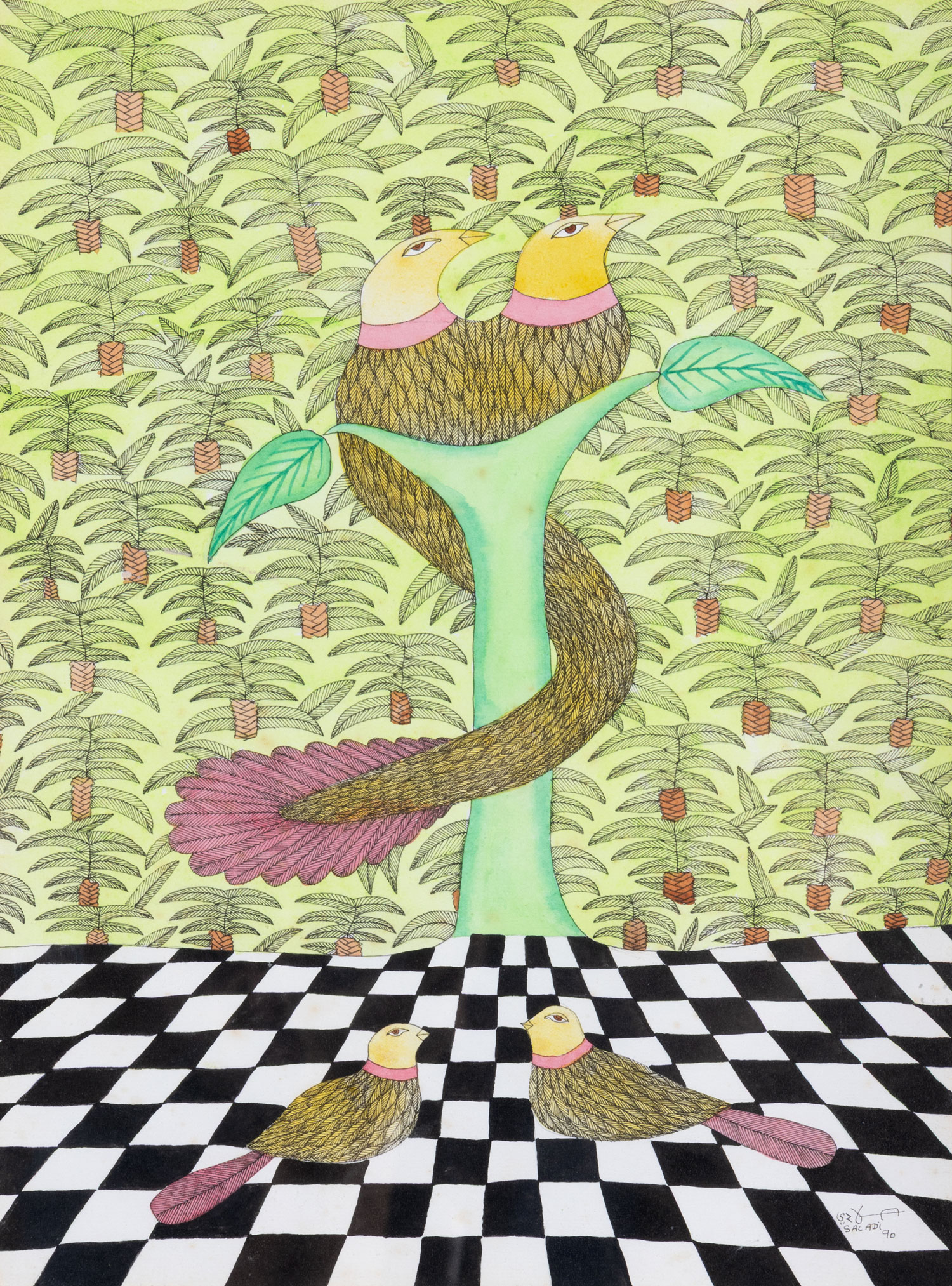
Composition, 1990. Watercolor and ink on paper. Signed and dated in the lower right corner, 42x32 cm. Formerly in the collection of the late Mustapha Segueni.
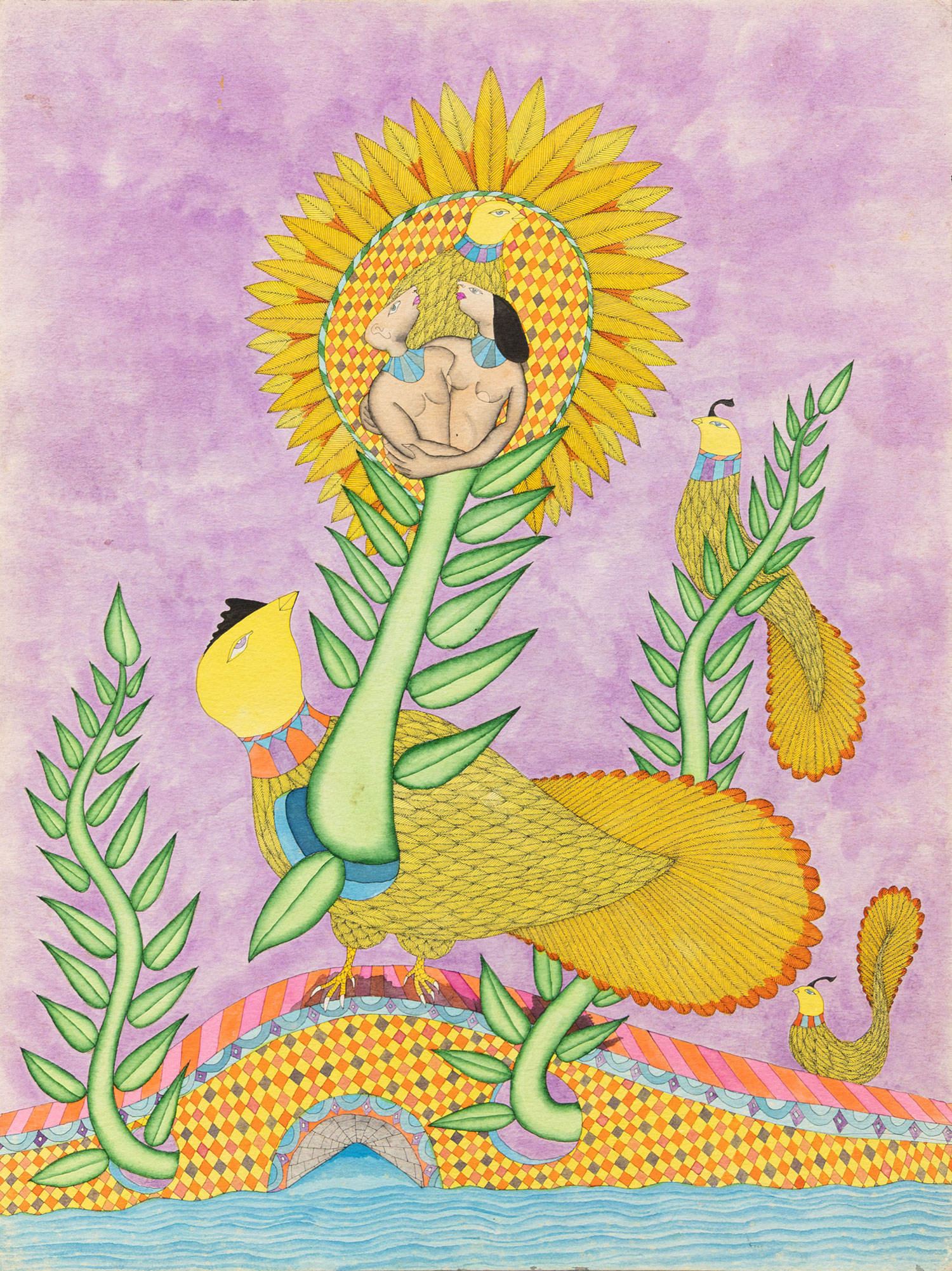
Composition, 1985. Watercolor and ink on paper, 41x32 cm. Pauline de Mazières Collection.
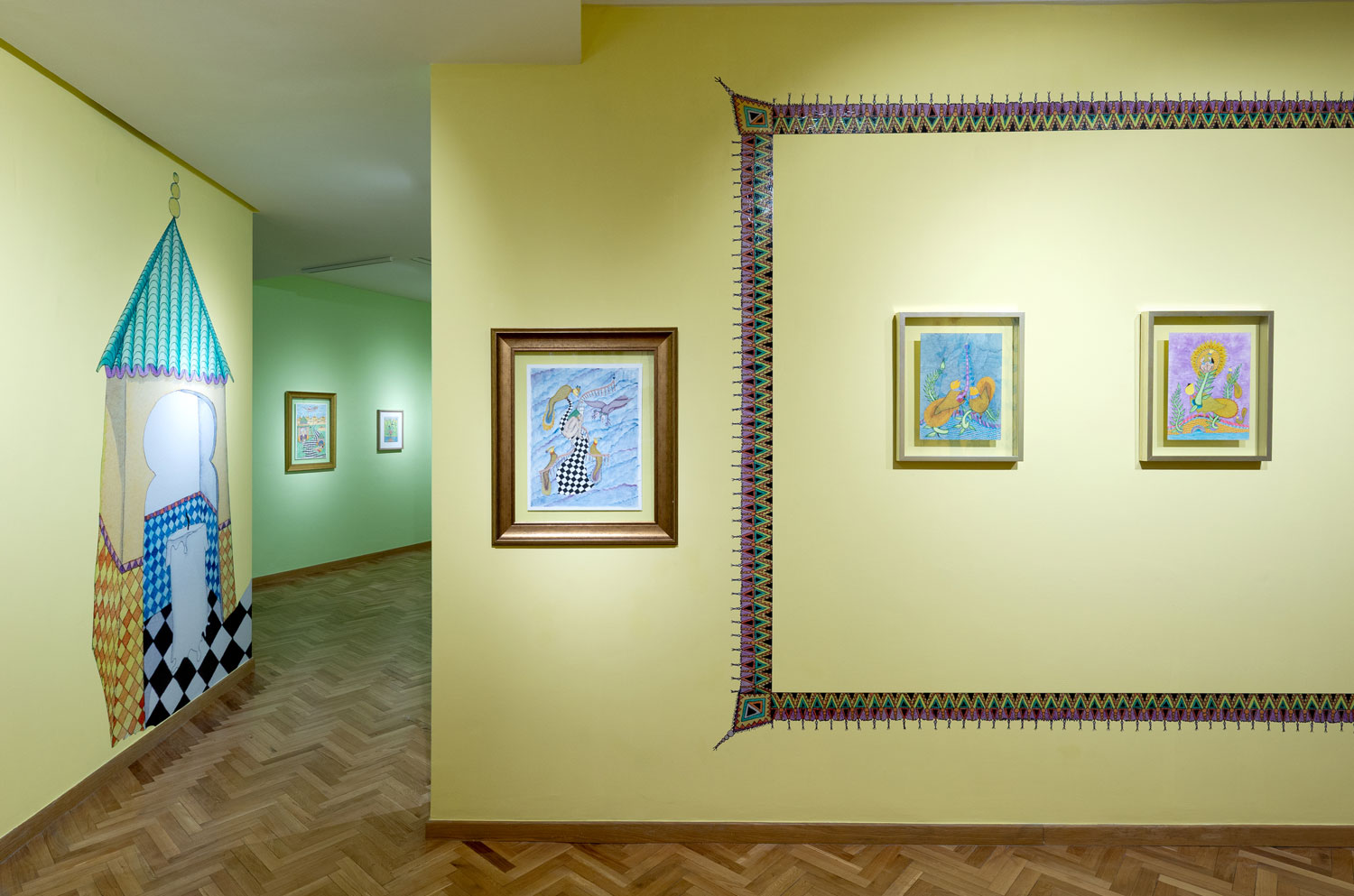
View of the exhibition “The Mystical Odyssey” at the Comptoir des Mines Gallery in Marrakech.