In his latest solo exhibition, Hassan Bourkia pays tribute to the books and authors that have accompanied him, offering us a philosophical reflection on the ravages of time.
By Olivier Rachet
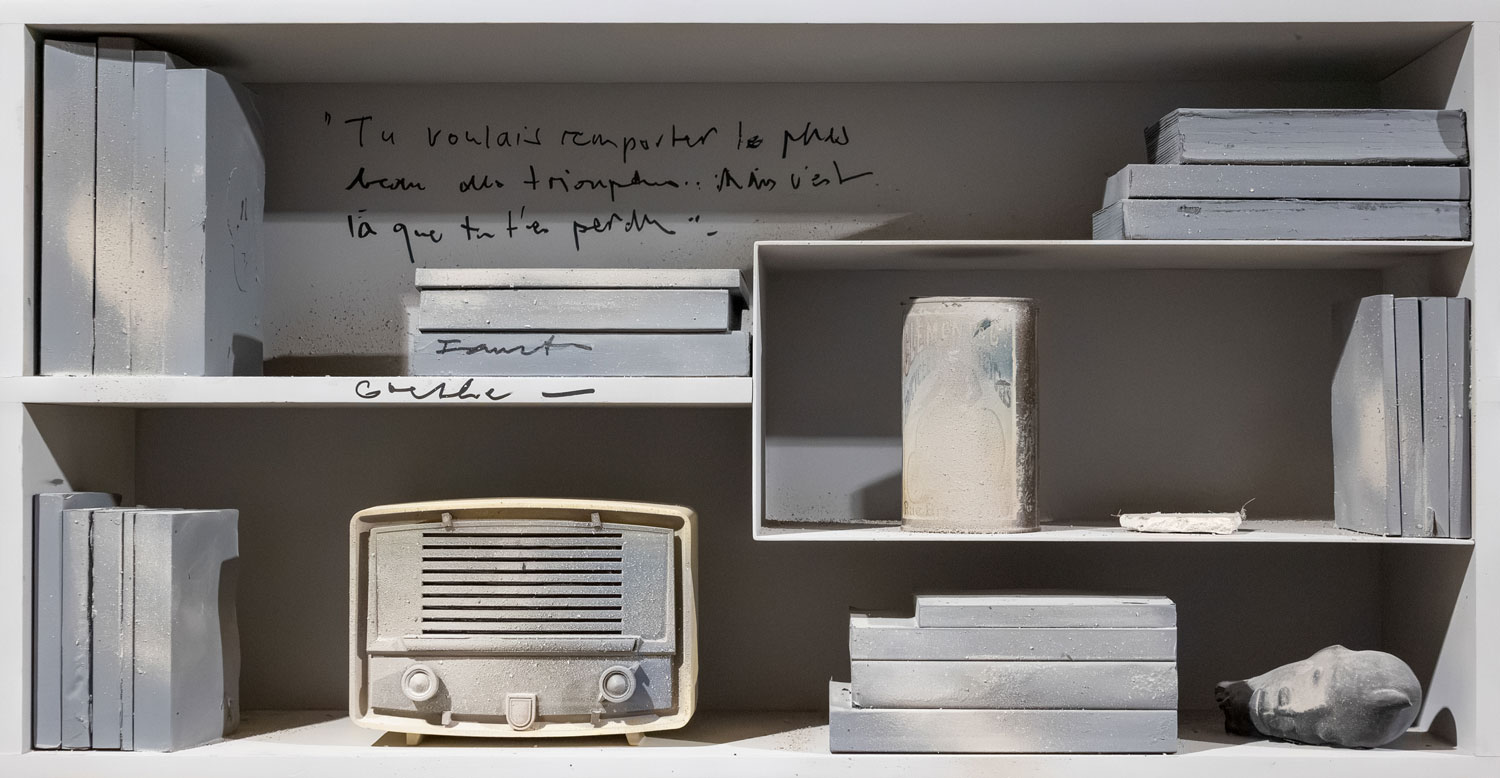
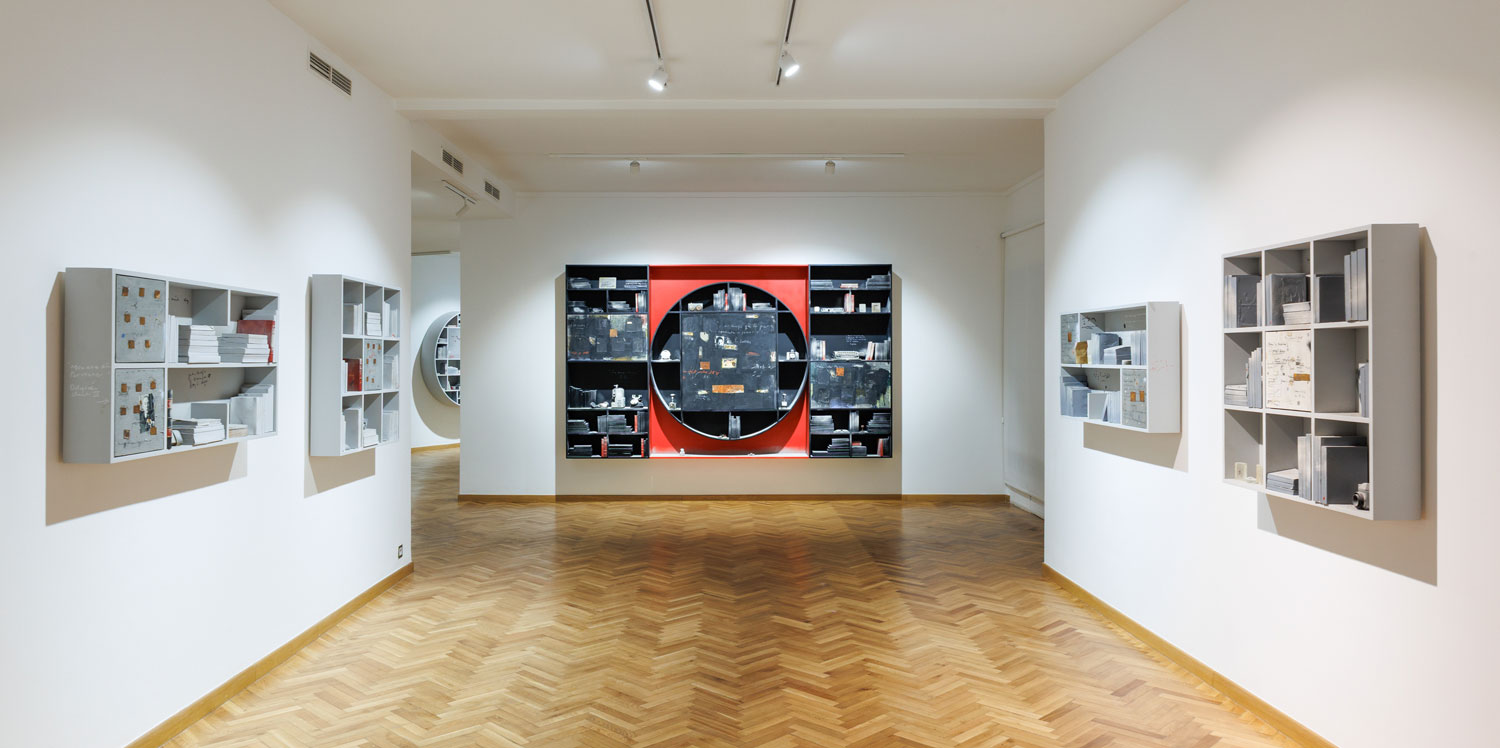
There are exhibitions that literally take your breath away. And breath is precisely the theme that opens “Les sentiers de l’intranquillité,” presented by Hassan Bourkia at the Comptoir des Mines in Marrakech, following the exhibitions “Résistance d’une promesse” (2020) and “Au nom des miens” (2021). The wall installation The Breath of the Image, which evokes a library and opens the exhibition, displays a collection of bamboo scrolls, some of which contain a few pieces of paper. On one of the shelves, a reed pen and a bowl serving as an inkwell stand out. A reminder of the earliest scrolls of writing, of calligraphy associated with divine inspiration, of a universal Wailing Wall? Ash covers the various objects, like the remnants of a time that might vanish.
The theme of disappearance, in fact, runs throughout the exhibition: from the city of Pompeii buried under lava, to the manuscripts of Timbuktu destroyed by fanatics, to the Library of Alexandria, to which a pyramid-shaped installation of the same name pays homage. Each work calls for silence and contemplation. Each invites sharing and—to borrow the beautiful term used by the artist, who is also a poet and translator—remembrance.
Wind and the Pasture of Wind
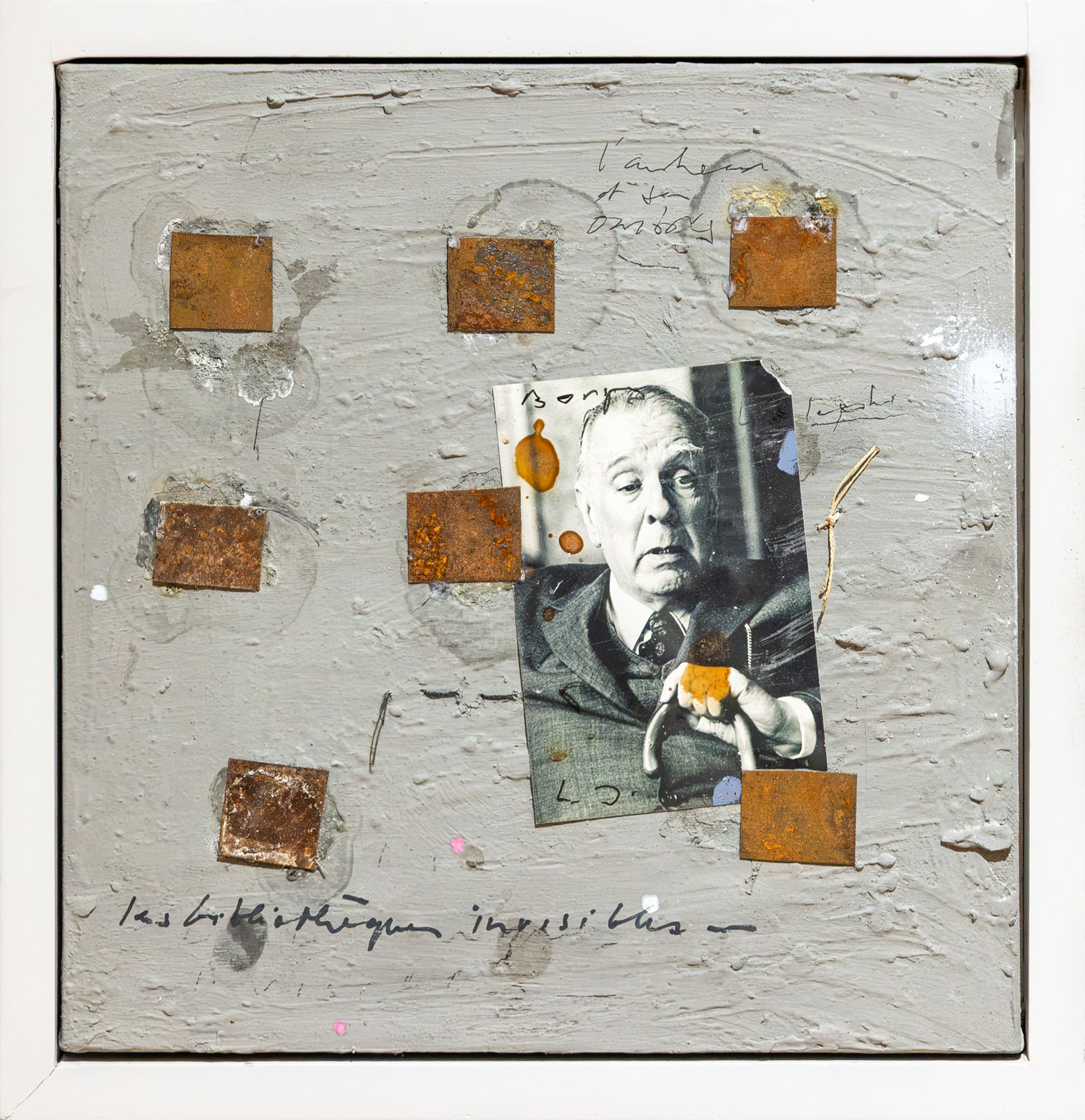
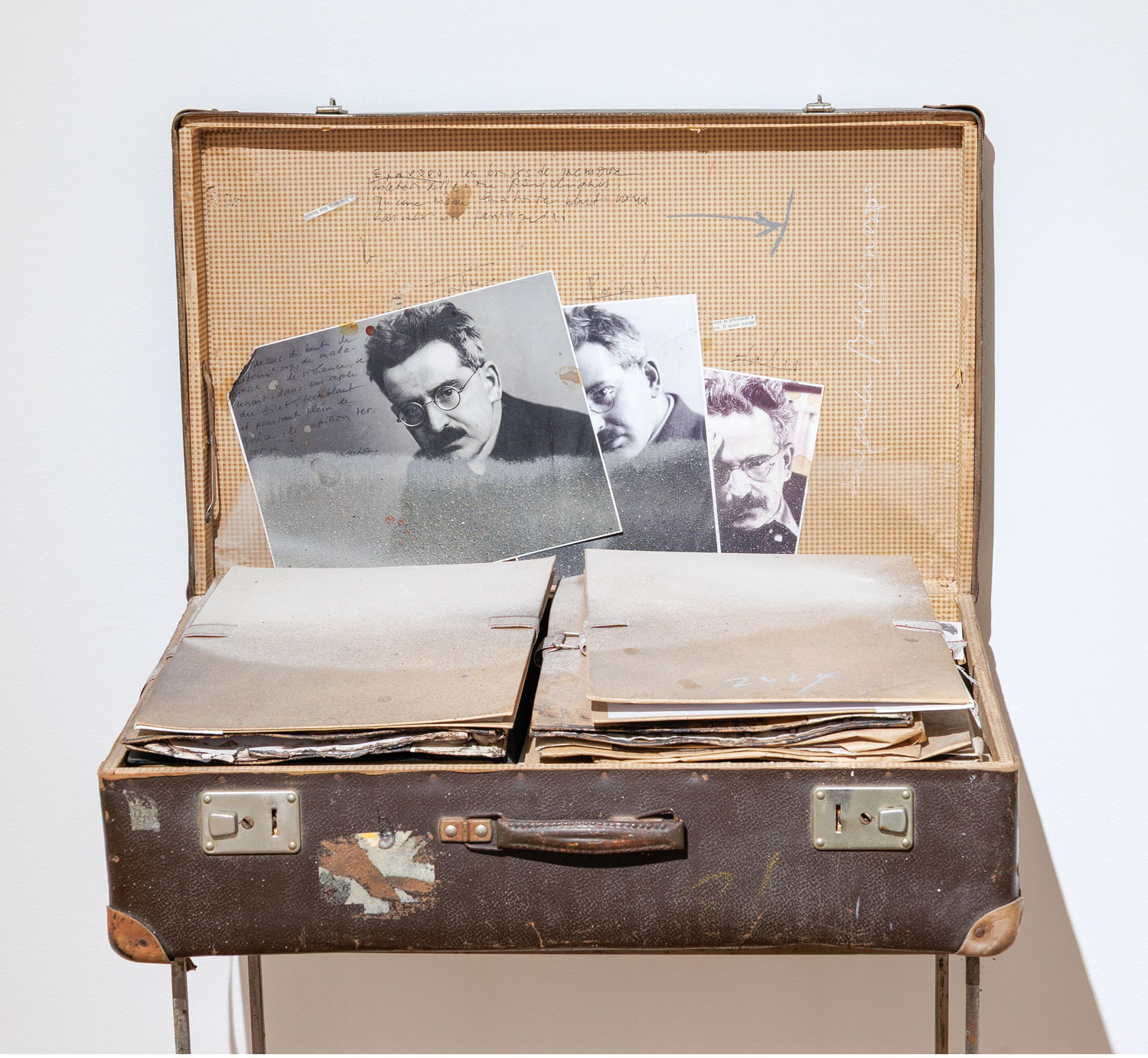
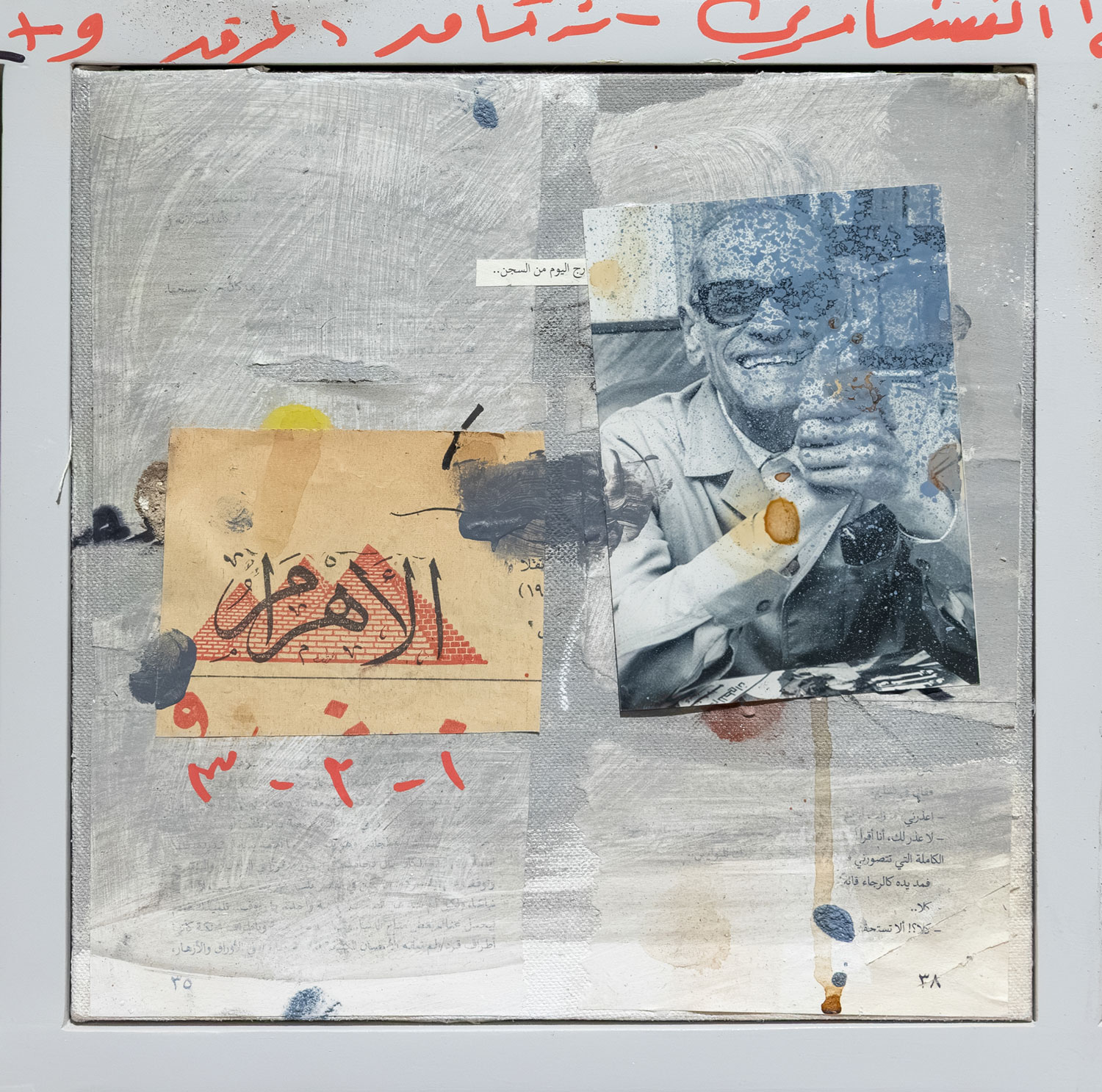
The authors featured—from Benjamin to Tanizaki, including Camus, Darwish, and Mahfouz—are chosen for the elements of destruction and violence that their work does not shy away from: from the Nazi extermination to the atomic bombs dropped on Nagasaki and Hiroshima. Placed under the auspices of a Faustian pact made with the devil, the installation The Wretched of the Earth evokes colonial violence through the figures of Fanon and Césaire, and recalls the 1889 Paris World’s Fair, which featured a “Negro Village” of grim infamy.
Disappearance is also an integral part of the process of industrialization, as suggested by the installation Facing the Absurd, in which objects meant to bring people closer together—transistors, televisions, cameras, 8mm film cameras—are covered in dust. As Ecclesiastes asks, is not everything wind and a chasing after the wind? Everything, yes—except perhaps words and images, in their ability to confront shadow and nothingness, as suggested by this passage from the Tao Te Ching, copied by the artist: “He who knows the white but remains in the dark is the measure of the world.”
A World That Refuses to Disappear
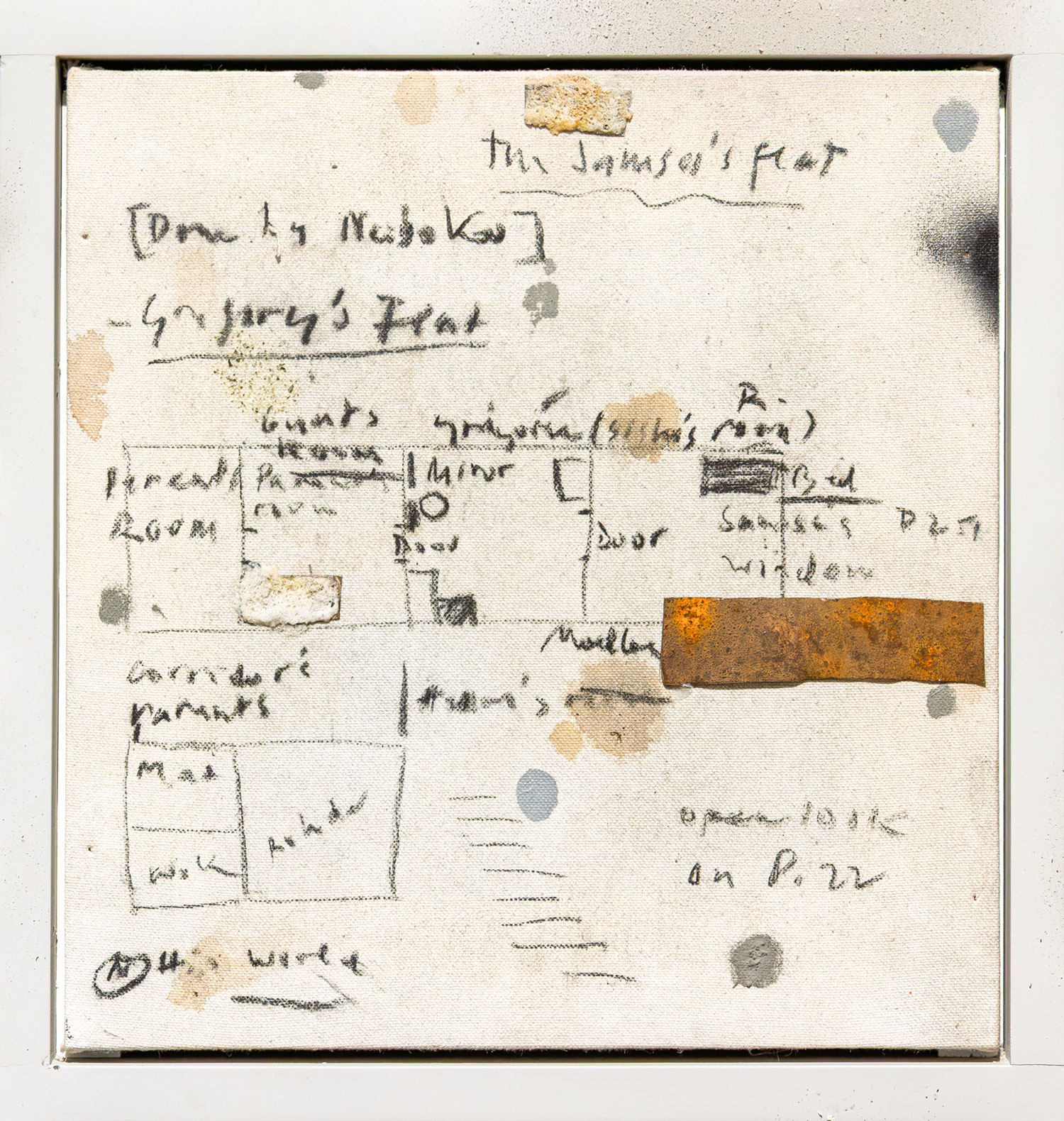
As for the image, the entire exhibition revolves around its essence, just as the reels of a cinematograph once turned. The ash and dust with which the artist covers his books and objects are merely the negative of a world that refuses to disappear. Bourkia, let us not forget, is a painter. Like Bellamine, he is also a champion of gray—of the interstice that both separates and unites the visible and the invisible, black and white, presence and absence, emptiness and fullness. Along the paths of restlessness, we encounter several canvases, one of which, pierced, offers a glimpse of the stretcher. Here, too, they are covered in ash and dust, revealing a few traces or imprints that seem almost funerary. Elsewhere, these traces form silhouettes or Japanese-style plum blossoms. It is not that art is reborn from its ashes, as Anselm Kiefer believed: art, according to Bourkia, has instead passed through the ashes of existence—mourning, lost loves, shattered ideals.
It is no coincidence that the exhibition concludes with the figures of Giacometti and Gérard de Nerval. One sculpted, in the aftermath of World War II, what remained of those tattered bodies that had survived the extermination camps; the other, in his poem El Desdichado, took pride in having “twice crossed the Acheron as a victor / Playing in turn on Orpheus’s lyre / The sighs of the saint and the cries of the fairy”. Bourkia, for his part, carves the pains of existence in fire and ash, on paper and on canvas. Like Orpheus, he rediscovers Eurydice in the guise of art. For art is metamorphosis; a tragic promise of eternity.
Hassan Bourkia, “Les sentiers de l’intranquillité,” Comptoir des Mines Galerie, Marrakech, through December 17, 2026.