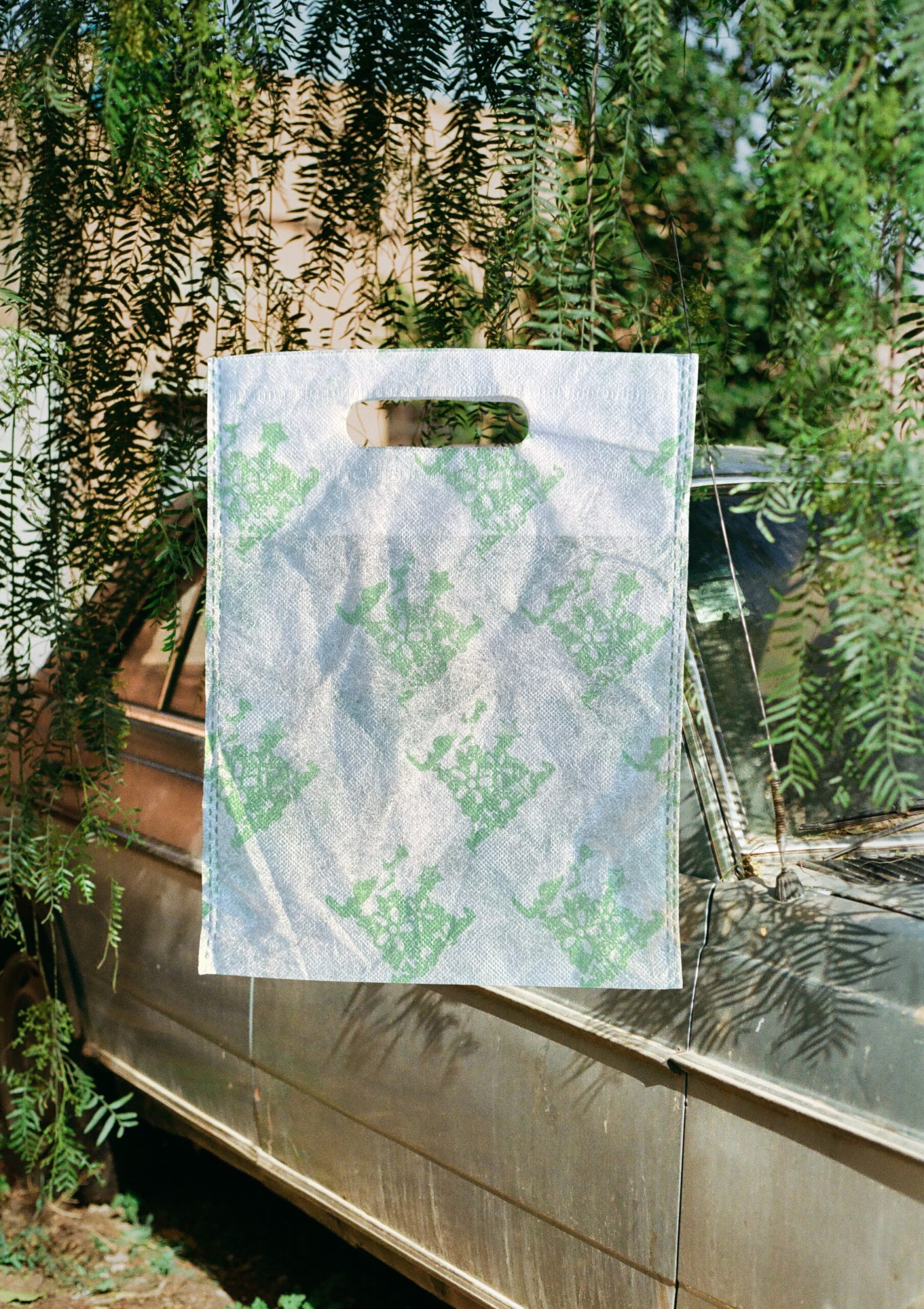
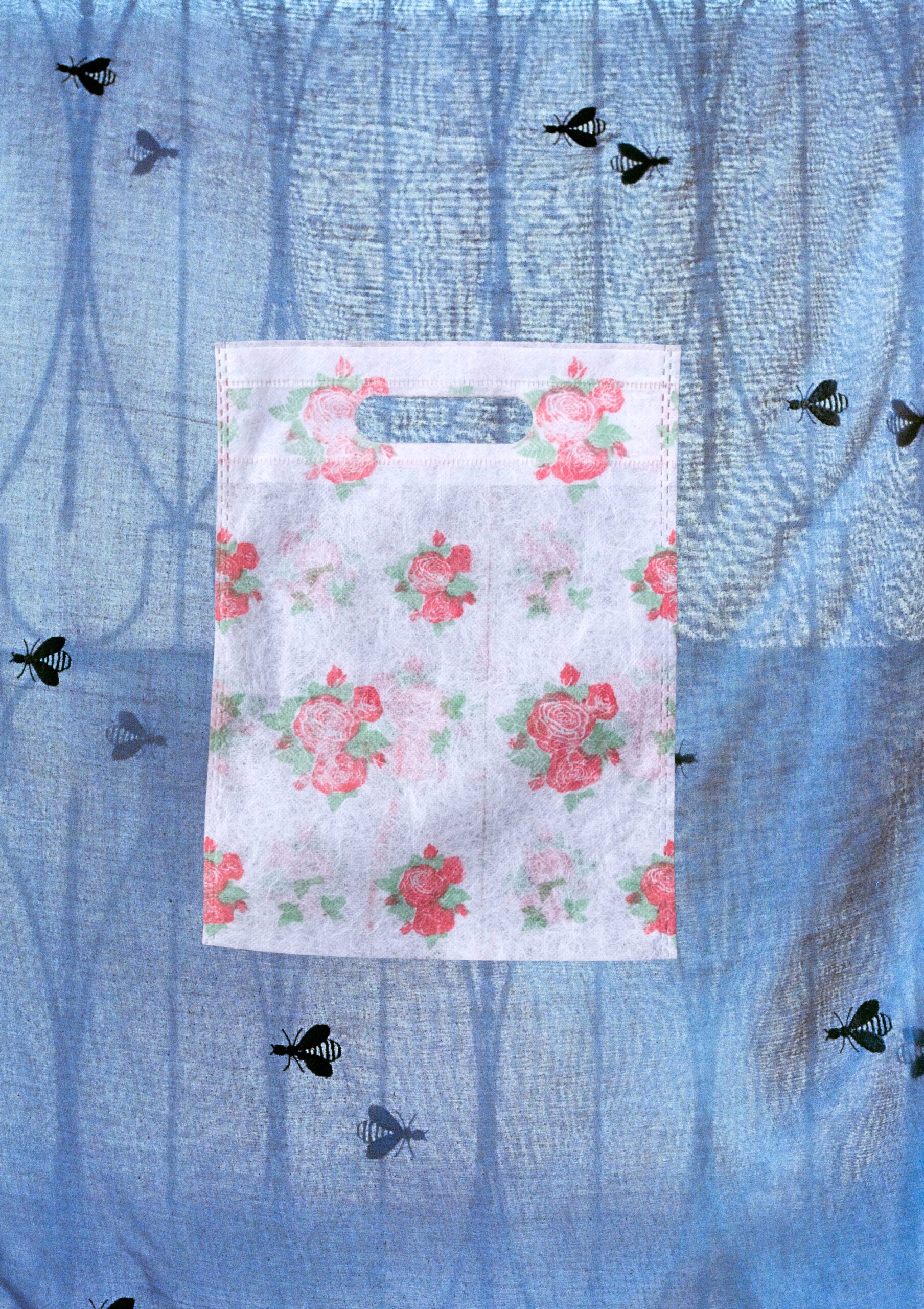
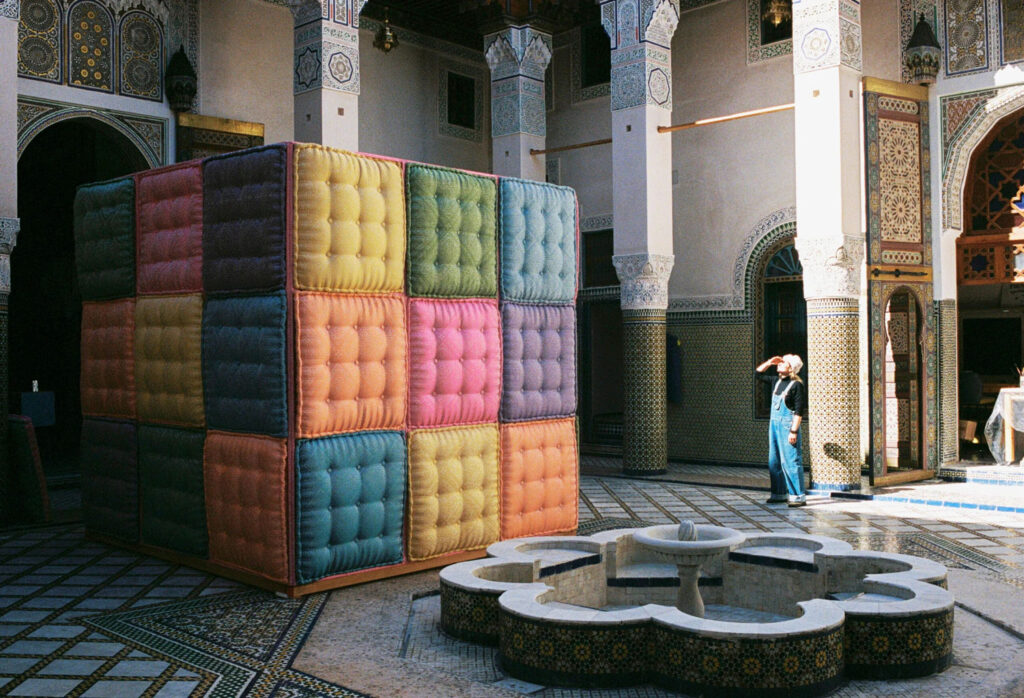
“My mother keeps everything. Bags tucked inside other bags, cellophane left on the fridge. In Morocco, we protect our belongings—especially since we’ve gone without them before. I’ve picked up the same habit. Ever since the ban on mika…” In 2016, I’ve been collecting the woven bags that replaced them and embroidering them with gold thread. Placing them on a pedestal means looking at what no one else looks at. They’re covered in patterns and colors, going against the grain of everything we’re streamlining today to retain only their function. These objects, which will soon disappear, replaced by simpler, more bland forms, draw me in. As I’ve collected them, I’ve come to realize that I’m preserving stories as much as I am preserving the bags themselves. My photographs, onto which I superimpose images of these bags, serve the same purpose. I capture places that are about to change or disappear—an abandoned swimming pool in Casablanca, a stretch of coastline in Imsouane that tourism will eventually transform. I work with film and make sure my images cannot be dated, so that viewers hesitate between today and twenty years ago. Morocco lends itself to this. The country is changing very quickly, but certain things persist, sometimes in an almost anachronistic way. Photography is a way of working with this disconnect. Today, I’m taking the image off the wall: by printing it on suspended fabrics, I’m moving toward forms that have volume. Photography remains my foundation, but I want it to become an object you can touch.”