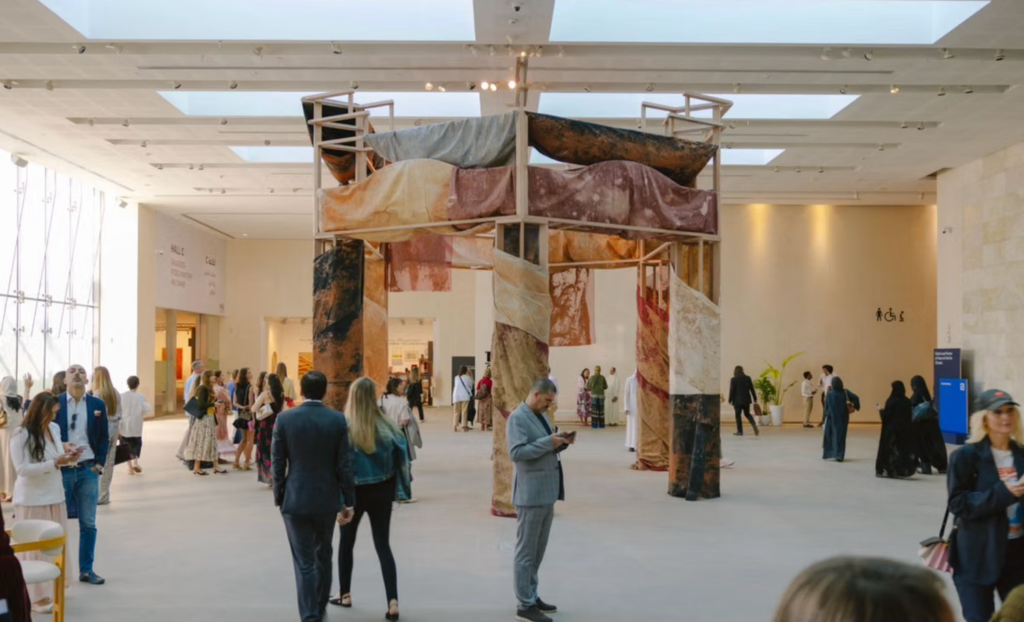
The artistic director of the 16th Dakar Biennale has unveiled a tight selection of 54 artists who address the theme of “(anti)fragility” with works that explore the concepts of repair and resistance in the face of global turmoil.
By Emmanuelle Outtier
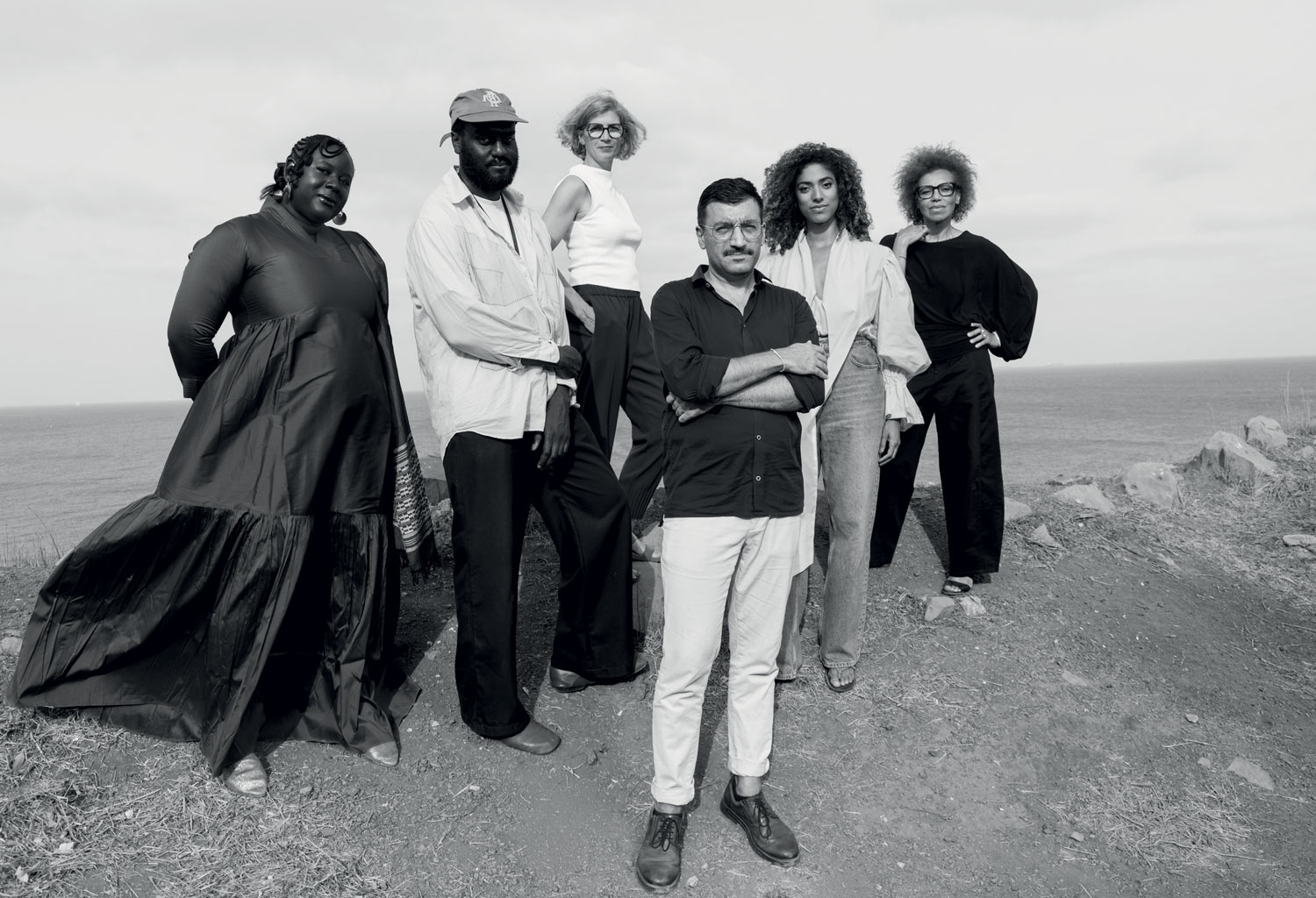
“All the selected artists seek to rethink our ways of living together, helping one another, and coexisting—not only among humans but also with all living things.” In late September, at the Museum of Black Civilizations, the artistic director of the upcoming Dakar Biennale, Morad Montazami, unveiled his selection: 54 visual artists brought together under the theme of (anti)fragility, “an attitude that consists of turning fragility into an expressive force,” he explains, borrowing the concept from the Lebanese-American intellectual Nassim Nicholas Taleb. On paper, this is familiar territory. Resilience, care, co-creation: for several years now, these notions have been permeating contemporary art. They were already present at the last Venice Biennale, conceived by Koyo Kouoh, to whom Montazami pays tribute—“she is one of the great inspirations for curators of my generation”—and in whose wake this 16th edition may well follow.
What does this selection suggest? It is short, tightly curated, and leaves little room for newcomers. Appointed in April, Montazami had to work quickly, facing the constraints of a biennale that selects its artists through an open call for submissions. Above all, it reflects his taste for artists whose careers have remained off the international radar, such as the Senegalese artist El Hadji Sy, a leading figure of the second generation of the Dakar School, Ernest Breleur from Martinique, recently rediscovered by a wider audience in “Paris Noir” at the Centre Pompidou; and Pape Diop, a self-taught Senegalese artist who paints saints and folk figures on pieces of salvaged plywood. And this may be where one of the defining characteristics of this edition becomes apparent. There are few young artists fresh out of art school or being propelled into the spotlight for the first time. Montazami seems to prefer established practices and mid-career artists, supplemented by younger artists who are already well-established on the international scene. Less a biennale of emergence, then, than one of affirmation.
The Moroccan selection clearly reflects this trend, featuring M’barek Bouhchichi, Safaa Erruas, Fatiha Zemmouri, and Mohamed Laouli—four artists whose artistic practices are already well-established. Montazami has also chosen Faouzi Laatiris—for whom he curated a retrospective at the Mohammed VI Museum of Modern and Contemporary Art in 2016—as the guest of honor, in perfect alignment with his theme of antifragility, which “values social and community bonds.” For more than thirty years, Faouzi Laatiris has indeed inspired and trained an entire generation of Moroccan artists—including Safaa Erruas herself—through his studio “Volume and Installation” at the National Institute of Fine Arts in Tetouan (INBA), where he “founded a school”—a concept dear to Montazami.
A Biennale of African Circulations?
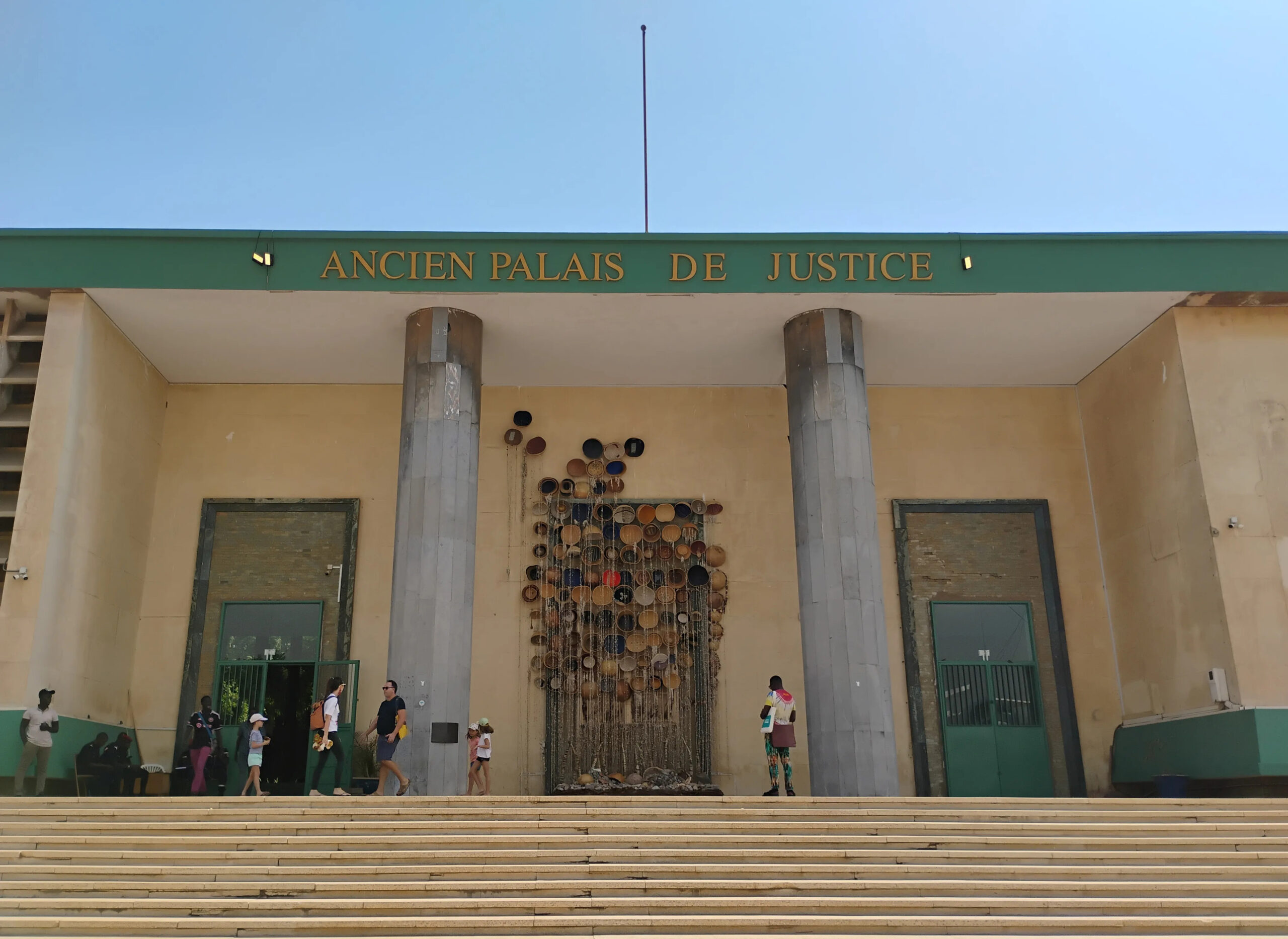
Montazami scatters enough clues to give a glimpse of the overarching theme of this new edition: coloniality, repair, and resistance are central to many of the practices on display. Repair comes notably through recycling, which thwarts Western imperialism and globalized consumerism, as seen in Georges Adéagbo’s installations made entirely of scrap materials. But it also comes through local knowledge that has been marginalized by dominant cultures. M’barek Bouhchichi will present a new installation in the form of an “immaterial library” centered on Amazigh and Senegalese poetry. Similarly, the Surinamese painter Marcel Hendrik Pinas creates works based on the Afaka alphabet, a Creole alphabet invented in the early 20th century in a community rooted in slavery and marronage. Resistance also manifests itself in the recognition of the non-human and through a reflection on environmental violence. One of the sections of the international exhibition (what Montazami calls the “line of flight”) is aptly titled “Greening the Old Courthouse: Decolonial Ecology, Agro-Resistance, and Knowledge of Medicinal Plants.”
Finally, the biennale continues to embrace a broader definition of Africa: not merely as a geographic entity, but as an imaginary space shaped in equal measure by its diasporas. Montazami and his curatorial team give prominence to art scenes that are more on the periphery of contemporary art circuits. While countries like South Africa and Nigeria command much of the international market’s attention, they will ultimately be underrepresented in Dakar. Conversely, more niche scenes are emerging, from Suriname to Guinea, including island regions such as Cape Verde, Madagascar, Réunion, and Mauritius. Montazami thus continues what his predecessors began: a dialogue between the continent and its diasporas, which share a history of displacement and trauma.
16th Dakar Biennale, Dak’Art, from November 19 to December 19, 2026.
Artistic Director: Morad Montazami – Curatorial Team: Madeleine de Colnet, Oulimata Gueye, Delphine Lopez, Fatima Bintou Rassoul Sy, Youssouf Fofana (Design Section).