The exhibition “The Poetics of Forms,” dedicated to the painter Mustapha Boujemaoui, offers a glimpse—albeit too brief—of his 50-year career.
By Olivier Rachet
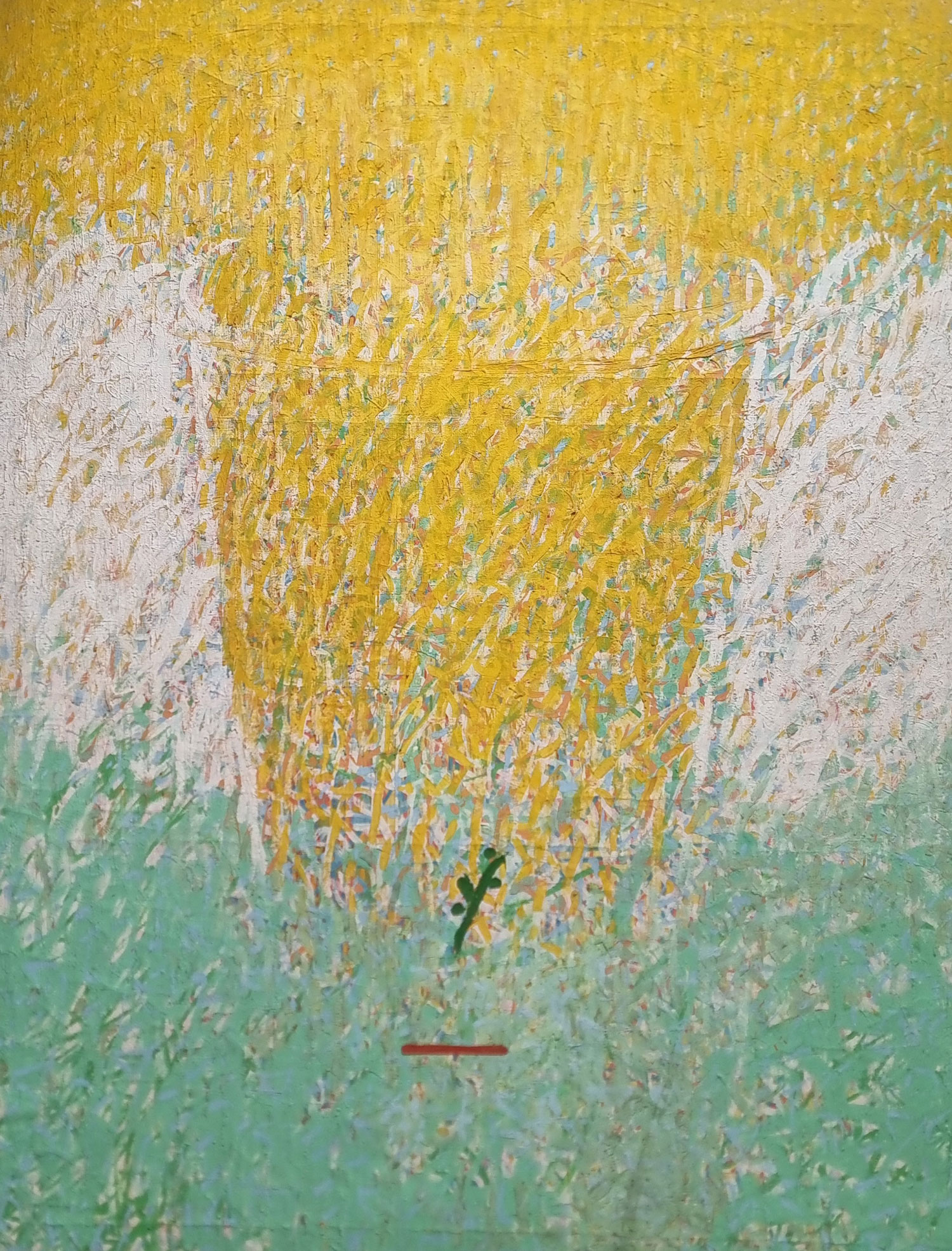
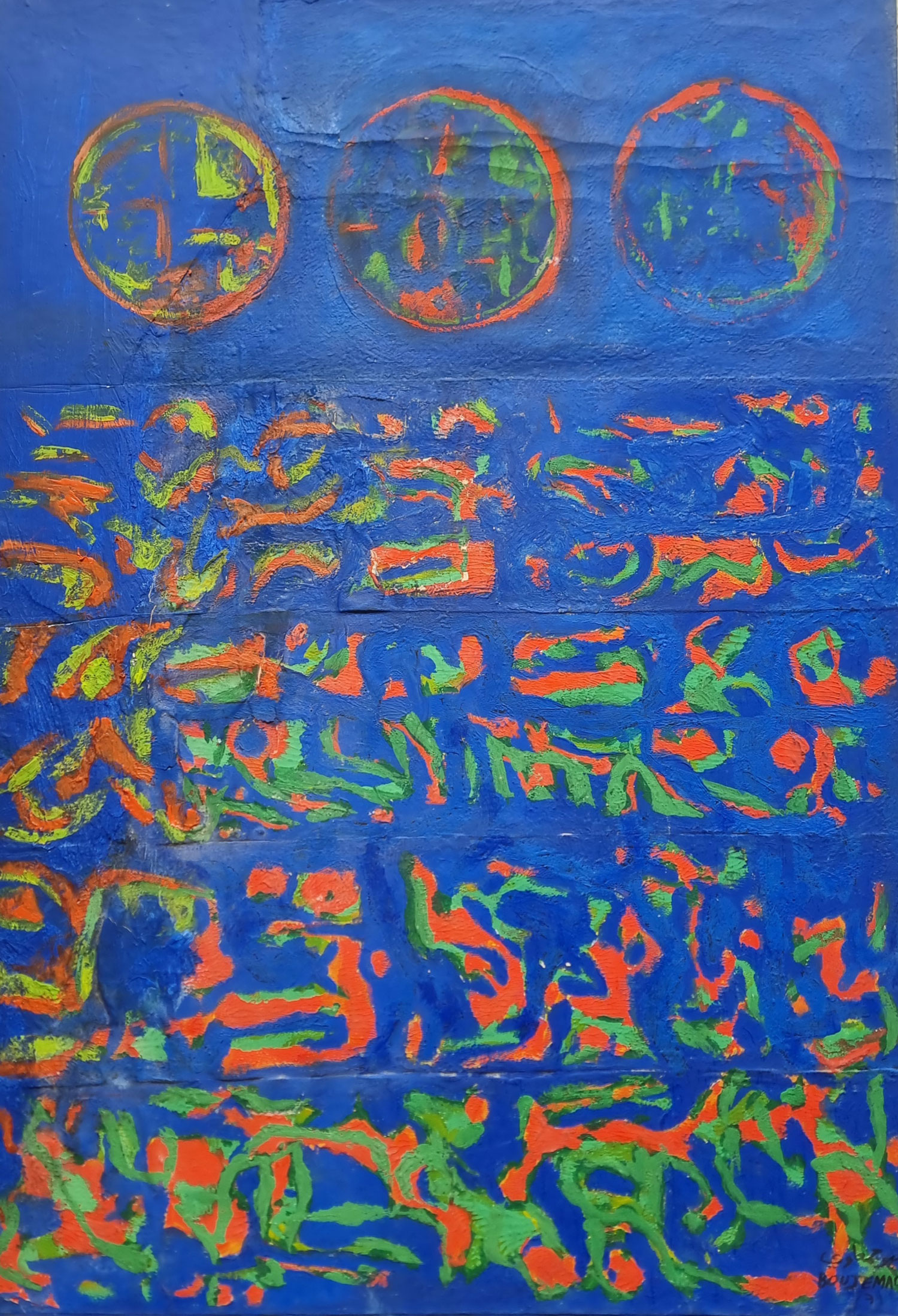
Mustapha Boujemaoui, Les jardins imaginaires, 1988. Mixed media on canvas, 130x100 cm. Private collection of Youssef Bennani
The early life of Mustapha Boujemaoui, born in 1952 in Ahfir in the Oujda region, is relatively well known. After studying at the National School of Fine Arts in Tetouan, he moved to Brussels in the 1970s, then to the École des Beaux-Arts in Paris. The exhibition “La Poétique des formes,” presented by the Villa Carl Ficke-Musée de la mémoire in Casablanca, offers a brief overview of this early creative period. At that time, the artist liked to use paper or newspaper as his medium and created what he called “pictocollages,” sometimes all-over, in which a free-flowing poetics of the sign comes to the surface. It is difficult to discern what is at play in the genesis of a work that nevertheless strikes the viewer with its mastery of color and its abstract language.
Boujemaoui returned to Morocco in 1982 to pursue a career as an art teacher, first at a high school in Oujda and later at the Regional Pedagogical Center and the National School of Architecture in Rabat. Several motifs, featured in the exhibition, then caught his attention. One of these was caravans, which he explored in particular in a 1994 acrylic on mounted newspaper that pays homage to Ibn Battuta. The composition here is based on an almost architectural spatial arrangement in which horizontal and vertical lines form frames open to the four winds, allowing the painter’s free-flowing brushwork to be fully expressed.
Mustapha Boujemaoui, The Caravan (in gray), 1994. Acrylic, 58 x 80 cm. Academy of the Kingdom of Morocco, on loan MMVI
A Hybrid Painting
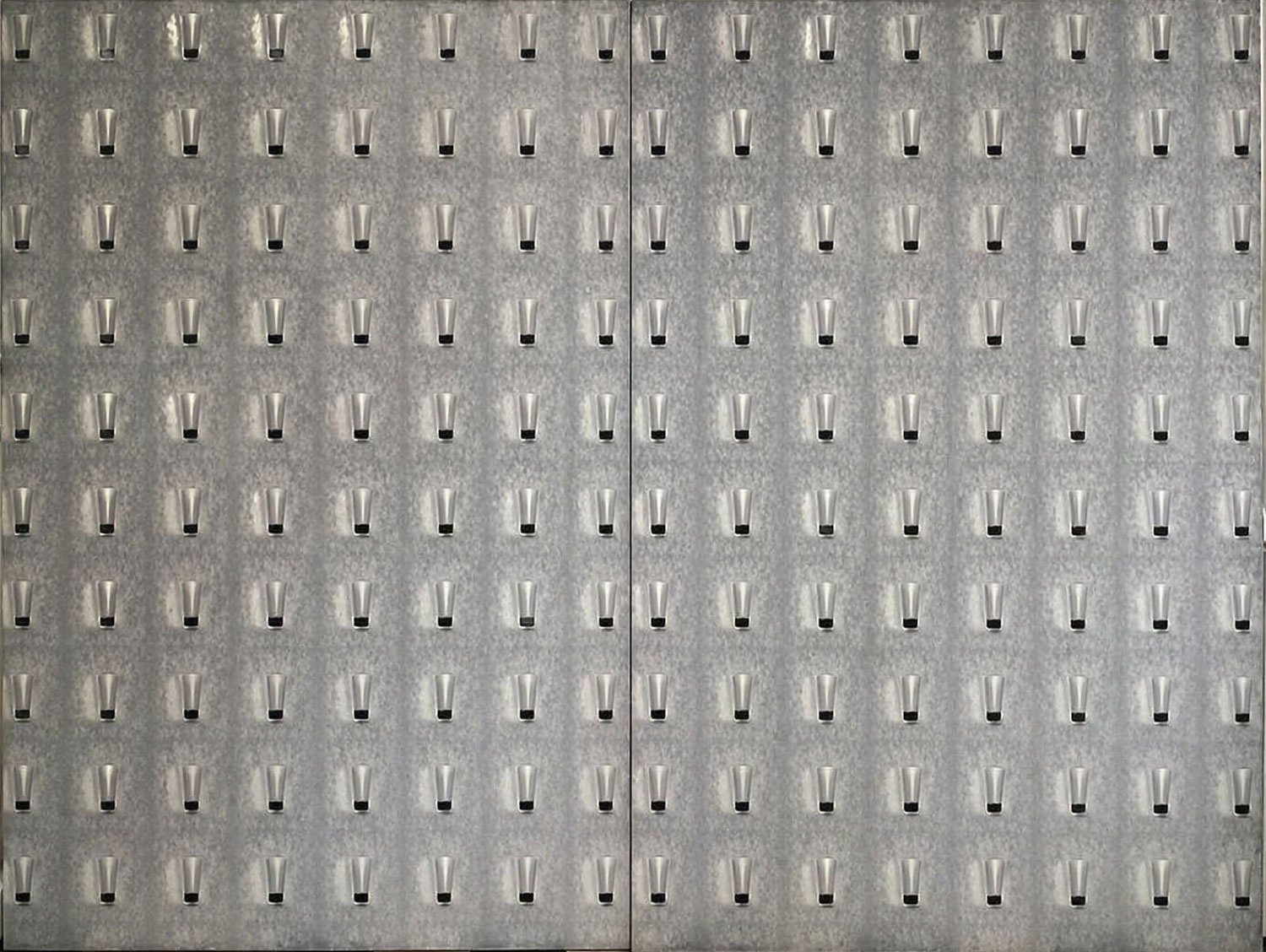
To this first motif was added that of the tea glass, which would become his favorite subject. The painter then began, following in the footsteps of Fouad Bellamine, to push the boundaries of painting by blending it with a subtle form of installation art. A prime example of this is the 1991 oil on canvas, Le Verre de Marie , which features, in its upper central section, an authentic tea glass resting on a glass base. As Aziz Daki explained in 2008 in the catalog for the exhibition “Les métamorphoses de ma vie” presented at the L’Atelier 21 gallery, the artist paints and sometimes even glues tea leaves onto the canvas, which are revealed in a multitude of brushstrokes that cause the motif to appear and disappear.
This technique shines through in one of the exhibition’s most beautiful paintings, Les jardins imaginaires (1988), in which the glass motif appears to be swept away by a whirlwind of colorful brushstrokes. This dual focus on repetition—which can extend to seriality and the dilution of the motif— is also evident in a recent painting from 2020 dedicated to the figure of Al-Boraq, which is not unlike the angels to which the painter has also devoted so much of his work.
Often describing himself as a painter-researcher, Boujemaoui also strikes us as a painter-player, taking turns to play with the laws of representation and the aniconic tradition of painting. This approach deserves a retrospective worthy of the name—perhaps at the Mohammed VI Museum of Modern and Contemporary Art in Rabat?
Exhibition The Poetics of Forms by Mustapha Boujemaoui, Villa Carl Ficke – Casablanca Museum of Memory, through November 30, 2026
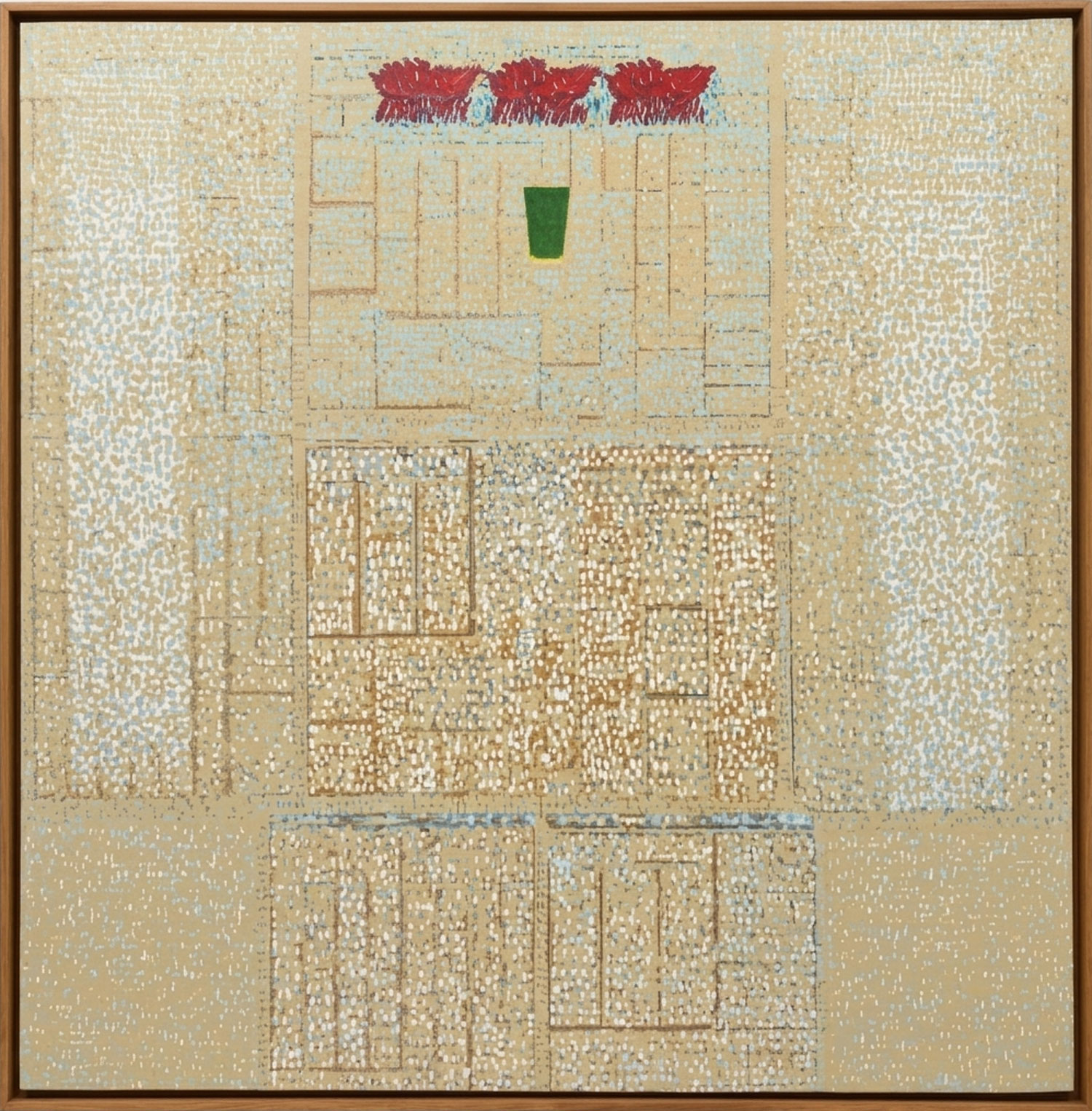
Mustapha Boujemaoui, La Caravane No. 3: Homage to Ibn Battuta, 1994. Acrylic on mounted newspaper, 150 x 150 cm.
Academy of the Kingdom of Morocco, on deposit MMVI
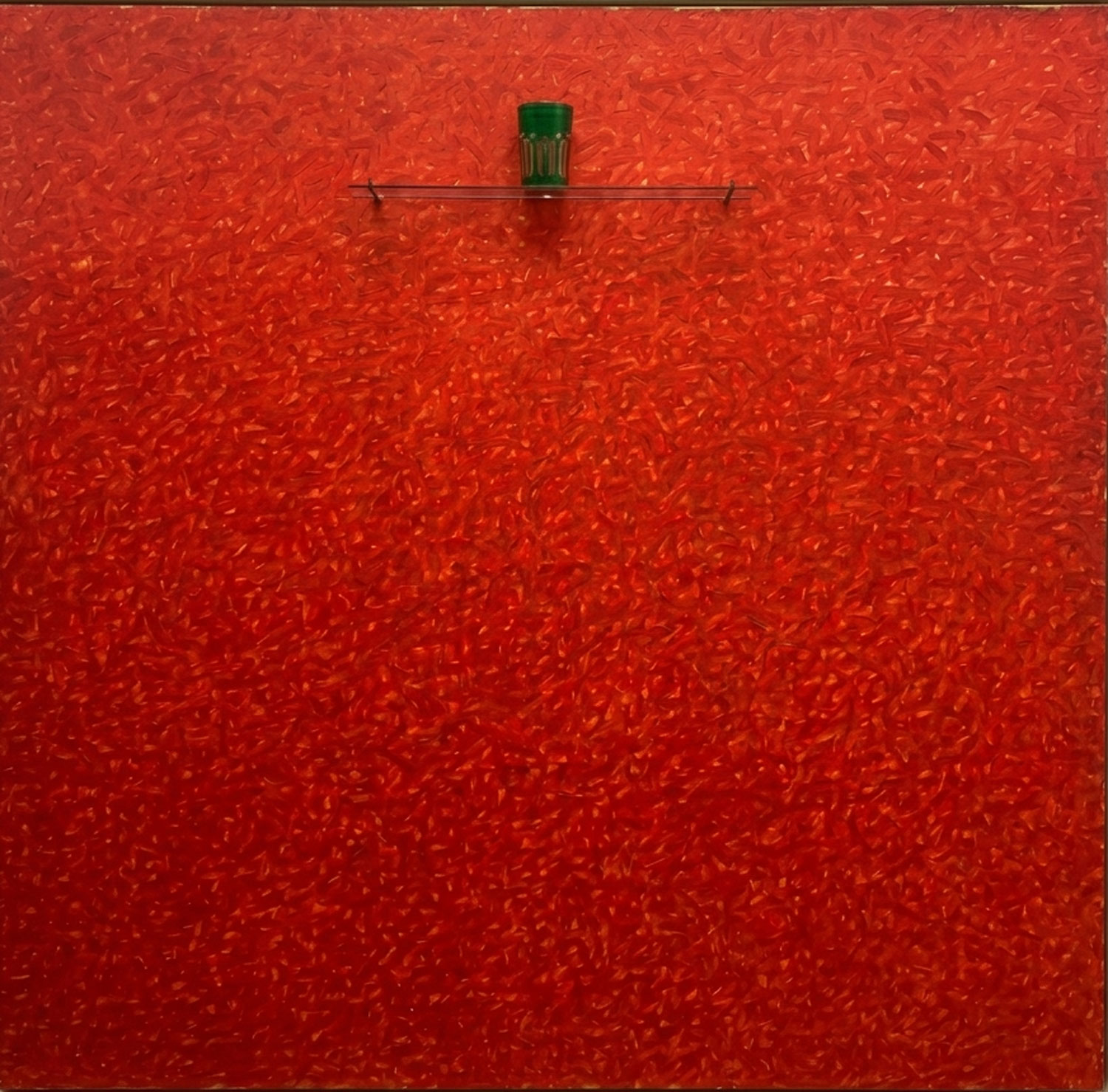
Mustapha Boujemaoui, Le Verre de Marie, 1991. Oil on canvas, glass, and teacup, 130 x 130 cm. Artist’s collection