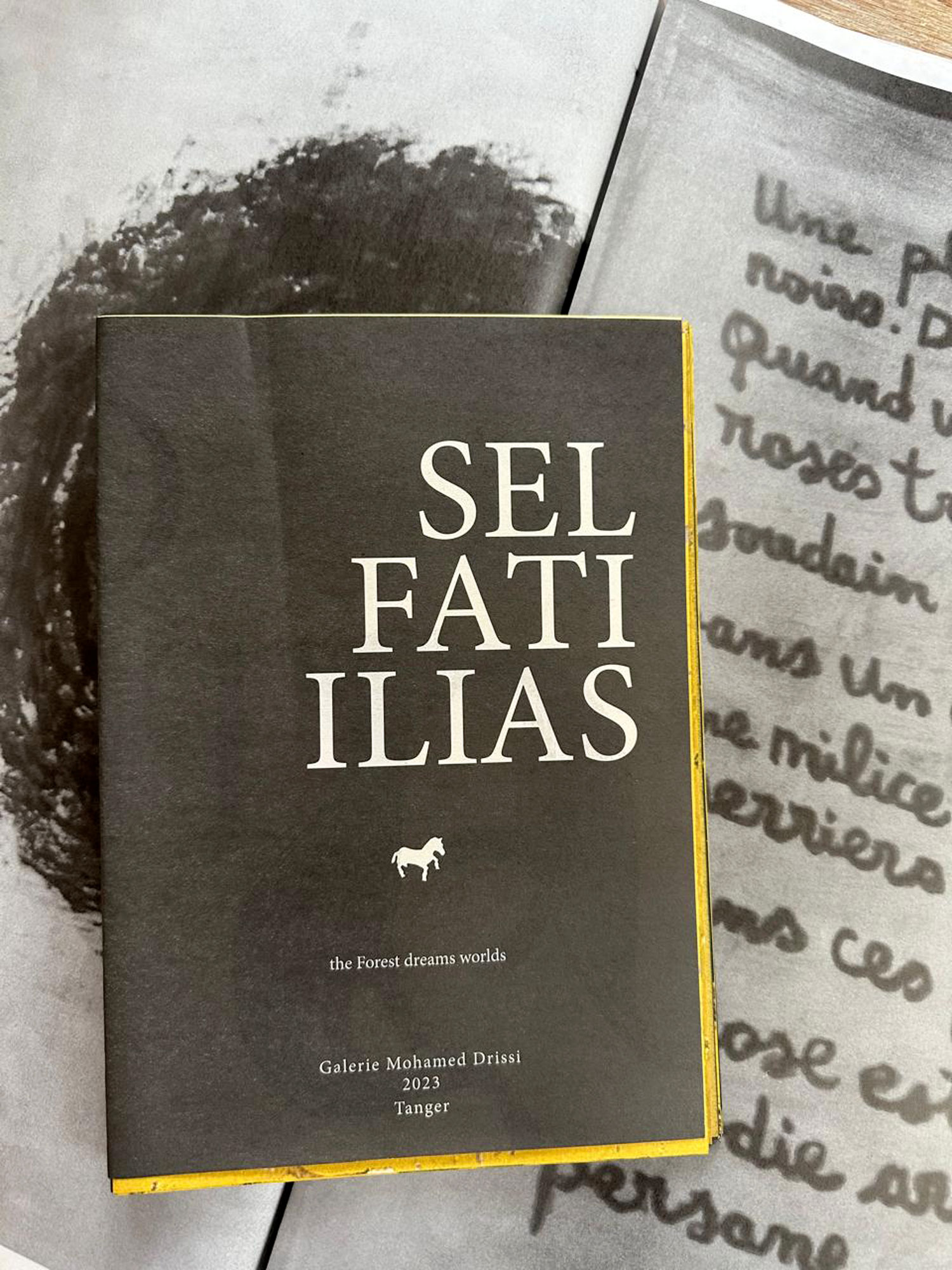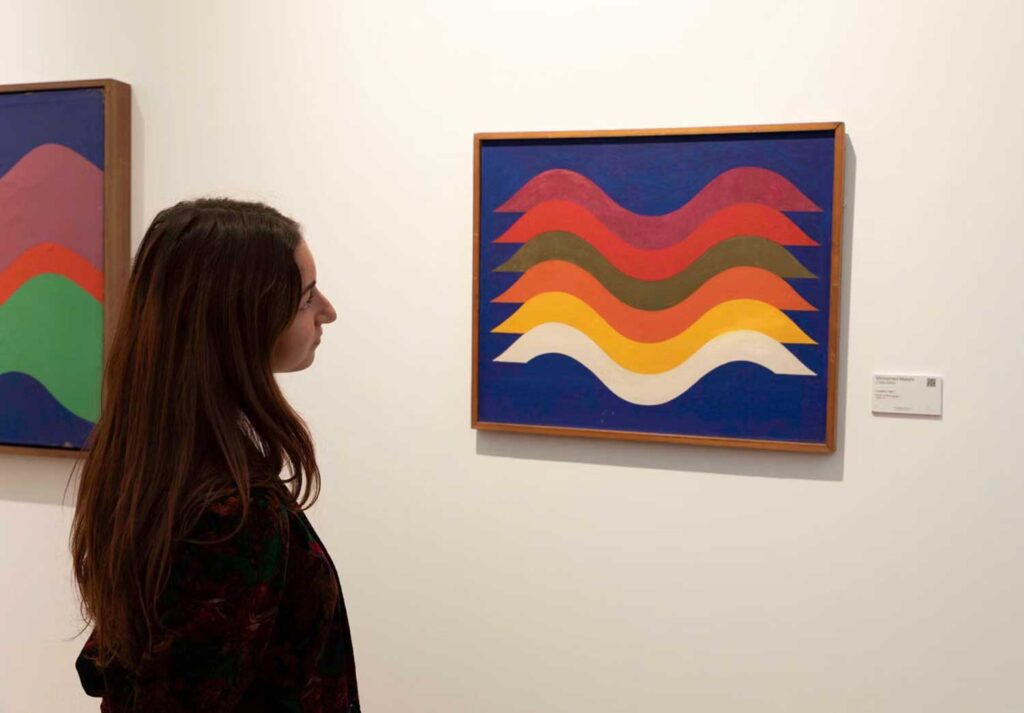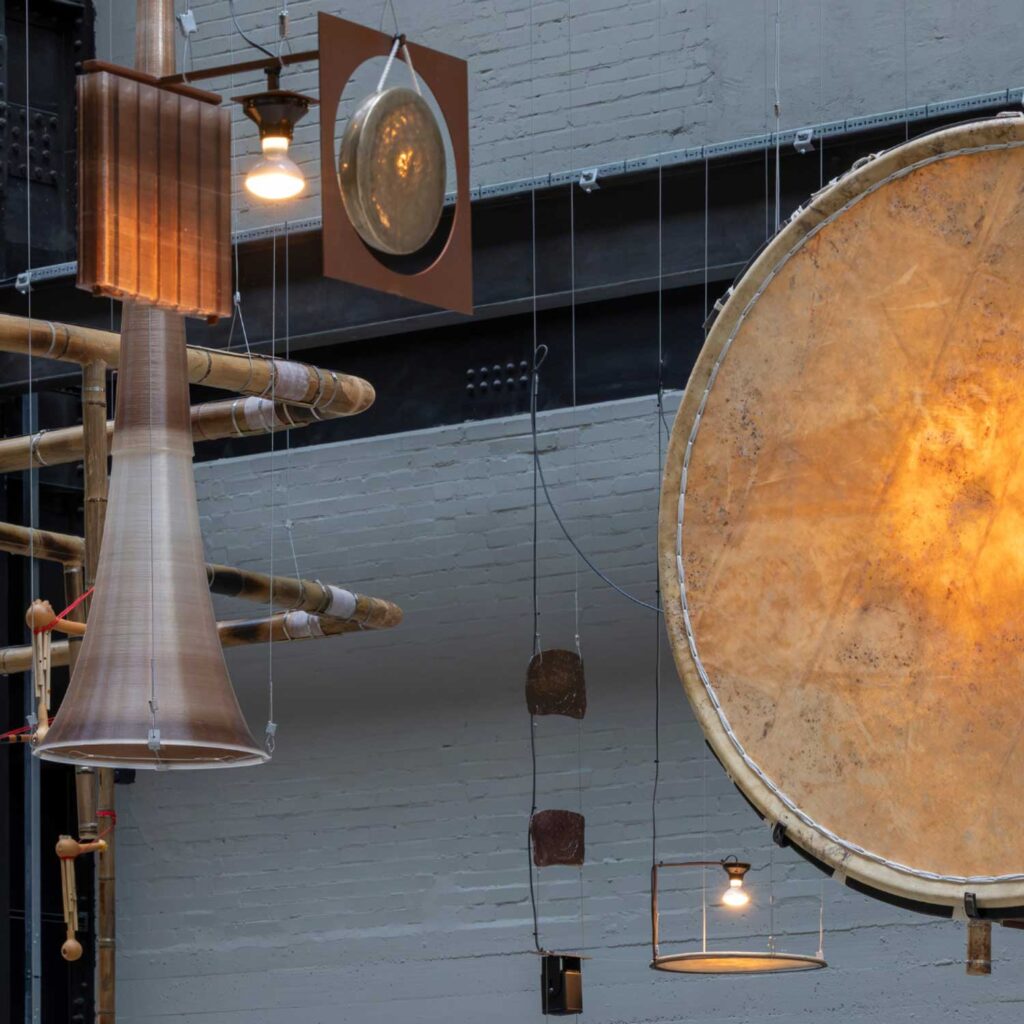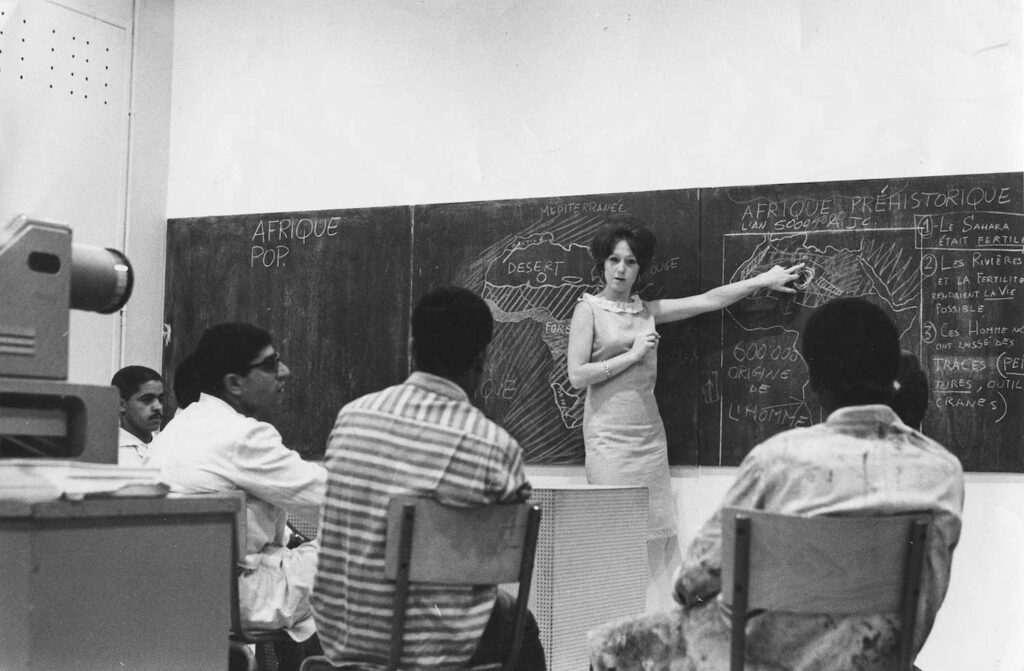
In Papers Blooming in a Forest, presented this spring at the Villa des Arts in Casablanca and this summer at the Villa des Arts in Rabat, Ilias Selfati returns to his horses, his forest, and the line he has been exploring for nearly forty years. Here, a new dialogue emerges—with Tangier, of course, but above all with the artist who, much later, would turn cutting into another way of drawing: Matisse.
By Meryem Sebti
Ilias Selfati knows how to draw with a single line. A clenched fist, a hand hanging from a wrist that disappears beyond the frame: just a few black lines on a surface left almost entirely bare. Nothing fills the drawing. There is no setting, no depth, and almost no indication of texture. The eye is compelled to follow the contour.
This sparseness is nothing new for Selfati. Drawing has always been a foundational gesture in his practice. Trained at the School of Fine Arts in Tetouan and later in Madrid, where he developed his printmaking, engraving, and screen-printing techniques in the 1990s, the artist has built a practice in which removing is at least as important as adding. His horses have become his most immediately recognizable figures: ears or tails sometimes omitted, bodies reduced to stylized silhouettes. Their anatomy remains just present enough to be recognizable, yet abstracted enough to become a sign.
In Casablanca, five horses appeared on a single sheet, rendered in brown like small archaic apparitions, almost reminiscent of cave paintings. Elsewhere, the animal expands until it fills almost the entire frame. In another work, two animal masses touch or overlap, becoming almost a single black blot, like a Rorschach test. What seems to interest Selfati is less the horse itself than the threshold at which a few pieces of visual information become enough to make it appear.
A sentence displayed on the wall of the Villa des Arts in Casablanca deserves particular attention: “In Selfati’s work, the visible emerges through accumulation and erasure.” It offers a more revealing key than the familiar image of the “inner forest.” The entire exhibition, and the current state of his practice, stems from this oscillation: accumulating forms until they become indistinguishable, then removing elements until they approach disappearance.
From One Window to Another
Matisse lies at the very origin of Papers Blooming in a Forest. The connection is not arbitrary. Selfati was born in Tangier, where Matisse stayed twice, in 1912 and 1913, producing some of the defining works of his Moroccan period. In Window at Tangier, in particular, the window is no longer simply a means of looking at the landscape. It structures the painting itself, blurring the distinction between the space one inhabits and the space one observes.
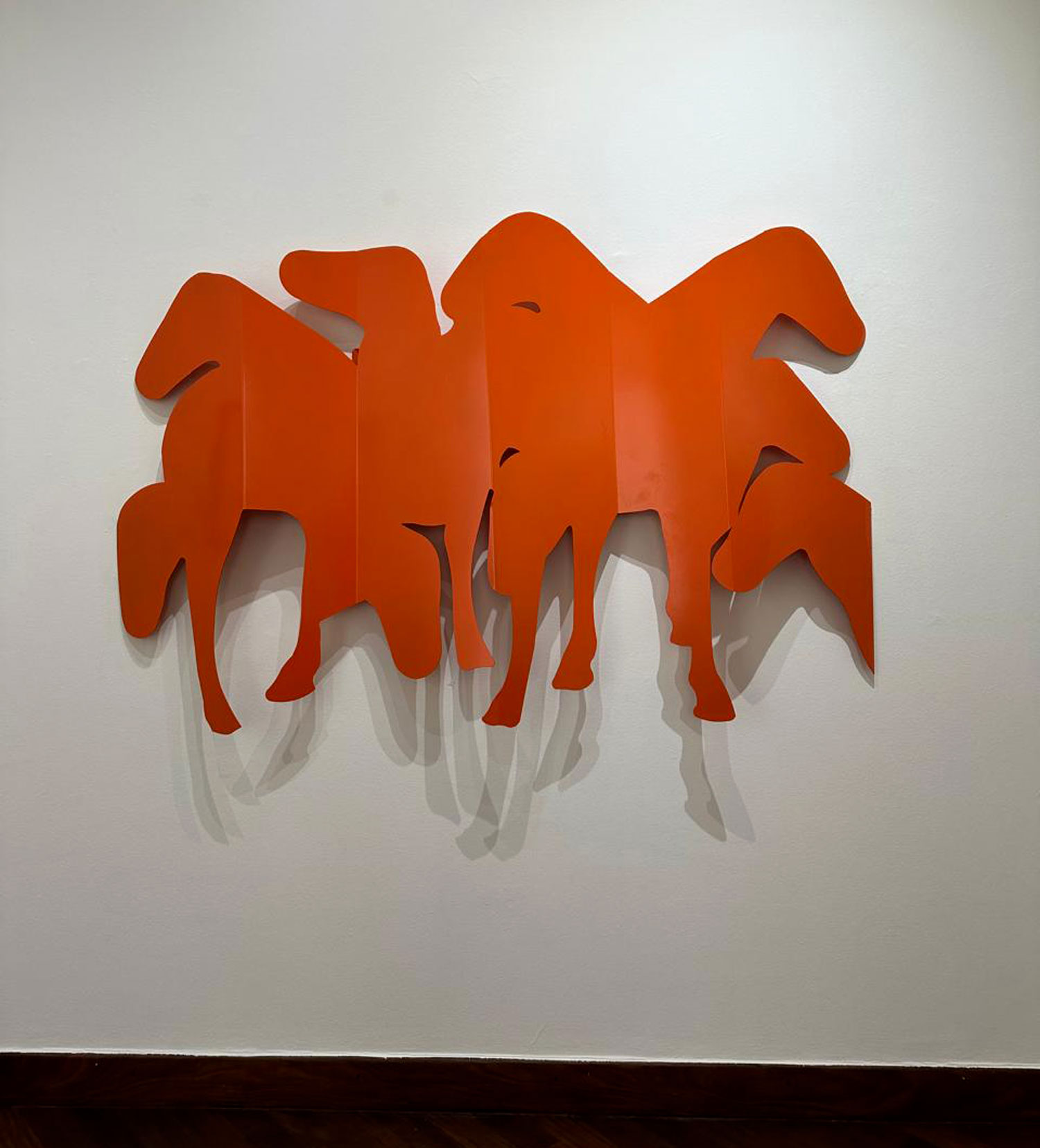
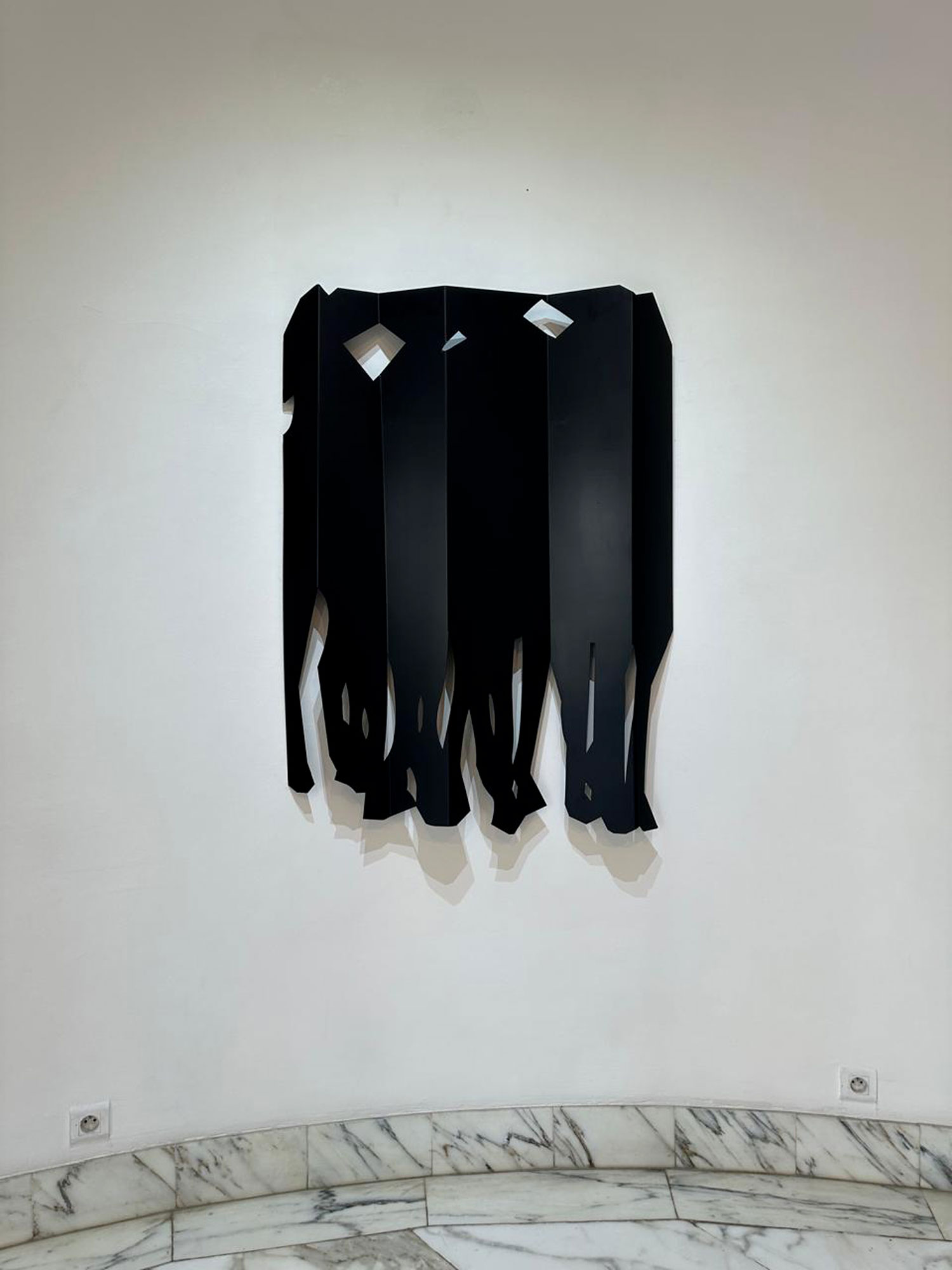
Yet this is not the Matisse who interests Selfati. On the ground floor of the Villa, silhouettes made from red, green, or orange sheet metal stand directly against the wall. “I discovered this material, which I find interesting, and I am experimenting with it,” he explains. The animals remain recognizable, but their bodies have become uniform surfaces and their outlines have replaced any internal representation. The draftsman’s line has thickened and almost become material. It no longer surrounds the form: it has become the form.
It is impossible not to think of the much later Matisse and his paper cut-outs. In Matisse’s work, of course, gouache-painted paper is cut with scissors. Here, the cut-out becomes a rigid object that casts its shadow onto the wall. Yet the conceptual operation is similar: drawing no longer simply by tracing a line, but by isolating the form directly within the material.
The comparison becomes even more interesting because Selfati reverses the principle. In Matisse, the paper cut-out retains something of the lightness of the gesture. In Selfati, the transition to sheet metal gives the drawing real physical weight. Yet positioned a few centimeters from the wall, these metal forms paradoxically regain their lightness through their shadows. Each horse produces a second one, gray and shifting. The sculpture becomes a drawing once again.
The Forest Without a Landscape
It would be tempting to read these animals as inhabitants of a bestiary. Selfati himself has incorporated enough horses, deer, insects, and plants into his work to encourage such an interpretation. Since the 1990s, the forest has returned insistently throughout his practice. In 2019, When the Forest Takes Shapes brought together nearly a quarter-century of this exploration. In 2023, The Forest Inside Me once again made the forest the territory of an entire exhibition.
Curiously, however, Selfati rarely depicts an actual forest. Instead, he scatters its elements: one horse, five horses, an animal mass, clustered silhouettes, a red form, a fragment of vegetation. The forest is not so much represented as mentally constructed by the viewer. This is where the title Papers Blooming in a Forest takes on its full meaning. Paper is not simply the surface on which Selfati represents the forest. It is the place where the forest can come into being.
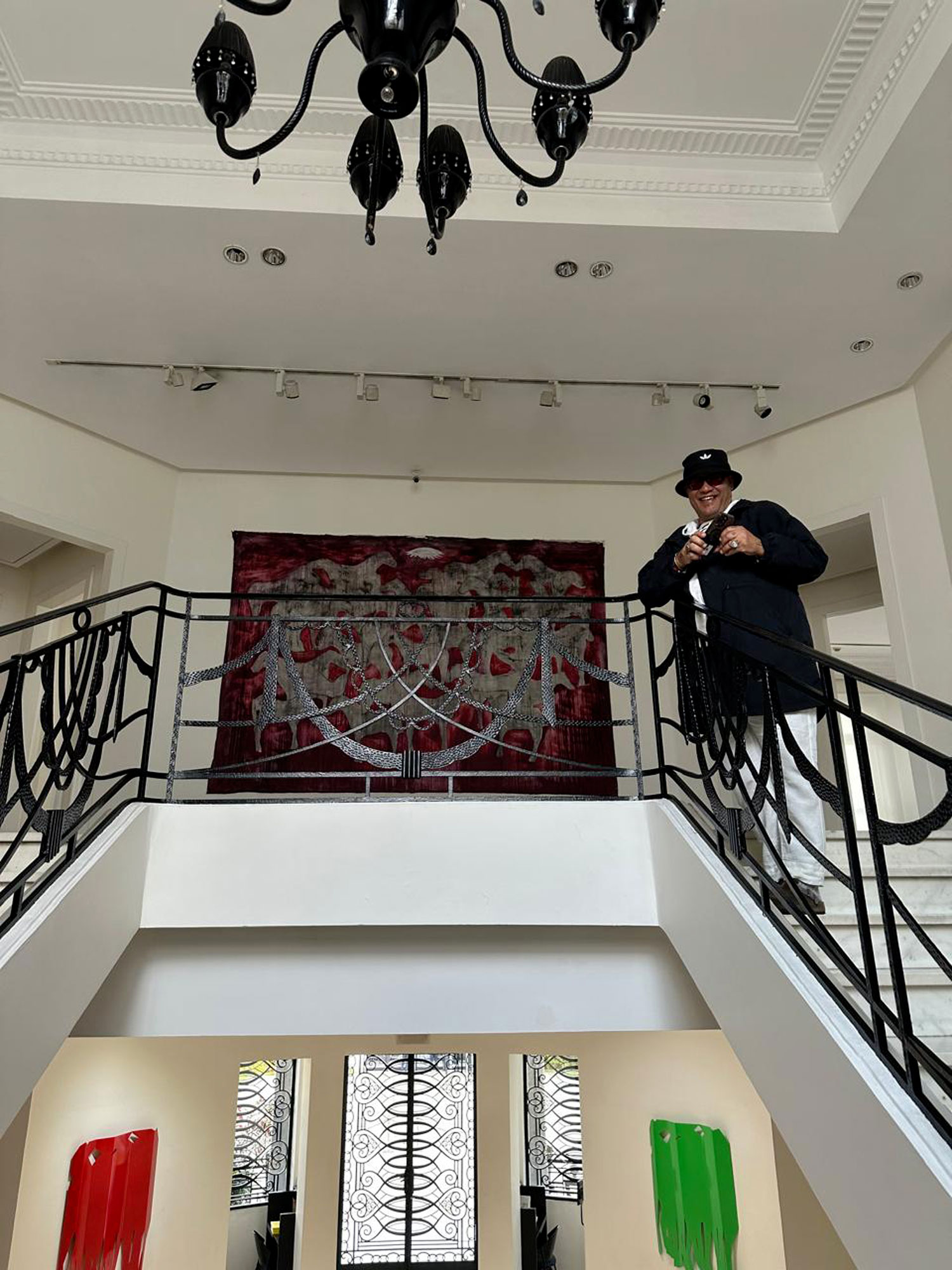
The monumental canvas suspended on the landing of the Villa des Arts in Casablanca seemed to push this logic toward saturation. Where the drawings preserve vast areas of empty space, this work fills the visual field with layers, signs, silhouettes, and streams of red paint. Viewed from the staircase, the canvas appeared behind the Art Deco ironwork of the stairs, caught within yet another network of lines. By chance, the installation itself expressed something central to Selfati’s approach: an image that can never be grasped as a single whole because one form is always concealing another.
Ultimately, the connection with Matisse is less a matter of homage than of method. Both artists understood, at different moments and with radically different tools, that a drawing can contain more when less is asked of it. In Selfati’s work, a horse can ultimately be contained within its outline, a forest within a handful of animals, and a body within a hand. It is, in essence, an art of metonymy. And strangely, through the act of stripping things away, the world returns.
This translation was generated using AI. For the original text, please see the French version of this article.
Ilias Selfati, “Papers Blooming in a Forest,” Villa des Arts Casablanca, April 21–May 31, 2026, and Villa des Arts Rabat, August 11–September 30, 2026.