In London, Frieze Masters and 1-54 are giving greater prominence to Arab and African modernisms long marginalised in Western art history. Beyond their growing recognition on the international art market, this renewed visibility invites us to rethink the narratives, exchanges and boundaries of modernism. But it also raises a question: do these categories risk confining artists to yet another set of labels?
By Vamika Sinha
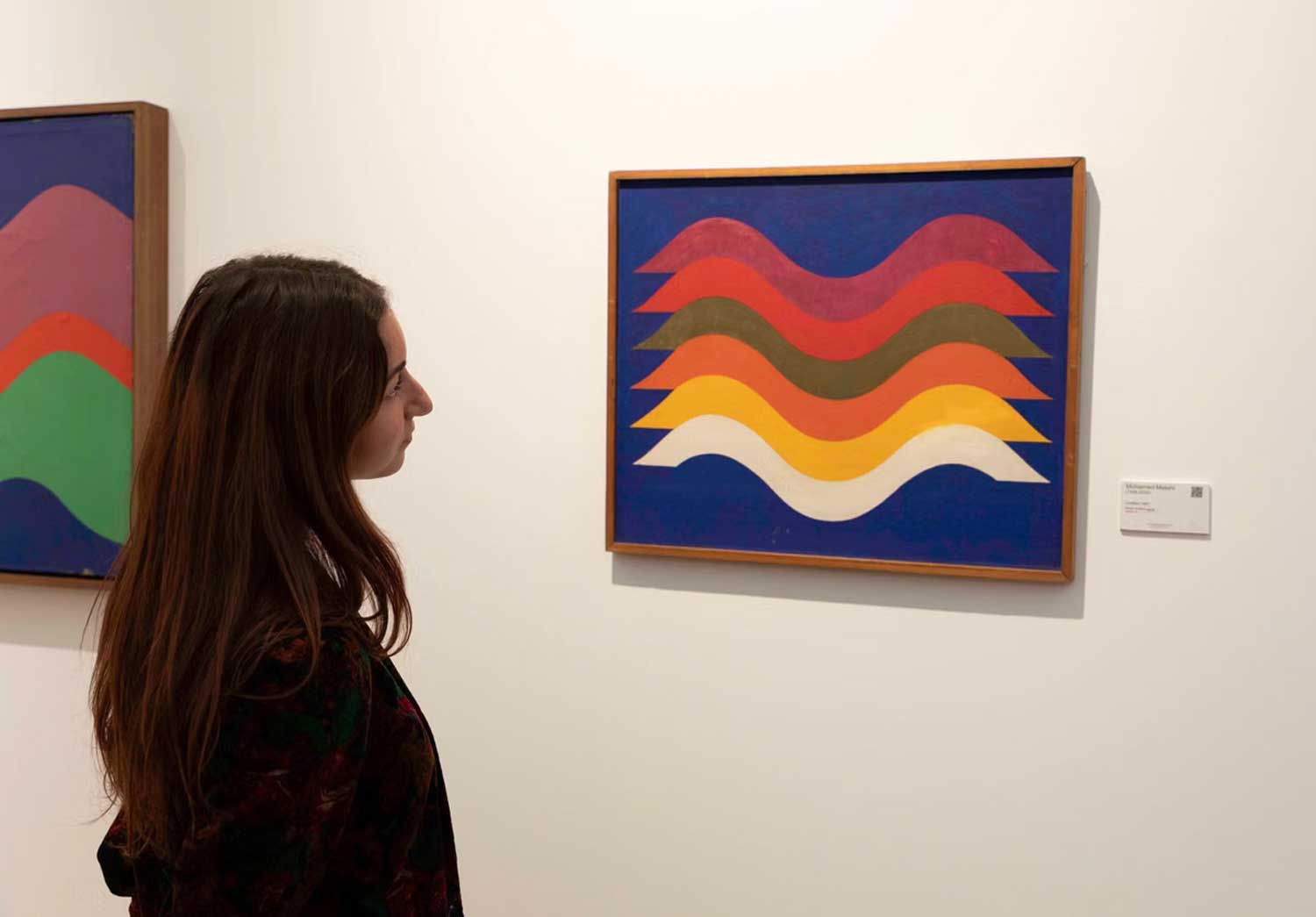
A representative from Frieze Masters’ first Moroccan participant, Loft Art Gallery, walks me through the evolution of a wave: that defining motif of Mohamed Melehi’s work in the 1960s-80s. The swoop and fall of a wave – its perpetual curvature – is the formal spine of not just Melehi’s paintings but the wider Casablanca Art School he helped shape. In a post-independence Morocco, artists and educators sought to bend away from colonially imposed European academic conventions towards a different oxygen: their local and indigenous visual cultures and traditions. A wave can bend a norm – that was an own approach its own right for the likes of Melehi, taken in further directions by contemporary Maghrebi artists today. The wave exemplifies the desire to understand one’s way of seeing and feeling as a knowledge system and historical narrative on its own terms. It says, ‘ We are not a decoration or plot device, but a narrative ourselves.’
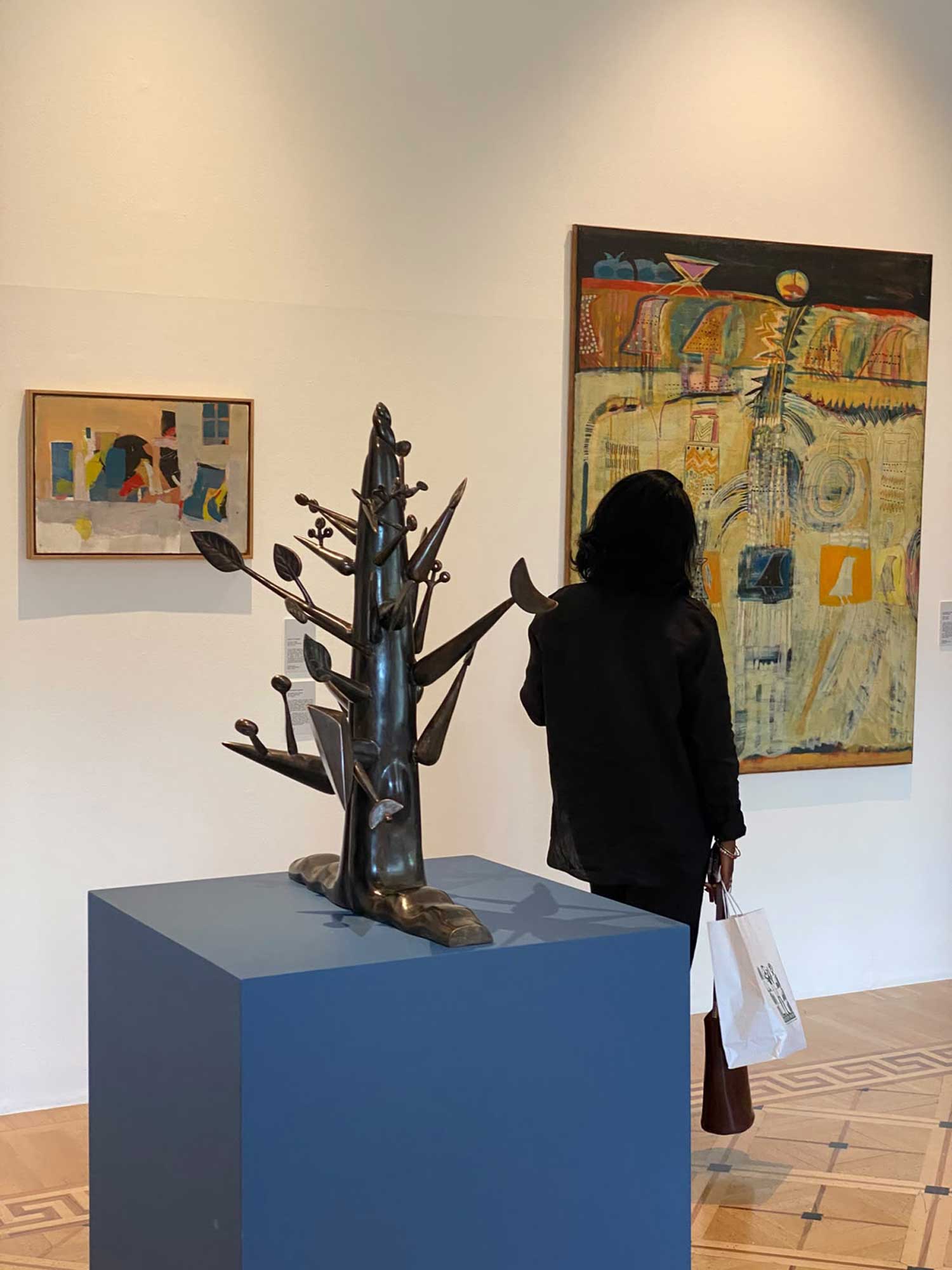
Loft is part of Frieze Masters’ Spotlight section, curated by Devika Singh and Sofia Gotti. In an interview for the Frieze Masters magazine, Singh also expounds on the Tunis- and Dubai-based Elmarsa Gallery’s booth opposite Loft, showing works by Algerian-born painter Mahjoub Ben Bella. These differ from the bold colour blocks and hard-edged vibrance of Melehi. They are darker, scratched, textured, sculptural, vulnerable, sharp – emotional. Less known or ‘legible’ in the international art market as yet as Melehi or Baya Mahieddine, Ben Bella’s work, though made in France, similarly wants to be seen as possessing its own language, totems and symbolisms. Its life source comes not from how it can be read through European movements like Lettrism, but from how it forged a style grounded in indigenous Algerian Kabyle traditions that were then in
exchange with French influence.
A growing presence in London’s Art Market
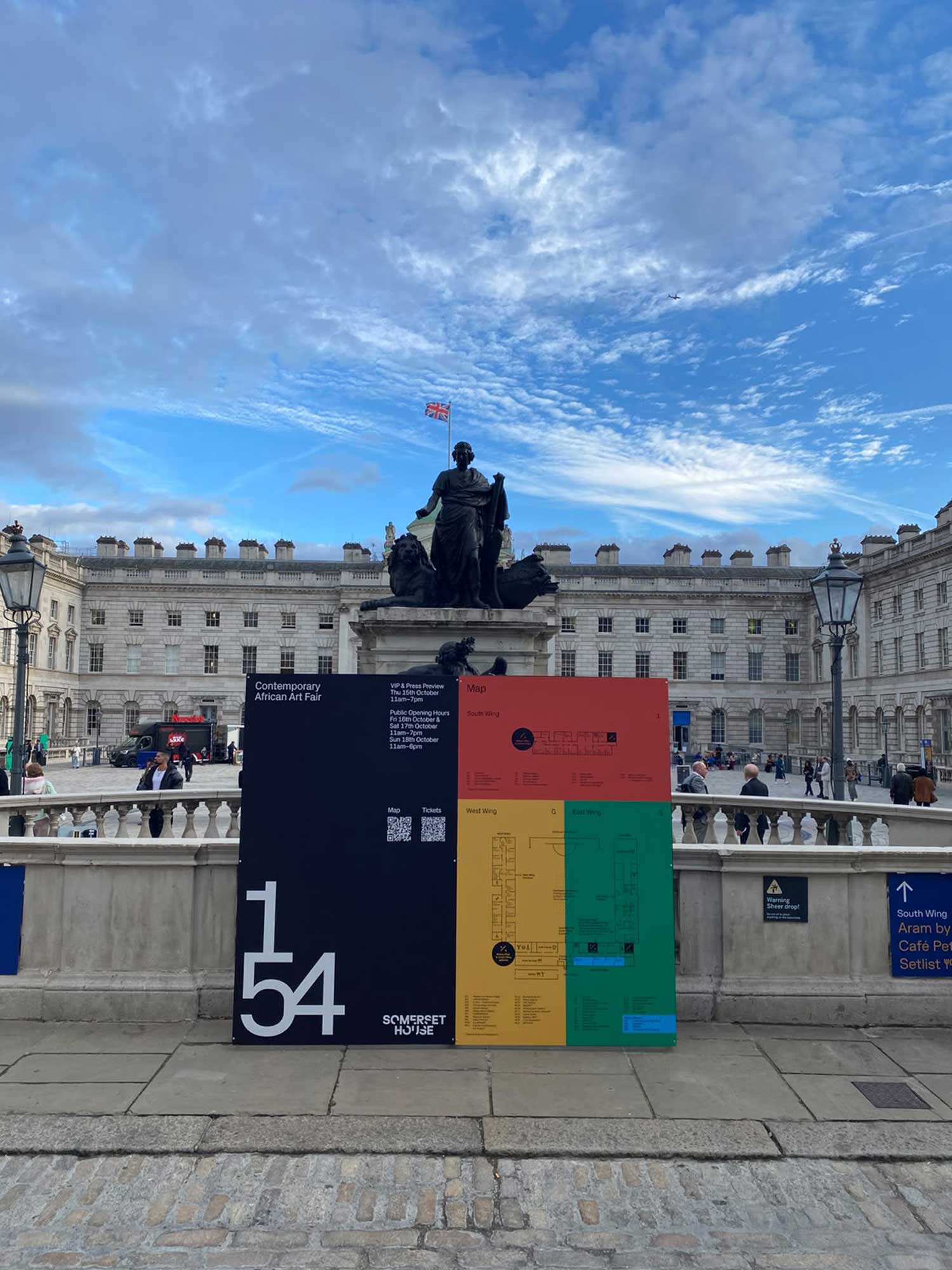
Meanwhile, this year’s 1-54 Contemporary African Art fair has introduced a dedicated focus on modernists, with the accompanying exhibition West Wind, curated by Nancy Dantas. This has work by Baya, Gerard Sekoto, Ibrahim El-Salahi, Papa Ibra Tall and Skunder Boghossian. Each of their practices – from Baya’s vivid gouaches to Sekoto’s contributions to modern Black South African painting to El-Salahi’s synthesis of Sudanese visuality and Arabic calligraphy – emerged from different political, intellectual and creative contexts. These cannot be collapsed into one another, yet they cannot be understood through national and state-formed categories alone either. Migration, collaboration and transmission of visual languages across cultures complicate the neat divisions or borders we might erect between African, Arab and European modernisms. While the market in London and the wider West seems to be embracing more of this work, they still bring very distinct artistic histories into a shared frame.
Still, the importance of having curators like Singh – who can place Melehi’s and Ben Bella’s presentations together without making them interchangeable – invites us to think of modernist art history as a web of exchanges, like endless silken threads winding between borders and continents. These movements, importantly, are not balanced, equal or reciprocal. We can try to move away from seeing artists as representatives of fixed geographical or identitarian categories, instead foregrounding the encounters and translations through which their practices developed. This pushes at the familiar account of modernism as a movement emerging from a few Western centres, then branching into ‘other’ exotic places.
Repositioning Modernists in Art History
The logics of the market are an ever-present spectre. Categories of ‘African’ or ‘Arab modernism’ can introduce artists who have been historically marginalised by dominant accounts of modern art to new collectors and institutions. But they can also flatten variances in their colonial experiences, languages, politics, and education, turning complex artistic narratives into more decipherable, and therefore more lucrative, collecting propositions. So while renewed or increased attention may support further research on a practice or history, it can also prioritise and reward those more easily translated into international (read Western) demand.
London’s Frieze and 1-54 fairs remind us of their roles beyond circulating historical works in a market. These are places where history is constantly negotiated, where artists are grouped, valued and positioned in relation to one another again and again. The question here isn’t simply whether non-Western modernists can get more representation at international fairs. Can evolving our understandings of their histories help to reshape those institutions and markets through which we understand modernism itself? It feels, at least, that London (or ‘Londonistan’, as its abundant SWANA, African, and diasporic population likes to call it) is one hub for the endeavour.
Frieze Masters, 14–18 October 2026, Regent’s Park, London.
1-54 London, 15–18 October 2026, Somerset House, London.