Thirteen years after its inception, has the 1-54 art fair succeeded in its mission? Conceived as a platform to provide international visibility for African galleries and artists, it has supported the rise of several players who are now present at major general-interest art fairs. Here’s a look back at a few iconic journeys.
By Emmanuelle Outtier
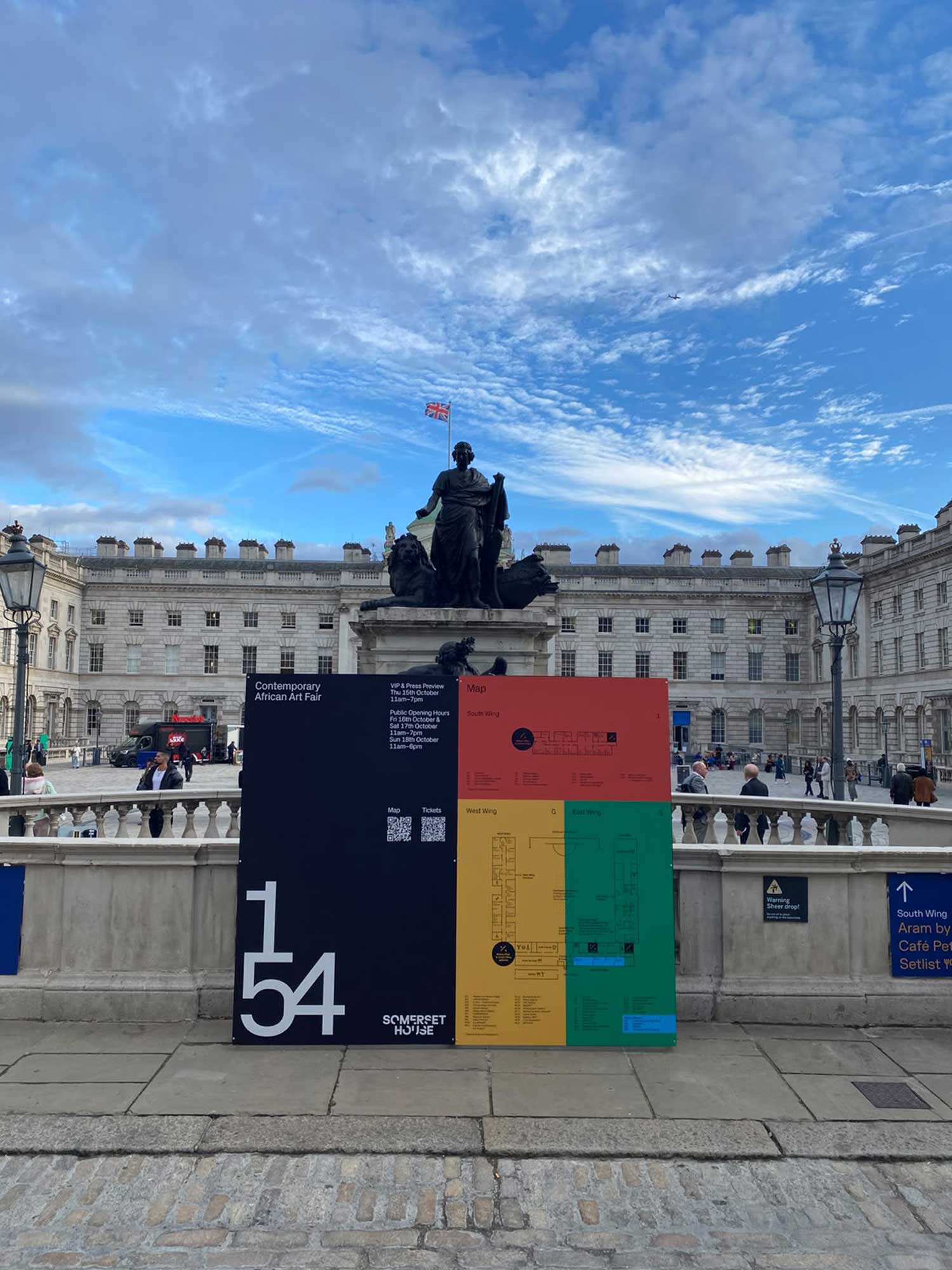
For a long time, it stood out as something of an anomaly on the international art fair scene. When it was founded in 2013, 1-54 London was the first international art fair entirely dedicated to contemporary African art, in a global market where the continent’s art scenes were still largely unknown. Thirteen years later, the landscape has changed dramatically. Specialized art fairs have proliferated, African artists have gained ground on the international market, and several galleries from the continent now have their “entry ticket” to major generalist fairs, from Art Basel to Frieze to Art Paris.
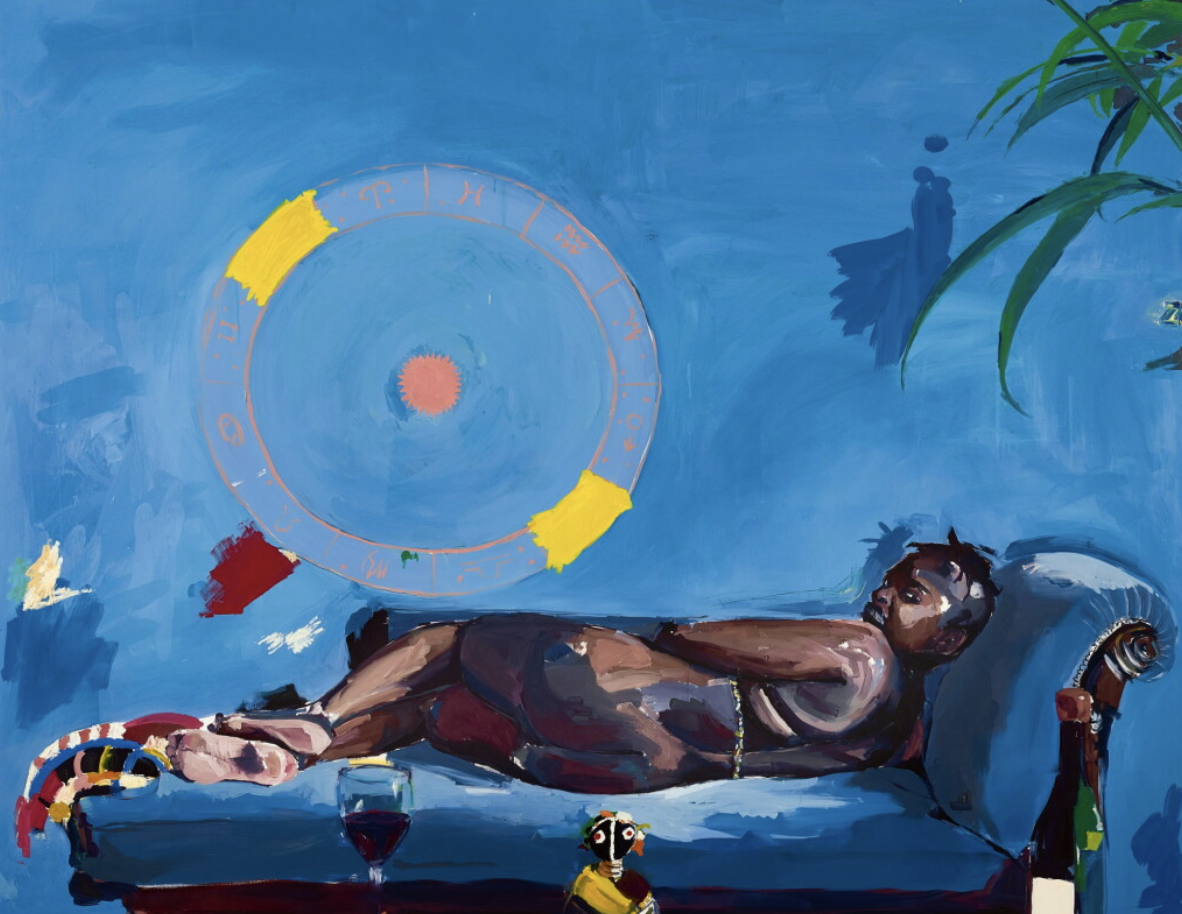
While 1-54 did not, on its own, change the game, the art fair founded by Touria El Glaoui certainly helped propel the rise of certain artists and galleries. For some, this led to a spectacular surge in their market value. Among the most striking examples is Kudzanai-Violet Hwami. In 2016, fresh out of Wimbledon College of Arts, the Zimbabwean painter participated in 1-54 London at the Tyburn Gallery booth—a young London gallery specializing in contemporary African art—which featured her again in 2017. Things moved quickly from there. In 2019, she was featured among the artists in the Zimbabwe Pavilion at the Venice Biennale before joining, a year later, the London gallery Victoria Miro, which opened the doors to major general art fairs for her, including Art Basel in 2023. Her market value also skyrocketed: in 2021, her painting Skye waNehanda (i) sold for 486,000 U.S. dollars at Sotheby’s in Hong Kong, 845% above its mid-estimate, according to MutualArt. In 2022, Cecilia Alemani selected her for *The Milk of Dreams*, the international exhibition at the Venice Biennale. Ten years after her debut at 1-54, Kudzanai-Violet Hwami is featured at the Victoria Miro booth at Frieze London 2026.
The 1-54 Effect?
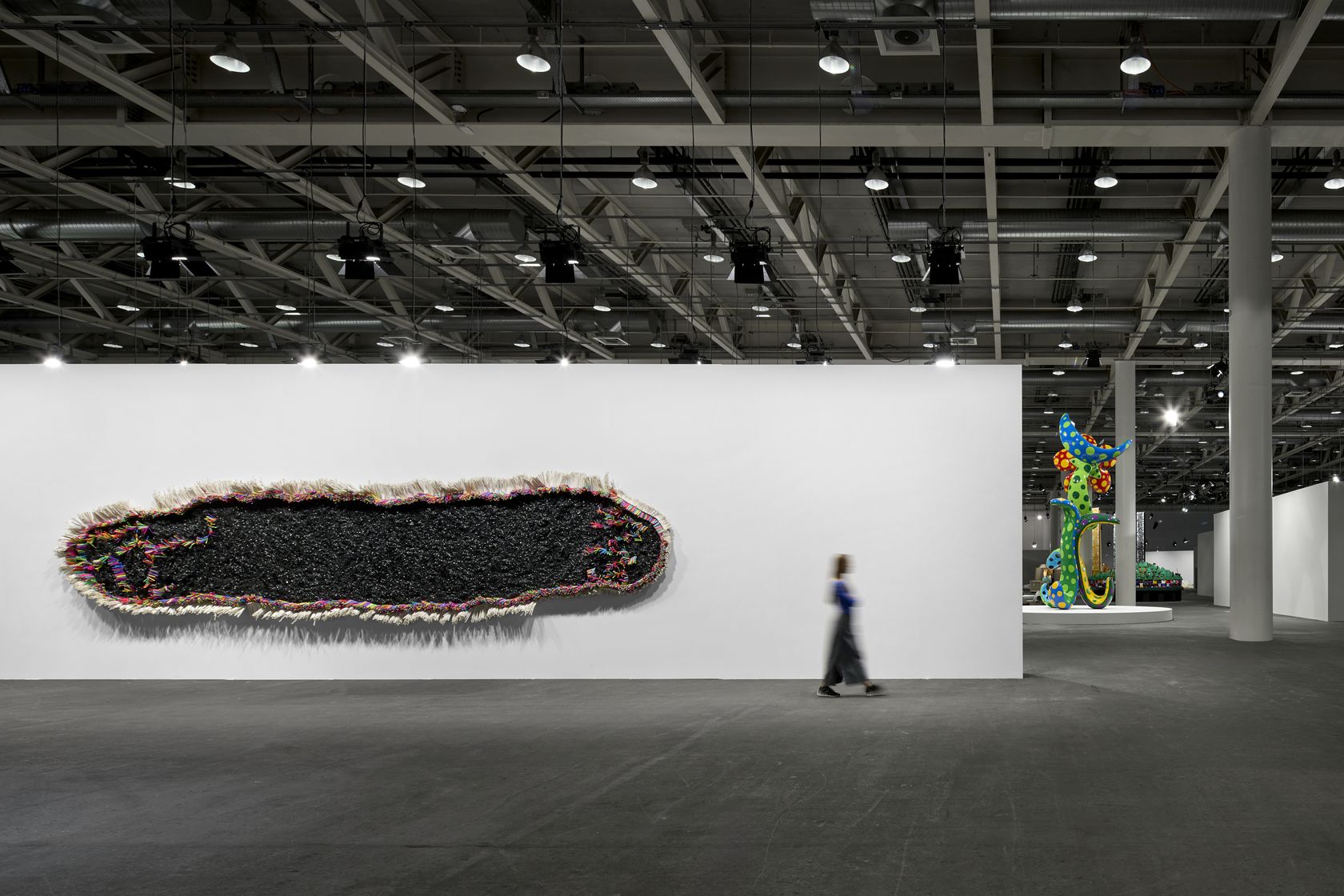
The painter is far from being an isolated case. Featured in the very first edition of 1-54 in 2013, the Ivorian artist Aboudia has since seen his market value skyrocket, with a painting selling for 504,000 pounds at Christie’s in London in 2022. Zimbabwean artist Moffat Takadiwa, represented in 2013 and 2014 by the Harare-based First Floor Gallery, has also come a long way. In fact, it was at 1-54 that Singapore-based American collector Jim Amberson first discovered his work before commissioning a piece from him for his collection. Since then, the artist has participated in the Zimbabwe Pavilion at the Venice Biennale in 2024, followed by a showing at the Sémiose booth at Art Basel Paris in 2025. Last June, the Parisian gallery dedicated a solo exhibition to him at Unlimited, the section of Art Basel dedicated to monumental works, featuring a wall installation nearly eight meters long.
These artists have now transcended the confines of the contemporary African art market. But should their success be attributed solely to 1-54? That would be to overlook an entire ecosystem that gradually took shape during the 2010s, comprising new galleries, collectors, specialized magazines, and institutions increasingly attentive to African art scenes. In this rapidly changing landscape, 1-54 was one of the first links in a much broader chain.
As for the galleries, their journey has been just as revealing. Present since the very first edition of 1-54 London in 2013, Cécile Fakhoury—who was based in Abidjan at the time—has since opened spaces in Dakar and Paris and joined the circuit of major art fairs. Since 2022, the gallery has become a regular at Art Basel Paris (it participates every year), where it notably caused a sensation in 2023 with a solo show by the young painter Elladj Lincy Deloumeaux. Gallery 1957 has followed a similar trajectory; founded in Accra in 2016 by Marwan Zakhem, it made its debut at 1-54 London that same year with Serge Attukwei Clottey, who has since been featured at Unlimited in 2023. Also based in London since 2020, the Ghanaian gallery has now participated several times in Frieze Seoul and Art Basel Hong Kong.
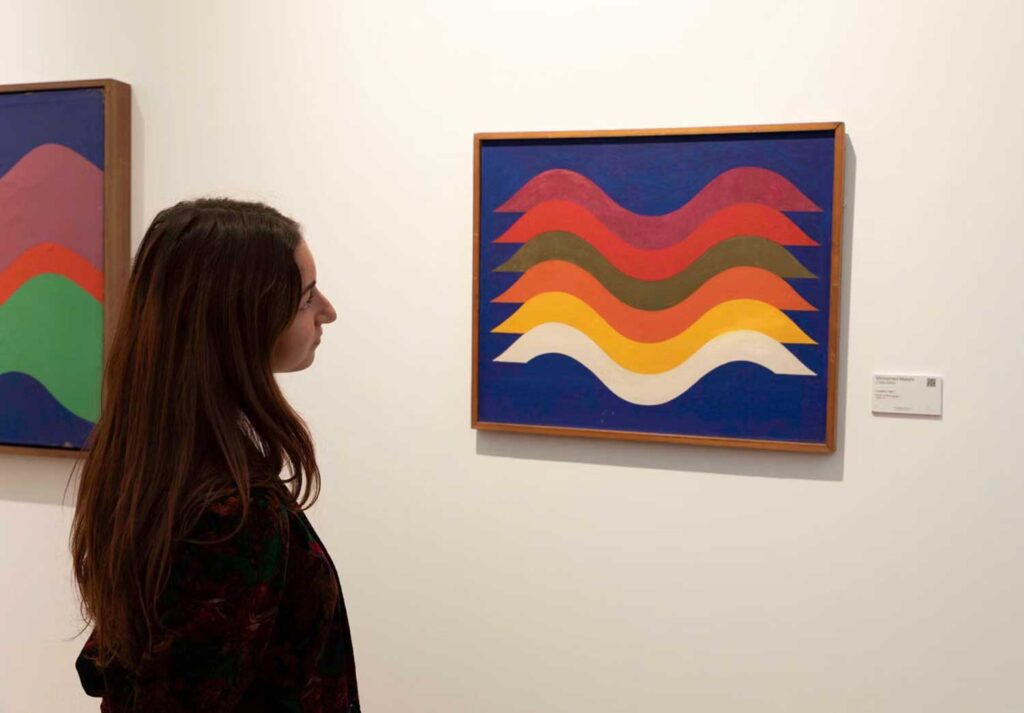
More recently, it’s been Loft Art Gallery’s turn to expand. A regular at 1-54 since 2018, the Casablanca-based gallery participated in the first edition of Art Basel Qatar in February 2026 before making its debut this week at Frieze Masters with a solo exhibition by Mohamed Melehi. In keeping with the times, it is simultaneously exhibiting at 1-54 London, where it is showcasing Amina Rezki and James Mishio. The two circuits are therefore not necessarily in competition with one another.
The Return of the Modernists—Really?
While the 14th London edition of Touria El Glaoui’s art fair showcases contemporary artists with the exhibition “ West Wind ” , 1-54 didn’t wait until 2026 to turn its attention to African modernists. As early as its first edition in 2013, the Mikael Andersen Gallery presented works by Ernest Mancoba (1904–2002), a South African figure long sidelined from the major narratives of modern art history. In 2019, the Centre Pompidou dedicated an exhibition to him. This year at Frieze Masters, the same gallery is hosting a solo show featuring his work. This trajectory speaks volumes about the reevaluation of African modernism, which is now well underway on the international market.
Today more than ever, the fair faces a paradox: it has helped launch artists and galleries who no longer necessarily need the “African contemporary art” label to carve out a place for themselves in the international market. It remains to be seen whether the fair will be able to play the same role for future generations. After all, the “1-54 effect” is now also evident at the booths of Art Basel and Frieze.
1-54 London, October 15–18, 2026, Somerset House, London.