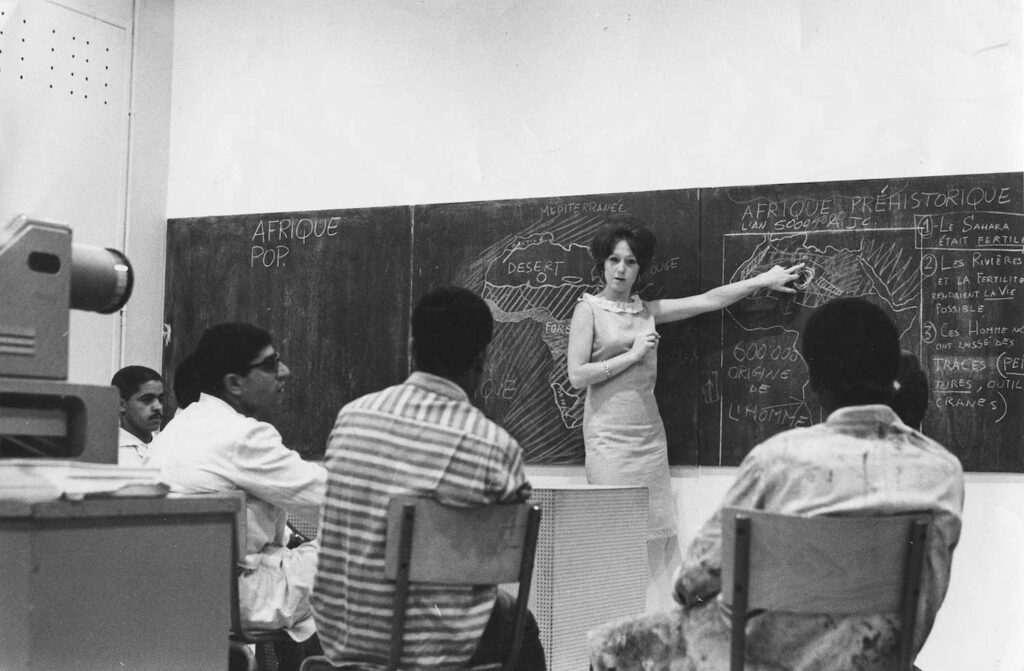
At a time when Western institutions are reassessing dominant narratives of modern art through the lens of plurality, IMA Tourcoing is dedicating an exhibition to Hamed Abdalla (1917–1985). An early Pan-Arabist, he turned the Arabic letter into a fully fledged artistic medium, championing the idea that modernity was already at work within Eastern visual traditions.
By Emmanuelle Outtier
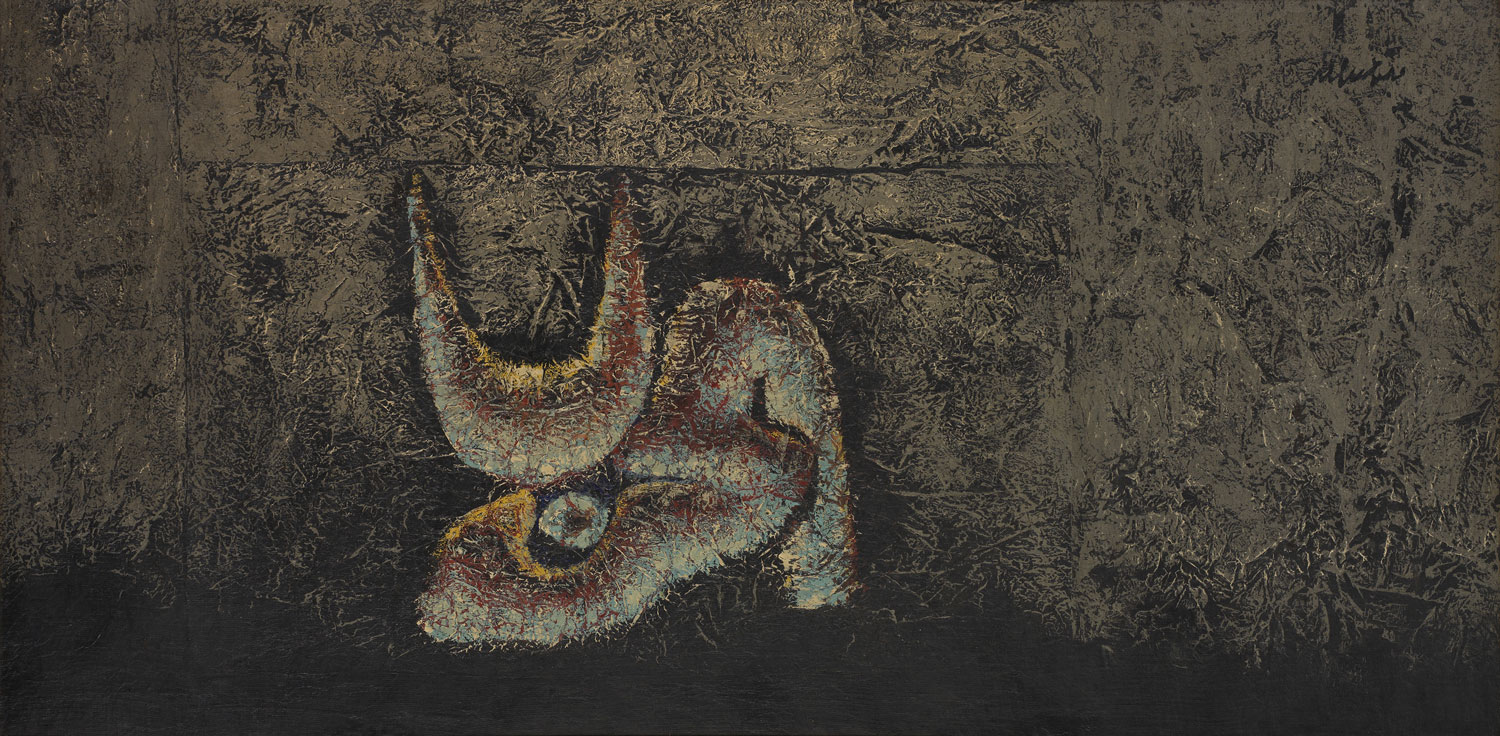
Al Harb (War), 1963, mixed media on crumpled tissue paper and hardboard
When members of the Arab intelligentsia exiled in Paris visited Hamed Abdalla, they jokingly said, “We are going to Little Egypt.” They would gather there to discuss the latest upheavals affecting the non-aligned countries. “It was a place of constant exchange,” recalls his son Samir Abdalla, who as a child moved within this circle connected to Radio Cairo and Sawt al-Arab (Voice of the Arabs). “People talked about painting, politics, and philosophy.” In the 1960s and 1970s, Paris remained a major meeting point for anti-imperialist and Pan-Arab intellectuals, activists, and artists. Hamed Abdalla settled there permanently in 1966, after leaving his native Egypt and spending time in Denmark. His journey across different worlds shaped the distinctive character of a painter who is difficult to associate with any single tradition. His work drew as much from European painting—Klee, Matisse, and even El Greco were among his references—as from Pharaonic, Coptic, Islamic, and folk art, which he studied closely during numerous journeys across Egypt. “He considered himself an Eastern painter above all,” explains Nada Majdoub, curator of the exhibition devoted to him at IMA Tourcoing. “For him, Eastern art had always been modern, and his ambition was to uncover this dimension of modernity through his work.” Throughout his career, Abdalla remained committed to this conviction: modernity was less a Western import than a possibility already embedded within Eastern visual traditions.
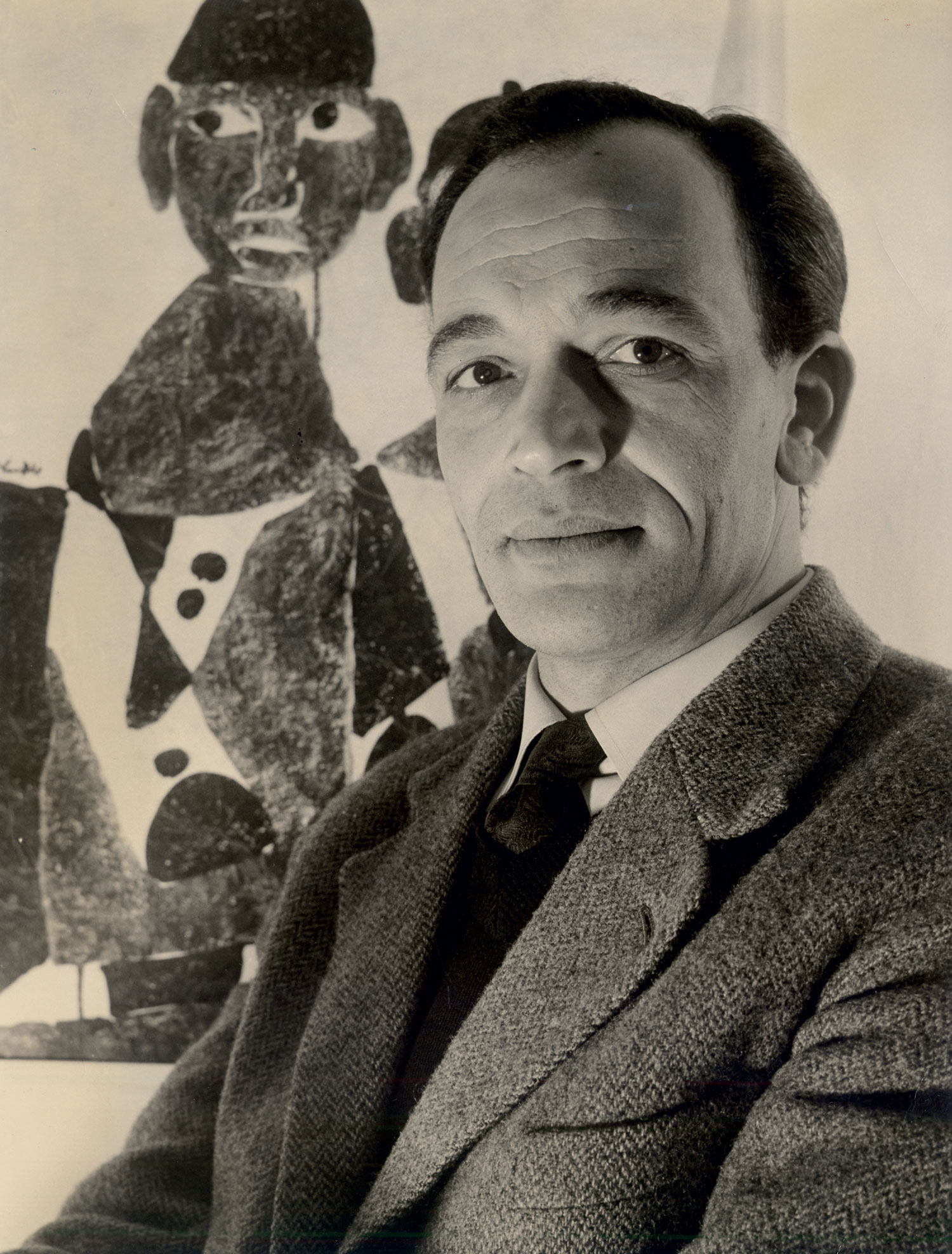
Hamed Abdalla in Odense, Denmark, 1958
A Precocious Self-Taught Artist
Abdalla’s work is inseparable from his life and political convictions. His journey took him from the working-class district of Mania Al Rodah in Cairo, where he was born in 1917, to years spent abroad, during which he invented a new visual form: the “word-forms.” Each stage of his life corresponded to a distinct stylistic evolution, highlighted by the focused and educational exhibition at IMA Tourcoing. He began making his first drawings at the age of ten. According to family lore, it all began with a lion. To help the child overcome his fear of the animal, his uncle suggested that he draw it. The act already had something of an exorcism about it, foreshadowing the importance that signs and writing would later assume in his work.
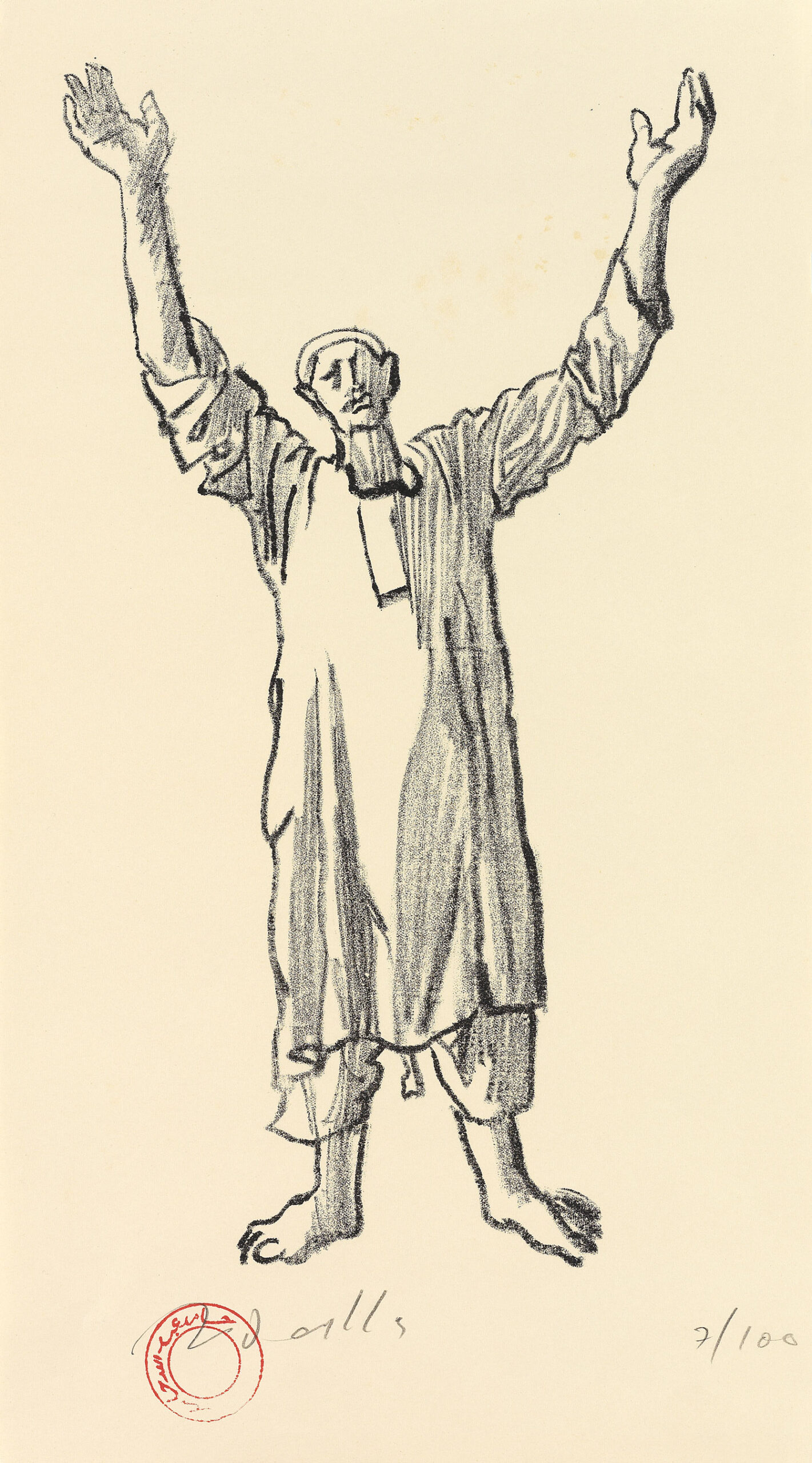
In his early years, the self-taught Abdalla sketched peasants, workers, and ordinary people around him. The figure of the fellah, or Egyptian peasant, permeated his early work, offering a counterpoint to the imagined representations produced by Orientalist painters. “There is absolutely no sense of looking down on his subjects in his work,” says Nada Majdoub. His early sketches possess the tenderness of someone painting his own people. Over the years, realism gave way to a simplification of line, without abandoning figuration. Abdalla’s fellah gradually moved away from individual portraiture and became a more archetypal figure. This evolution accompanied the political transformations Egypt experienced following the fall of the monarchy and the rise of the Free Officers in 1952. Under Gamal Abdel Nasser, himself the grandson of peasants, the fellah became a symbol of the new nation and a central figure in Nasserist imagery and iconography.
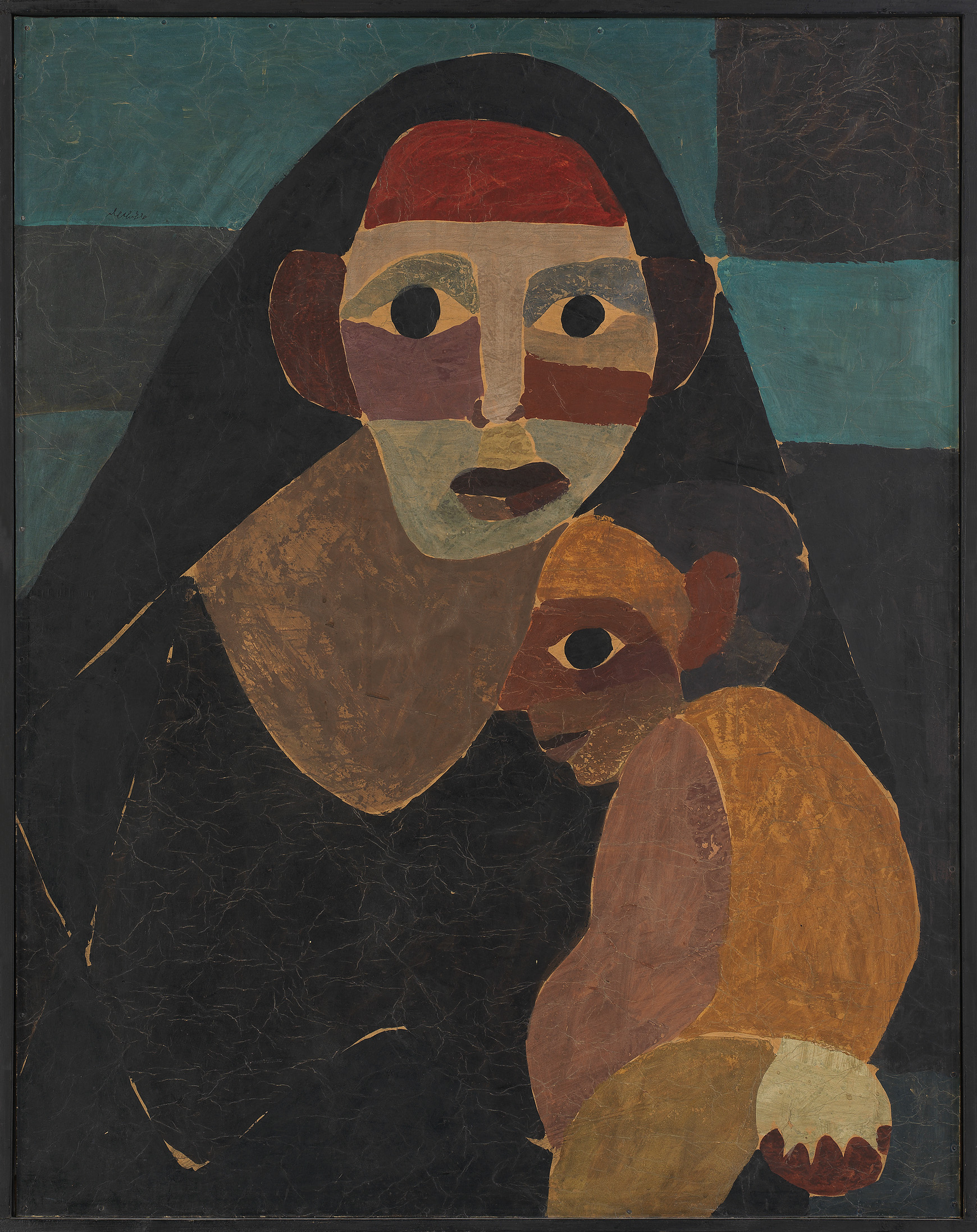
J’accuse (I Accuse), 1956, mixed media on paper and hardboard
A Popular Pan-Arabism
Amid the revolutionary ferment that followed 1952, Abdalla opened his own studio in Cairo. It quickly became a meeting place for a young generation of artists, including Inji Efflatoun and Gazbia Sirry, who sought to create a distinctly Egyptian modernity. His ideological affinity with some of the ideals of the 1952 revolution could have turned Abdalla into an official painter of Nasserism. Yet he always maintained a critical distance. He supported “a popular Pan-Arabism rather than the Pan-Arabism of a political elite,” notes Nada Majdoub. “He quickly became wary of the bureaucracy that constrained artists,” adds his son Samir Abdalla. Although he eventually left Egypt, he never ceased returning to it through his paintings and through the exhibitions he continued to hold there.
Rather than going into exile, Abdalla stepped back. In 1956, as he prepared to settle in Denmark, he painted the striking J’accuse, referencing Émile Zola. It was a response to the tripartite attack on Egypt following Nasser’s nationalization of the Suez Canal. The painter chose his side: that of the voiceless. He depicted the victims—a mother and child—as a timeless Pietà, with a rich color palette reminiscent of Coptic art. That same year, the small watercolor The Martyr Mothers marked a subtle shift. The patterns on the women’s dresses suggested the shapes of calligraphic Arabic words. The artist was moving toward his major visual invention, the “word-forms,” which he would fully develop during his years in Denmark. The Arabic letter ceased to function solely as a sign and became an image.
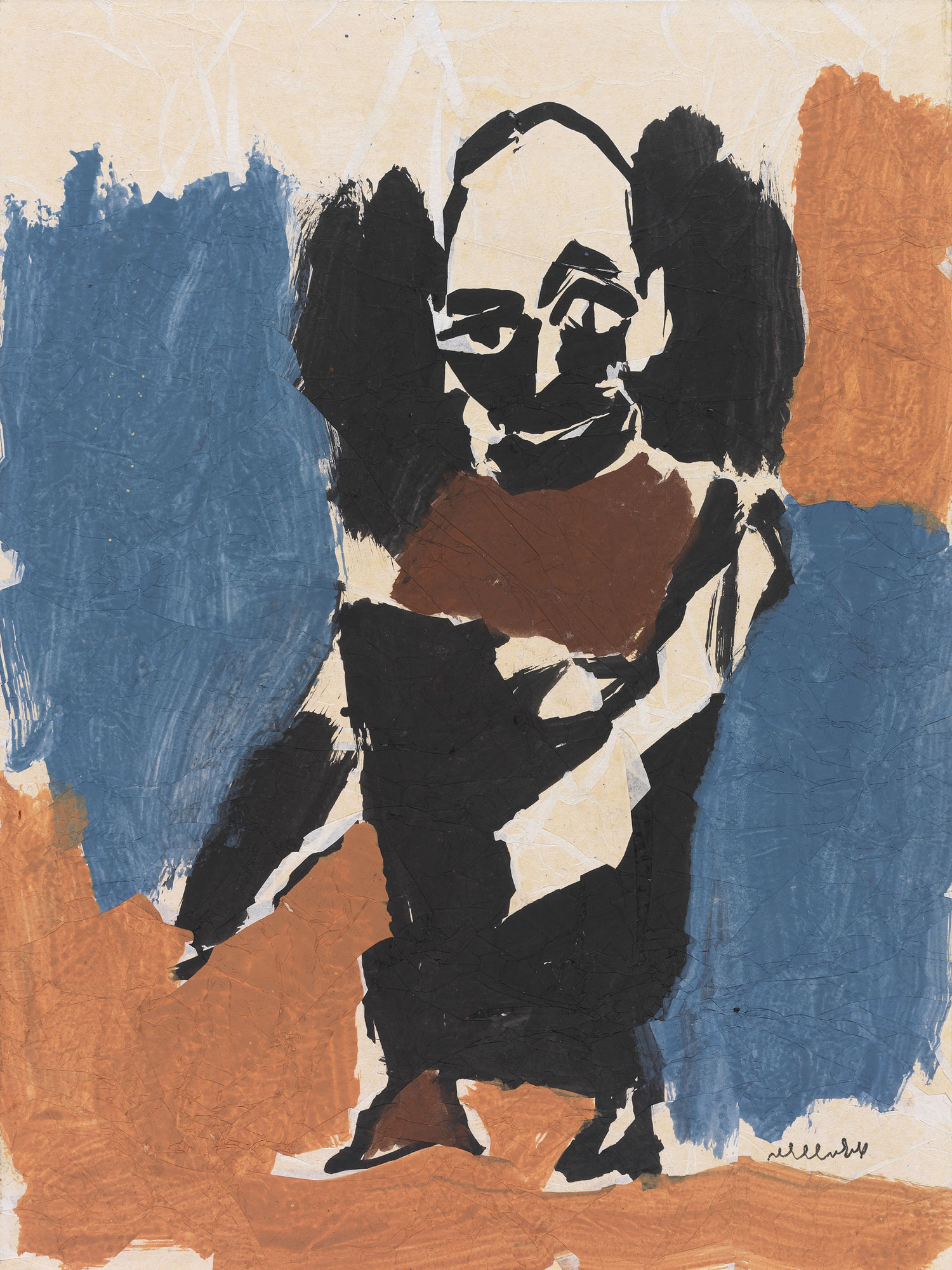
Self-Portrait, 1954
Molding His Native Language
It was by moving away from Egypt that Hamed Abdalla developed an even more intimate relationship with the Arabic language. “With distance, language and writing became so important that they became the medium itself,” explains his son Samir. Through his contact with the post-CoBrA movement in Denmark, which sought to dissolve the boundaries between figuration and abstraction, Abdalla fully embraced his most distinctive artistic approach: a fusion of lettering and figuration. While distance from his homeland led him to mold his native language into a visual material, leaving Egypt also gave him greater freedom to experiment, away from any expectation that he should embody the spirit of the new Egypt. This “anthropomorphic writing” revealed the figurative power of words.
The work on paper War, constructed from the Arabic word for war, becomes under Abdalla’s brush a form resembling a bull—the raw and brutal force of a Minotaur. The word-form Misery evokes a man bending beneath his own weight, while Freedom becomes a figure raising a clenched fist. “The Arabic letters come together, bend, and articulate themselves, mobilizing gesture, rhythm, and the materiality of the line to bring forth bodies, silhouettes, and postures,” writes Nada Majdoub. Suspended between writing and image, sign and body, the word-forms invite the viewer less to read than to imagine. By blurring the boundaries between writing and image, Abdalla returned to the spirit of the hieroglyph. It was a way of reconnecting the threads of a shared visual history, from the Pharaonic sign to the Arabic letter.
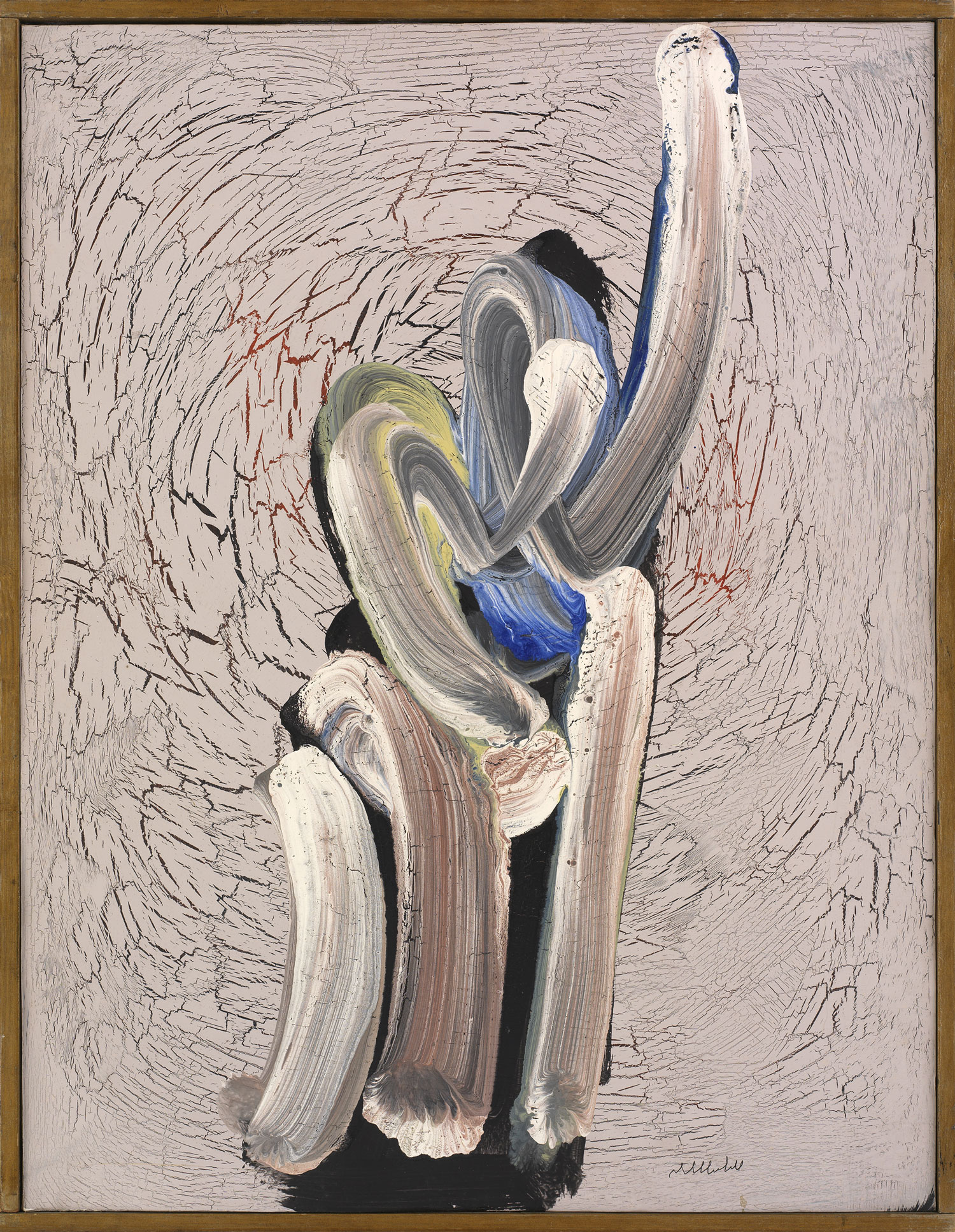
Al Soumoud (Perseverance), 1974, acrylic paint on paper and canvas
Productive Paradoxes
When Abdalla settled in Paris, where he would live until his death in 1985, he continued his experiments relentlessly, from crumpled paper to compositions created with stencils and spray paint. At this stage, his work focused more on experimenting with materials than inventing new forms. Yet it gradually acquired a darker tone. In the Convulsions series, the artist refers both to Plato’s cave and to the cave of Hira, the site of revelation in Islamic tradition. The works move toward a darker and perhaps less universal form of mysticism. Anwar Sadat’s rapprochement with Israel in 1977 marked a rupture for an artist who had consistently defended the Palestinian cause throughout his work. In Disintegration (1977), the word itself becomes a ruin, as though writing had begun to carry the fractures of the Arab world within it. It was perhaps a moment of disillusionment shared by many Pan-Arab intellectuals.
Nationalist and expatriate, politically engaged and independent, Eastern and cosmopolitan, Hamed Abdalla spent his life navigating productive paradoxes. “He constantly managed to enter territories that might appear contradictory and connect them while always maintaining the same direction,” concludes Nada Majdoub. That direction was experimentation.
This translation was generated using AI. For the original text, please see the French version of this article.
Hamed Abdalla retrospective, “Signes d’Égypte,” IMA Tourcoing, through July 12, 2026.
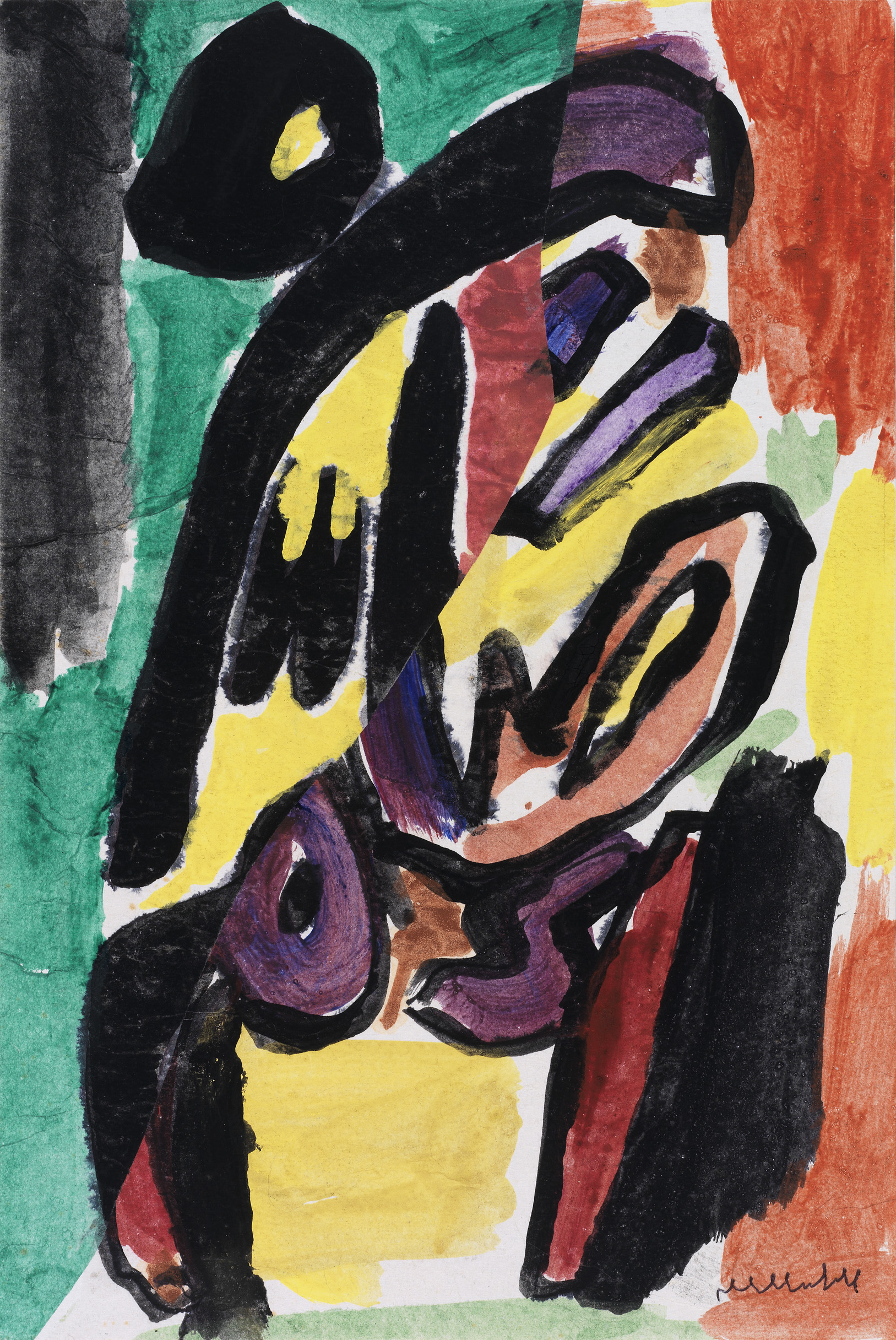
Oum Saber, 1953, gouache on tissue paper and cardboard