In an age when a selfie can be taken with the swipe of a finger, what’s the point of creating a work of art based on such a commonplace practice? A true tool for empowerment throughout the ages, the self-portrait continues to serve the long struggle for the recognition of marginalized groups. Here’s a look at feminist artists who use their bodies as a medium to make their voices heard more clearly.
By Horya Makhlouf
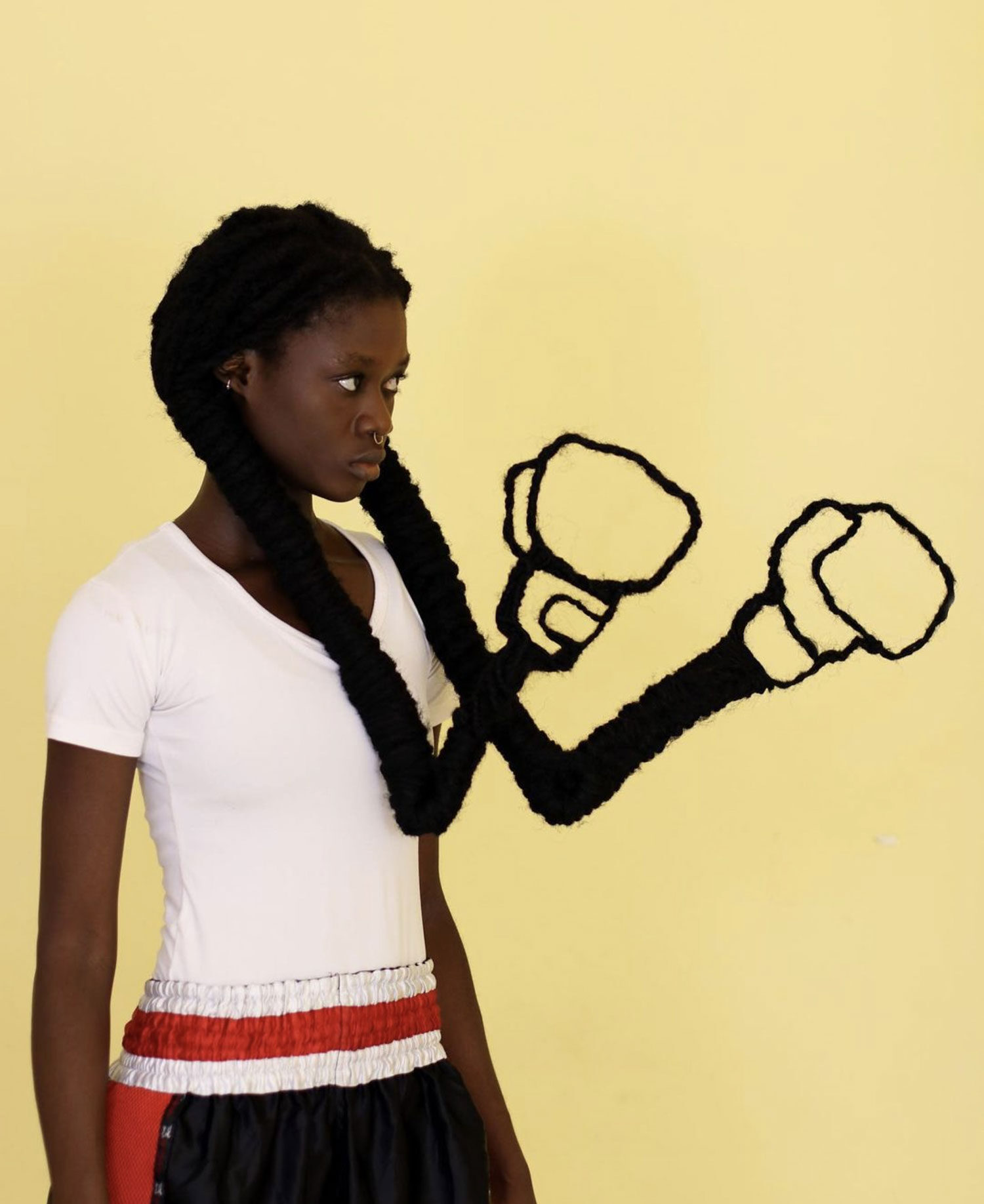
Her two long braids are standing straight up in a fighting stance, her hands clad in boxing gloves, ready to unleash a flurry of hooks. Further down, on her Instagram, Laetitia Ky has woven them into two thick arms bulging from weight training, her sculpted chest arching above her head. In other selfies, they take the shape of the African continent, a female body, the roots of a tree, a vagina, or a pubic mound from which a red stream of menstrual blood flows—or a raised fist or a face… The 25-year-old influencer made a remarkable debut this year at the Venice Biennale, when she moved seamlessly from the virtual walls of Instagram to the gallery walls of the Côte d’Ivoire pavilion. What does this meteoric rise mean for the self-portrait today?
There is a certain boldness in self-portraiture. To include one’s own figure in a work—and even go so far as to make it the central subject—requires an awareness of one’s own importance and a desire to make that known to the world. Asserting one’s identity and existence, and anchoring them in posterity: these are the challenges that artists, from the 15th century to the present day, have never tired of taking up. From the early masters of the Italian Renaissance to the Flemish Primitives, from Masaccio to Hieronymus Bosch, who hides in the middle of the Garden of Earthly Delights, the references are at first subtle, cryptic. They point to the hand of the artist who composed the scene, concealing clues to his identity among religious, mythological, or real-life figures. They seem to say, “I am the one who made this,” but also “I alone am capable of bridging the gap between the different worlds.” The self-portrait is first and foremost a signature and an assertion of power. It did not become a genre in its own right until the 17th century in Western painting and sculpture, where it marked the culmination of a patient process of recognizing the artist’s status. Through it, the artist proclaims his dignity and legitimacy. He distinguishes himself from the figure of the craftsman—with whom he had long been associated—and carves out his own place in history.
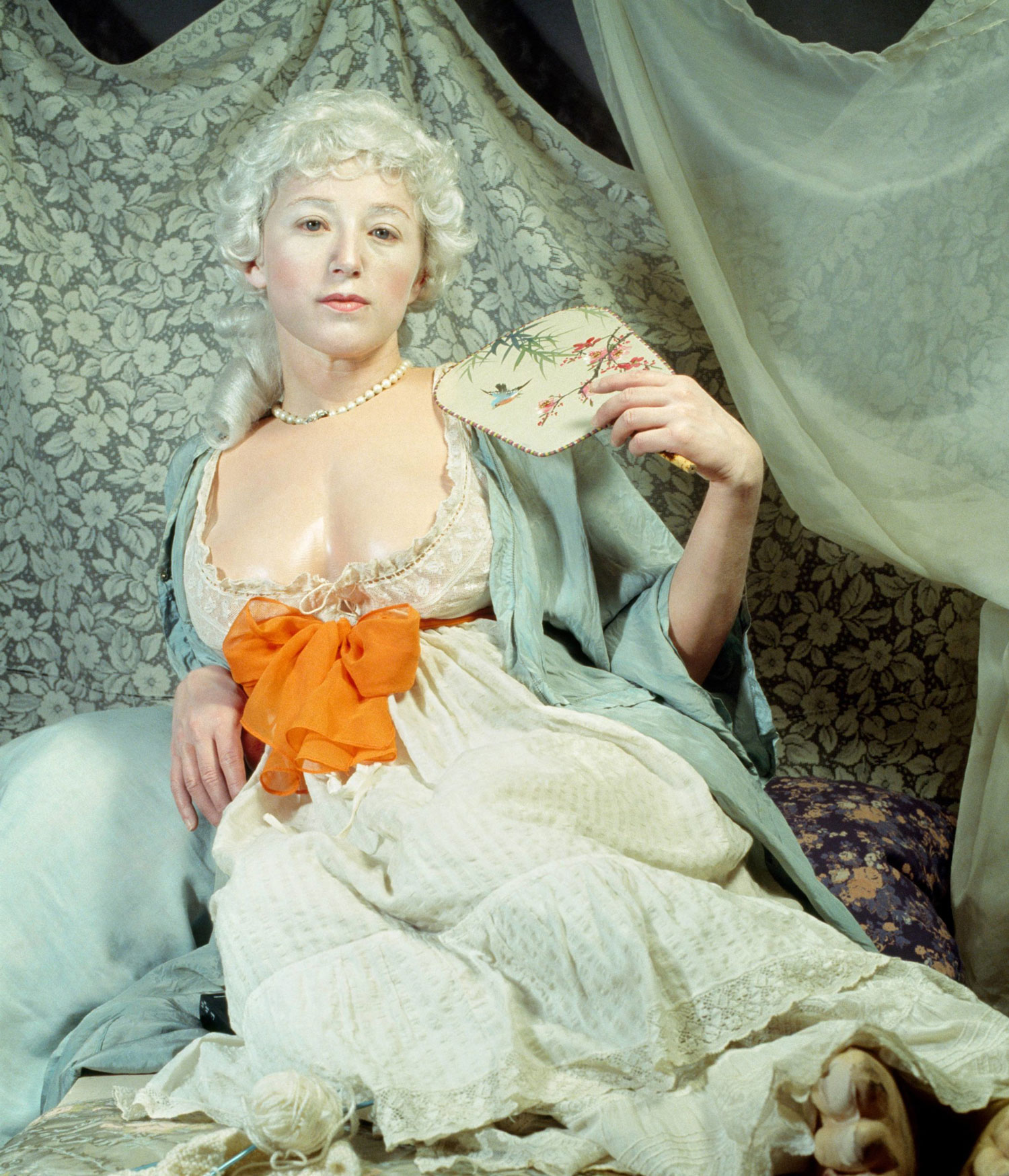
It fell out of favor in the early 20th century. For several decades now, the self-portrait has been experiencing a resurgence of interest. Political from its very beginnings, it is today a valuable tool in the struggle for recognition of certain bodies that have long remained in the shadows—or, conversely, in the spotlight of the fantasies projected onto them by artists, who are predominantly white, Western men. It is no surprise, then, that it is now widely used by artists from gender or ethnic minorities who, tired of having been muses and models for too long, see it as an essential tool in the struggle for recognition of their bodies. A pioneer in this field, the American artist Cindy Sherman chose herself as her own model from the very beginning of her career. Using a wealth of simulations and artifice, she reenacted in the 1980s the most iconic images of collective visual culture—from art history, advertising, and fashion—to subvert their rules and codes. With biting humor, she deconstructs history to reveal its narrative strategies and its forgotten figures, thereby paving the way for many artists who would follow in her footsteps.
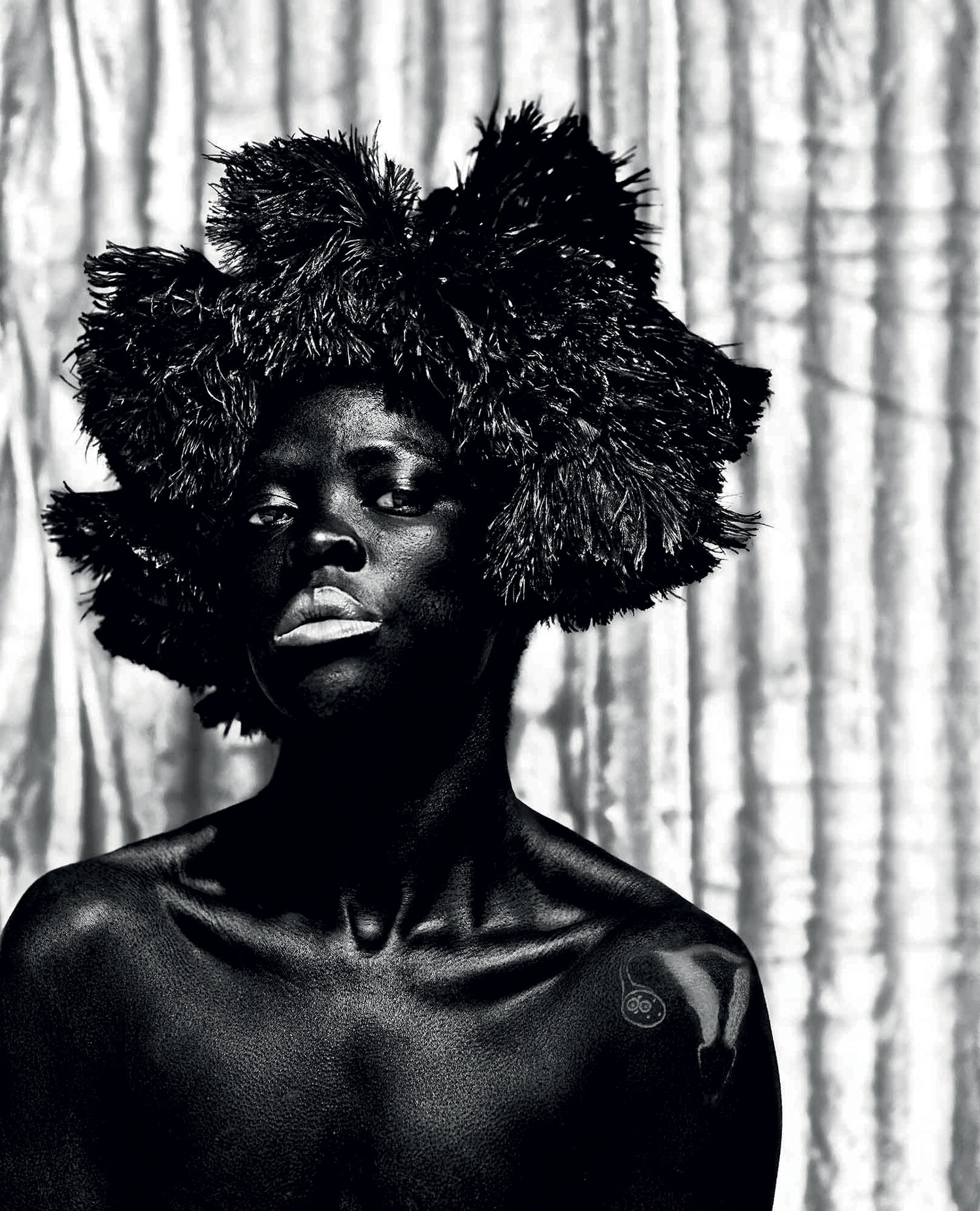
On the other side of the globe, in South Africa, Zanele Muholi is also a leading figure in the history of feminist self-portraiture. While the society in which she lives is openly homophobic and racist—posing a mortal danger to anyone who does not have the “right” sexual orientation or skin color—the artist uses her body and her camera lens as weapons of resistance. In her black-and-white photographs, she proudly displays her Black, lesbian body and her curly hair, without looking away. On the contrary, her gaze extends beyond the frame to meet that of the person stepping forward to support her, pointing to the world she wants to see come to pass: a world in which her body and those like hers will no longer have to hide, in which what was previously kept on the margins can proudly take center stage. She is an admonisher in the truest sense: the artist shows the viewer what to look at, accept, and finally recognize as legitimate—as fully belonging in society and in history. Her body becomes the vessel for shared struggles.
Making the Personal Collective
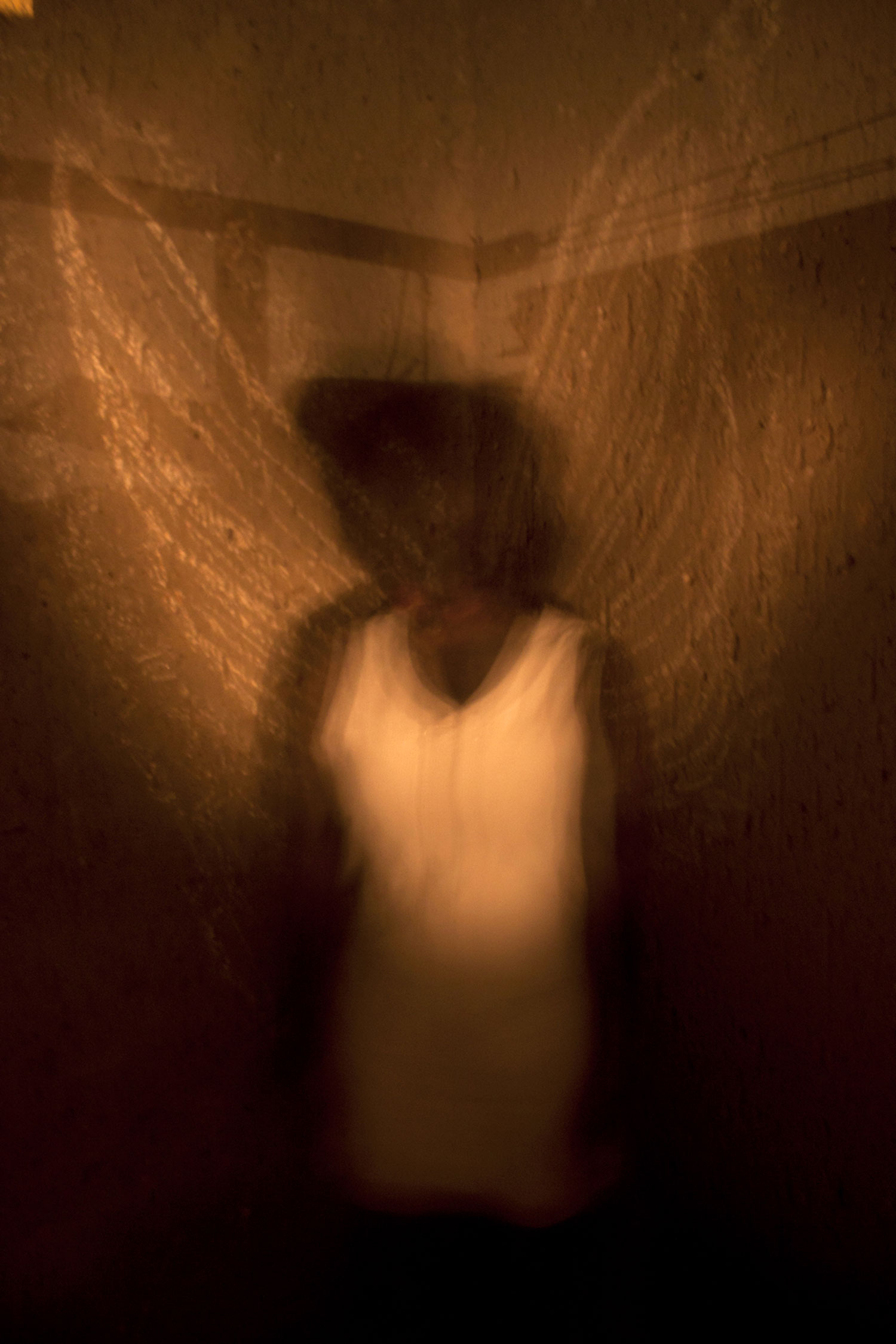
A true metonymy, the self-portrait serves to illustrate and bring into being entire communities that would come together around similar bodies. To bodies that are wounded, fantasized about, stigmatized, rendered invisible, and forgotten by history, the self-portrait offers a space in which to rebuild oneself and be accepted—a space where one can discover both the collective and the intimate. From Phumzile Khanyile (South Africa) to Fatima Zohra Serri (Morocco), including Inès Bouallou (Morocco) and Lebohang Kganye (South Africa), a generation of artists born in the 1990s is now turning to the self-portrait to overturn rules and impositions, wherever they may come from. In the series Plastic Crowns (2016), Phumzile Khanyile appears troubled, solitary, and withdrawn. She stands there before or after an imaginary party, when she is left alone with her thoughts, while her grandmother—with whom she lives in the township of Soweto—has left the house, her only chance to escape social pressures, if only for a moment, and to live as she imagines herself.
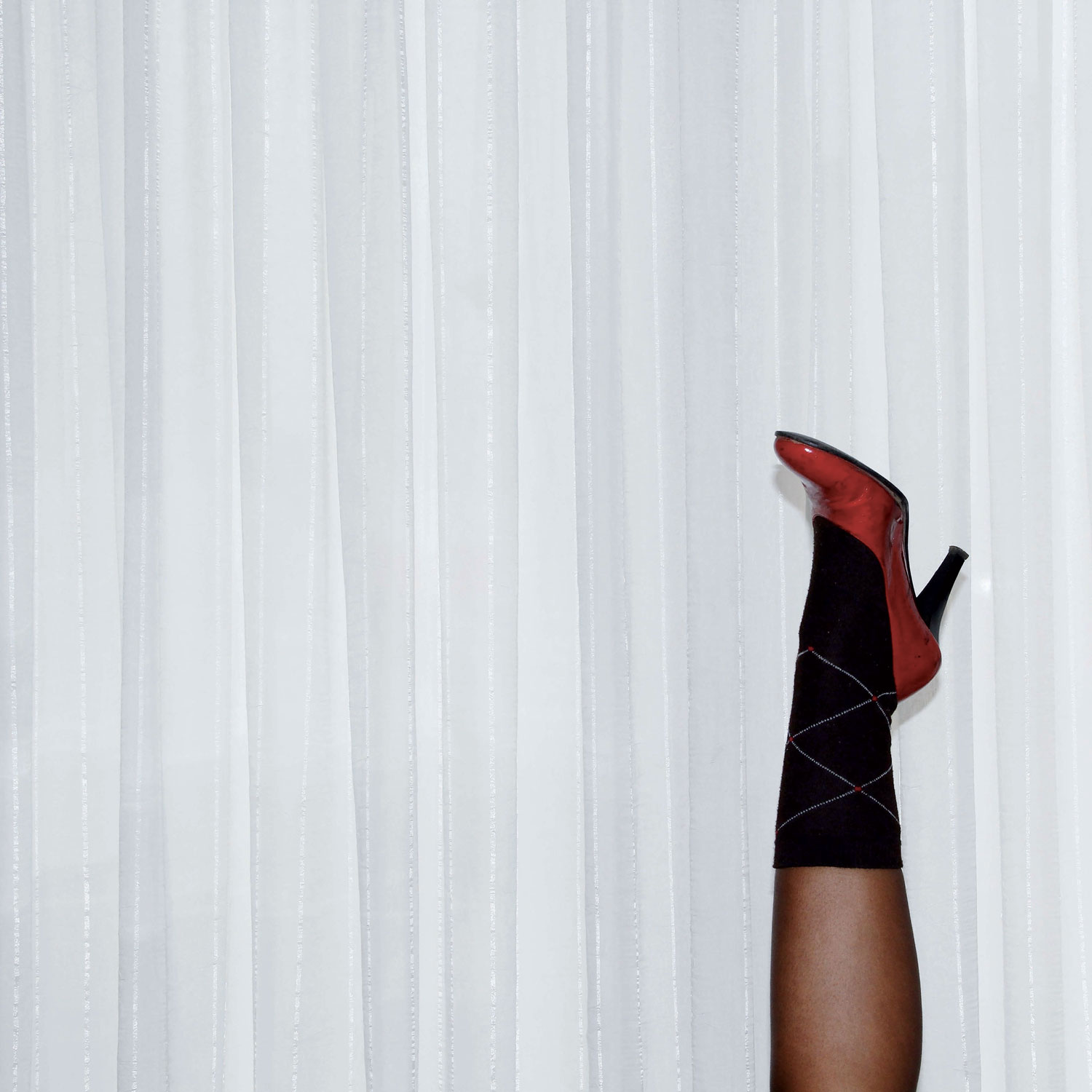
Fatima Zohra Serri’s (Morocco) Instagram feed features visual representations of cries, bare legs, and heels peeking out from under a long hijab, a woman alone, gazing into the camera, peeling a flower next to the caption “I’m tired of being called awrah.” “Ever since I was little, I’ve witnessed things I disagree with,” the artist explains. The self-portrait reveals and exposes what she cannot shout out. It is a gentle revolution, one that allows us to reinvent the world from what already exists, to deconstruct it, and to share its fragments. Lebohang Kganye does just that when she reappropriates the collective imaginaries inherited from Disney and other children’s stories. Exhibited this year in the South African pavilion at the same Venice Biennale that celebrated Laetitia Ky, the artist reappropriates the codes of fairy tales to carve out her own place within them. Having grown up identifying with Disney heroines, the artist has, in fact, reached an impasse: “My black skin and my geographical location were creating an ever-widening disconnect from the fantasies I once believed in.” Through self-portraiture, she subverts these myths in a liberating way—for the child she once was as well as for future generations—by transforming Snow White into Black Snow. Her series, B(l)ack to Fairy Tales (2011), “is evidence of the political within the personal—thus, personal narratives resonate with broader political and social issues, and the project highlights these intersections by examining intimate stories,” she explains.
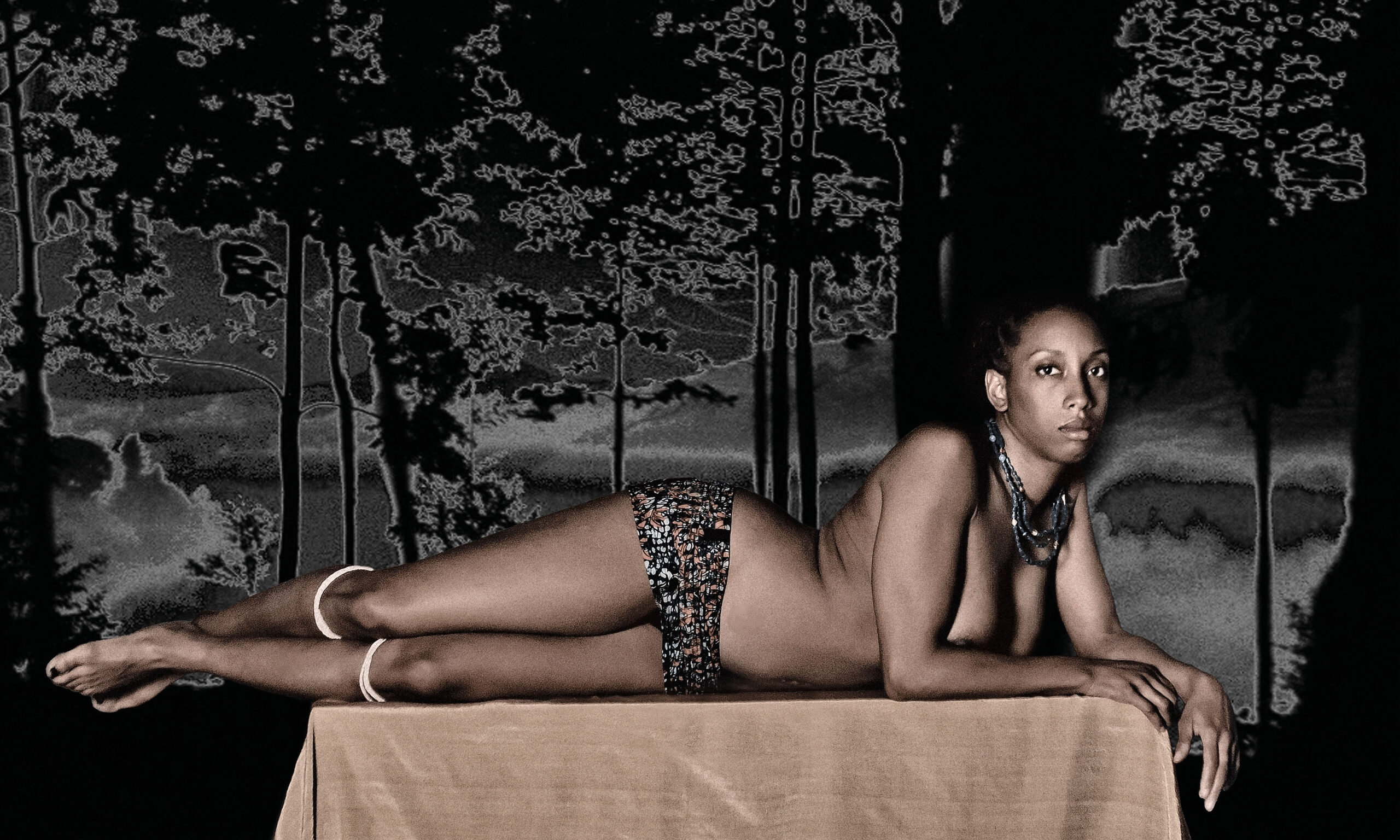
With the self-portrait, representation changes hands—and so do the norms. Gone are the projections of others; the self-portraitist regains control of their own body, with pride, courage, and a hope for healing. As early as 1994, in her series Inhabited by imagings we did not choose, the Franco-Moroccan artist Yasmina Bouziane staged herself in a photo studio across multiple scenarios.
By reimagining the conventions that prevailed in photography studios from the 1870s to the 1960s in colonized Arab countries—where families of colonists would come to be photographed adorned with jewelry, gold leaf, and traditional clothing, in front of columns, handcrafted rugs, and potted palm trees, Yasmina Bouziane makes it clear that it’s all about composition. Thus, the pair of sneakers under the djellaba, the book held by the belly dancer, or the broom the model is sweeping with in the back of the studio introduce doubt and defuse the exoticism. Codes and representations are constructs: anyone who wishes to do so is free to create their own, more accurate and more authentic ones.
Self-Portrait 3.0
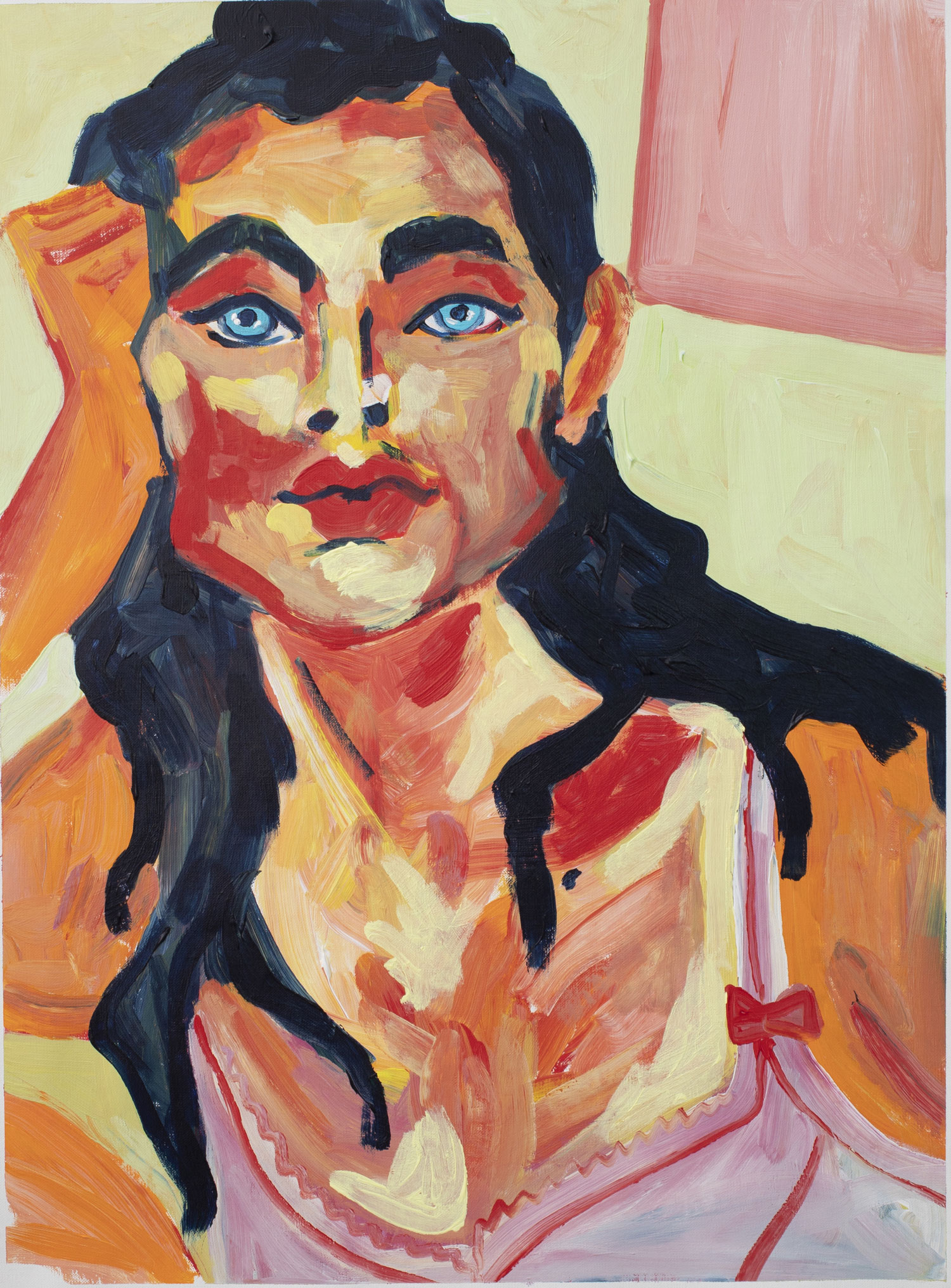
The self-portrait, which requires delving into one’s inner self, is also a way for artists to engage in self-reflection. In the series of paintings Imitating Equilibrium (2020), Tunisian artist Dora Dalila Cheffi portrays herself in a sort of visual diary that draws on the conventions of selfies. With her series of poses reminiscent of an Instagram feed, her thick brushstrokes in vivid colors, and her spontaneous style—which evokes Fauvism—she brings to the physical canvas what scrolls across the virtual one. In doing so, she gives form and substance to the fluctuations of her ever-changing self and proudly declares: “I am all these women at once.”
In an era when the private has never been more public, when self-portraits are easy to create, reproduce, and share at will, and when modern imaging technologies allow them to be viewed continuously across all platforms, the ways in which artists engage with the self-portrait have inevitably been reinvented. Far from being disheartened by this, they seem to see it as an opportunity to democratize their practice, transcending boundaries, disciplines, and genres, moving effortlessly from social media to the major venues of contemporary art. The proliferation of self-portraits is beneficial in several ways in this long struggle for the recognition of bodies that have been invisible or marginalized. It not only helps to compensate for the absence of representations that has persisted for far too long in art history but also transcends national and disciplinary boundaries to build genuine archives of bodies and political images from which, at long last, new narratives can be constructed.
This translation was generated using AI. For the original text, please see the French version of this article.