After ten years of construction, the Museum of Photography and Visual Arts is opening its doors in the medina of Casablanca. Designed by Tadao Ando, the building is impressive. But the real challenge begins now: bringing to life an institution capable of chronicling the history of Moroccan photography, which is still largely yet to be written.
By Emmanuelle Outtier
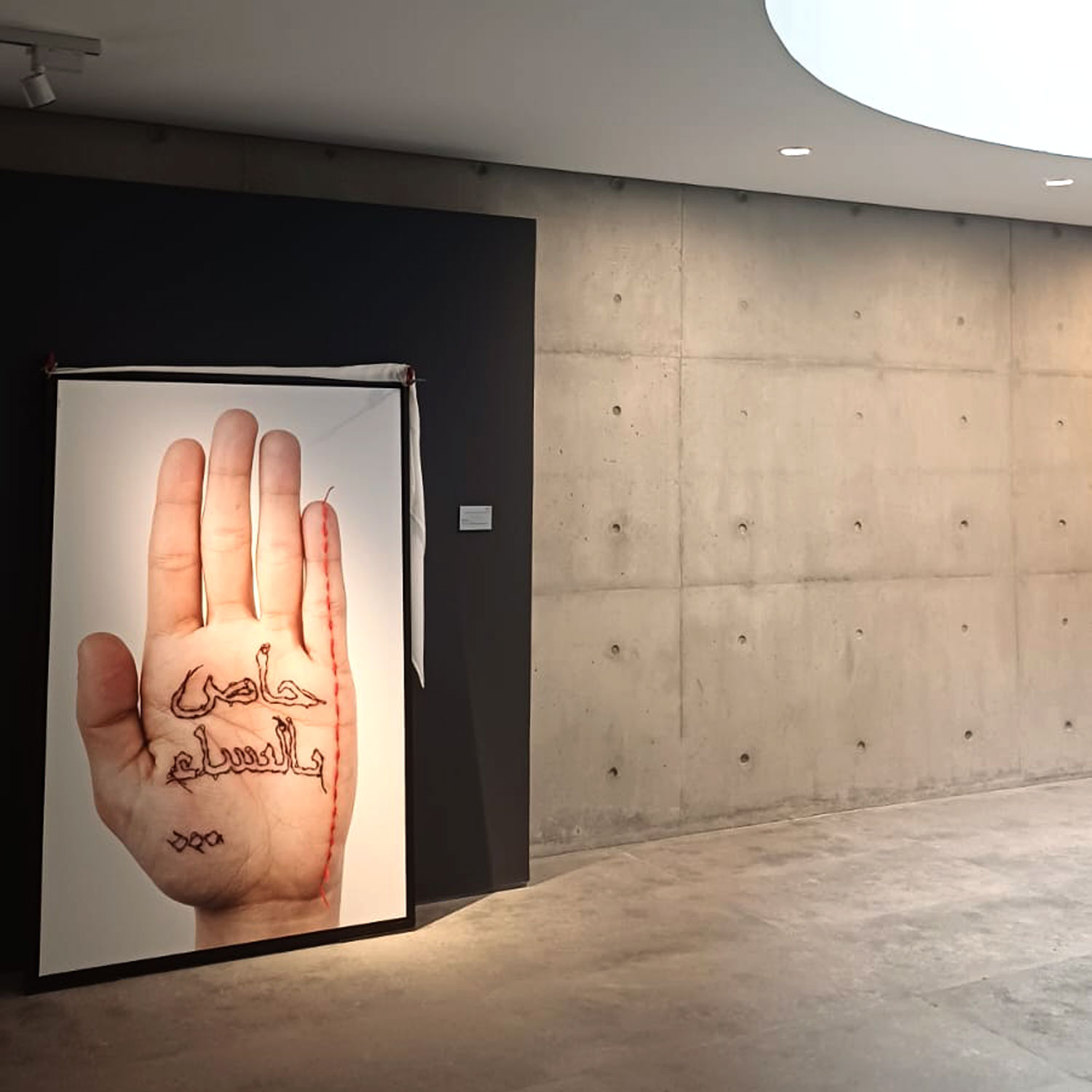
View of the “Casa” exhibition featuring a work by Khadija El Abyad at the Museum of Photography and Visual Arts in Casablanca
“It’s quite unique in the world,” says photographer Khalil Nemmaoui. “You’re in the medina, and suddenly it’s as if you’ve been transported to New York, London, or Tokyo.” He isn’t the only one to have been surprised by the Museum of Photography and Visual Arts, which opened in late June in the heart of Casablanca’s medina. The contrast is striking. After passing through the medina’s ramparts and walking past the famous La Sqala café, located in a former fortified bastion, a glass facade appears in a narrow alleyway, standing in stark contrast to the blind facades of the traditional houses. You can make out arches—the only remnants that hint at the building’s history as a 17th-century foundouk. Beyond them, the concrete structures, designed by Tadao Ando, evoke major international museums.
The project took more than ten years to come to fruition and required a budget of 20 million dirhams, funded by the Casablanca Urban Agency as part of the extensive renovation of the old medina. Perhaps the most surprising aspect of this story is that Tadao Ando has never set foot in the Casablanca medina. To bring his vision to life, the Japanese architect relied on the Moroccan firm H+E Architecture, which was tasked with adapting his plans to the site’s constraints—and there were many. The discovery of historic arches that needed to be preserved was a game-changer. The team of Moroccan architects then traveled to Osaka in 2016 for a workshop lasting several days with Ando. The project evolved: the concrete facade originally envisioned was ultimately replaced by a large picture window that allows for a dialogue with the original architecture. “Ando’s architecture is not a static, imposed object,” emphasizes Houda Aourarhi of H+E Architecture. Another major challenge: the exposed concrete—a hallmark of the Japanese architect. “All of his architecture revolves around this material,” the architect continues. “In the medina, getting it there was already a challenge, given the narrowness of the streets. But the trickiest part is that with exposed concrete, there’s no room for error.” This technique, highly prized in contemporary architecture, tolerates no approximations. “The concrete undergoes no treatment after being removed from the formwork. Even the slightest imperfection remains visible.”
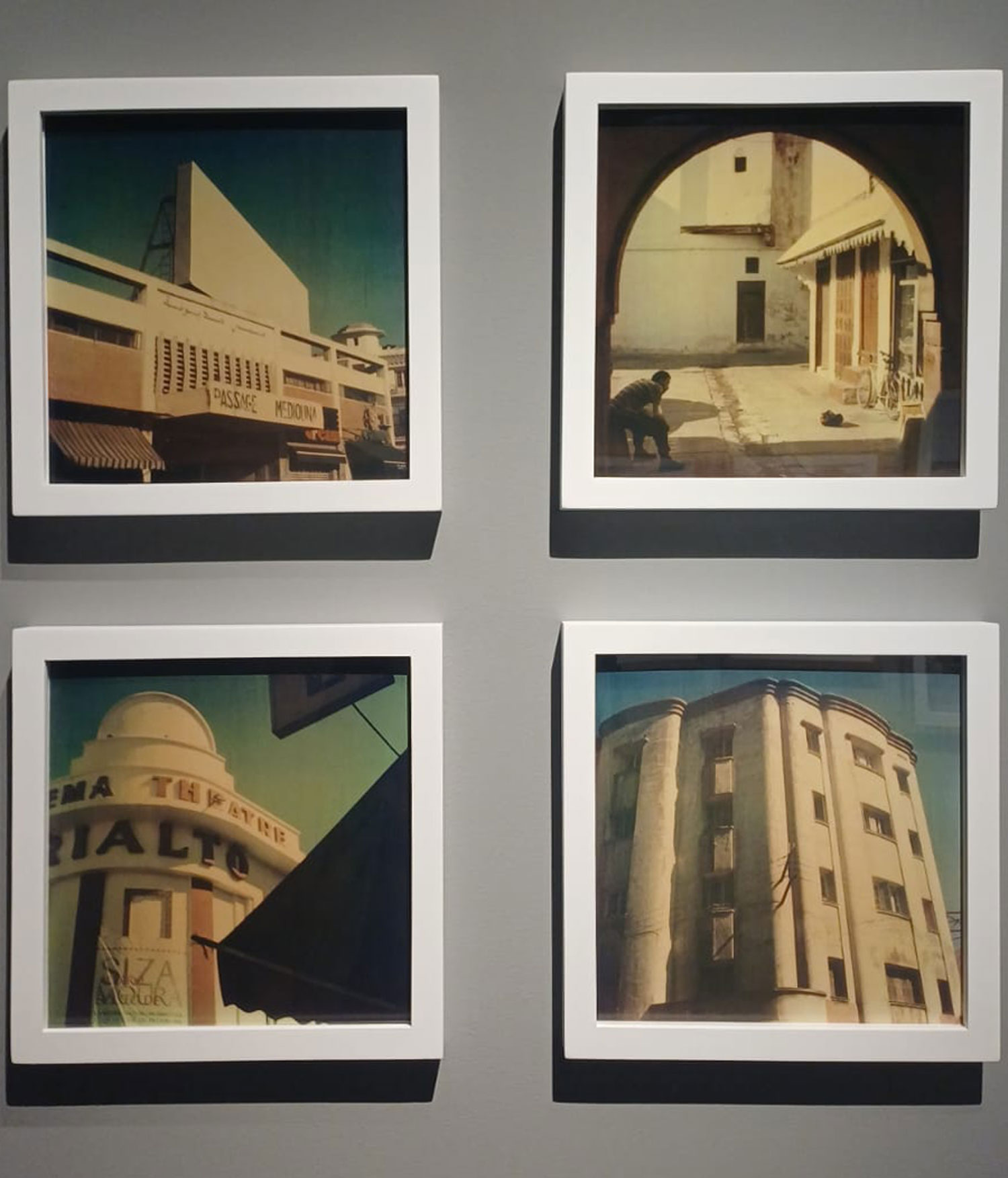
Marco Barbon, “Casablanca” series, 2010, pigment prints based on Polaroids on Hahnemühle Photo Rag Pearl FineArt paper. 24 x 25 cm / 40 x 42 cm. Courtesy of Galerie 127.
A State Museum
Beyond being an architectural feat, the museum also fills a gap. Having come under the management of the National Museum Foundation (FNM) following the signing of an agreement with the city and its stakeholders in January 2026, it fills a void in a metropolis that lags far behind Rabat, Tangier, and Marrakech in terms of museums. “This is a first step toward the development of new cultural institutions in Casablanca,” promises Abdelaziz El Idrissi, the FNM’s director general of museums. “We need museums rooted in the neighborhoods,” adds Soufiane Er-Rahoui, co-curator of the inaugural exhibition and curator of the National Museum of Photography in Rabat, which until now has been the only Moroccan public institution entirely dedicated to this medium.
This ambition is not new. The initial project, spearheaded by photographer Touhami Ennadre, was conceived as a “House of Photography” intended to offer residents of the medina a place to explore and learn about photography. While the project has since changed in scale and governance, the original vision may still be realized through workshop spaces and a library that will soon house 600 photography books donated by photographer and collector Joseph Klahr. Above all, this museum represents a promise at a time when photography is playing an increasingly prominent role in the Moroccan art scene. New generations are embracing this accessible medium to document daily life, observe societal changes, or explore more intimate narratives. As demonstrated by the first exhibition, titled “CASA.”
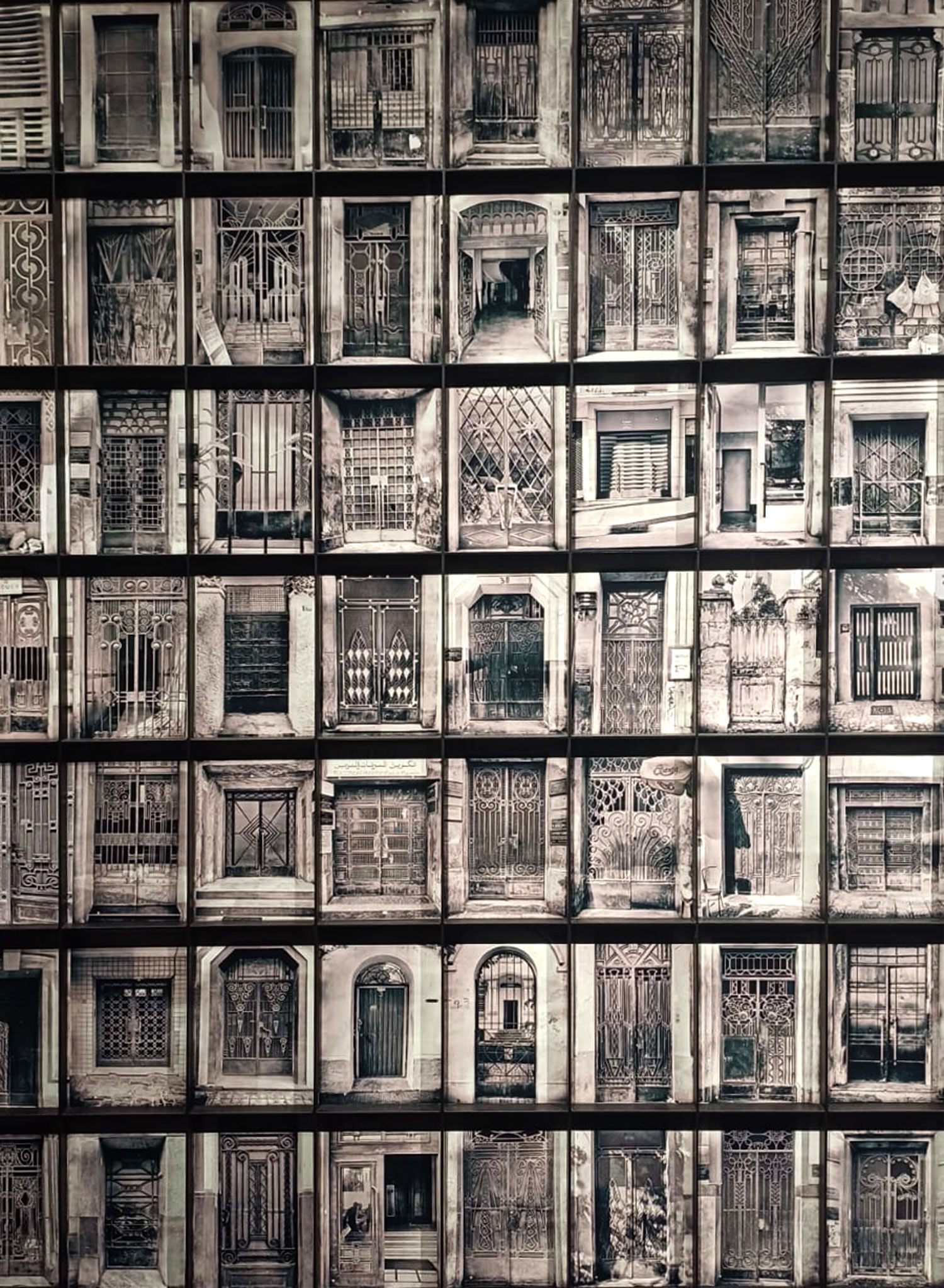
Hakim Benchekroun, Casa Portes (detail), 2026, a composition of 140 photographs: 10 x 15 cm, digital prints on FineArt paper mounted on wood, 206 x 108 cm.
Casablanca, a picturesque city
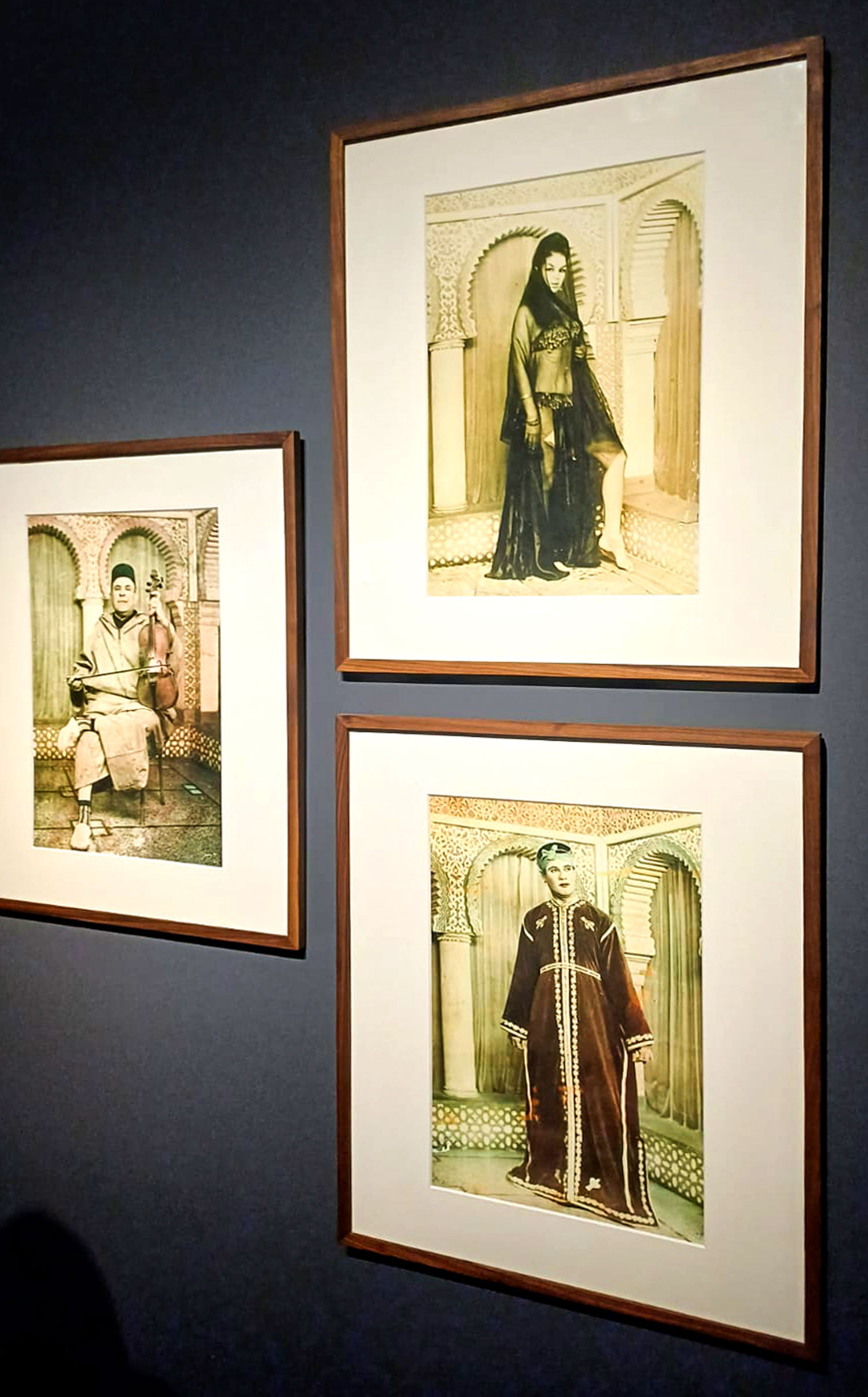
“Casa—it was a no-brainer.” The theme of this exhibition emerged naturally. Not without a few pitfalls to avoid, Soufiane Er-Rahoui acknowledges: “We didn’t want to put on a postcard-style exhibition; we needed to show not only Casablanca’s beauty but also its vulnerabilities and challenges.” The exhibition, which is highly educational, unfolds in several sections, beginning with Casablanca’s architecture—known for its Art Deco and Modernist gems—before focusing on the studio photography that shaped the city throughout the 20th century. “Casablanca is a city that invented itself through images. Very early on, photography accompanied its development and helped shape the way it sees itself and is seen,” notes Khalil Nemmaoui, who served on the scientific committee for this first edition. This highlights the sheer scope of the heritage work that still needs to be done to document the history of Moroccan photography, which remains incomplete. “There are still many collections to be discovered, particularly from the colonial period,” emphasizes Nathalie Locatelli. As the founder of La Galerie 127 in Marrakech—which has supported several generations of Moroccan photographers—Locatelli is also a co-curator of the exhibition. The museum could thus help structure this research project, without neglecting its commitment to supporting contemporary artistic creation.
What stands out about this exhibition is its commitment to providing a level of historical depth befitting an international museum. Even if that means making a few minor missteps—which are quickly forgiven: the section devoted to Morocco’s early photographers features some truly beautiful photos taken by the sultan Moulay Abdelaziz, who, out of personal interest, introduced the medium to the court at the very end of the 19th century. Except that the photos were likely taken in the imperial palace in Fez. Never mind. We can’t help but enjoy seeing these prints, along with those by Gabriel Veyre and Marcelin Flandrin—some of whose photos were loaned by the Institut du monde arabe, marking the beginning of a collaboration between the Parisian institution and the museum. Moreover, this room illustrates a shift from the external gaze (that of foreign photographers) to a self-reflective gaze through a delightful little detail. While we see Gabriel Veyre photographing Sultan Moulay Abdelaziz, a few display panels further on, it is the sultan who is photographing Gabriel Veyre.
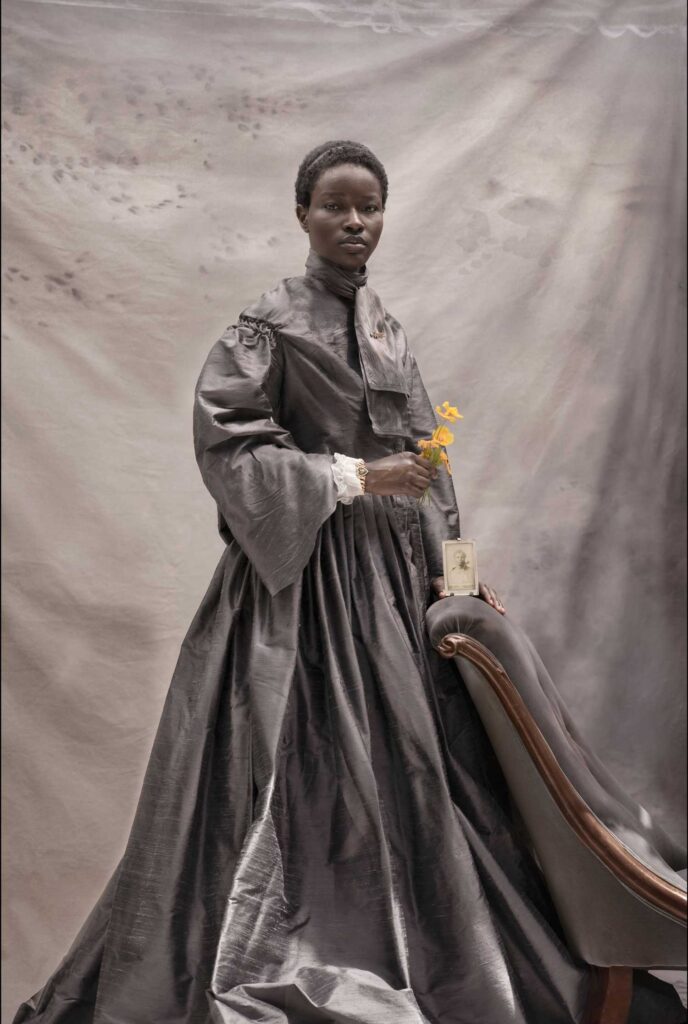
This shift—from a gaze directed at Morocco to a gaze produced from within Morocco—is perfectly embodied in one of the exhibition’s most cohesive sections, featuring exclusively female photographers (Fatima Mazmouz, Khadija El Abyad, Lalla Essaydi, …) who challenge the modes of representation inherited from colonialism and patriarchy in order to reclaim control over their own image. For the exhibition does not present a linear history of photography in Morocco. Rather, it shows how contemporary artists engage with archives and historical narratives to extend, shift, or sometimes challenge them.
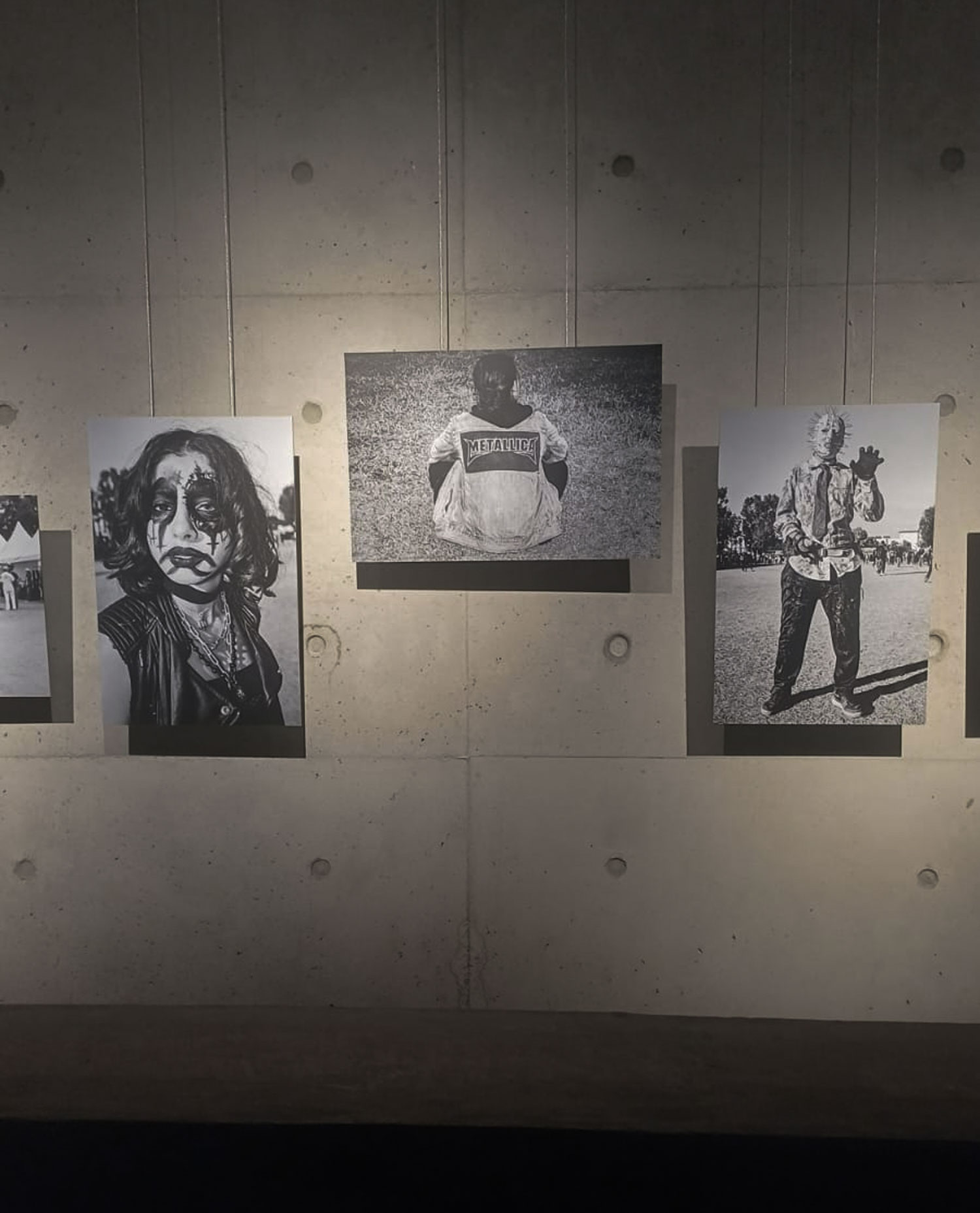
View of the “Casa” exhibition featuring photographs by Yassine Toumi at the Museum of Photography and Visual Arts in Casablanca
A Museum-School?
The exhibition is rich and varied: family archives, abandoned movie theaters in Casablanca, young people photographed by Yoriyas or Yassine Toumi during L’Boulevard, and city figures captured by Daoud Aoulad Syad… This is both the strength and the limitation of this inaugural exhibition. “CASA” succumbs to the temptation to show everything, taking full advantage of the museum’s 2,000 m², at the risk of glossing over fascinating topics that would have deserved more space—such as the realities of migration in a metropolis that welcomes a growing number of workers from sub-Saharan Africa, as photographed by Imane Djamil.
Ultimately, this inaugural exhibition serves above all to illustrate what lies ahead for the museum. First and foremost is the appointment of a director capable of charting a course for it. The museum will also need to build a collection. “CASA” was made possible thanks to numerous loans from institutions and private collectors, which indirectly highlights the lack of a substantial public photography collection. The donation by Yves Jeanmougin of 300 of his silver gelatin prints dedicated to Casablanca may be the first milestone in this effort. “It should become a museum-school, where photography is taught, as well as the various professions within the field,” envisions Nathalie Locatelli. “This place is like a picture frame in photography,” sums up Khalil Nemmaoui. “A frame can reveal an image and give it value. Now, the photograph itself must live up to the frame.”
This translation was generated using AI. For the original text, please see the French version of this article.
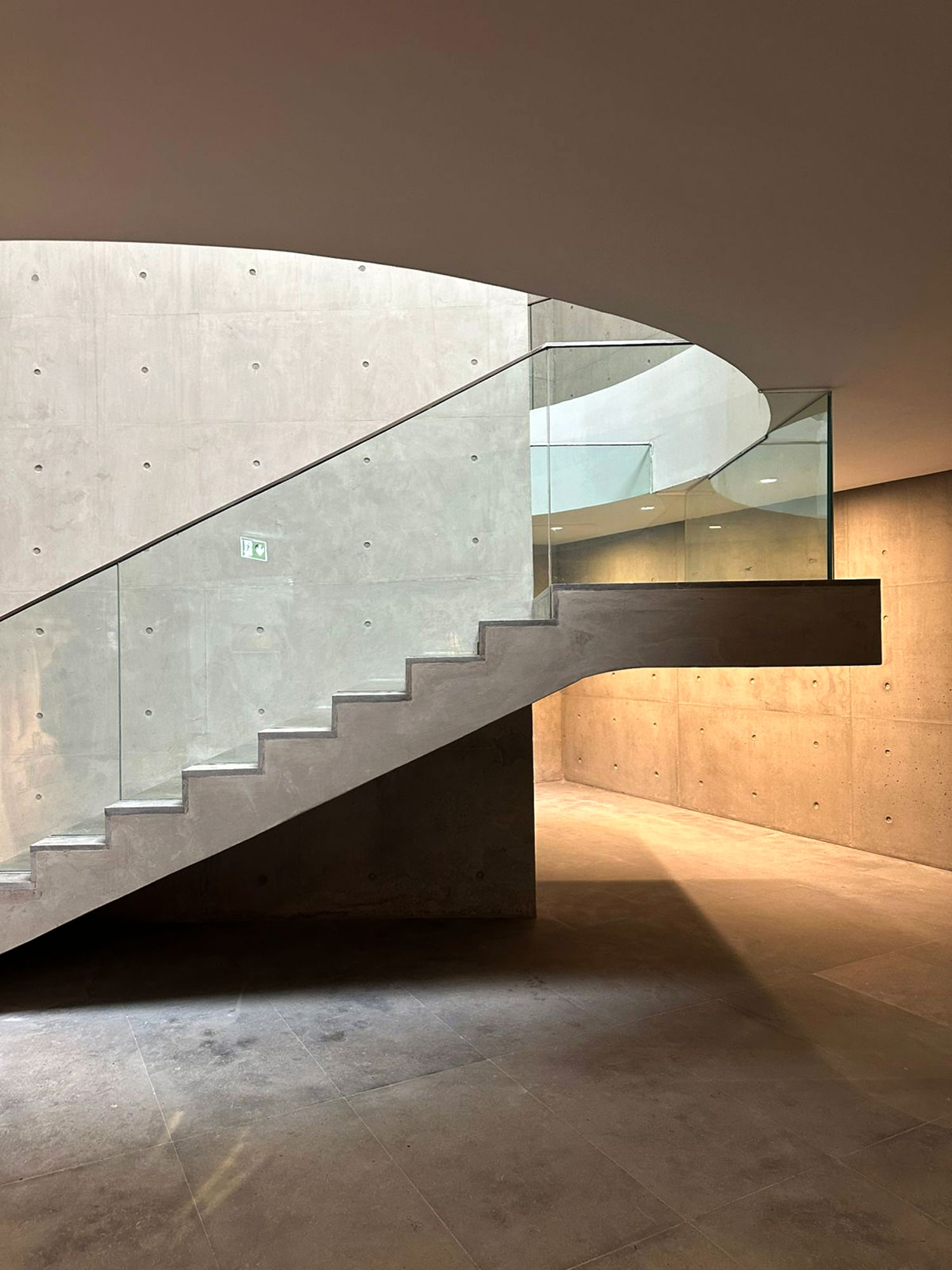
View of the Museum of Photography and Visual Arts in Casablanca, designed by Tadao Ando.
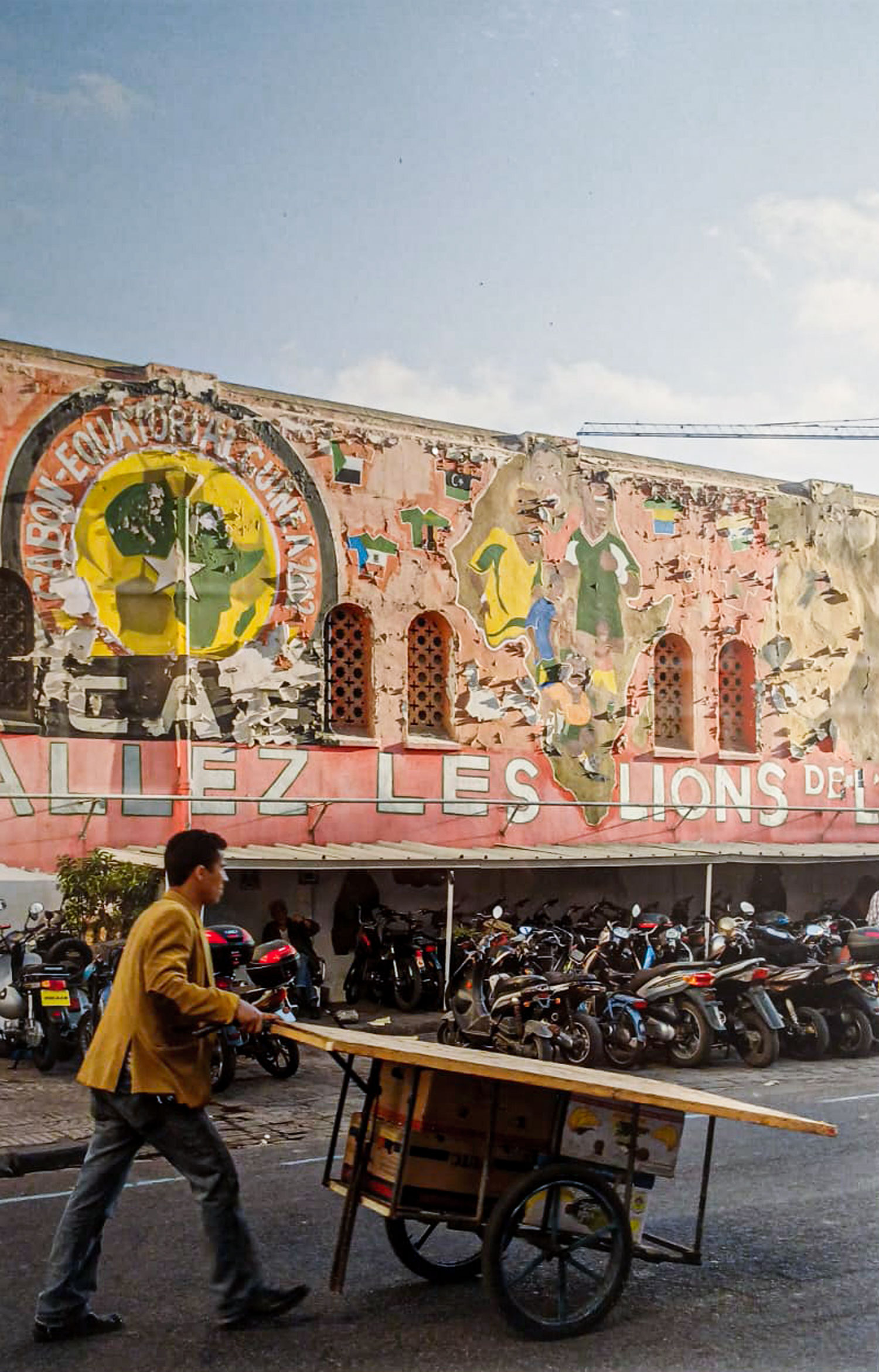
Alice Sidoli, Around the Central Market, 2014, digital file, photographic commission by the IMA Photo Library. © Photo Library of the Institut du monde arabe / Alice Sidoli