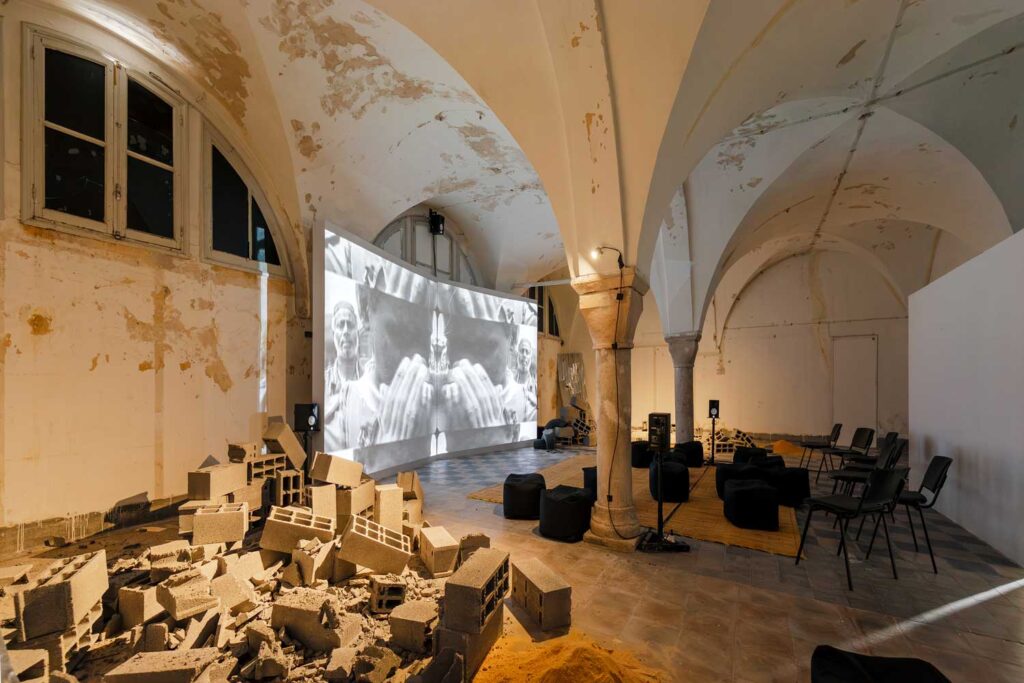
Founded in 1951, the Baghdad Modern Art Group sought to forge an Iraqi artistic modernity at the intersection of local traditions and international avant-garde movements. At Mathaf in Doha, the exhibition What Lingers in the Artist’s Mind traces the history and influence of this pioneering collective, whose archives have been partially scattered or destroyed by wars. An interview with the curator, art historian Nada Shabout.
Interview by Meryem Sebti
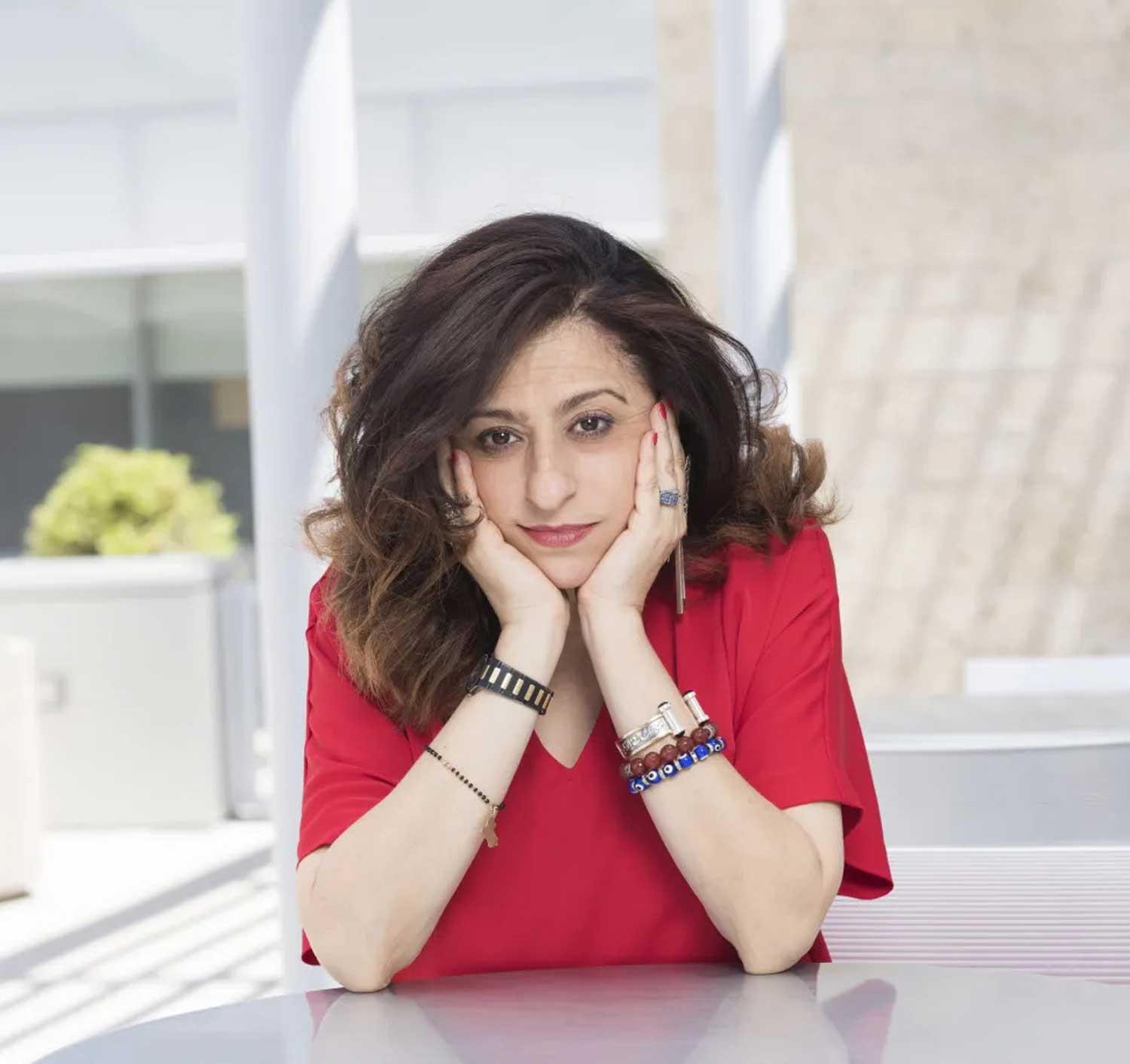
Why is it important to revisit the Baghdad Modern Art Group today? How does the exhibition “What Lingers in the Artist’s Mind,” which you curated, allow us to take a different look at Iraqi—and, more broadly, Arab—modernism?
The group played a fundamental role in the emergence of Iraqi modernism, but it also allows us to better understand Arab modernism as a whole. While its name is relatively well known, its history and contributions are much less so. This exhibition, which reinterprets the two previous installments of the project titled “All Manner of Experiments,” is the first major exhibition to place the collective in its historical context. It offers a look back at the group’s formation, its evolution, its members, the challenges it faced, and the influence it exerted on subsequent generations.
The exhibition traces the group’s development through the works of its two leading figures (Jawad Saleem and Shakir Hassan Al Said, ed.) and the contributions of its founding members. It also traces the evolution of the group’s membership during its first decade of existence, as well as the efforts to continue its work following the untimely death of Jawad Saleem.
It also explores the relationships that bound these artists together—as friends, colleagues, and teachers—and which have fostered the transmission of their ideas to the present day, notably through the “1980s generation” of Iraqi artists in the diaspora, followed by the reconnection of contemporary generations in the diaspora with Iraq. It is precisely the group’s emphasis on experimentation—in an environment conducive to the development of an ever-evolving aesthetic—that explains the richness and enduring nature of its educational legacy. As for our understanding of Arab modernism, this exhibition offers a concrete example, a discourse, and new aesthetic perspectives.
The exhibition draws not only on artworks, but also on archival materials, research, and what has been lost or remains untraceable. How do these absences influence the way you tell this story?
The exhibition takes into account the consequences of the wars and political instability in Iraq, as well as the resulting loss of archival materials. These losses have significantly hindered our ability to reconstruct the group’s history as a whole. We often have only fragmentary accounts, written in Arabic by Shakir Hassan Al Said and by one of the group’s leading advocates, the Palestinian critic Jabra Ibrahim Jabra.
This exhibition can therefore be interpreted as much through the way it engages with these absences and fragments of history as through the works and archival documents on display. The U.S.-led invasion of Iraq in 2003 resulted in considerable—and in some cases irreversible—cultural destruction, as well as the dismantling of institutions. The consequences were devastating for Iraq and its people and, in the context of this exhibition, for the visual arts.
This is the third phase of a research project presented successively at Bard, NYU Abu Dhabi, and now at Mathaf. What does the Mathaf collection allow you to contribute or reconsider? And how has the exhibition evolved across these different contexts?
The Mathaf collection, which is the world’s largest collection of modern Iraqi art, allows me to significantly deepen and broaden the scope of the two previous versions of the exhibition.
It brings together not only a much larger selection of major works by the group’s two leading figures, its co-founders Jawad Saleem and Shakir Hassan Al Said, but also works by other members of the collective and by artists belonging to the groups that succeeded them in the 1960s and 1970s. This allows me to fill in some gaps in the narrative of Iraqi modernism.
The research I conducted for these three exhibitions allowed me to explore broader time periods, delve deeper into certain aspects of art history, and include new artists in order to convey the many exchanges, dialogues, collaborations, and tensions that existed among them.
This work also led me to reexamine certain established narratives through the direct study of the artworks. In this regard, being able to bring together such a rich collection of Iraqi artworks in a single space is a rare opportunity.
What audiences do you hope to reach with this exhibition? Beyond specialists already familiar with Iraqi modernism, how can this history resonate with younger generations and a broader audience in Doha and throughout the region today?
As an art historian, I hope this exhibition will help challenge dominant narratives about the formation of modernism, foster a better understanding of Iraqi modernism, and, more broadly, to renew the narrative of modern art history by giving other voices their rightful place as equally legitimate forms of knowledge.
I also hope that visitors from around the world, whether experts or not, will be able to discover and appreciate magnificent works of art. I would like them to leave with a different image of Baghdad and Iraq.
In particular, this story can show younger generations in Doha and the region that there are other major narratives—still largely unknown—in which Arab artists played a vital role in the development of modernism. It also serves as a reminder that art has always held an important place in modern Arab cultures.
“What Lingers in the Artist’s Mind: Experiments and Legacies of the Baghdad Modern Art Group,” Mathaf Doha, through February 6, 2027.