For the first time in its history, the Geneva Moving Image Biennial is being held outside Switzerland, in Tunis. Hosted by Jaou, the event brings together sixteen new commissions by artists from Africa, the Arab world, Asia, and Latin America in a former Ottoman barracks. It is not only an ambitious international collaboration but also an exhibition that reimagines the ways of presenting video art by making architecture an integral part of the works.
By Olivier Rachet
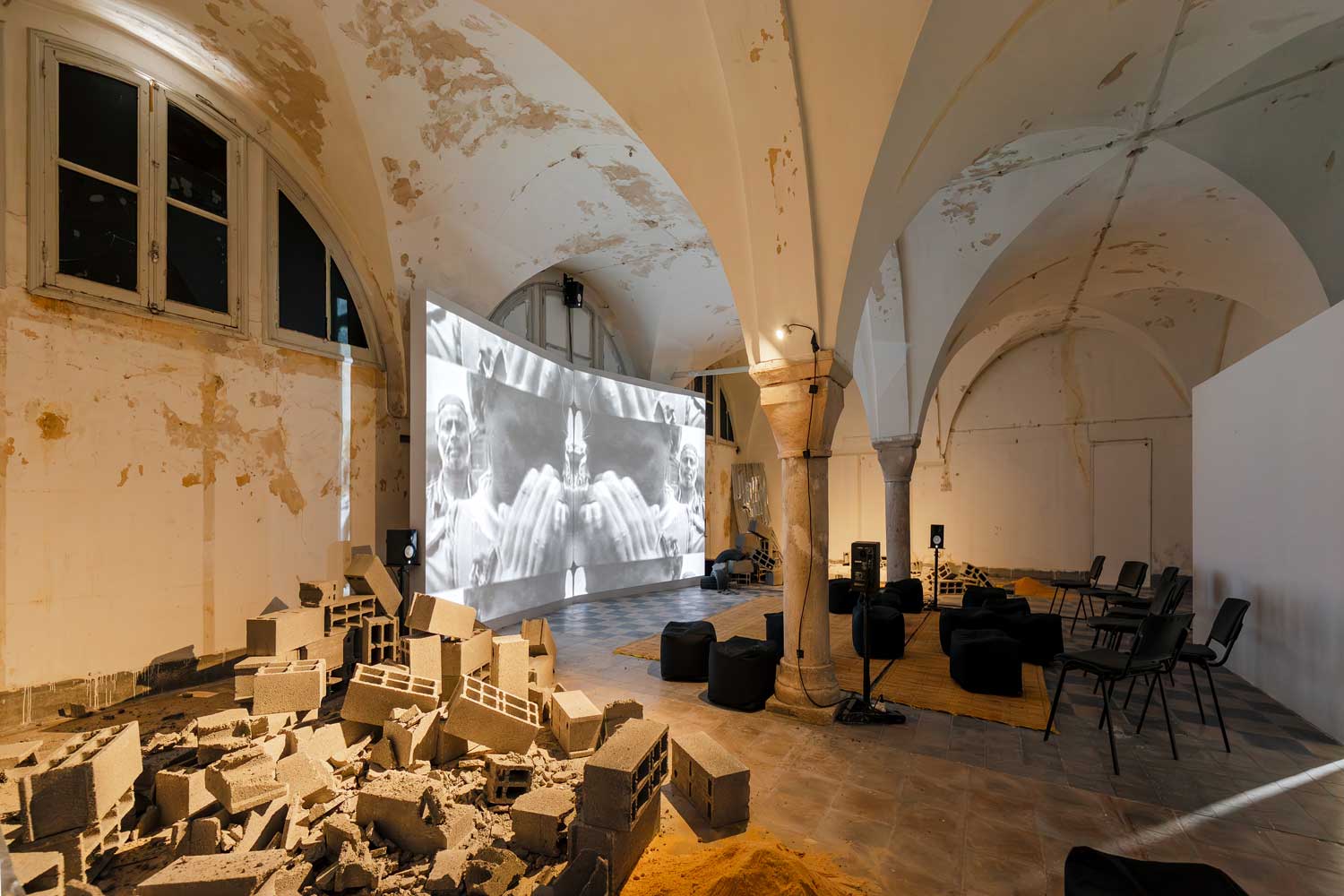
The location is anything but ordinary. Situated in the heart of the medina of Tunis, just a few steps from the Zitouna Mosque, the El Attarine Barracks is a fully renovated remnant of the Ottoman period. The origins of this military structure are closely linked “ the history of the Ottoman Janissary corps, the system of dervishism—which involved the enslavement of children for military purposes—and the Bektashi Sufi order ,” states the catalog for the exhibition “Becoming the Ocean,” curated by Lina Lazaar, director of Jaou, and Andrea Bellini, director of the Geneva Biennale of Moving Images.
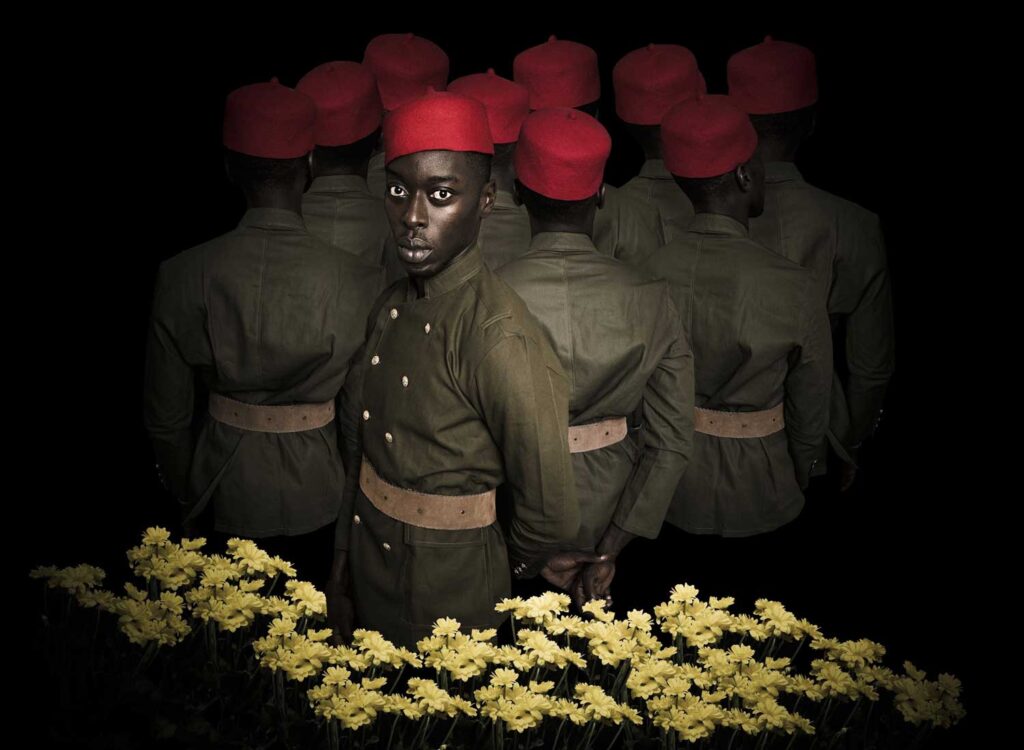
This historic venue is hosting 16 artists, most of whom, as Andrea Bellini points out, “ do not come from the historically privileged regions from which Western contemporary art has built and imposed its discourse. Many come from regions long considered peripheral—Africa, the Middle East, Asia, Latin America—or from their diasporas ”.
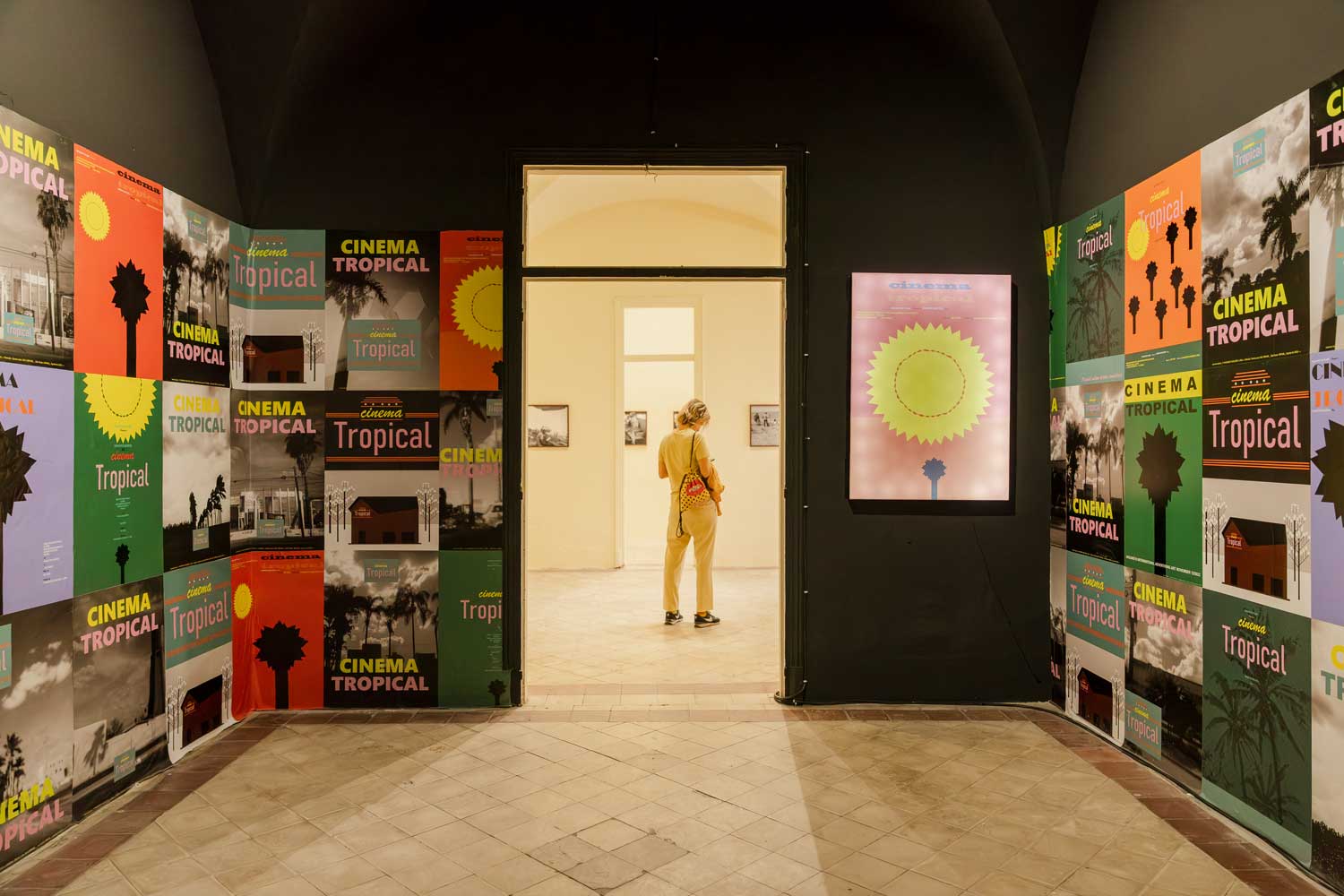
In a compelling way, several video artists choose to reimagine the space allotted to them by altering its original function. For example, Namibian artist Hildegard Titus transforms the space into a classroom to explore, in her video Mbwiti, —whose title refers to the Aawambo people native to north-central Namibia—the issue of the loss of the mother tongue in a colonial context. “The scenography of my work revolves around the classroom, because it was in this setting that religious and cultural indoctrination began. Anything that wasn’t Christian — and, by extension, white – was demonized and ostracized,” the artist explains, adding that she chose pink and red, “because these colors pay homage to the tradition of coating the body with red pigments during various ceremonies or for aesthetic purposes.” On a more down-to-earth note, Brazilian artist Paulo Nazareth’s choice to associate the venues with a movie theater named Tropical is perhaps too literal.
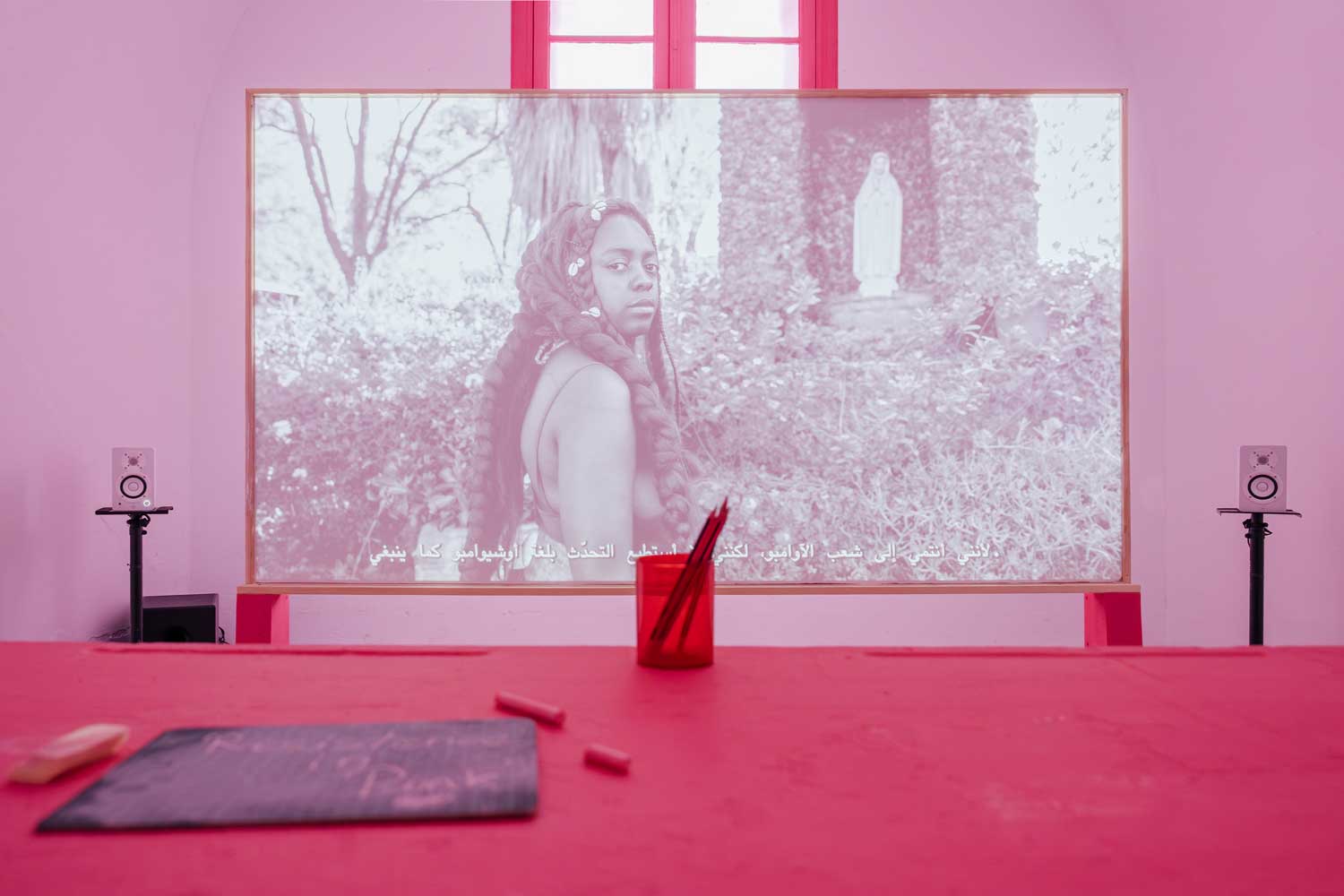
Architecture in the Service of Art
Sometimes, simple objects—a piece of fabric, a pile of cinder blocks, a fan—are enough to transform the screening space into a contemporary art installation. Among the most striking set designs is that of Sudanese artist Leena Habiballa, whose video *Unstrung* evokes, through a masterful manipulation of archival footage, the conflicting forces at work in the war in Sudan. “On either side of the screen stands a dismantled barricade, made of cinder blocks, rubble, sand, corrugated metal, and tires,”, the artist comments. “What I hope to highlight here is the simultaneity of revolution and counterrevolution—the fact that these are intertwined power struggles rather than distinct, successive events.”
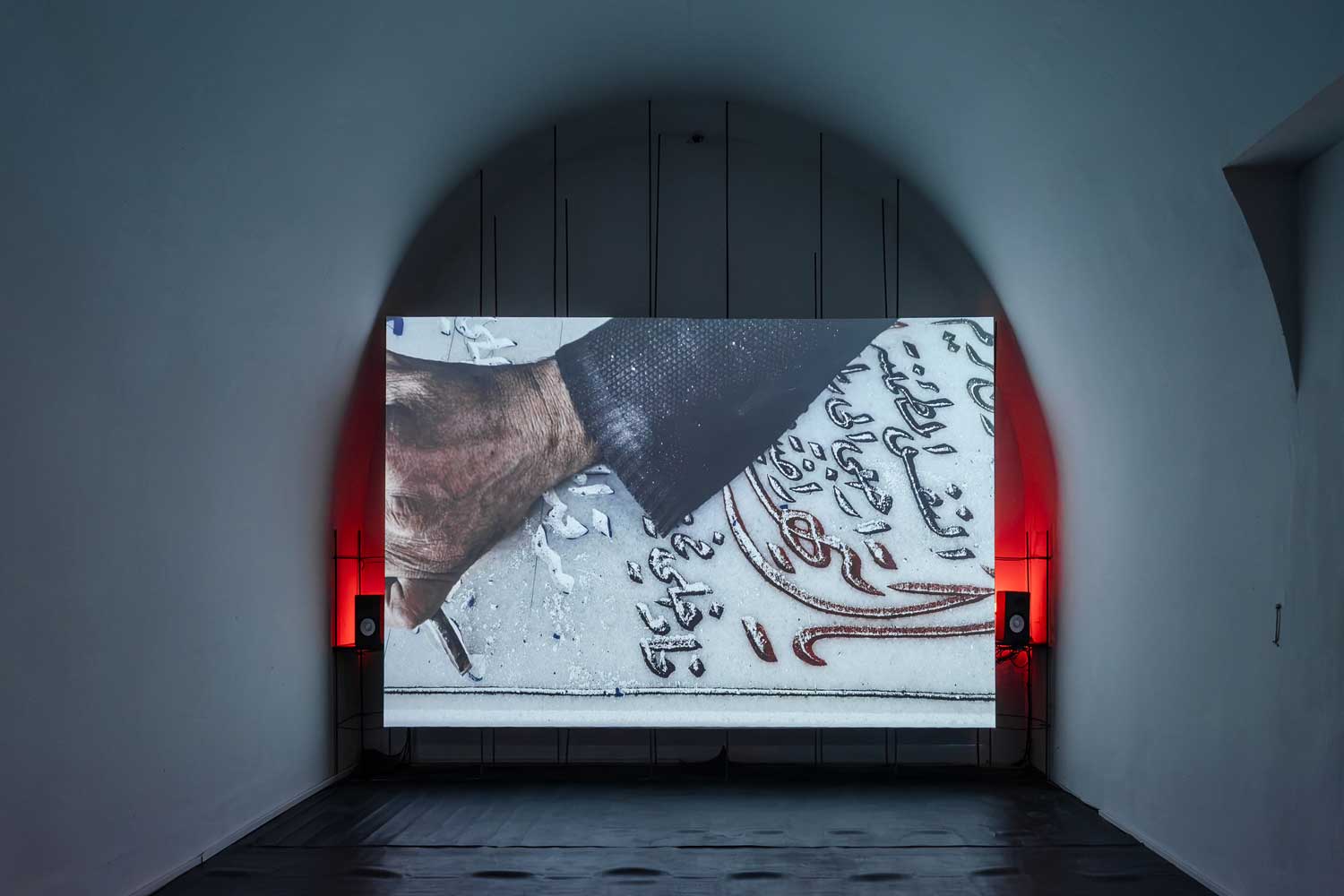
With its various spaces arranged around an inner courtyard reminiscent of those found in fondouks, the El Attarine Barracks stands out for its minimalist architecture, its numerous colonnades, and vaulted ceilings—elements that certain artists, driven primarily by a desire for authenticity, skillfully draw upon. Take, for example, the Palestinian filmmaker Sarah Zeryab, whose video *Notes on Camps*—which blends archival footage with documentary footage shot in the Yarmouk refugee camp (Syria)—evokes the figures of Palestinian martyrs. Tunisian artist Younès Ben Slimane chose for his video Grounds for Mourning , a more direct approach. His long tracking shots, reminiscent of Resnais’s cinema, evoke the ruins of the former French penal colony of Saint-Laurent-du-Maroni in French Guiana, with a focus on memory that takes on its full meaning here. “I chose a set design that builds on what the barracks’ architecture already offers,” he explains, its frames, its passages, and its surfaces on which to project the images. In the first room, the film is projected directly onto the wall, without the use of a projection screen. The columns and the vaulted ceiling form a frame around the projection, whose light alone illuminates the space.” Who would claim that video art does not rival the sometimes laborious installations of contemporary art?
Jaou Tunis, through November 22, 2026.
“Becoming the Ocean” exhibition, in collaboration with the Geneva Moving Image Biennial, Caserne El Attarine
“Undertow” exhibition, curated by Amanda Abi Khalil and Danielle Makhoul, featuring Badr El Hammami, Imane Djamil, Bouchra Khalili, Randa Maroufi, Sara Sadik, and Valentin Noujaïm, B7L9
Exhibition “Images of Syria: Palmyra, Aleppo, Damascus” by Michel Eisenlohr, French Institute of Tunis