For more than thirty years, Hassan Darsi has been developing an artistic practice in which art is never separate from the world he observes. A leading figure in the Moroccan contemporary art scene and founder of La Source du Lion in Casablanca, he uses the city—its transformations and power dynamics—as a testing ground. For his first solo exhibition in France, “Persistances,” Diptyk spoke with the artist about what persists in his practice: scale, paradox, and art’s ability to shift our perspective.
Interview by Najat Saidi
Why did you title your joint exhibition “Persistances”?
It is Bérénice Saliou (co-curator of the exhibition, Ed.)) who came up with the idea. We’ve known each other for twenty years. There’s a sense of persistence in our friendship and in our exchanges. And besides, I’m an artist who persists in forms and in themes. I’ll take something, reshape it, remake it, and revisit it until it’s worn out. I exhaust myself in the process. With each exercise, a form emerges like a piece of evidence.
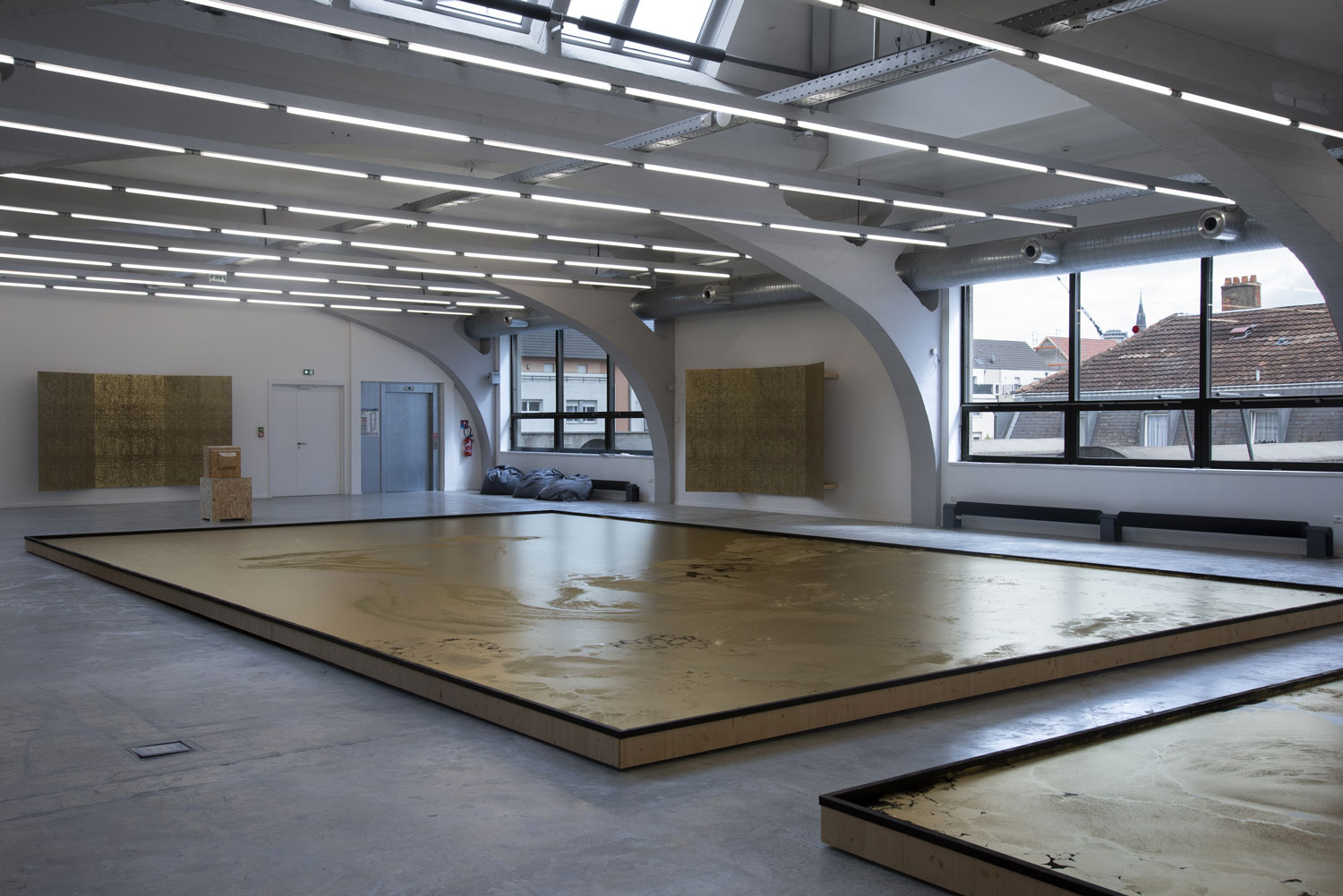
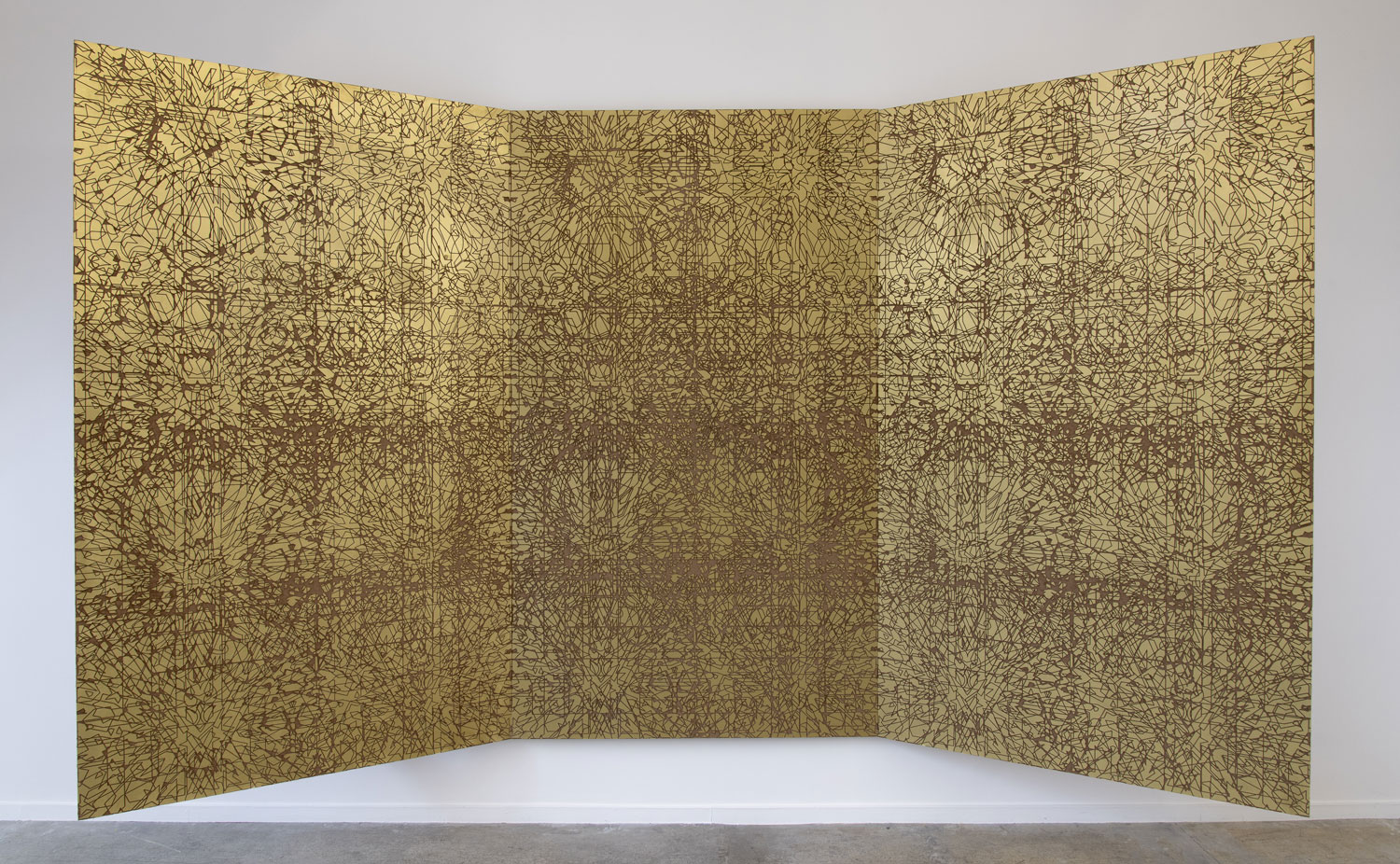
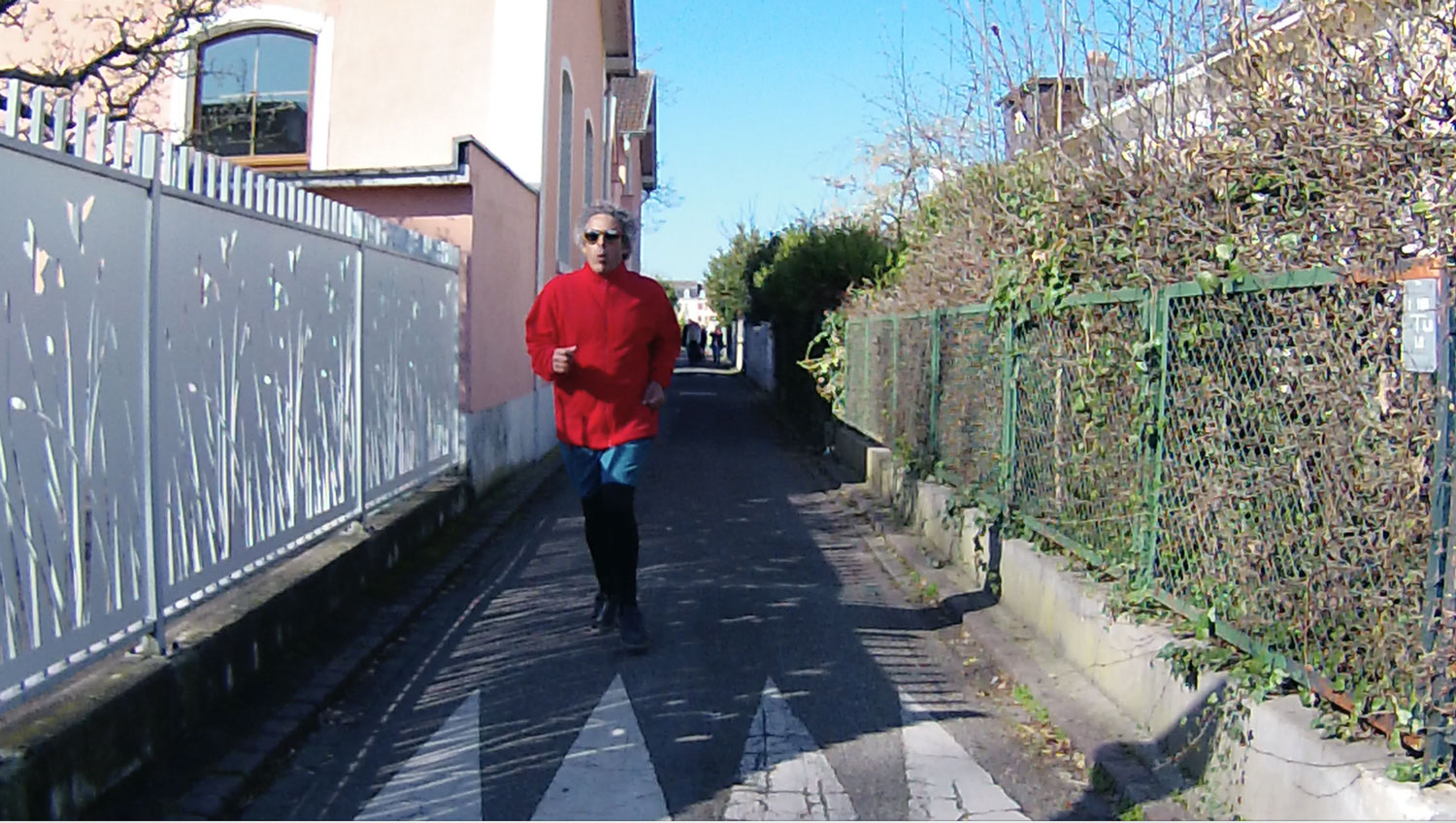
In every work on display, there’s been a consistency over the past thirty years. All the work with gold, for example, has been ongoing since 1999. I’ve made a tooth out of it, a tank, something that covers a monument, a pool of golden water. There’s a lot of aggression. The video project *The Man Who Runs*is also still ongoing. I was running when I was 40, and I’m still running today.
You have to observe, always stay alert, available, and fresh to bring something new to the table and avoid falling into a rut. There’s a lot of determination in my work.
You’ve been working with gold for over twenty-five years. What fascinates you about this material?
The power of color, symbolism, and metaphor. We must always question things, shift our perspective, and look at things from multiple points of view. I subvert the attributes of gold and want to reveal its danger. For example, in Tenerife, many bodies of Senegalese people wash up there, on a pier where German tourists come to relax. I put gold tape on that pier. It blinds us and acts as a mirror. I like it when art is accurate and true to scale.
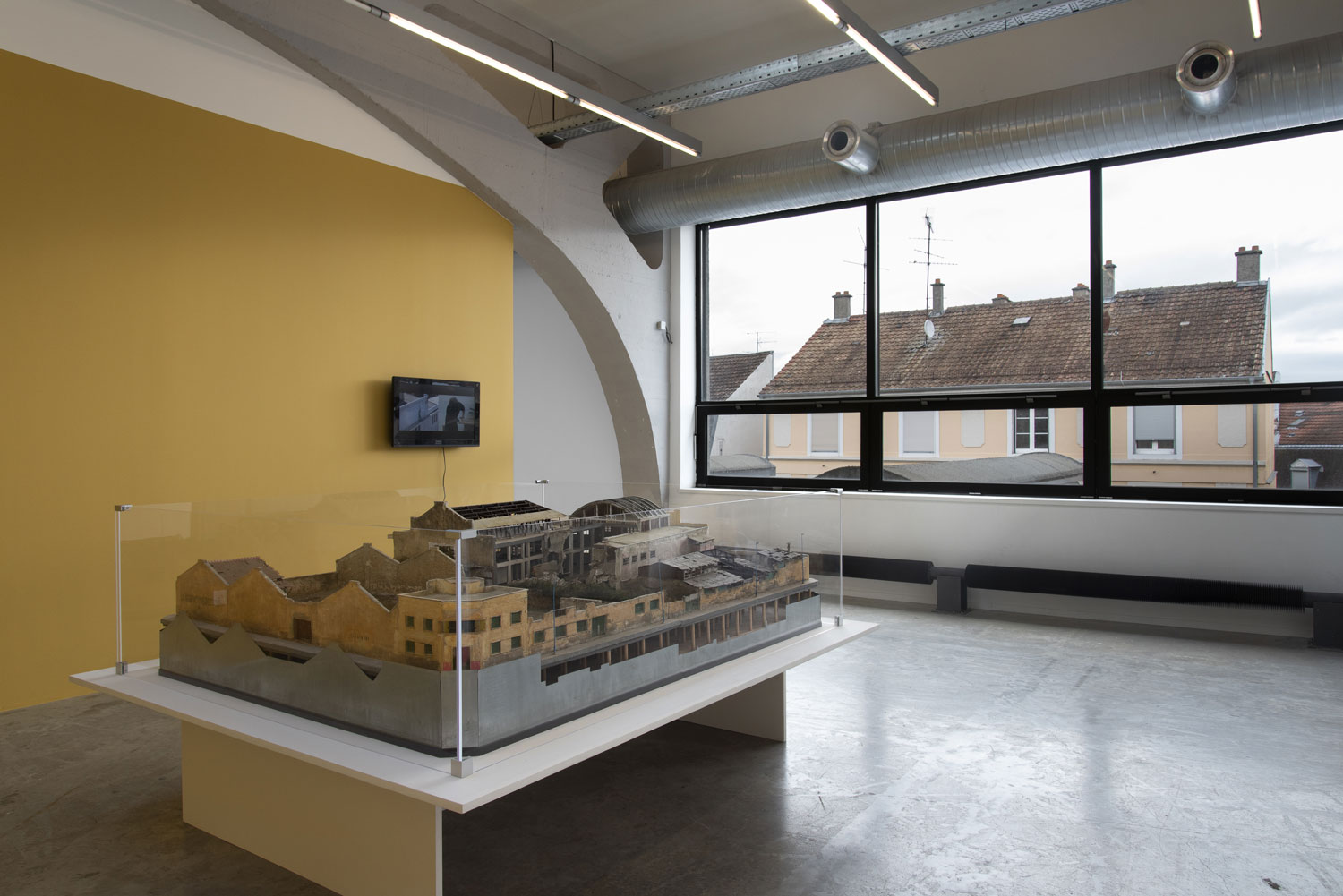
This issue of scale is particularly relevant to the Model Project and the Lower Square. What does the model allow that a work of art, in the traditional sense, does not?
The Model is a work of art, but it’s more than that: it’s an object that sparks action. It consists of forms, spaces for exchange and negotiation—it’s an attitude. It creates a worksite, without violence. It helps bring people together and makes them love art, too.
Paradoxes are everywhere. I rely on my own vision, but I work with people. I use all the tools of a builder to create something magnificent. That’s what art can be: the Hermitage Park in Casablanca was saved in this way.
Your projects involve residents and various stakeholders in the city. What role do you play, then, as an artist?
I have never spoken on behalf of the residents of Casablanca to anyone. I am an artist, not an elected official. Others are free to speak out.
I have always made sure that my processes are rigorous and do not veer into manipulation. Art belongs to everyone; it shouldn’t be a privilege. So we need to work on a large scale and work with people.
If the world is burning, it’s because we’re not living on the right scale. And it keeps happening. Right now, we’re neither mindful nor caring. Yet there’s a way forward—a way to teach children to see. Art has something to say about this. To do that, we must allow ourselves to dream of a different society.
Your works are never entirely overt. In your view, should art provide answers?
When Jacques Brel was asked about Brassens, he would say: “Brassens poses the questions.” He’s someone who never stopped observing, drafting, and revising. He isn’t showy. He’s truly engaged in the craft of writing. I draw inspiration from writers and artists like them. I believe art is a tremendous force. It requires commitment, dedication, and a strong sense of ethics.
Life is full of paradoxes. Not a single millimeter on Earth is free of them. We live in societies that refuse to embrace this complexity because it offers no tangible benefit. Yet there is no life without paradox. Art is the realm where paradoxes reign supreme.
We’re born into it, we live in it, we’re immersed in it. We can’t erase it. We must stay alive, acknowledge our contradictions, sharpen our hearts and minds. And create. Create.
“Persistances,” May 28–October 25, 2026, FRAC Champagne-Ardenne, Reims.
“Persistances,” June 12–October 25, 2026, Kunsthalle, Mulhouse.
Curated by Florence Renault-Darsi, Bérénice Saliou, and Sandrine Wymann.