For more than thirty years, Hassan Darsi has been developing a practice in which art is never separate from the world it observes. A leading figure in the Moroccan contemporary art scene and founder of La Source du Lion in Casablanca, he turns the city, its transformations, and its power dynamics into a field of experimentation. For his first solo exhibition in France, “Persistances,” Diptyk spoke with the artist about what persists in his practice: scale, paradox, and art’s ability to shift the viewer’s perspective.
Interview by Najat Saidi
Why did you title your two-venue exhibition “Persistances”?
We were talking with the three curators about our long-standing collaboration spanning more than twenty years, and the word came naturally from Bérénice Saliou (co-curator of the exhibition, Ed.) and immediately stood out as the perfect title for the exhibition. There is persistence in friendship and in exchange, and I, too, am an artist who persists in forms and in ideas. I’ll take something, reshape it, remake it, and revisit it until it’s worn out. With each exercise, a form emerges like a piece of evidence.
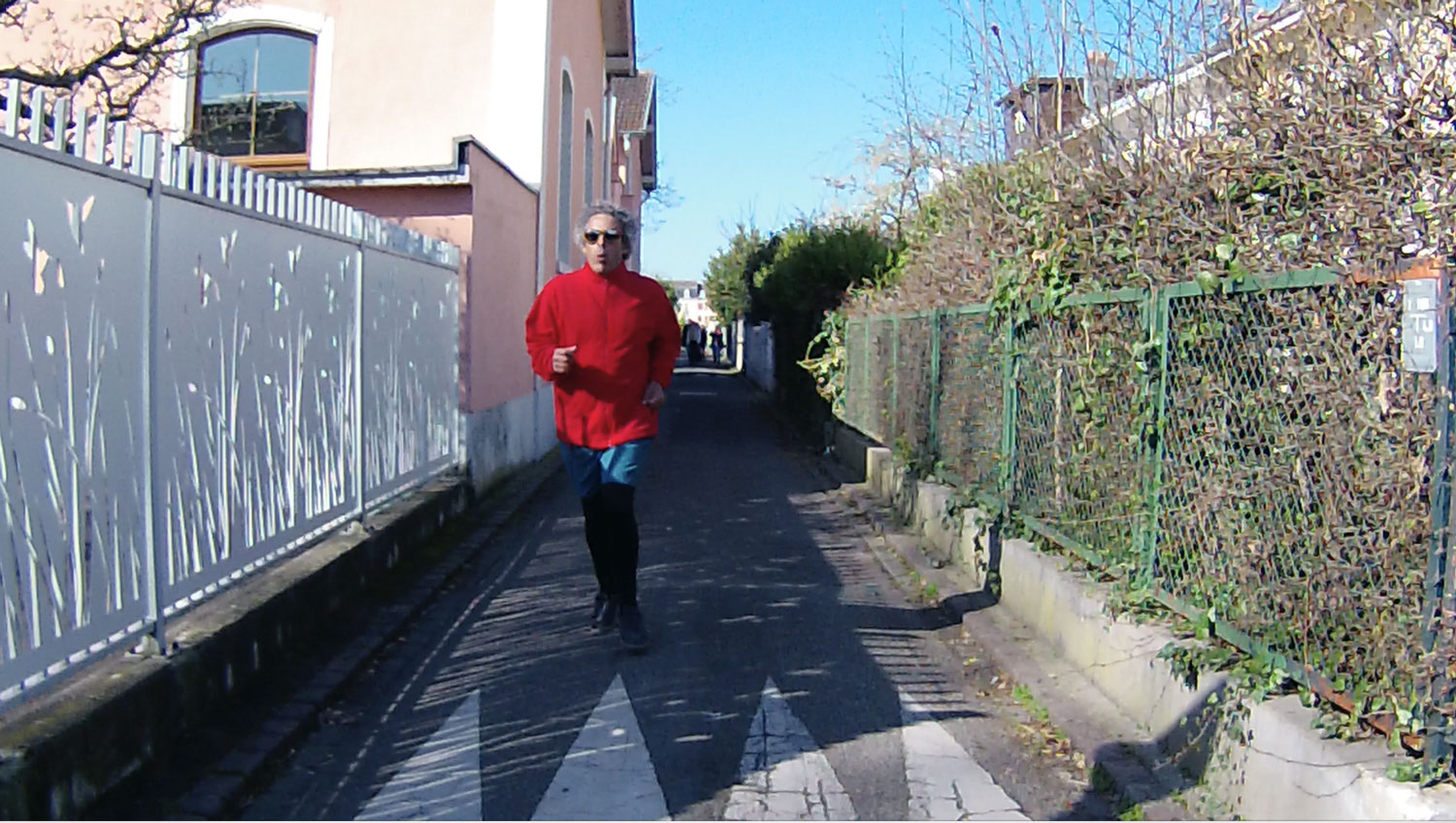
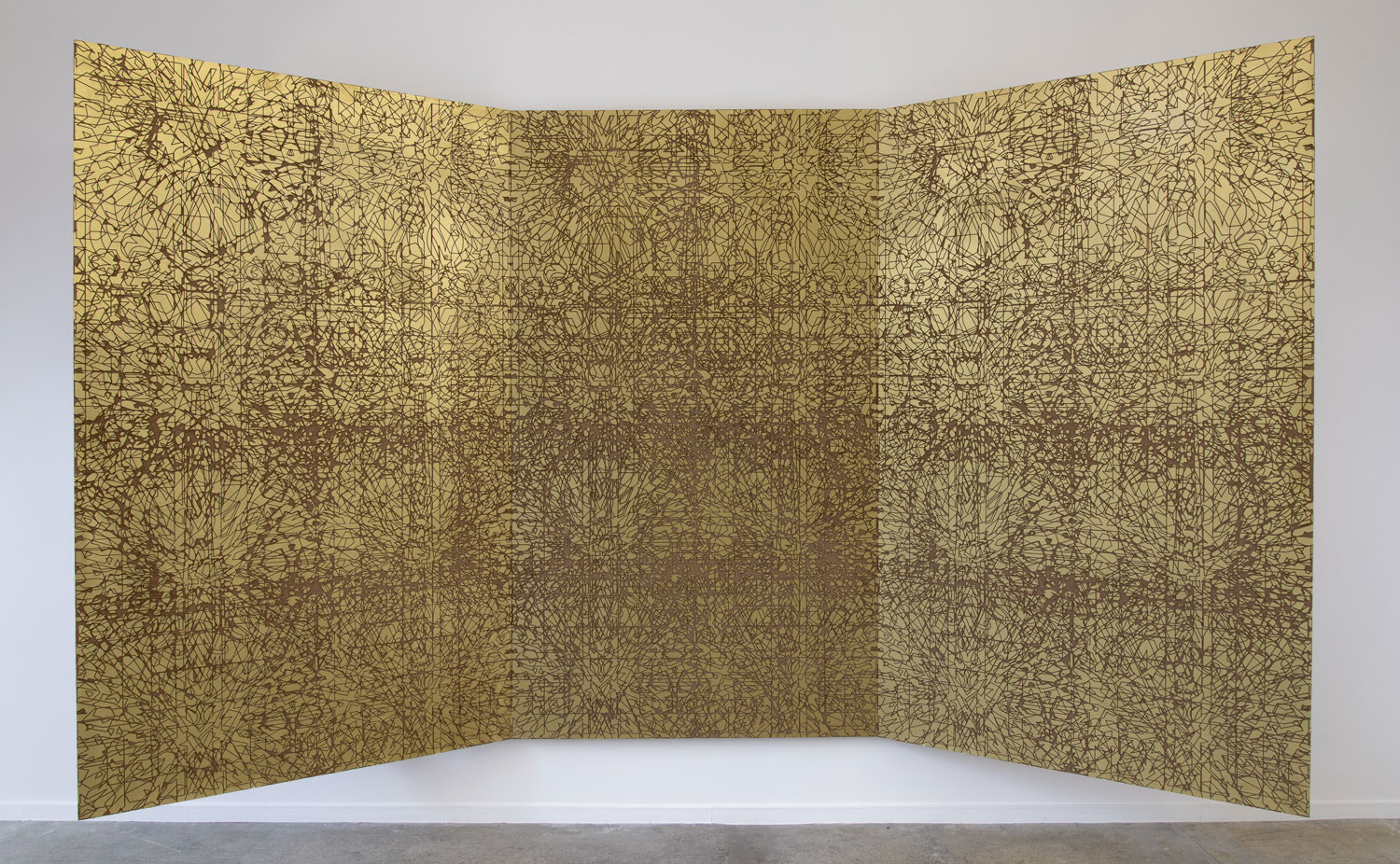
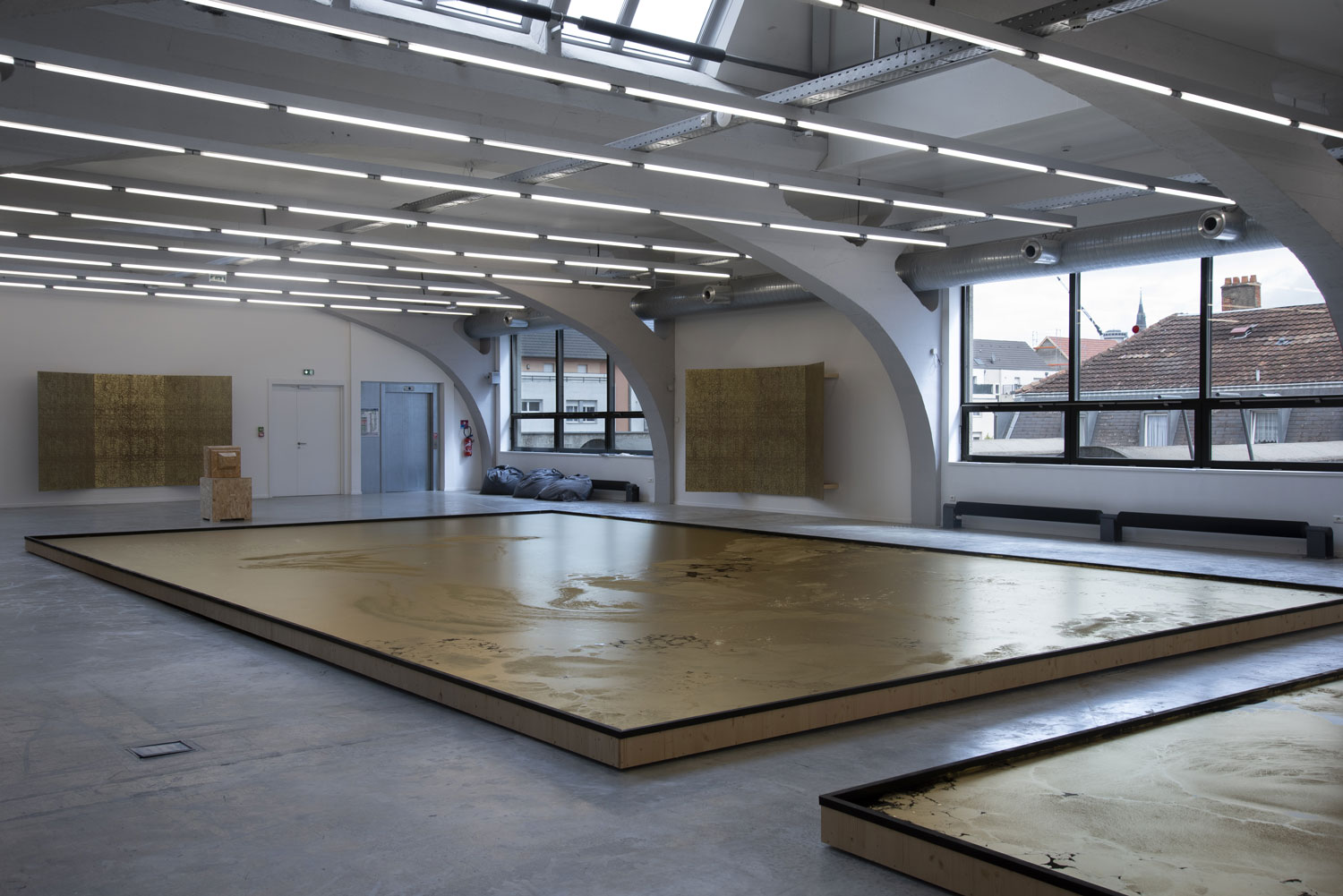
For more than thirty years, there has been persistence in each of my works and projects. My work with gold, for example, has been ongoing since 1999. I have used it to cover a tooth, a tank, a formwork that obscures a monument, a water basin, a pier out at sea… Another example is the video L’Homme qui court [The Running Man]—it, too, is still running; I was running at age 40, and I’m still running today.
You’ve been returning to the subject of gold for over twenty-five years. What fascinates you about this material?
The power of color, symbolism, and metaphor, and the allure that gold exerts on the world. Through this work, I shift the attributes of gold—which fascinates us—to transform it into an element that signals danger. Gold acts as a dividing line—both fascinating and monstrous—between two states of the world, serving as a revealer… For example, in Tenerife, the bodies of migrants regularly wash up on a pier that protects the beach where tourists come to relax. I covered the concrete cubes of this breakwater with gold adhesive tape; the gold blinds us and acts as a mirror, highlighting the contradictions. I like it when art is accurate and true to scale.
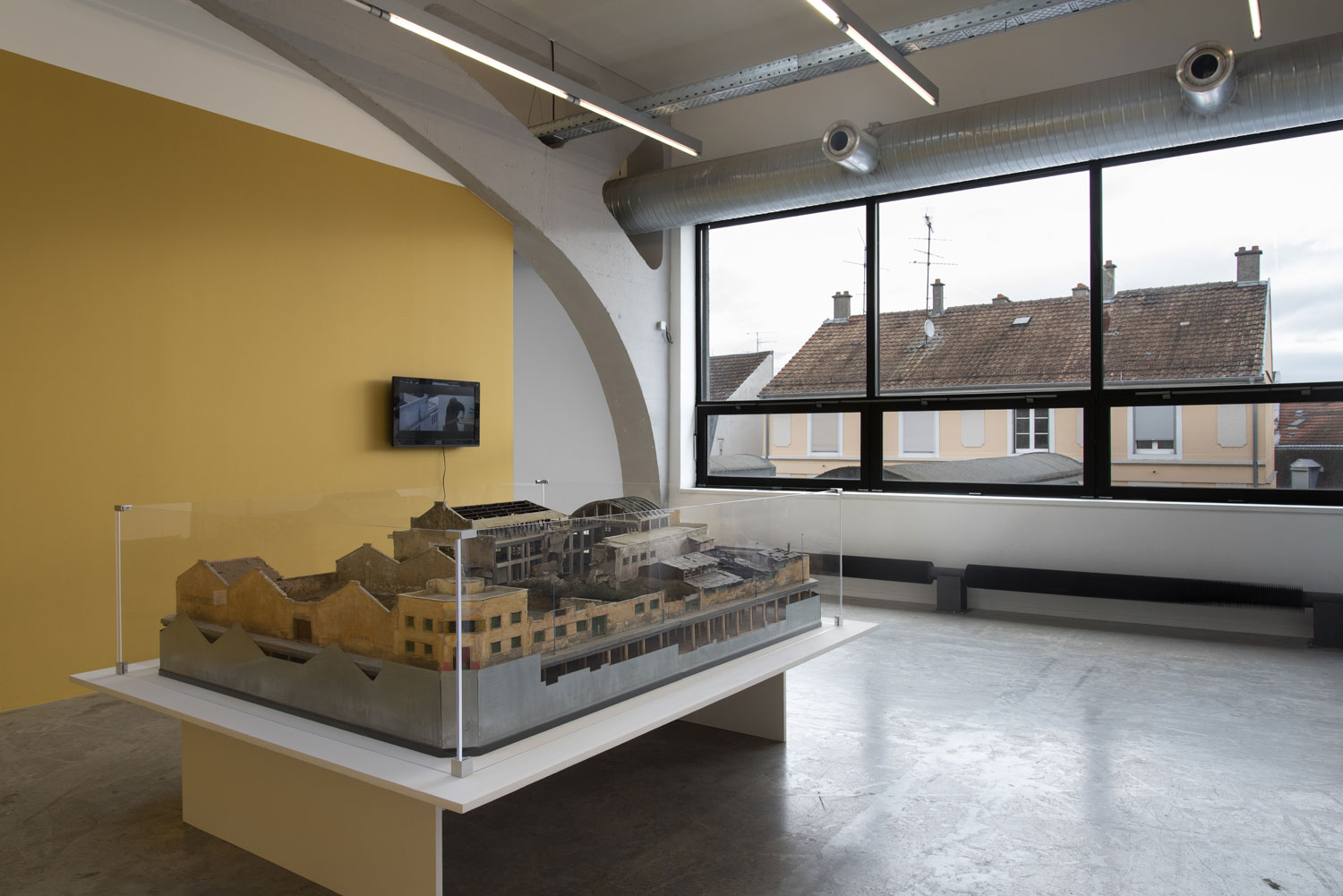
This issue of scale is particularly evident in Le Projet de la maquette [The Model Project] and Le Square d’en bas [The Square Below]. What does the model offer that a work of art, in the traditional sense, does not?
In both cases—the Hermitage Park and the Légal Frères building—it’s, in a way, a return to a classic artistic practice: reproducing an object, a landscape, or a view. I used these two urban spaces to create, in a sense, two models. Their construction, which took time (two years for Le Projet de la maquette and three for Le Square d’en bas) creates significant, shared moments for looking, observing, deciphering, measuring, and rendering reality on a given scale. It is this aesthetic, constructive, and participatory process that sparks a desire for art and gives it meaning.
Your projects involve residents and various stakeholders in the city. What role do you play as an artist?
It is also—and above all—the urban space and its complexities that call on all of us to reflect on the places where we live.
My projects explore and question the world I inhabit and navigate; I engage with it as an artist, and I have always made sure that my processes are rigorous and do not veer into manipulation. I am an artist who speaks out, amplifies, denounces, erases, and superimposes my perspective—like another tracing paper—that interacts through transparency with those of others. Art makes this possible. The city is fertile ground for refining my perspective and my approach, my processes and tools—all of which serve as exercises and explorations.
Your works are never entirely demonstrative. In your opinion, should art provide answers?
Brel said of Brassens that he was someone who raised questions.
For me, it’s first and foremost about questioning, highlighting, expressing a feeling, evoking rather than stating… I like to blur the lines, to create areas of uncertainty. My work is never direct; I prefer to take a detour to make things visible. The forms and media I use are constantly being renewed and refined to be as accurate as possible, on the right scale, with persistence but also with poetry.
“Persistances,” May 28–October 25, 2026, FRAC Champagne-Ardenne, Reims.
“Persistances,” June 12–October 25, 2026, Kunsthalle, Mulhouse.
Curated by Florence Renault-Darsi, Bérénice Saliou, and Sandrine Wymann.